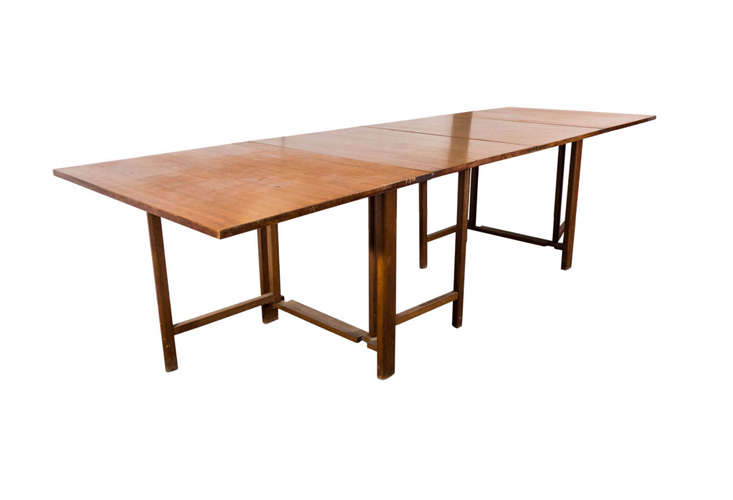
The Midcentury "Maria" Folding Gateleg Dining Table is the kind of furniture that makes small-space living feel suspiciously clever. At first glance, it can look almost shy: a slim wooden form tucked against the wall, quietly minding its business like a well-behaved console table. Then, with a few graceful movements, it opens into a full dining table ready for dinner, paperwork, board games, holiday chaos, and that one guest who always says, “I’ll just have a tiny slice,” before taking half the pie.
Designed in the spirit of Scandinavian modernism and closely associated with Swedish designer Bruno Mathsson, the "Maria" table is more than a practical folding dining table. It is a lesson in engineering, proportion, and restraint. It solves a real household problem without shouting about it. That is the magic of midcentury modern furniture at its best: smart enough to be admired, simple enough to be used every day.
For homeowners, collectors, apartment dwellers, and design lovers, the Midcentury "Maria" Folding Gateleg Dining Table remains a fascinating piece because it delivers three things at once: compact storage, generous seating, and timeless style. In other words, it is not just a table. It is a social life with hinges.
What Is the Midcentury "Maria" Folding Gateleg Dining Table?
The "Maria" Folding Gateleg Dining Table is a vintage expandable dining table known for its narrow folded profile and remarkable ability to transform into a long dining surface. Many examples are described as Swedish midcentury or Scandinavian modern pieces, often linked to Bruno Mathsson and the Karl Mathsson workshop or Mathsson International. Typical vintage listings show the table folding down to roughly console depth, then expanding to around 110 inches or more when fully opened, depending on the specific version.
The design usually uses hinged leaves supported by swing-out gatelegs. Instead of storing separate extension boards in a closet, the table carries its own flexibility in its body. The leaves fold down when not needed and lift up when guests arrive. It is a dining table that understands real life: sometimes you need a table for two, sometimes for ten, and sometimes you just need a place to dump the mail while pretending you are going to organize it later.
Why the Gateleg Design Still Feels Brilliant
A gateleg table is built around a simple but effective idea. Hinged legs swing out from the frame, like little wooden gates, to support hinged tabletop leaves. When closed, the legs tuck away and the leaves fold downward. When opened, the table becomes wider or longer, depending on the design.
The "Maria" design takes this old furniture concept and gives it a modern Scandinavian personality. It feels lighter, cleaner, and more architectural than many traditional gateleg tables. Instead of heavy carved legs or decorative fuss, it focuses on function, line, and material. The result is furniture that can sit comfortably in a midcentury home, a contemporary apartment, a minimalist dining room, or a warm eclectic interior.
Bruno Mathsson and the Scandinavian Modern Connection
Bruno Mathsson is widely recognized as one of Sweden’s most important modern furniture designers. His work is often associated with ergonomics, lightness, functionalism, and a deep respect for wood. While he is especially famous for chairs, daybeds, and architectural projects, his tables also show the same interest in comfort, flexibility, and human-centered living.
The "Maria" table fits beautifully into this design philosophy. It does not merely look elegant in a showroom. It works in a home. It adapts to different routines. It can live quietly in the background during the week and become the star of the room on Saturday night. That blend of humility and genius is exactly why Scandinavian modern furniture remains so loved by collectors and everyday users alike.
Key Features of the "Maria" Folding Gateleg Table
1. Slim Folded Profile
One of the biggest selling points of the Midcentury "Maria" Folding Gateleg Dining Table is its compact folded size. Some examples fold down to around 9 inches deep, making the table practical for apartments, studios, guest rooms, narrow dining areas, and multipurpose spaces. It can function like a console table when closed, holding a lamp, books, ceramics, or a bowl of keys that somehow contains keys to things nobody owns anymore.
2. Expansive Dining Surface
When fully opened, many "Maria" tables stretch to roughly 110 inches long, with some auction and marketplace examples listed slightly longer. That is enough space for serious dining. Depending on chair size and layout, the table can often seat eight to ten people comfortably, and in some settings even more. It is the furniture equivalent of a tiny suitcase that somehow contains an entire vacation wardrobe.
3. Multiple Configurations
The table does not have to be all open or all closed. Several versions can be used in partial configurations, making them useful for two-person meals, four-person breakfasts, work-from-home setups, craft projects, or a casual buffet. This flexibility is one reason the "Maria" table appeals to modern households, where rooms often serve more than one purpose.
4. Warm Wood Construction
Vintage examples appear in teak, walnut, rosewood, beech, and other wood combinations. Teak and walnut versions are especially popular with midcentury modern enthusiasts because they bring warmth without visual heaviness. The grain pattern becomes part of the design. There is no need for excessive ornament when the wood itself is doing a tasteful little solo.
5. Clean Scandinavian Lines
The "Maria" table avoids bulk. Its beauty comes from proportion, material, and motion. The legs, leaves, and hinges work together in a way that feels intentional rather than improvised. Even when open, it looks composed. Even when closed, it looks useful. That is a difficult trick, and this table performs it with a straight face.
Why Collectors Love It
Collectors are drawn to the Midcentury "Maria" Folding Gateleg Dining Table because it sits at the intersection of beauty and utility. Many collectible design pieces are admired but not used. They become museum guests in the living room, silently judging everyone who sets down a coffee mug. The "Maria" table, by contrast, invites use. It was made to open, close, support meals, adapt to rooms, and solve problems.
Another reason collectors value it is scarcity. Authentic vintage examples, especially those with maker marks, strong provenance, original hardware, and well-preserved wood, can be hard to find. The market includes original pieces, later versions, attributed examples, and tables inspired by the design. That makes careful evaluation important for buyers.
How to Identify a Quality Vintage "Maria" Table
Check the Construction
A good gateleg table should open and close smoothly. The leaves should sit level when raised, and the legs should support the surface securely. Wobbles are not always deal breakers in vintage furniture, but dramatic instability is a warning sign. A dining table should not feel like it is auditioning for a boat scene.
Look for Maker Marks
Some examples may have labels, brands, stamps, or marks associated with Karl Mathsson or Mathsson International. Not every vintage piece will have an obvious mark, and some marks may be lost during refinishing. Still, documentation matters. For collectors, a clearly marked table usually carries stronger value than an unsigned attributed example.
Inspect the Veneer
Many midcentury tables use beautiful veneers. Look for lifting, bubbling, chips, deep scratches, water rings, or poorly matched repairs. Minor wear can add character, but severe veneer damage may require professional restoration. If the table has been refinished, check whether the finish respects the original design rather than making the wood look like it has been dipped in pancake syrup.
Test Every Configuration
Do not judge the table only when closed. Open each leaf. Move each gateleg. Confirm that the hinges work and that the leaves align. A "Maria" table is valuable because of its transformable design, so every moving part should be examined carefully.
Best Rooms for the "Maria" Folding Gateleg Dining Table
This table is especially useful in homes where space must work hard. In a studio apartment, it can serve as a console most days and a dining table when friends arrive. In a family home, it can become a holiday table without permanently occupying the dining room. In a home office, it can work as a project table, folding away when the room needs to breathe again.
It also works beautifully in open-plan interiors. Because the design is slim and visually light, it does not overpower a room. Pair it with simple dining chairs, woven seats, vintage Scandinavian pieces, or modern upholstered chairs for contrast. The table is flexible enough to handle quiet minimalism or cozy collected style.
Styling Ideas for a Midcentury "Maria" Table
Keep the Chairs Light
Because the table has a refined folding structure, lightweight chairs often look best. Consider Danish-style teak chairs, spindle-back seating, simple leather strap chairs, or contemporary wood chairs with clean lines. Avoid overly bulky chairs unless the room is large enough to balance them.
Use a Low Centerpiece
A long table deserves a centerpiece, but not one that blocks conversation. Low ceramic bowls, taper candles, small vases, or a narrow runner can highlight the table’s length without turning dinner into a game of peekaboo.
Let the Wood Speak
If the grain is beautiful, do not cover the entire surface with a heavy tablecloth. Use placemats, linen runners, or simple dishes that allow the wood to remain visible. Midcentury modern design works best when materials are allowed to show their natural personality.
Care and Maintenance Tips
Vintage wood furniture rewards gentle care. Use coasters, wipe spills quickly, and avoid harsh cleaners. A slightly damp cloth followed by a dry cloth is often enough for routine cleaning. Keep the table away from extreme humidity, direct sunlight, and heating vents, all of which can affect wood and veneer over time.
For teak or walnut, consult a furniture restoration professional before applying oils or finishes. Not every vintage finish should be treated the same way. What helps one table may harm another. In short: do not experiment on a collectible piece unless you enjoy expensive lessons.
Hardware also deserves attention. Hinges and moving supports should be kept clean and properly aligned. If a screw is loose, address it early. A small repair today can prevent a larger structural problem later.
Buying Advice: Original, Attributed, or Inspired?
The marketplace for the "Maria" gateleg table includes several categories. Original signed examples are generally the most desirable for collectors. Attributed examples may still be beautiful and functional, but their value depends on quality, provenance, and condition. Inspired versions or later copies can be excellent practical choices if your main goal is daily use rather than investment-grade collecting.
Before buying, compare dimensions carefully. Some tables are narrower, deeper, longer, or taller than others. Measure your space in both closed and fully open positions. Also measure the path into your home. A folding table is compact, but vintage furniture still enjoys making staircases dramatic.
Why It Works for Modern Living
Modern homes often need furniture that can multitask. Dining rooms become offices. Living rooms become guest rooms. Kitchens become classrooms, charging stations, snack zones, and emotional support coffee bars. The Midcentury "Maria" Folding Gateleg Dining Table fits this reality because it changes with the day.
It is also a sustainable choice. Buying a well-made vintage table keeps quality furniture in use and reduces demand for disposable pieces. A table built decades ago and still functioning today has already proven something important: good design ages better than trends.
Common Questions About the "Maria" Folding Gateleg Dining Table
Is the "Maria" table good for small apartments?
Yes. Its folded profile makes it one of the more practical collectible dining tables for compact homes. When closed, it can work as a console or side table. When open, it becomes a full dining surface.
How many people can it seat?
Depending on the specific table, chair size, and configuration, many examples can seat eight to ten people, and some layouts may accommodate more. For comfortable dining, always test spacing with actual chairs rather than relying only on total length.
Is it fragile?
A well-maintained example should be sturdy, but it is still vintage furniture. The hinges, leaves, veneer, and gatelegs should be inspected before purchase and treated with care during daily use.
Is it worth the investment?
For design collectors and small-space homeowners, it can be a very worthwhile piece. Its value comes from its design pedigree, utility, craftsmanship, and scarcity. However, condition and authenticity matter greatly.
Real-Life Experience: Living With a "Maria" Gateleg Table
The first thing you notice when living with a table like the Midcentury "Maria" Folding Gateleg Dining Table is not its collector value. It is the quiet relief of having furniture that does not bully the room. In a small dining area, many tables behave like permanent guests who brought three suitcases and no plans to leave. The "Maria" table is different. Folded down, it gives the room back to you. It can sit along a wall with a lamp, a stack of books, or a ceramic bowl, looking intentional rather than stored.
Then comes the transformation. Opening the table is oddly satisfying. The gatelegs swing out, the leaves rise, and suddenly the room has changed roles. A weekday console becomes a dinner table. A quiet corner becomes a gathering place. It feels mechanical, but not industrial; elegant, but not delicate. There is a small sense of theater in the movement, like the table is saying, “Fine, I’ll host.”
In everyday use, the best feature is flexibility. You may open only one section for breakfast or a laptop session. You may open more leaves for a puzzle, sewing project, or family meal. When guests arrive, the table stretches into a long surface that feels generous without looking clumsy. It is especially useful for people who love entertaining but do not want a giant dining table dominating their home all week.
The table also changes how you think about furniture. Many modern pieces are designed for one fixed purpose. The "Maria" table reminds you that furniture can adapt. It can support daily routines, special occasions, and spontaneous plans. One day it holds coffee and notebooks. The next day it holds pasta, candles, salad, dessert plates, and at least one phone face-down because someone is pretending not to check work email.
There are practical lessons, too. You learn to open it carefully and evenly. You learn which chairs fit best. You learn that long tables need thoughtful lighting, because nobody wants the far end of dinner to feel like a separate zip code. You also learn to respect the wood. Coasters become non-negotiable. Hot pans stay on trivets. Spills get wiped immediately, not “after this story,” because vintage veneer has no patience for dramatic storytelling.
Guests tend to notice the table. Some admire the wood. Others are fascinated by the folding mechanism. People who live in apartments often react with the same expression: part envy, part mental calculation. You can almost see them measuring their own walls in their heads. That is the charm of the "Maria" table. It is beautiful, but its beauty is tied to usefulness. It does not simply decorate a home; it improves how the home works.
After using one, the appeal becomes obvious. The Midcentury "Maria" Folding Gateleg Dining Table is not just a collector’s object or a design-world conversation piece. It is a practical companion for real life. It understands that homes expand and contract emotionally even when the square footage does not. Some nights you need space. Some nights you need seats. This table gives you both, with better manners than most furniture.
Conclusion
The Midcentury "Maria" Folding Gateleg Dining Table remains one of the smartest examples of Scandinavian modern furniture because it solves a timeless problem with grace. It is compact without feeling compromised, expandable without feeling awkward, and stylish without trying too hard. Its connection to Bruno Mathsson’s functional design legacy gives it historical depth, while its everyday usefulness makes it surprisingly current.
For collectors, it offers pedigree and scarcity. For small-space dwellers, it offers freedom. For hosts, it offers a dining table that appears when needed and politely steps aside when the party is over. In a world full of furniture that either looks good or works hard, the "Maria" table does both. That is why it continues to earn attention from vintage dealers, designers, and homeowners who appreciate furniture with a brain, a backbone, and a very good folding trick.