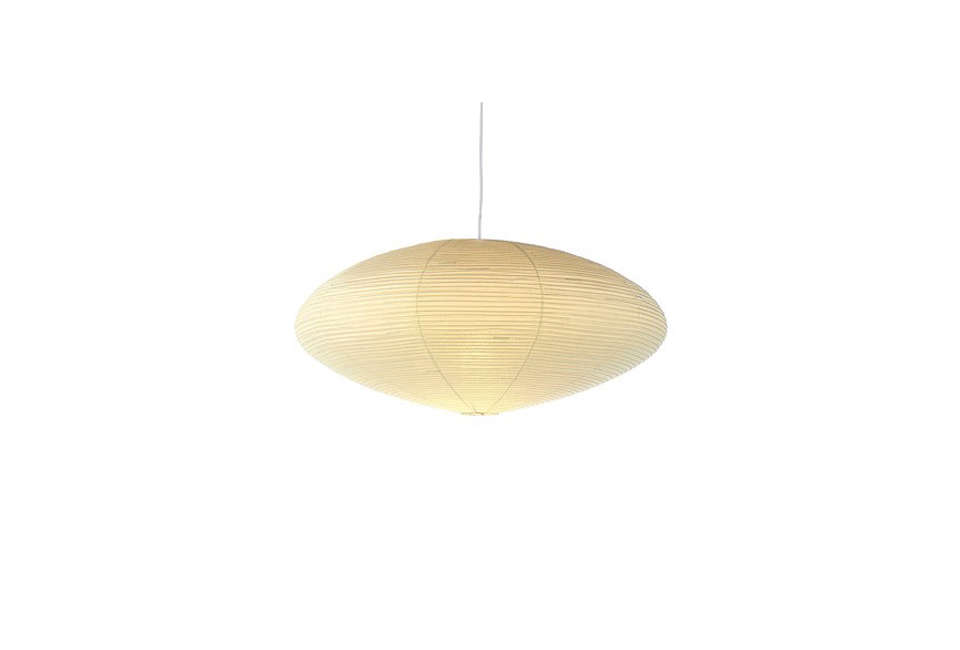
The Noguchi 15A/21A/26A Lamp is not the kind of lighting you buy because your room is dark and your patience is darker. It is the kind of lamp you choose when you want a ceiling fixture that behaves like sculpture, glows like a paper moon, and somehow makes a dining room, bedroom, studio, or reading corner look more thoughtful without shouting, “I hired a designer.”
Part of Isamu Noguchi’s legendary Akari Light Sculptures, the 15A, 21A, and 26A are pendant lamps made with handmade washi paper, bamboo ribbing, and a metal frame. They belong to a design family that began in 1951, when Noguchi visited Gifu, Japan, a city famous for traditional paper lanterns. From that meeting of Japanese craft and modernist imagination came one of the most beloved lighting collections of the 20th century.
What makes these lamps special is their quiet confidence. They do not sparkle, flash, rotate, change colors with an app, or ask to connect to Wi-Fi. Thank goodness. Instead, they soften electric light through paper, turning a bulb into an atmosphere. The result is warm, diffused, poetic, and surprisingly practical.
What Is the Noguchi 15A/21A/26A Lamp?
The Noguchi 15A, 21A, and 26A lamps are ceiling pendant versions within the Akari Light Sculptures collection. “Akari” means light in Japanese, with a sense of both illumination and physical lightness. That double meaning matters because these lamps are visually light, materially light, and emotionally light. They float overhead like gentle clouds that had excellent taste in mid-century design.
Each model has an elliptical or rounded lantern form, but the sizes and room presence vary. The 15A is the largest of the three and works beautifully as a statement pendant over a dining table, open living area, or spacious bedroom. The 21A is wider and flatter, giving it a calm horizontal profile that suits dining rooms, lounges, and modern apartments. The 26A is smaller and more compact, ideal for cozy corners, bedrooms, entryways, or layered lighting schemes.
Noguchi 15A: The Statement Maker
The Akari 15A measures approximately 35 inches long, 35 inches deep, and 13 inches high. That makes it a generous, sculptural pendant with enough scale to anchor a room. It is especially effective over a large dining table, in a living room with tall ceilings, or in a minimalist interior that needs one soft focal point rather than a parade of decorative accessories.
The 15A has a broad, rounded presence. It is large, but because the washi paper is translucent and the structure is delicate, it does not feel heavy. Think of it as a big design gesture that whispers instead of bangs a gong.
Noguchi 21A: The Balanced Favorite
The Akari 21A measures approximately 25.5 inches long and 11 inches high. Its lower, wider shape makes it one of the most versatile choices in the series. It can sit visually close to a ceiling without overwhelming the room, yet it still has enough width to feel intentional.
The 21A is a smart option for dining spaces, kitchen seating areas, apartment living rooms, and bedrooms where you want softness without too much volume. It feels refined and calm, like the lamp equivalent of someone who knows when to speak and when to simply make the room better.
Noguchi 26A: The Compact Charmer
The Akari 26A measures approximately 17.7 inches long and 10 inches high. It is the smallest of the three, but it should not be dismissed as merely “the little one.” The 26A is perfect for smaller rooms, bedside pendant installations, entryways, reading nooks, or a pair of lamps hung over a long console or kitchen island.
Because the 26A has a compact form, it brings the Akari feeling into spaces where the 15A might look like it is auditioning to become a weather system. It is gentle, adaptable, and easier to layer with other lights.
The Story Behind Akari: From Gifu Craft to Modern Icon
Isamu Noguchi was an American artist and designer whose career crossed sculpture, furniture, gardens, stage sets, public art, and lighting. He believed that sculpture was not limited to objects on pedestals. Space itself could be shaped. A table, a playground, a garden, or a lamp could all become sculpture if handled with imagination.
In 1951, Noguchi visited Gifu, Japan, a place known for paper lanterns and other traditional crafts. The local lantern industry was facing decline as modern electric lighting changed daily life. Noguchi’s genius was not to reject electricity, but to humanize it. He used the familiar construction of paper and bamboo, then adapted it for electric bulbs. The result was neither an old lantern nor an ordinary lamp. It was Akari: a light sculpture.
That phrase, “light sculpture,” is the secret to understanding the Noguchi 15A/21A/26A Lamp. These pieces are functional, yes. They illuminate rooms. But they also define space, soften architecture, and change the emotional temperature of an interior. A bare bulb says, “We have electricity.” An Akari says, “We have considered the mood.”
Materials: Washi Paper, Bamboo, and Metal
The beauty of a Noguchi Akari lamp begins with its materials. Handmade washi paper diffuses light in a way that glass, plastic, or metal shades rarely can. Washi has texture, fiber, and depth. When lit, it does not simply cover the bulb; it transforms the bulb’s harshness into a warm, atmospheric glow.
Bamboo ribbing gives the shade its structure. The ribs create subtle lines across the surface, giving the lamp rhythm and movement. The metal frame provides support while remaining visually secondary. The whole object feels light, but the construction is carefully considered.
Authentic Akari lamps are also tied to traditional Gifu lantern-making techniques. Bamboo rods are shaped around wooden forms, washi strips are applied, and the shade can be folded once the form is removed. This ability to fold flat is part of the design’s practical brilliance. It is art that understands shipping, which is more than can be said for many beautiful things.
Why the Noguchi 15A/21A/26A Lamp Works in Modern Interiors
The Noguchi 15A/21A/26A Lamp works because it balances opposites. It is traditional and modern, handmade and minimal, sculptural and useful, delicate and iconic. That flexibility allows it to fit into many interior styles without looking forced.
In Japandi Interiors
Japandi design blends Japanese simplicity with Scandinavian warmth. Akari lamps are a natural fit because they share the same values: honest materials, clean forms, soft light, and calm visual energy. A 21A pendant above a pale wood dining table can complete a Japandi room without adding clutter.
In Mid-Century Modern Spaces
Noguchi’s Akari lights sit comfortably beside mid-century classics: low sofas, walnut case goods, sculptural chairs, and simple textiles. Unlike some mid-century pieces that feel retro in a costume-party way, Akari lamps still feel current. They have aged well because they were never trying too hard in the first place.
In Contemporary Minimalist Homes
Minimalist rooms can sometimes feel cold if every surface is hard, flat, and aggressively beige. A Noguchi pendant solves that problem by adding texture and warmth without visual noise. The 15A can serve as a major focal point in an open space, while the 26A can soften a hallway or small bedroom.
In Eclectic Rooms
Akari lamps also work beautifully in layered, eclectic interiors. Pair one with vintage rugs, colorful art, bookshelves, ceramics, or modern furniture. The lamp’s simplicity lets it play well with others. It does not compete for attention; it improves the conversation.
How to Choose Between the 15A, 21A, and 26A
Choosing the right Noguchi pendant depends on room size, ceiling height, furniture scale, and the visual role you want the lamp to play.
Choose the 15A If You Want a Focal Point
The 15A is best when the lamp should be noticed. Use it over a dining table, in a living room, or in a space with enough breathing room around it. Because it is broad and sculptural, it can replace the need for a dramatic chandelier while feeling warmer and more relaxed.
Choose the 21A If You Want Versatility
The 21A is the most balanced option for many homes. It has presence, but not too much. It is wide enough to feel substantial and low enough to suit rooms where a taller pendant would feel bulky. If you are unsure which model to choose, the 21A is often the safe, stylish middle path.
Choose the 26A If You Need a Smaller Pendant
The 26A is ideal for compact areas or grouped installations. Use one in an entry, bedroom, reading corner, or small dining nook. Use two or three if you want rhythm across a longer space. It is also a great choice when you want the Akari look without letting the lamp dominate the room.
Lighting Quality: Soft, Warm, and Human
The main reason people fall in love with Akari lamps is the quality of light. Washi paper filters illumination in a way that feels gentle and human. It reduces glare, softens shadows, and creates a calm glow that flatters both rooms and faces. In other words, it is excellent dinner lighting. Your soup looks better. Your friends look better. You look like someone who reads design books, even if your current bookmark is a grocery receipt.
For best results, use a warm white LED bulb rather than a cool, bluish bulb. A bulb around 2700K is usually a good choice for living rooms and dining spaces. Dimmable bulbs are even better, especially if the pendant is used over a table or in a multipurpose room. The goal is not to flood the room like a dental office. The goal is atmosphere.
Authenticity: How to Recognize a Genuine Akari Lamp
Because Noguchi Akari lamps are so famous, they are widely copied. Some paper lanterns are honest alternatives inspired by the same tradition; others are knockoffs pretending to be the real thing. If you are buying an authentic Akari, look for the red sun-and-moon logo and, on contemporary models, the “I. Noguchi” signature. Genuine Akari lamps are associated with the original production tradition and use handmade materials that give the shade its subtle texture and warm glow.
Authenticity matters not only for collectors, but also for quality. A true Akari is not just a paper globe with a famous name attached. It is a carefully proportioned object designed by Noguchi and made through a specific craft process. The difference may seem subtle in photographs, but in person, material quality and light diffusion are hard to fake.
Care and Maintenance Tips
A Noguchi 15A/21A/26A Lamp is delicate, but not impossible to live with. Think of it like a linen shirt: beautiful, breathable, and not interested in rough treatment. Dust it gently with a soft feather duster or a clean microfiber cloth. Avoid wet cleaning, harsh chemicals, or enthusiastic vacuum attachments. Washi paper does not appreciate being power-washed by ambition.
Keep the lamp away from moisture-heavy areas such as bathrooms or steamy kitchens. Avoid placing it where pets, children, or tall guests with dramatic hand gestures can easily hit it. When installing, make sure the pendant hangs at a comfortable height. Over a dining table, it should feel intimate but not block eye contact. Nobody wants to discuss dessert through a paper eclipse.
Specific Room Ideas for the Noguchi 15A/21A/26A Lamp
Dining Room
The 15A is excellent over a long or round dining table, especially in a room with simple furniture. It creates a glowing centerpiece without the formality of crystal or metal chandeliers. The 21A also works well where ceiling height is moderate or the room needs a flatter profile.
Bedroom
The 26A can be used as a central bedroom pendant or as a pair of bedside pendants. It gives the room a calm, cocoon-like feeling. Add linen bedding, a wood nightstand, and warm bulbs, and suddenly the bedroom feels like it has learned meditation.
Living Room
In a living room, the 15A can provide sculptural drama while the 21A offers a quieter, more balanced look. Combine the pendant with table lamps and floor lamps so the room has layers of light. Akari is wonderful, but one ceiling light should not be forced to do the emotional labor of an entire lighting plan.
Entryway
The 26A is a charming entryway lamp. It gives guests an immediate sense of warmth and taste. It also says, “Welcome, please remove your shoes if that is our household policy,” but in a very elegant way.
Experience-Based Notes: Living With a Noguchi 15A/21A/26A Lamp
Living with a Noguchi Akari-style pendant is different from living with a typical ceiling light. The first thing people usually notice is that the lamp changes the mood of the room even when the furniture stays exactly the same. A space that once felt a bit flat can suddenly feel layered, calm, and intentional. The glow spreads outward gently, and because the shade itself becomes luminous, the lamp reads as both light source and object.
In everyday use, the 21A may be the easiest model for many homes. It has enough size to look special, but it does not demand a huge room. Over a dining table, it creates a warm pool of light that makes weeknight dinners feel more composed. Even takeout looks more respectable beneath it. Pizza under an Akari is still pizza, but now it has cultural depth.
The 15A offers a more dramatic experience. It is the model that can transform a room in one move. If your living room has clean lines, neutral furniture, and a little too much empty air, the 15A can bring everything together. It fills visual space without adding heaviness. The key is to give it room. If installed in a cramped space, it may feel oversized. If placed in the right setting, it feels generous and sculptural.
The 26A is more intimate. It works beautifully where a larger pendant would feel bossy. In a bedroom, it creates a soft glow that makes the space feel slower and quieter. In a reading nook, it adds character without stealing attention from books, art, or a favorite chair. It also works well in multiples. A pair of 26A pendants can look refined over a console, kitchen island, or long hallway.
One practical lesson: bulb choice matters. A cool white bulb can flatten the magic of the washi paper and make the lamp feel less inviting. A warm LED bulb gives the shade depth and brings out the gentle texture of the paper. A dimmer switch is even better. With dimming, the lamp can move from practical dinner lighting to soft evening glow with very little effort.
Another experience-based point is that Akari lamps encourage simpler styling around them. Once the pendant is installed, you may find yourself removing a few unnecessary objects from the room. That is part of the appeal. The lamp has presence, but its presence is calm. It invites the rest of the room to behave. Suddenly the extra vase, the random basket, and the mysterious decorative ball from 2014 all seem ready for retirement.
The only real caution is delicacy. Washi paper is beautiful because it is not pretending to be industrial armor. Handle the lamp gently during installation, keep it away from rough traffic zones, and clean it lightly. If you want a fixture that can survive flying toys, indoor soccer, and a cat with chandelier ambitions, choose placement carefully.
Overall, the Noguchi 15A/21A/26A Lamp offers an experience that is rare in lighting: it improves the room without overwhelming it. It gives light a body, gives the ceiling a purpose, and gives everyday spaces a sense of quiet ceremony. That is why these lamps remain design icons. They are not just good-looking objects. They make home feel more human.
Conclusion: Is the Noguchi 15A/21A/26A Lamp Worth It?
The Noguchi 15A/21A/26A Lamp is worth considering if you want lighting that combines art, craft, warmth, and timeless design. These pendants are not merely decorative shades; they are part of Isamu Noguchi’s larger idea that sculpture can belong to daily life. Whether you choose the large 15A, the versatile 21A, or the compact 26A, you are choosing a lamp that brings softness, history, and atmosphere into the room.
For homeowners, designers, collectors, and anyone tired of harsh overhead lighting, the Akari pendant remains one of the most graceful solutions available. It is simple, but not plain. Famous, but not flashy. Fragile, but enduring. In a world full of overdesigned fixtures trying to win the ceiling Olympics, the Noguchi Akari quietly glowsand wins anyway.