Low coolant is one of those car problems that starts quietly and then, if ignored, turns into an expensive mechanical opera. One day your temperature gauge sits a little higher than usual. The next day your heater blows cold air like it has personal issues. Then suddenly there is steam under the hood, a sweet smell in the air, and your engine is begging for mercy.
The good news? Low coolant symptoms are usually easy to spot when you know what to look for. The better news? Many causes are fixable before they become wallet-crushing disasters. The not-so-good news? Driving with low coolant can overheat the engine, damage the head gasket, warp metal parts, and potentially turn a simple top-off into a major repair bill.
This guide explains the most common symptoms of low coolant, what causes coolant loss, how to check your coolant safely, and how to fix the problem the smart way. No panic, no mechanic-speak fog machinejust practical information for drivers who would prefer their engine to stay inside the car and not become an outdoor grill.
What Does Coolant Do?
Engine coolant, also called antifreeze, is a fluid designed to help regulate your engine’s temperature. It circulates through the engine, absorbs heat, carries that heat to the radiator, and helps prevent overheating. It also protects against freezing in cold weather and helps reduce corrosion inside the cooling system.
Most modern vehicles use a specific coolant formula recommended by the manufacturer. That detail matters. Coolant is not a “whatever is on sale and looks colorful” type of fluid. Different vehicles may require different coolant chemistries, and mixing the wrong types can reduce protection or create sludge in the system. Your owner’s manual is the boss here, even if the bottle at the parts store looks confident.
Common Low Coolant Symptoms
1. Rising Temperature Gauge
One of the clearest low coolant symptoms is a temperature gauge that climbs above its normal range. If the needle moves toward “hot,” or the digital temperature display rises quickly, your engine may not be receiving enough coolant circulation to stay cool.
A slightly warmer reading during heavy traffic or hot weather can happen, but a gauge that keeps climbing is a warning sign. If the engine overheats, pull over safely, turn off the engine, and let it cool. Do not keep driving while hoping the gauge develops a better attitude.
2. Dashboard Coolant or Temperature Warning Light
Many vehicles have a coolant warning light, temperature warning light, or message that appears when the engine is getting too hot or coolant is low. It may look like a thermometer floating in wavy lines. Cute symbol, serious meaning.
If this light comes on, treat it as urgent. The vehicle is telling you the cooling system needs attention now, not after errands, not after lunch, and definitely not after a 40-mile highway experiment.
3. Heater Blows Cold Air
Your cabin heater depends on hot coolant flowing through the heater core. When coolant is low, the heater may blow cool or lukewarm air even when the temperature setting is turned up. This is especially noticeable in colder weather, when you expect warm air and instead get a chilly breeze that feels like the car is judging your life choices.
Cold heater air can also be caused by a stuck thermostat, air trapped in the system, or a clogged heater core. But when it appears with a low coolant reservoir, overheating, or a sweet smell, coolant loss becomes a prime suspect.
4. Sweet Smell Around the Vehicle
Coolant often has a sweet odor. If you smell something syrupy around the front of the car, under the hood, or inside the cabin, you may have a coolant leak. The smell may appear after parking, while driving, or when the heater is running.
A sweet smell inside the cabin can sometimes point toward a heater core leak. That repair is usually more involved than replacing a hose, so it is worth getting checked quickly.
5. Visible Puddles Under the Car
Coolant leaks may leave green, orange, pink, yellow, blue, or purple puddles under the vehicle, depending on the coolant type. If you see a bright liquid under the front-center area of your car, place a piece of cardboard under the vehicle overnight to help confirm where the fluid is dripping.
Do not confuse coolant with clear water from air conditioning condensation, which is normal. Coolant usually has color, smell, and a slippery feel. Still, avoid touching or tasting any automotive fluid. Your curiosity deserves better hobbies.
6. Steam From Under the Hood
Steam can appear when coolant leaks onto hot engine parts or when the engine overheats badly enough to boil coolant. This is a stop-driving-now symptom. Pull over safely, shut off the engine, and keep your distance until everything cools down.
Never remove a radiator cap or coolant reservoir cap while the engine is hot. A hot cooling system is pressurized, and opening it can release scalding coolant or steam.
7. Frequent Need to Top Off Coolant
Coolant should not disappear rapidly in a healthy system. If you top off the reservoir and the level drops again within days or weeks, there is likely a leak, evaporation from a damaged cap, air in the system, or an internal engine issue.
A small drop over a very long period may happen, but repeated coolant loss is not normal. Your car is not “using coolant” the way it uses gasoline. If coolant keeps vanishing, it is escaping somewhere.
8. White Exhaust Smoke or Milky Oil
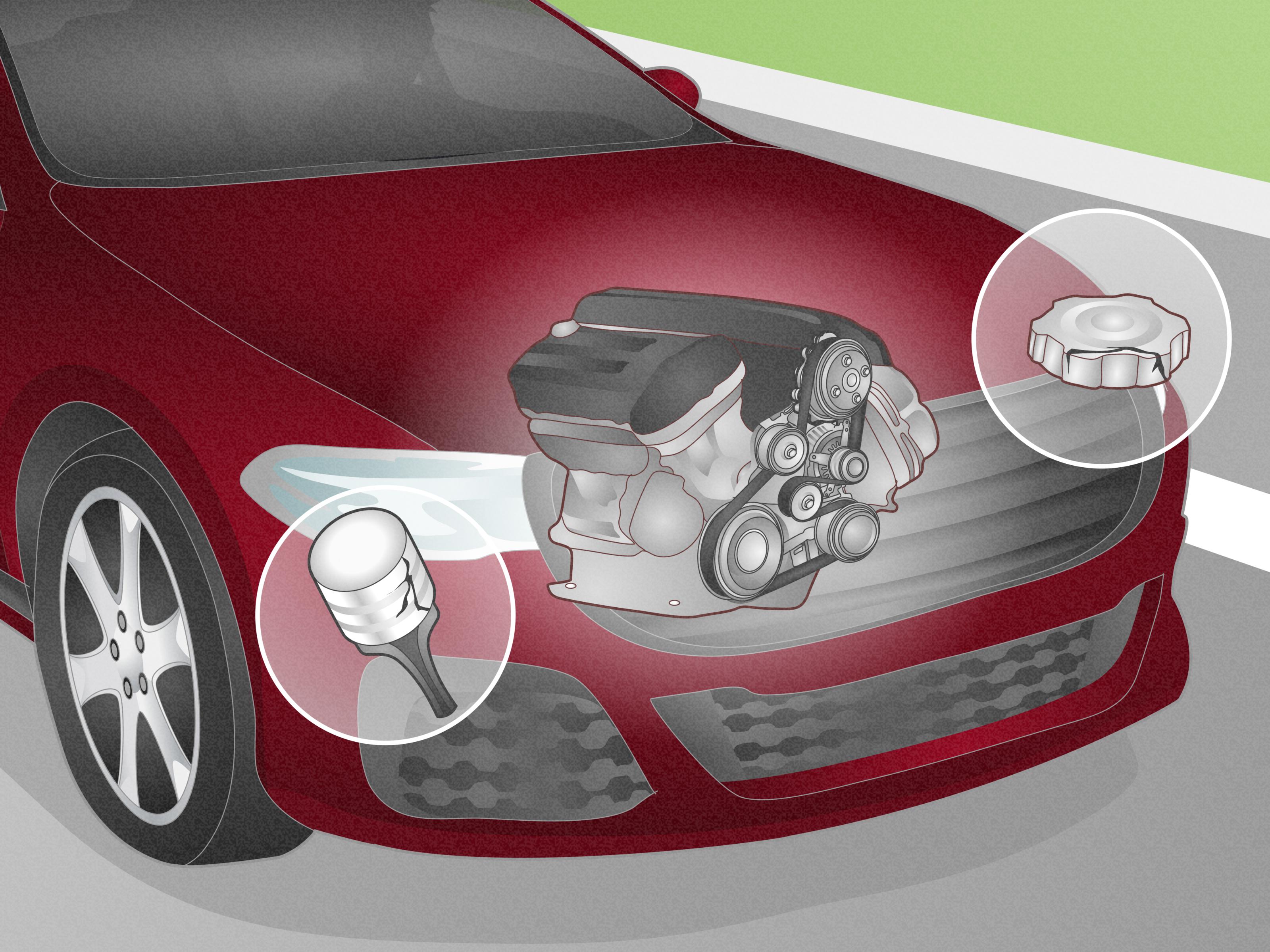
These are more serious signs. Thick white exhaust smoke, especially after warm-up, may suggest coolant entering the combustion chamber. Milky, coffee-colored oil on the dipstick or under the oil cap may indicate coolant mixing with engine oil.
Both symptoms can point toward a blown head gasket, cracked cylinder head, or other internal engine problem. Do not ignore them. This is the cooling-system equivalent of a fire alarm wearing tap shoes.
What Causes Low Coolant?
Leaking Radiator
The radiator cools hot coolant as air passes through its fins. Over time, corrosion, road debris, vibration, or old age can create leaks. A radiator leak may show up as wet spots, crusty residue, or coolant dripping near the front of the vehicle.
Cracked or Loose Hoses
Coolant hoses carry fluid between the engine, radiator, heater core, and reservoir. Rubber hoses can crack, swell, soften, or split with age. Hose clamps can loosen as well. A damaged hose is one of the more common and more affordable coolant leak repairsassuming you catch it before the engine overheats.
Bad Radiator Cap or Reservoir Cap
The cooling system needs pressure to raise the boiling point of coolant and move fluid properly. A weak cap may allow pressure to escape, coolant to boil, or fluid to overflow. It is a small part, but it can cause surprisingly dramatic symptoms.
Faulty Water Pump
The water pump circulates coolant through the engine. When it fails, coolant may leak from the pump seal or stop moving efficiently. Symptoms can include overheating, coolant near the front of the engine, whining noises, or temperature swings.
Stuck Thermostat
The thermostat regulates coolant flow based on engine temperature. If it sticks closed, coolant cannot circulate properly, and the engine can overheat quickly. If it sticks open, the engine may take too long to warm up. Either way, the cooling system is not doing its job smoothly.
Leaking Heater Core
The heater core is a small radiator-like component inside the dashboard area. If it leaks, you may notice a sweet smell inside the cabin, foggy windows, damp carpet, or poor heater performance. This repair can be labor-intensive because the part is often tucked deep behind the dash.
Blown Head Gasket
A head gasket seals the area between the engine block and cylinder head. If it fails, coolant can enter the combustion chamber or mix with engine oil. Signs may include overheating, white exhaust smoke, bubbling in the coolant reservoir, loss of power, or milky oil. This is one of the most serious causes of coolant loss.
Normal Maintenance Neglect
Coolant breaks down over time. Old coolant may lose corrosion protection, collect debris, or become contaminated. If the coolant system has not been flushed according to the manufacturer’s schedule, overheating and component wear become more likely.
How to Check Coolant Safely
Before checking coolant, park on level ground and let the engine cool completely. This is not optional. Hot coolant is pressurized and can cause serious burns.
- Open the hood after the engine has cooled.
- Find the coolant reservoir, usually a translucent plastic tank near the radiator.
- Look for the “low” and “full” marks on the side of the reservoir.
- If the level is below the “low” mark, coolant is low.
- Check around hoses, the radiator, reservoir, and water pump area for wet spots or colored residue.
- Use the coolant type recommended in your owner’s manual.
Some vehicles require checking coolant at the radiator, but many modern cars are checked at the reservoir. Again, your owner’s manual wins the argument.
How to Fix Low Coolant
Step 1: Top Off the Coolant Correctly
If the engine is cool and the reservoir is low, add the correct coolant to bring the level between the “low” and “full” marks. Many coolants are sold pre-mixed 50/50 with water, while others are concentrated and must be diluted with distilled water.
Do not overfill the reservoir. Coolant expands as it gets hot, and the extra space is there for a reason. Overfilling can cause overflow and make you think there is a leak when the system is simply pushing out excess fluid.
Step 2: Look for Obvious Leaks
After topping off, inspect the system. Look under the car after it has been parked. Check hoses for cracks, bulges, wetness, or crusty deposits. Look around the radiator, coolant reservoir, hose clamps, and water pump. A flashlight helps. So does patience. Dramatic detective music is optional.
Step 3: Replace Simple Failed Parts
If you find a cracked hose, loose clamp, damaged reservoir, or weak cap, those may be manageable repairs for experienced DIYers. Always use vehicle-specific parts and follow proper procedures for bleeding air from the system after repairs.
Air pockets can cause overheating even after coolant is refilled. Some vehicles have bleeder screws or specific refill procedures. Skipping this step can make the car act like the problem is still there because, technically, it is.
Step 4: Pressure Test the Cooling System
If the leak is not obvious, a cooling-system pressure test can help locate hidden leaks. A mechanic pressurizes the system while the engine is cool and checks where pressure drops or coolant escapes. This can reveal leaks from the radiator, hoses, water pump, heater core, reservoir, or gaskets.
Step 5: Flush Old or Contaminated Coolant
If the coolant is rusty, oily, sludgy, or overdue for service, a coolant flush may be needed. A flush removes old coolant and contaminants, then refills the system with fresh coolant. This helps restore heat transfer and corrosion protection.
However, flushing will not fix a leak by itself. Think of it like brushing your teeth. Good maintenance, yes. Replacement for fixing a cracked tooth? Absolutely not.
Step 6: Get Professional Help for Serious Symptoms
If you see white exhaust smoke, milky oil, repeated overheating, bubbling in the coolant reservoir, or unexplained coolant loss with no visible leak, have the vehicle inspected by a qualified mechanic. Internal leaks can damage the engine quickly and are not good candidates for guesswork.
Can You Drive With Low Coolant?
Driving with low coolant is risky. If the coolant is only slightly low and the engine temperature is normal, you may be able to top it off and drive carefully while monitoring the gauge. But if the temperature gauge rises, the warning light comes on, steam appears, or the reservoir is empty, do not keep driving.
An overheated engine can suffer major damage in a short time. Pull over safely, shut off the engine, let it cool, and call for roadside assistance if needed. A tow bill is annoying. An engine replacement bill is a financial jump scare.
How to Prevent Low Coolant Problems
- Check coolant level monthly when the engine is cold.
- Use the coolant type recommended by your vehicle manufacturer.
- Inspect hoses for cracks, swelling, or leaks.
- Replace coolant according to the maintenance schedule.
- Pay attention to smells, puddles, heater changes, and warning lights.
- Fix small leaks before they become big repairs.
Cooling-system care is not glamorous. Nobody brags at dinner about their perfectly maintained radiator cap. But small checks can prevent overheating, protect the engine, and save a lot of money.
Real-World Experiences: What Low Coolant Problems Usually Look Like
In real life, low coolant rarely announces itself with a neat little speech. It usually drops hints. The first hint might be a faint sweet smell after parking in the driveway. You sniff the air, wonder if someone nearby is making pancakes, and then forget about it. A week later, the temperature gauge creeps above normal during stop-and-go traffic. Then the heater starts blowing cool air at red lights. That combination is your car’s way of saying, “Please open the hood before I turn this commute into a roadside podcast.”
One common experience is the slow hose leak. The car runs fine most of the time, but every few weeks the coolant reservoir looks low. There may be no dramatic puddle because the leak only happens when the system is hot and pressurized. Coolant lands on hot parts and evaporates, leaving behind a crusty stain near a clamp or hose end. This is why a quick visual inspection can be so useful. A tiny dried trail can tell the whole story.
Another familiar scenario is the cracked reservoir. Plastic coolant tanks live in a hot engine bay for years, expanding, contracting, and slowly becoming brittle. A hairline crack may leak only when the engine warms up. Drivers often top off the coolant repeatedly without realizing the reservoir itself is the escape route. Replacing the reservoir is usually far cheaper than replacing an overheated engine, which is a sentence that should be printed on every garage wall.
Then there is the “I only drove a little farther” mistake. Many drivers see the temperature warning and continue because home is close, work is close, or the exit is close. Unfortunately, engines do not care about your schedule. Once overheating begins, damage can happen quickly. Even one severe overheating event can lead to warped components, head gasket failure, or long-term reliability problems. The safest move is boring but effective: pull over, shut it down, and let the engine cool.
People also learn the hard way that adding coolant is not the same as fixing coolant loss. Topping off is a temporary step. If the level drops again, there is a cause waiting to be found. It may be as simple as a cap, hose, or clamp. It may be a radiator, water pump, thermostat, or heater core. And sometimes, yes, it may be a head gasket. The sooner the cause is diagnosed, the better the odds of keeping the repair small.
A smart habit is to check coolant before long drives, especially before summer road trips or winter travel. Hot weather, mountain driving, towing, heavy traffic, and long highway runs all make the cooling system work harder. If the coolant is already low, those conditions can expose the weakness fast. Think of coolant as the engine’s hydration plan. You would not run a marathon without water; your engine should not cross three states with an empty reservoir.
The most practical lesson is simple: low coolant symptoms are early warnings, not background noise. A sweet smell, rising temperature gauge, weak heater, visible leak, or repeated top-off is worth attention. Catch the issue early, use the correct coolant, inspect the system carefully, and get professional help when symptoms point to internal damage. Your engine will reward you by continuing to do its main job: being expensive machinery that does not melt.
Conclusion
Low coolant may seem like a small issue, but it can quickly lead to overheating and serious engine damage if ignored. The key symptoms include a rising temperature gauge, dashboard warning lights, cold heater air, sweet smells, visible puddles, steam, and repeated coolant loss. Common causes include leaks from hoses, the radiator, water pump, reservoir, heater core, radiator cap, thermostat problems, old coolant, and in serious cases, head gasket failure.
The best fix starts with safety: let the engine cool, check the reservoir, use the correct coolant, inspect for leaks, and repair the actual cause. If symptoms are severe or mysterious, get the vehicle professionally diagnosed. A cooling system is much cheaper to maintain than an overheated engine is to rebuild.
Note: This article is for general vehicle maintenance education. Always follow your owner’s manual and consult a qualified mechanic for vehicle-specific diagnosis and repairs.