There is something oddly satisfying about a jade roller. It looks elegant, feels cool against the skin, and makes a bathroom counter look as if a tiny spa checked in for the weekend. But here is the tricky part: not every green facial roller sold as “jade” is actually jade. Some are authentic nephrite jade, some are jadeite, some are dyed stone, and some are basically pretty green impostors wearing a skincare costume.
If you have ever wondered whether your jade roller is authentic, how much a real one should cost, or whether the material actually matters, you are asking the right questions. A jade roller is not just a beauty accessory; it is also a small carved stone tool. That means its value depends on mineral type, craftsmanship, durability, hardware quality, and honest labeling.
This guide breaks down the real meaning of jade, what authentic jade rollers usually cost, how to check quality, and which red flags suggest your roller may be more “mystery mineral” than genuine jade. No gemology degree requiredjust curiosity, common sense, and maybe a flashlight.
What Is a Jade Roller?
A jade roller is a handheld facial massage tool with one or two rolling stone heads attached to a handle. Most designs include a larger roller for the cheeks, forehead, jawline, and neck, plus a smaller roller for the under-eye area and around the nose. The tool is used with gentle pressure to roll across the skin, usually after applying moisturizer, serum, or facial oil.
People use jade rollers to help reduce temporary puffiness, encourage a refreshed look, relax facial tension, and create a cooling sensation on the skin. The results are usually short-term, not magical. A roller may make your face look less puffy before school photos, Zoom meetings, or a dinner date, but it will not permanently sculpt cheekbones like a celebrity lighting crew.
The term “jade roller” is often used loosely in beauty marketing. Some products are made from genuine jade, while others are made from rose quartz, aventurine, serpentine, glass, or dyed stone. That does not automatically make those tools useless, but it does mean buyers should know what they are paying for.
What Counts as Authentic Jade?
Authentic jade usually refers to one of two gem materials: jadeite or nephrite. Both are real jade, but they are not the same mineral. Jadeite is generally rarer and can be more valuable, especially when it has vivid green color, strong translucency, and fine texture. Nephrite is also genuine jade and is often tougher, with a waxier, softer-looking appearance. Many jade rollers on the market are more likely to be nephrite than high-grade jadeite because nephrite is usually more affordable for everyday tools.
Jadeite vs. Nephrite
Jadeite is the premium name most people associate with fine jade jewelry. It can appear in green, lavender, white, yellow, black, and other shades. The most prized jadeite has rich, even green color and a glowing translucency. That type of jadeite is not commonly used in low-cost beauty rollers because the material is too valuable.
Nephrite, on the other hand, is more common in functional jade items. It can range from creamy white to deep green, gray-green, brownish green, or blackish green. A genuine nephrite jade roller can be beautiful, durable, and practical without costing a fortune. For skincare tools, nephrite is often the more realistic authentic jade option.
Common Jade Roller Impostors
Many inexpensive “jade” rollers are made from other green stones. Aventurine is one common substitute. It is attractive, usually sparkly or slightly glittery, and often sold in beauty tools. Serpentine is another material that can resemble jade but is not true jade. Dyed marble, glass, and composite materials may also appear in budget rollers.
These alternatives are not always bad. A cool, smooth stone roller can still feel pleasant on the skin. The problem begins when a seller charges jade prices for non-jade materials or uses vague phrases like “jade-like,” “natural green stone,” or “healing jade crystal” without explaining what the stone actually is.
How Much Should an Authentic Jade Roller Cost?
Cost is one of the easiest clues, although it is not proof by itself. A very cheap roller can still be functional, but it is unlikely to contain high-quality jadeite. In general, jade roller pricing falls into a few broad categories.
Budget Rollers: $5 to $15
At this price, expect basic construction and uncertain materials. Some rollers may be made from aventurine, serpentine, dyed stone, or low-grade nephrite. The hardware may squeak, loosen quickly, or bend with pressure. If the listing claims “100% premium natural jadeite” at this price, your skepticism should wake up, stretch, and put on running shoes.
Mid-Range Rollers: $15 to $45
This is where many decent facial rollers live. You may find genuine nephrite jade, better hardware, smoother rolling action, and more careful finishing. A trustworthy seller should clearly describe the material, avoid exaggerated medical claims, and show close-up photos. This range is often reasonable for everyday skincare use.
Premium Rollers: $45 to $100+
Premium jade rollers may use higher-quality nephrite, better carving, stronger metal hardware, improved packaging, or brand-backed sourcing. If the roller is made with verified jadeite, the price can climb quickly. However, expensive does not always mean authentic. Sometimes you are paying for branding, influencer sparkle, or a box that looks like it was designed by a luxury candle company.
How to Check If Your Jade Roller Is Authentic
No home test can guarantee jade authenticity with the same confidence as a gemological lab. Still, a few practical checks can help you separate likely genuine jade from suspicious alternatives.
1. Look at the Color
Real jade often has natural variation. It may show cloudy areas, veins, tiny mineral patterns, or uneven color distribution. Perfectly uniform neon green is suspicious, especially if the price was low. Genuine jade can be vivid, but low-cost rollers with a bright candy-green shade may be dyed or made from glass.
Do not reject a roller just because it is pale. Real nephrite can be light green, gray-green, creamy, or muted. In fact, a softer natural color may be more believable than a roller that looks like it was dipped in radioactive lime syrup.
2. Check the Temperature
Jade and many natural stones feel cool at first touch. Hold the roller against your cheek or wrist. It should feel cool, then gradually warm from your skin. Glass can also feel cool, so this test is not conclusive, but plastic usually warms quickly and feels lighter.
3. Examine the Texture
Authentic jade should feel smooth and dense, not chalky or overly lightweight. The surface should be polished without rough edges. If the stone feels gritty, flakes at the edges, or has paint-like color sitting on the surface, that is a red flag.
4. Notice the Weight
Real stone rollers usually feel heavier than plastic imitations. Jade has a satisfying density, though size and hardware affect total weight. If the roller feels hollow or toy-like, the material may not be genuine stone.
5. Inspect for Dye
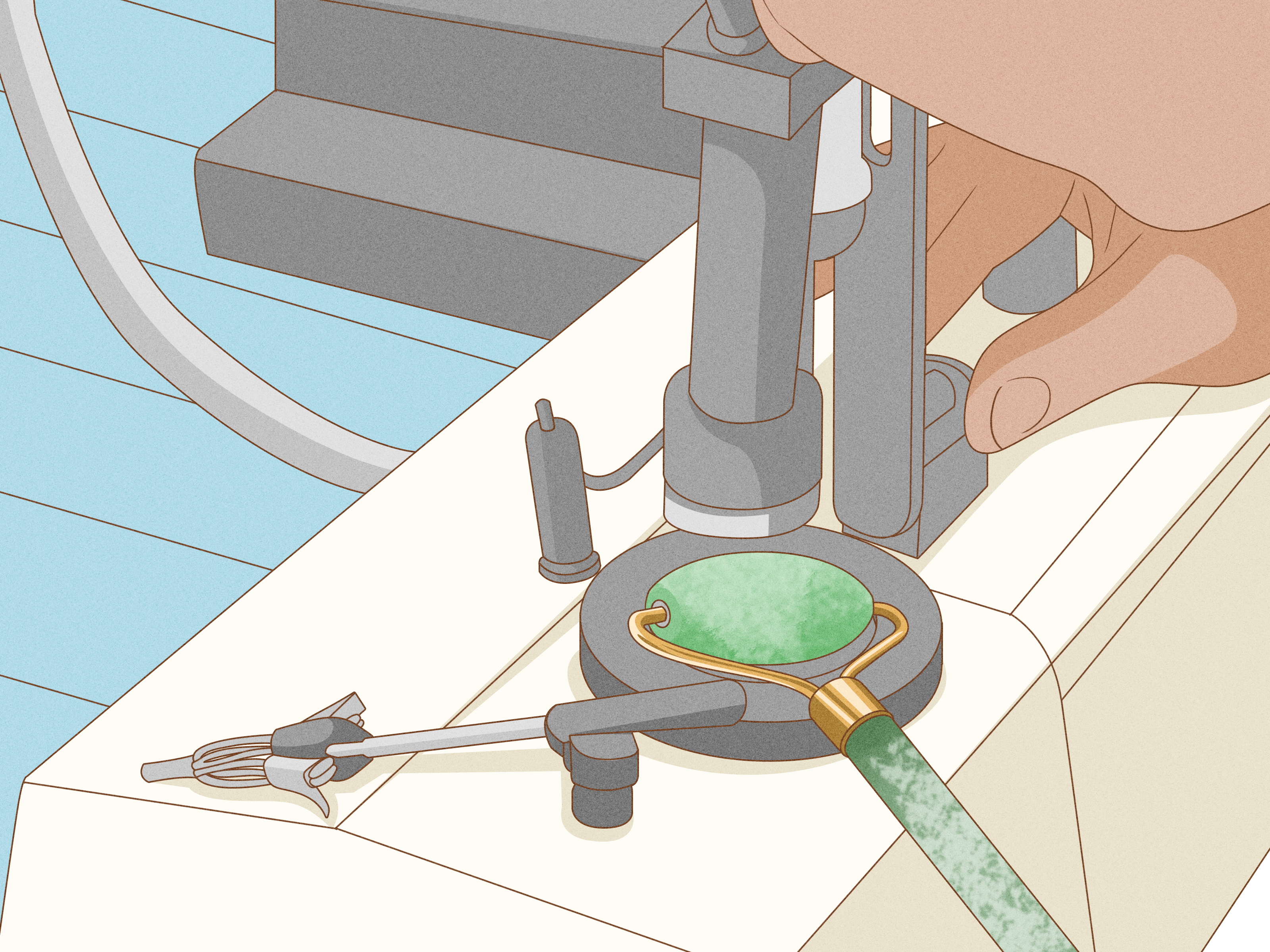
Check around drilled holes, metal brackets, and seams. Dye can collect in small cracks or near hardware. If you see unusually dark green residue, uneven staining, or color rubbing off after cleaning, your roller may be dyed. Avoid harsh scratch tests; damaging the roller will not make you a better detective, only a sadder one.
6. Read the Product Description Carefully
Good sellers use specific language. Look for “nephrite jade” or “jadeite jade” rather than only “jade stone.” Be cautious with listings that rely on vague wellness claims but never identify the mineral. Also watch for “natural crystal jade,” which can be marketing fog. Clear labeling matters because genuine gemstone treatments and substitutions should be disclosed honestly.
7. Ask for Documentation
For an expensive roller, ask whether the seller provides a gemological certificate or material verification. A certificate is more common for jewelry than beauty tools, but premium jade products should have some sourcing transparency. For a $12 roller, certification is unrealistic. For a $120 roller, it is a fair question.
Quality Check: What Makes a Jade Roller Good?
Authenticity is only one part of quality. A genuine jade roller can still be poorly made. Before buying or keeping one, check these details.
Smooth Rolling Action
The roller should glide without dragging, squeaking loudly, or wobbling like a shopping cart with one dramatic wheel. A little sound is normal, but rough motion makes the tool less pleasant and may tug the skin.
Secure Hardware
The metal frame should hold the stone firmly. Loose brackets, bent arms, or rollers that pop out easily suggest poor construction. Stainless steel or sturdy metal hardware is preferable, especially if you plan to use and clean the tool frequently.
Polished Edges
Run your finger gently over the stone edges. They should feel rounded and smooth. Sharp edges can irritate the skin, especially around delicate areas like under the eyes.
Natural Variation
Small color changes and internal patterns are normal in natural stone. Cracks, however, are different. Avoid rollers with deep fractures, chips, or unstable-looking seams. A natural vein is fine; a split that looks ready to become two rollers is not.
Does Jade Material Improve Skincare Results?
The skincare benefit of a jade roller mostly comes from massage, cooling, and gentle movementnot from mystical mineral powers. A smooth roller can help temporarily reduce puffiness by encouraging fluid movement. It can also make skincare application feel more relaxing and may help spread products evenly.
Jade is popular because it stays cool, looks elegant, and has cultural history. However, rose quartz, stainless steel, and other smooth materials can offer similar rolling benefits. The difference is more about feel, durability, hygiene, and personal preference than dramatic skin transformation.
If a seller claims that jade will detox your body, erase wrinkles overnight, cure acne, or rebalance every cell while making your ex regret everything, step away from the checkout button. A jade roller can be a lovely tool. It is not a licensed dermatologist in gemstone form.
How to Use a Jade Roller Properly
Start with clean skin. Apply a serum, moisturizer, or facial oil to reduce friction. Use light pressure and roll outward from the center of the face. For the cheeks, roll from the nose toward the ears. For the forehead, roll upward and outward. For the jawline, roll from the chin toward the ears. On the neck, use gentle downward strokes if you are focusing on relaxation, or follow your preferred lymphatic massage routine with care.
Do not press hard. More pressure does not mean better results. It only increases the chance of irritation. Most people need only a few minutes. The goal is a refreshed, relaxed feelingnot a face workout that leaves you wondering whether your cheekbones need a union representative.
How to Clean and Store Your Jade Roller
Clean your roller after each use, especially if it touches skincare products. Wipe it with a soft damp cloth and mild soap, then dry it completely. Some experts recommend using rubbing alcohol for sanitation, but check the hardware first because repeated exposure may affect certain finishes. Avoid soaking the roller in water, as moisture can weaken glue or damage metal parts.
Store the roller in a clean, dry place. If you like a cooler sensation, keep it in the refrigerator, not the freezer. Extreme cold can make the stone uncomfortable and may stress materials over time. Also, do not share your roller unless it is thoroughly cleaned. Skincare tools are personal items, not community snacks.
Red Flags When Buying a Jade Roller
Watch out for listings that promise permanent face slimming, instant wrinkle removal, or medical-level results. Be careful with suspiciously low prices paired with luxury claims. Poor grammar, stolen product photos, vague material descriptions, and no return policy are also warning signs.
Another red flag is the phrase “real jade crystal” without specifying jadeite or nephrite. Jade is not just a color; it is a material category. If a seller cannot name the stone, they may not know what they are sellingor they may know exactly what they are avoiding saying.
Should You Buy an Authentic Jade Roller?
If you love the tradition, look, and feel of jade, an authentic jade roller can be worth it. Choose nephrite jade for a practical balance of authenticity and cost. Look for honest labeling, smooth construction, sturdy hardware, and natural stone variation. If you mainly want a cooling facial massage tool, you do not have to obsess over jadeite. A well-made roller from another safe stone or stainless steel may serve you just as well.
The best jade roller is not necessarily the most expensive one. It is the one that is clearly labeled, comfortable to use, easy to clean, and realistic in its claims. Beauty tools should make your routine feel better, not turn your shopping experience into a mineral fraud investigation.
Real-Life Experience: What It Feels Like to Check and Use a Jade Roller
The first time you compare jade rollers side by side, the differences can be surprisingly obvious. A cheap roller may look attractive in photos, but in hand it can feel light, noisy, and slightly flimsy. The stone may be too bright, too uniform, or almost plastic-looking. The metal may squeak with every roll, which is not exactly the peaceful spa soundtrack anyone ordered.
A better-quality roller usually feels more balanced. The stone has a natural coolness and a denser weight. The color may not be perfect, but that is part of the charm. You might see soft cloudy areas, pale green sections, or darker natural streaks. Instead of looking like a cartoon version of jade, it looks like something formed in the earth, not printed by a beauty trend machine.
In daily use, the most noticeable benefit is the cooling massage. Rolling under the eyes in the morning can feel soothing, especially after too little sleep or too much salty food. The effect is not permanent, but it can make the face look a bit calmer and more awake. Think of it as pressing the “refresh” button, not installing a new operating system.
One useful habit is to test the roller before applying skincare. Roll it gently on the inside of your wrist. If it drags, squeaks heavily, or feels rough, it may not be ideal for the face. If it glides smoothly, then apply a serum or moisturizer and use light strokes. The product helps the roller move without pulling the skin.
Another experience many people overlook is cleaning. A jade roller that looks glamorous on day one can become a sticky little bacteria taxi if it is never washed. After each use, wipe it carefully, especially around the brackets where product can collect. Dry it before storing. This step takes less than a minute and makes the tool feel fresh every time.
When buying online, customer photos are often more useful than polished brand images. Look at real reviews and zoom in on the stone. Does every roller look exactly the same? That may suggest dyed or artificial material. Do reviewers mention broken handles, loose metal, or color rubbing off? Those are signs to avoid. A few natural differences between rollers are normal and often reassuring.
If you already own a roller and suspect it may not be real jade, do not panic. It may still be safe and pleasant if the surface is smooth, the material does not shed dye, and you clean it properly. The bigger issue is whether you paid a premium price for a mislabeled product. If the seller advertised genuine jadeite or certified jade and the roller seems questionable, contact customer service and ask for material details.
Ultimately, the experience of using a jade roller should be simple: cool stone, gentle pressure, clean skin, and a few quiet minutes. Authentic jade adds beauty and value, but the best part of the ritual is consistency. A real jade roller sitting untouched in a drawer is less useful than a modest, well-made roller used with care. Your skin does not read price tags, but it definitely notices rough edges, dirty tools, and overly aggressive rolling.
Conclusion
So, is your jade roller authentic? The answer depends on material, labeling, price, and quality details. Real jade usually means jadeite or nephrite, and for most facial rollers, nephrite is the more realistic authentic option. High-grade jadeite is rare and expensive, so be suspicious of bargain products making luxury claims.
To check your roller, look for natural color variation, cool dense stone, smooth polish, sturdy hardware, and clear product descriptions. Avoid tools with dye residue, sharp edges, loose frames, or miracle skincare promises. A jade roller can be a relaxing and useful part of your routine, but it should be purchased with clear eyesnot just because the packaging whispers “ancient beauty secret” in a fancy font.
Authenticity matters most when you are paying for authenticity. For everyday skincare, choose a roller that is safe, well-made, easy to clean, and enjoyable to use. That is the real glow-up.