“`
Few tiny disasters feel as dramatic as spotting a fresh scratch across your watch glass. One minute your timepiece is quietly doing its job; the next, it looks like it lost a sword fight with your desk. The good news? Some watch glass scratches can be improved safely at home. The less-good news? Not every watch crystal wants your DIY enthusiasm, and some will punish overconfidence faster than a cat near a bath.
This guide explains how to remove scratches from watch glass safely and easily, starting with the most important step: identifying what kind of crystal you have. Watch glass is commonly called a watch crystal, and it may be made from acrylic, mineral glass, sapphire crystal, or a coated smart-watch display. Each material reacts differently to polishing, toothpaste, abrasives, and repair compounds. Treating them all the same is how innocent watches become cautionary tales.
Below, you will learn how to inspect scratches, choose the right method, avoid damaging coatings, and decide when a professional watchmaker is the smarter choice. We will keep things practical, friendly, and just a little funnybecause your watch has suffered enough.
First: Is It Really a Scratch?
Before you reach for polish, make sure the mark is actually a scratch. Watch crystals often collect skin oil, soap film, sunscreen, dust, pocket lint, and mystery grime from that one drawer everyone pretends is organized. These can look like scratches under harsh lighting.
Do a quick cleaning test
Use a clean microfiber cloth and gently wipe the glass in small circles. If the mark fades or disappears, congratulations: your watch was not scratched, it was just being dramatic. If the mark remains, slightly dampen the cloth with water and wipe again. Avoid soaking the watch, especially if it is vintage, has a cracked crystal, has a loose crown, or has not had its water resistance checked recently.
For smartwatches such as Apple Watch, Galaxy Watch, Pixel Watch, or similar devices, avoid aggressive cleaners and abrasive materials. Many digital screens have protective or oleophobic coatings that can be worn down by harsh rubbing. A soft, lint-free cloth is the safest starting point.
Know Your Watch Glass Type Before You Polish
The safest way to remove scratches from watch glass depends almost entirely on the material. This is the fork in the road. Choose correctly, and your watch may look much better. Choose badly, and you may turn one scratch into a cloudy circle of regret.
Acrylic crystal: easiest to polish
Acrylic is a type of plastic often used on vintage watches, budget watches, and certain heritage-inspired models. It scratches more easily than mineral or sapphire, but it is also the most forgiving. Light surface scratches on acrylic can often be polished out with a plastic polish such as PolyWatch, a similar acrylic polishing compound, or a very mild plastic-safe polishing product.
Acrylic is common on many older watches because it is light, warm-looking, impact-resistant, and relatively easy to restore. If your watch has a domed crystal that feels slightly softer or warmer than glass, it may be acrylic. Vintage collectors often love acrylic because it gives a watch charm, even if it picks up tiny marks like it is collecting souvenirs.
Mineral glass: harder, but not easy to polish
Mineral glass is common on affordable and mid-range watches. It is harder than acrylic and more scratch-resistant, but once scratched, it is usually difficult to polish cleanly at home. Light scuffs may become less visible with careful cleaning, but true scratches in mineral glass often require crystal replacement rather than polishing.
This surprises many people because mineral glass sounds like it should be easy to fix. Unfortunately, it behaves more like regular glass: once the surface is cut, smoothing it evenly without distortion takes skill, equipment, and patience. In many cases, replacing a scratched mineral crystal is faster, cleaner, and more affordable than trying to polish it into submission.
Sapphire crystal: extremely scratch-resistant, difficult to fix
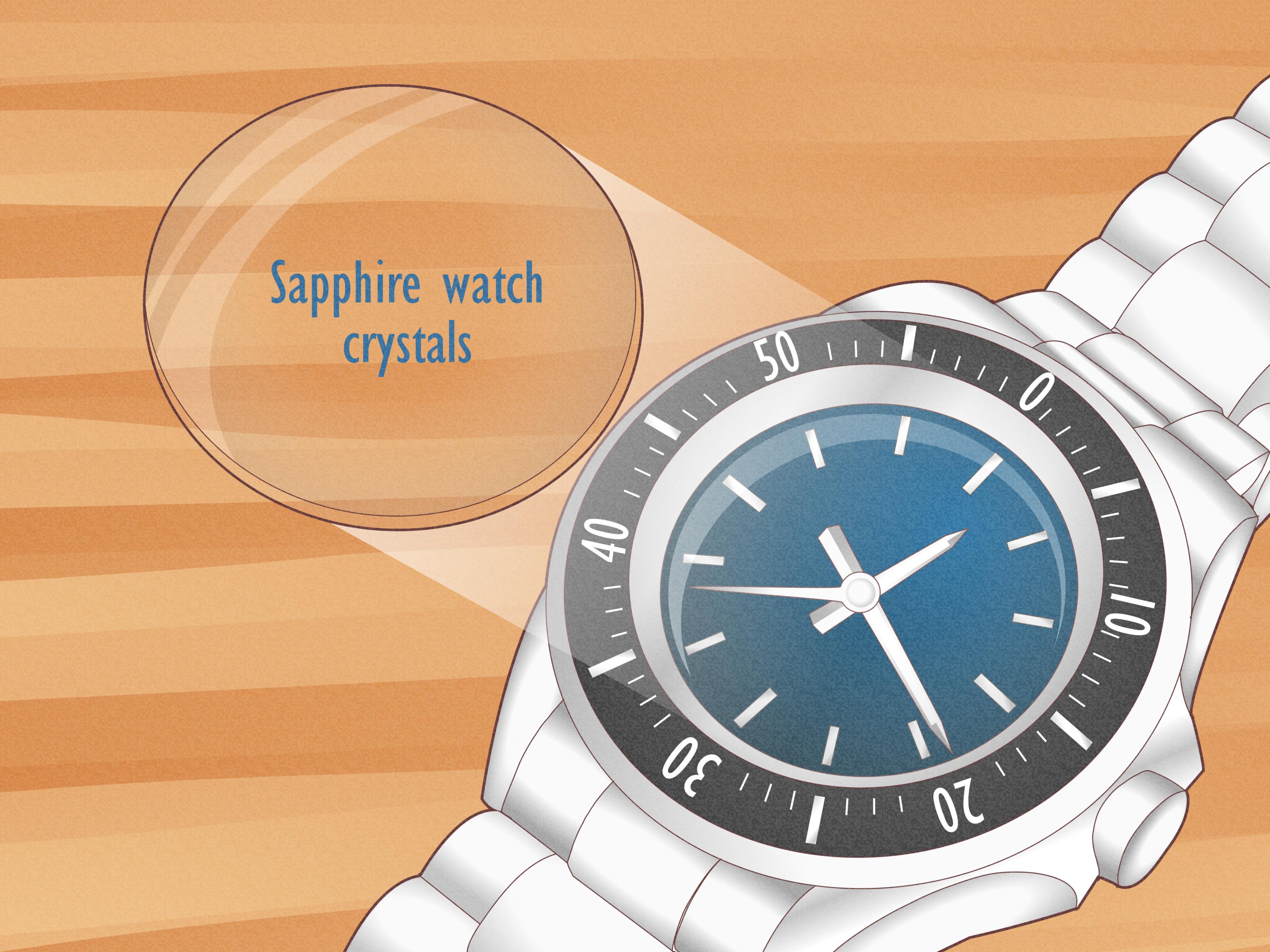
Sapphire crystal is found on many luxury watches, premium tool watches, and higher-end everyday watches. It is extremely hard and highly scratch-resistant. If your sapphire crystal is genuinely scratched, the mark may have come from diamond jewelry, hard abrasive grit, ceramic, masonry, or another very hard surface.
Because sapphire is so hard, removing scratches usually requires diamond polishing compounds and controlled technique. That is not a casual “Saturday afternoon while eating chips” project. Sapphire crystals may also have anti-reflective coating on the outside. Polishing can remove or unevenly damage that coating, leaving a shiny scar that looks worse than the original scratch.
Smartwatch glass: treat with extra caution
Smartwatch displays are a special case. They may use strengthened glass, sapphire, or other protective materials, but they also rely on coatings, sensors, seals, and touch sensitivity. Abrasive polishing can damage the surface, reduce clarity, affect touch feel, or compromise water resistance. For smartwatches, cleaning and screen protectors are usually safer than polishing. Deep scratches should be evaluated through the manufacturer or a qualified repair service.
Tools You May Need
For safe watch glass scratch removal, keep your toolkit simple. You do not need a laboratory, a monk’s patience, or a tool chest that requires its own mortgage.
- Clean microfiber cloths
- Painter’s tape or low-tack masking tape
- Acrylic-safe watch crystal polish for acrylic crystals
- Cotton pads or soft cotton cloth
- A small bowl of clean water
- A soft brush for cleaning around the case, used gently
- A bright lamp for inspection
- A magnifying glass or phone camera zoom
Do not start with toothpaste, baking soda, metal polish, sandpaper, rotary tools, or mystery compounds from the garage. Toothpaste is often recommended online, but many formulas vary in abrasiveness. Some can cloud plastic or damage coatings. Baking soda paste can also behave unpredictably. Your watch glass deserves better than dental drama.
How to Remove Scratches from Acrylic Watch Glass
If your watch has acrylic crystal, you have the best chance of safe at-home improvement. This method works for light surface scratches and shallow scuffs. It will not fix cracks, chips, deep gouges, or damage that reaches the edge of the crystal.
Step 1: Clean the watch glass
Wipe the crystal with a microfiber cloth. Remove dust and grit before polishing. Tiny particles can act like sandpaper, and nobody invited them to the repair party.
Step 2: Tape around the crystal
Use painter’s tape to protect the bezel and case. This is especially important if the watch has a polished bezel, plated finish, painted markings, rotating dive bezel, or vintage case. Leave only the acrylic crystal exposed.
Step 3: Apply a small amount of acrylic polish
Place a pea-sized amount of acrylic watch crystal polish on the scratched area or on a soft cloth. More polish does not mean better results. It just means more cleanup and a watch that smells like a tiny workshop.
Step 4: Polish with firm, controlled pressure
Rub the polish over the scratch using small circular motions. Apply moderate pressure, but do not press so hard that the crystal flexes. Work for two to three minutes, then stop and inspect. The goal is to gradually level the surface, not attack it like you are trying to erase your browser history.
Step 5: Wipe and repeat if needed
Use a clean microfiber cloth to remove excess polish. Check the crystal under bright light from different angles. If the scratch is still visible but improved, repeat the process. For deeper acrylic scratches, several short polishing sessions are better than one aggressive session.
Step 6: Remove tape and clean gently
Once the scratch is reduced, remove the tape and wipe the watch with a clean cloth. Avoid rinsing the watch under running water unless you are certain it is water-resistant and the crown is fully secured.
Can You Remove Scratches from Mineral Watch Glass?
Mineral watch glass is where expectations need a seatbelt. Light marks may sometimes look better after cleaning, but actual scratches are difficult to remove safely at home. Because mineral glass is harder than acrylic, standard plastic polish will not do much. Stronger abrasives may create haze, uneven shine, distortion, or a larger polished patch that catches light awkwardly.
For a low-cost watch, replacing the mineral crystal may be the most practical solution. Many watch repair shops can replace mineral glass for a reasonable price, depending on the size, shape, gasket, water resistance, and brand. For watches with sentimental value, replacement is usually worth it because the result is clean and predictable.
If the scratch is tiny and does not bother you during normal wear, leaving it alone is also a valid option. Watches are tools, accessories, and life companions. A small scratch may simply mean the watch has left the house and participated in society.
Can You Polish Scratches Out of Sapphire Crystal?
Sapphire crystal is wonderfully resistant to scratches, but that same hardness makes repairs difficult. A real scratch in sapphire usually cannot be removed with ordinary watch polish. Diamond paste can polish sapphire, but it requires the right grit progression, flat pressure, protection for the case, and awareness of coatings.
The biggest risk is anti-reflective coating. Some sapphire crystals have coating on the underside only, which is protected. Others have coating on the outside surface. If you polish an externally coated crystal, you may remove part of that coating and create a patchy glare. In plain English: you tried to remove one line and created a weird glowing fingerprint. Not ideal.
For sapphire crystal, the safest recommendation is simple: clean it, inspect it, and consult a watchmaker if the scratch is significant. If the crystal is chipped or cracked, replace it. A hard impact strong enough to damage sapphire may also affect the movement, hands, dial, or seals, especially on a mechanical watch.
What About Toothpaste?
Toothpaste is the folk remedy of the scratch-removal universe. It appears in almost every DIY discussion, usually with the confidence of someone who has never ruined a crystal. The issue is that toothpaste formulas vary. Some are mildly abrasive, some include whitening agents, and some contain ingredients that are not ideal for plastics, coatings, or watch finishes.
On acrylic, toothpaste may slightly reduce very fine haze in some cases, but a purpose-made plastic polish is safer and more consistent. On mineral glass and sapphire, toothpaste is unlikely to remove true scratches. On smartwatches or coated displays, it may damage the coating. In short: toothpaste belongs on teeth. Your watch deserves a product that knows what a watch is.
When to Stop and See a Watchmaker
DIY polishing is useful only within limits. Stop and take the watch to a professional if you notice any of the following:
- The crystal is cracked, chipped, or loose.
- The scratch is deep enough to catch your fingernail.
- The watch is valuable, vintage, rare, or collectible.
- The crystal is mineral glass or sapphire and the scratch is obvious.
- The watch has an external anti-reflective coating.
- The watch is a smartwatch with touch-sensitive glass.
- You see condensation under the crystal.
- The watch recently suffered a hard impact.
A good watchmaker can tell whether polishing, crystal replacement, gasket replacement, pressure testing, or full inspection makes sense. Professional help is especially important for dive watches. Water resistance is not permanent, and opening or replacing a crystal can affect the seals. A pressure test after repair is not fancy extra seasoning; it is part of doing the job correctly.
How to Prevent Future Watch Glass Scratches
Prevention is less exciting than repair, but it is much cheaper and usually involves fewer nervous internet searches at midnight.
Store watches separately
Do not toss watches into the same drawer with keys, coins, bracelets, or other watches. That is not storage; that is a tiny gladiator arena. Use a watch box, pouch, soft cloth roll, or separate compartment.
Be careful around hard surfaces
Door frames, brick walls, gym equipment, stone countertops, and metal desk edges are common scratch villains. You do not need to live in fear, but a little wrist awareness helps.
Use a screen protector when it makes sense
For smartwatches and daily beaters, a thin screen protector can take the abuse instead of the glass. It may slightly change the appearance, but so does a scratch shaped like a lightning bolt across your display.
Choose the right crystal for your lifestyle
If you want maximum scratch resistance, sapphire is usually the best choice. If you enjoy vintage charm and easy polishing, acrylic has its appeal. If you want affordability and everyday durability, mineral glass is common, but know that replacement may be the repair path if it gets scratched.
Common Mistakes to Avoid
The fastest way to make a scratched watch worse is to rush. Avoid these common mistakes:
- Polishing before identifying the crystal material
- Using toothpaste on coated smartwatch glass
- Using metal polish on acrylic or sapphire
- Skipping tape and accidentally polishing the bezel
- Using a rotary tool without experience
- Pressing too hard and overheating acrylic
- Trying to polish cracks instead of replacing the crystal
- Assuming water resistance is still intact after impact
Think of watch crystal repair like ironing a shirt: gentle, controlled effort can help, but too much heat and pressure can turn “better” into “well, now we have a new problem.”
Experience Notes: Real-World Lessons from Fixing Watch Glass Scratches
After handling scratched watches in everyday situations, one lesson becomes obvious: the scratch is rarely the only issue. The real challenge is patience. Most people see a line on the glass and immediately want it gone. That is understandable. A watch sits right on your wrist, so the scratch keeps waving at you like a tiny annoying flag. But the safest repair usually begins with doing less, not more.
For example, light scratches on an acrylic crystal can look terrible under a desk lamp but become almost invisible after a careful polish. The best results usually come from short polishing rounds. Two or three minutes, wipe, inspect, repeat. When someone tries to finish the entire job in one aggressive session, the crystal may develop uneven shine or heat haze. Acrylic is forgiving, but it is not magical. Treat it like soft plastic, not like a kitchen tile.
Mineral glass creates a different experience. Many owners try a mild polish and feel disappointed when nothing happens. That does not mean they did it wrong. It means the material is doing what mineral glass does. It resists light wear better than acrylic, but it does not politely buff back to perfection once scratched. On inexpensive quartz watches, replacing the crystal can feel almost silly at firstuntil the watch comes back looking new. Then it feels brilliant. Sometimes the easiest scratch removal method is not removal at all; it is replacement.
Sapphire crystal teaches humility. Because sapphire is so scratch-resistant, a visible scratch often means the watch met something unusually hard. People sometimes mistake marks on anti-reflective coating for scratches in the sapphire itself. That distinction matters. If the coating is scratched, polishing may remove more coating and create a larger visible area. A professional inspection can save a luxury watch from an amateur “improvement” that hurts resale value.
Smartwatches add another practical lesson: function matters as much as appearance. A traditional acrylic crystal can be polished because it is mostly a protective window. A smartwatch screen is also an interface. It responds to touch, protects sensors, and may rely on surface coatings. Even when a DIY trick appears to improve the look, it may affect feel, clarity, or durability. For smartwatches, a screen protector after cleaning is often the most sensible solution. It hides minor marks, prevents new ones, and avoids risky polishing.
Another real-world tip is to inspect scratches in normal lighting before making decisions. Bright LED flashlights exaggerate every tiny mark. A scratch that looks terrifying under magnification may be invisible on the wrist. Watches are meant to be worn, not judged by forensic lighting. If a scratch does not affect readability and the watch is valuable or collectible, leaving it alone may be the wisest choice.
Finally, remember that scratches tell you something about your habits. If the damage is near the outer edge, you may be bumping door frames or desk corners. If the center of the crystal is marked, your watch may be rubbing against bracelets, laptop edges, gym equipment, or tools. Fixing the scratch is nice; preventing the next one is better. A watch box, a microfiber pouch, and a little wrist awareness can save you from repeating the same repair every few months.
Conclusion: Safe Scratch Removal Starts with Knowing the Crystal
Learning how to remove scratches from watch glass safely and easily begins with one simple rule: identify the crystal before doing anything abrasive. Acrylic watch glass is usually the best candidate for at-home polishing. Mineral glass is often better replaced than polished. Sapphire crystal is highly scratch-resistant but difficult to repair without professional tools, especially if it has external coating. Smartwatch screens should be treated with extra care because coatings, sensors, and touch performance matter.
If the scratch is light and the crystal is acrylic, a careful polish with painter’s tape, microfiber cloth, and acrylic-safe compound can make a big difference. If the glass is cracked, chipped, deeply scratched, coated, or valuable, a watchmaker is the safest path. Your watch does not need heroic DIY surgery. It needs the right method, a gentle hand, and maybe a little less time in the drawer with your keys.
Note: This article is for general watch-care education. Always follow your watch manufacturer’s care instructions, and consult a qualified watchmaker for valuable, vintage, water-resistant, cracked, coated, or smart-watch displays.
“`