That tiny pop in your back can feel ridiculously satisfyinglike your spine just hit the refresh button. But before you twist yourself into a human pretzel on the living room rug, let’s get one thing straight: the goal is not to force your back to crack. The goal is to move safely, release tension, improve mobility, and let any harmless pops happen naturally.
When people search for how to crack your back, they usually want relief from stiffness, pressure, or that “I have been sitting like a shrimp at my laptop” feeling. The sound itself often comes from gas moving in the fluid around a joint, a process commonly called cavitation. It is usually not dangerous when it happens during gentle movement and is not accompanied by pain. However, cracking your back aggressively, asking a friend to yank you around, or forcing your spine past its comfortable range can irritate muscles, joints, ligaments, or nerves. Your back is not a glow stick. Please do not snap it for dramatic effect.
This guide explains safe, simple at-home exercises that may help your back feel looser. These movements focus on spinal mobility, hip flexibility, gentle rotation, and core support. If your back cracks naturally during one of them, fine. If it does not, also fine. Silence is not failure; your spine is simply not in the mood to perform today.
Before You Start: Safety Rules for Back Cracking at Home
Back cracking should never feel sharp, electric, pinching, or painful. A comfortable stretch is acceptable. A “something is very wrong” sensation is not. Stop immediately if you feel pain, dizziness, numbness, weakness, tingling down the legs, or worsening symptoms.
You should also avoid trying to crack your back at home if you recently had a fall, car accident, surgery, fracture, severe osteoporosis, spinal instability, unexplained weight loss, fever, cancer history, or new bladder or bowel problems. If back pain travels below the knee, causes leg weakness, wakes you at night, or does not improve after several days of home care, it is time to talk with a healthcare professional.
Use this simple warm-up first
Spend three to five minutes walking around the room, marching in place, or doing light shoulder rolls. Warm muscles move better than cold muscles. Think of your back like a tortilla: warm it first, and it bends; skip the warm-up, and things may crack in the wrong way.
How to Crack Your Back Safely: 10 Exercises to Try at Home
1. Cat-Cow Stretch
Best for: Gentle spinal mobility, morning stiffness, and warming up the back.
Start on your hands and knees with your wrists under your shoulders and knees under your hips. Inhale as you slowly drop your belly toward the floor, lift your chest, and tilt your tailbone upward. This is the “cow” position. Exhale as you round your spine upward, tuck your chin slightly, and draw your belly in. This is the “cat” position.
Move slowly for 8 to 12 repetitions. You may hear a small pop along the mid-back, but do not chase it. Let the movement be smooth and controlled. Cat-cow is useful because it moves the spine through flexion and extension without loading it heavily.
2. Child’s Pose Reach
Best for: Lower back relaxation, shoulder tension, and gentle decompression.
Kneel on the floor, sit your hips back toward your heels, and stretch your arms forward. Let your chest relax toward the floor. Breathe deeply for 20 to 30 seconds. To target one side, walk both hands slightly to the left and breathe into the right side of your ribs. Then switch sides.
This position may help release tightness through the lower back, lats, and upper back. If your hips do not reach your heels, place a pillow between your thighs and calves. Comfort beats “perfect form” every time.
3. Supine Spinal Twist
Best for: Lower back stiffness, gentle rotation, and post-sitting tension.
Lie on your back with your knees bent and feet flat. Extend your arms out to the sides like a letter T. Slowly drop both knees to one side while keeping your shoulders relaxed on the floor. Hold for 15 to 30 seconds, then return to center and repeat on the other side.
This is one of the most popular back cracking exercises because the spine may naturally release during the twist. Keep the movement mild. Your knees do not need to touch the floor. If they hover like undecided helicopters, that is perfectly acceptable.
4. Knee-to-Chest Stretch
Best for: Lower back tightness, glute tension, and gentle lumbar flexion.
Lie on your back with both knees bent. Bring one knee toward your chest and hold behind the thigh or over the shin. Keep the opposite foot on the floor, or straighten the opposite leg if that feels comfortable. Hold for 20 to 30 seconds, then switch sides.
For a deeper version, bring both knees toward your chest at the same time and gently rock side to side. This can massage the lower back and may create a natural pop. Avoid pulling so hard that your hips lift dramatically or your neck tenses. Your face should not look like you are opening a stubborn jar of pickles.
5. Seated Chair Twist
Best for: Office stiffness, mid-back tightness, and quick movement breaks.
Sit tall in a sturdy chair with both feet flat on the floor. Place your right hand on the outside of your left thigh and your left hand on the chair back. Gently rotate your chest to the left. Hold for 10 to 20 seconds. Return to center and switch sides.
Keep your spine long rather than slumping. The twist should come from your upper body, not from aggressively yanking your arms. This is a useful stretch if you spend long hours at a desk and your posture has slowly evolved into “question mark with Wi-Fi.”
6. Open Book Stretch
Best for: Thoracic spine mobility, chest tightness, and shoulder stiffness.
Lie on your side with your knees bent and stacked. Extend both arms straight in front of you, palms together. Keeping your knees together, slowly rotate your top arm open across your body toward the floor behind you. Follow your hand with your eyes if your neck feels comfortable. Hold for a few breaths, then return to the starting position.
Repeat 5 to 8 times per side. The open book stretch is excellent for the mid-back, where many people feel locked up after sitting, driving, or scrolling on the couch while pretending they are “just checking one thing.”
7. Foam Roller Mid-Back Extension
Best for: Upper and mid-back stiffness.
Place a foam roller horizontally under your upper back, around the bottom of your shoulder blades. Bend your knees with feet flat on the floor. Support your head lightly with your hands. Slowly lean back over the roller, keeping your hips on the floor. Pause for one or two breaths, then return.
Move the roller slightly higher or lower along the upper back, but avoid rolling directly on the neck or lower back. A foam roller may create a satisfying pop in the thoracic spine. Do not bounce over it. You are doing mobility work, not auditioning for a trampoline documentary.
8. Pelvic Tilts
Best for: Lower back control, core activation, and gentle pain-free movement.
Lie on your back with knees bent and feet flat. Gently flatten your lower back toward the floor by tightening your abdominal muscles and tilting your pelvis upward. Hold for 3 to 5 seconds, then relax and let your lower back return to its natural curve.
Repeat 10 to 15 times. Pelvic tilts may not produce a dramatic crack, but they help teach your lower back and core to move together. This is especially helpful for people whose backs feel stiff because the surrounding muscles are guarding or overworking.
9. Figure-Four Stretch
Best for: Glutes, hips, piriformis tightness, and lower back tension.
Lie on your back with both knees bent. Cross your right ankle over your left thigh, making a figure-four shape. If you feel enough stretch, stay there. For more intensity, lift the left foot and gently pull the left thigh toward your chest. Hold for 20 to 30 seconds, then switch sides.
Tight hips can make the lower back work overtime. Stretching the glutes and outer hips may reduce pressure and help your back feel more mobile. If this stretch causes sharp sciatic-type pain, stop and choose a gentler option.
10. Standing Back Extension
Best for: Counteracting sitting, improving posture, and quick movement breaks.
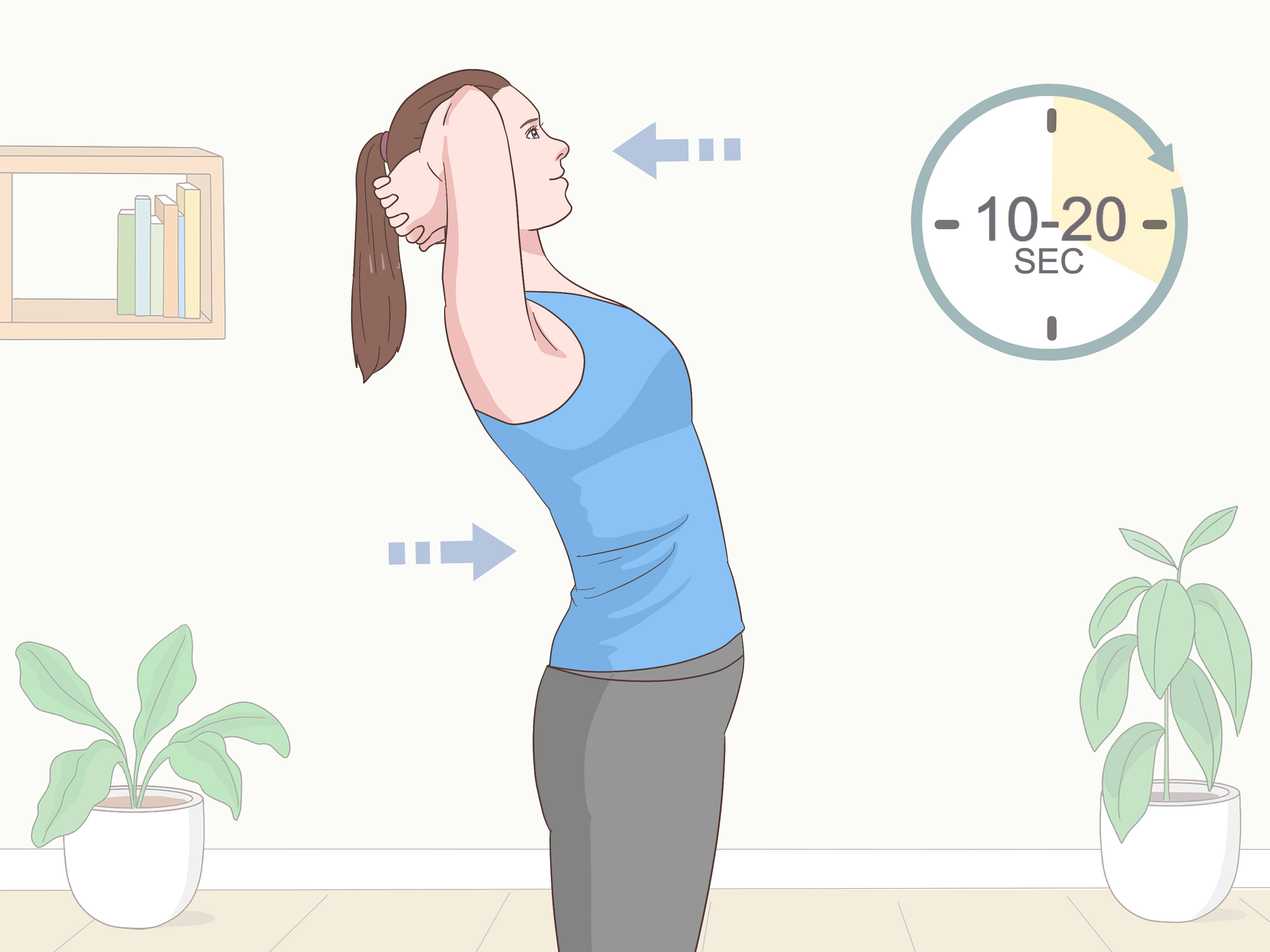
Stand with your feet about hip-width apart. Place your hands on your lower back or hips. Gently squeeze your shoulder blades together and lean backward a small amount while keeping your knees soft. Hold for 2 to 3 seconds, then return upright.
Repeat 5 to 8 times. This movement can feel especially good after sitting. Keep it small and controlled. More range does not mean better results. Your goal is to remind your spine that it can extend, not to recreate a dramatic movie scene where someone dodges lasers.
What If Your Back Does Not Crack?
If your back does not crack during these exercises, nothing is wrong. The pop is not proof that the stretch worked. Many helpful mobility exercises are completely silent. A safe routine should leave you feeling looser, warmer, and more comfortablenot necessarily louder.
People often become attached to the sound because it gives instant feedback. But long-term back comfort usually depends more on consistent movement, strength, posture changes, walking, sleep quality, stress management, and healthy daily habits. In other words, your spine does not need applause. It needs care.
How Often Should You Do These Back Cracking Exercises?
For general stiffness, choose three to five exercises and practice them once daily or several times per week. Keep each session short: 5 to 10 minutes is enough for many people. If you are new to stretching, start with fewer repetitions and build gradually. Gentle consistency beats one heroic 45-minute stretch session followed by three days of complaining every time you sneeze.
A balanced routine might include cat-cow, child’s pose, supine twist, figure-four stretch, and pelvic tilts. If you sit for long hours, add chair twists and standing back extensions during the day. If your upper back feels stiff, try open books and foam roller extensions.
Common Mistakes to Avoid When Trying to Crack Your Back
Forcing the pop
The biggest mistake is treating the crack like a mission. If you push harder and harder just to hear a sound, you increase the chance of irritating tissue. Stop at mild tension.
Using another person for pressure
Do not ask someone to walk on your back, pull your arms, twist your torso, or “bear hug” your spine into submission. It may look funny in movies, but your ligaments are not a comedy prop.
Ignoring pain
A painless pop is usually less concerning. A painful pop, repeated locking, swelling, numbness, weakness, or pain traveling down the leg deserves medical attention.
Only stretching and never strengthening
Stretching can help stiffness, but your back also needs support. Core, glute, and hip strength can reduce repeated tightness. Exercises such as bird dog, bridges, side planks, and walking may help build a stronger foundation once you are ready.
When to See a Healthcare Professional
Home exercises are not a substitute for diagnosis. Contact a healthcare provider if your back pain follows trauma, becomes severe, lasts more than a few days without improvement, spreads down one or both legs, causes numbness or weakness, or appears with fever, unexplained weight loss, or bladder or bowel changes.
You should also seek guidance if you feel the need to crack your back constantly. Frequent cracking may be a sign that your muscles, joints, or movement habits need a more complete plan. A physical therapist, physician, chiropractor, or other qualified clinician can assess your movement and recommend safer, more specific exercises.
Real-Life Experience: What It Feels Like to Build a Safer Back-Cracking Routine
Many people discover back cracking the same way: one day they twist after sitting too long, hear a pop, and suddenly feel like they unlocked a secret level of being human. The first time can feel amazing. Then the habit begins. A little twist after waking up. Another one after work. A chair twist before lunch. A dramatic stretch on the floor at night. Soon, cracking becomes less of a relief strategy and more of a ritual. The problem is that the relief often fades quickly if the real causestiff hips, weak core muscles, poor sitting posture, stress tension, or lack of movementis still there.
A more useful experience-based approach is to stop asking, “How can I crack my back right now?” and start asking, “Why does my back feel like it needs to crack every hour?” For many desk workers, the answer is simple: the body has been stuck in one position too long. The spine loves variety. It likes bending, extending, rotating, walking, breathing, and being supported by active muscles. When your day is eight hours of sitting followed by three hours of couch research into which show to watch, the back may get grumpy. That stiffness is not your spine being dramatic; it is your body requesting movement in the least subtle way possible.
One practical routine is to use short movement snacks. In the morning, do cat-cow and child’s pose for two minutes. Around midday, stand up and perform a few gentle back extensions. After work, try the open book stretch and figure-four stretch. Before bed, use knee-to-chest breathing to calm the lower back. This routine does not need special equipment, expensive clothing, or the motivational personality of a fitness influencer. It just needs consistency.
Another helpful lesson is that the best stretch is often the one you can do without pain. Some people love supine twists. Others feel better with pelvic tilts. Some enjoy foam rolling; others find it too intense. Your body gives feedback. Listen to it. If a move leaves you feeling freer, calmer, and more comfortable, it probably belongs in your routine. If it makes symptoms sharper or more irritated, retire it. No stretch deserves loyalty if it treats your back badly.
People also notice that breathing changes everything. Holding your breath while stretching makes your body brace. Slow breathing tells your nervous system that you are safe, which can reduce muscle guarding. Try inhaling through the nose for four seconds and exhaling slowly as you ease into a stretch. This turns a simple back exercise into a mini reset. Bonus: it is difficult to panic about your inbox while calmly breathing in child’s pose, though your inbox may still be misbehaving when you return.
The biggest experience-based takeaway is this: back cracking can feel good, but mobility feels better when it lasts. A pop may give temporary relief, while regular movement helps reduce the need for constant popping. Think of cracking as a side effect, not the main event. The real win is standing up from your chair without making old-door sound effects, bending to tie your shoes without negotiating with your spine, and moving through your day with less stiffness.
If you treat these exercises as gentle maintenance, they can become a reliable part of your self-care routine. Not flashy. Not magical. Just useful. And honestly, useful is underrated.
Conclusion
Learning how to crack your back safely is really about learning how to move your back better. Gentle exercises such as cat-cow, child’s pose, spinal twists, knee-to-chest stretches, open books, pelvic tilts, and standing extensions can help reduce stiffness and improve mobility at home. The key is to avoid forcing the pop. A painless crack may happen naturally, but comfort, control, and consistency matter more than sound effects.
Use these exercises as part of a balanced routine, warm up first, breathe slowly, and stop if anything hurts. If your back pain is severe, persistent, or linked with concerning symptoms, get professional medical advice. Your spine works hard for you every day. Treat it less like a stubborn machine and more like a hardworking teammate that occasionally needs a stretch, a walk, and perhaps a little less chair time.