Note: A motorcycle burnout is a high-risk stunt, not a street-riding skill. This guide is written for licensed, experienced riders practicing only at a sanctioned track, drag strip, closed-course event, or private facility with permission and proper safety supervision. Never attempt a burnout on public roads, parking lots, gas stations, near crowds, or anywhere with traffic, loose debris, fuel, or limited space.
A motorcycle burnout is one of those things that looks simple from the sidelines: front wheel stays put, rear tire spins, smoke appears, and suddenly everyone nearby feels like they are standing inside an action movie trailer. In reality, a burnout is controlled rear-wheel slip. It requires throttle control, clutch control, front-brake stability, tire awareness, and enough judgment to know when to stop before your rear tire becomes an expensive rubber pencil eraser.
Done properly in a controlled environment, a short burnout can be part of drag-racing preparation or a supervised stunt demonstration. Done carelessly, it can damage a tire, overheat brakes, stress the clutch and drivetrain, start a fire, or launch the motorcycle somewhere it absolutely should not go. The goal is control, not chaos with a soundtrack.
What Is a Motorcycle Burnout?
A motorcycle burnout happens when the rear tire spins faster than the motorcycle moves. In a stationary burnout, the front brake helps hold the bike in place while engine power and clutch engagement cause the rear tire to break traction. The tire may chirp, haze, or create smoke depending on the surface, tire compound, power delivery, and how long the rider continues the maneuver.
There are two broad versions:
- Stationary burnout: The motorcycle remains mostly in place while the rear tire spins.
- Rolling burnout: The rear tire spins while the motorcycle moves forward slowly.
For most riders, the stationary version is the only one worth discussingand only for controlled venues. Rolling burnouts add more movement, more unpredictability, and more opportunities to turn a bad decision into a memorable insurance conversation.
Why Riders Do Burnouts
In professional drag racing, a brief burnout can help prepare a rear tire before a run. Cycle World notes that drag racers may use a burnout to warm the rear tire before launching, but the exact routine depends on the tire, track surface, bike setup, and racing class.
Outside competition, burnouts are usually done for entertainment, photography, stunt exhibitions, or motorcycle events. That does not make them harmless. A smoky burnout may impress the crowd, but the crowd is not paying for your tire, clutch plates, brake pads, chain, belt, shaft-drive components, or tow truck.
Think of a burnout like hot sauce: a little can be exciting; too much can make everyone regret the evening.
Should You Try a Motorcycle Burnout?
You should only consider a burnout if all of the following are true:
- You are already comfortable with smooth clutch release, throttle modulation, braking, and low-speed balance.
- You have completed a recognized rider-training course and understand your motorcycle’s controls.
- You are in a legal, controlled, spacious, and supervised setting.
- Your motorcycle is mechanically sound and has a healthy rear tire.
- You understand that a burnout may shorten tire life and stress drivetrain parts.
- You are prepared to stop immediately if the motorcycle feels unstable, the front brake fades, the bike begins moving unexpectedly, or electronics intervene.
The Motorcycle Safety Foundation emphasizes coordinated use of the clutch friction zone, throttle, and brakes as foundational motorcycle-control skills. If those basics are not automatic for you, a burnout is not the next lesson. Practice starts, stops, slow-speed maneuvers, and emergency braking instead. They are less smoky but much more useful when a car turns left in front of you.
Safety Gear and Setup Before a Burnout
Wear Proper Motorcycle Protective Gear
Do not treat a burnout like a casual driveway experiment. Wear a certified helmet, abrasion-resistant jacket and pants, gloves, over-the-ankle boots, and eye protection. A rear tire can throw debris, and a motorcycle that suddenly moves can turn a small stunt into a full-body lesson in friction.
Inspect the Motorcycle First
Before riding, NHTSA advises riders to check tire pressure and tread depth, brakes, lights, signals, fluid levels, and signs of leaks. For a burnout, that inspection matters even more because the maneuver puts unusual stress on the rear tire, front brake, clutch, and final drive.
Check these items before you even think about spinning the rear tire:
- Rear tire tread, sidewall condition, and correct cold pressure.
- Front brake lever feel and brake-fluid condition.
- Clutch engagement and cable or hydraulic-clutch condition.
- Chain slack and lubrication on chain-drive motorcycles.
- Belt condition on belt-drive bikes.
- No fuel, oil, coolant, or brake-fluid leaks.
- No loose luggage, accessories, clothing, or nearby objects.
Bridgestone recommends checking tire pressure while tires are cold and comparing the reading with the manufacturer’s recommended pressure. Do not lower tire pressure just to make a burnout easier. That is not a clever shortcut; it is a shortcut toward poor handling and possible tire damage.
Choose the Right Location
A proper location has level pavement, open space, clear escape room, no pedestrians, no flammable materials, and no traffic. Avoid painted lines, gravel, sand, wet pavement, oil stains, leaves, metal plates, and uneven surfaces. A burnout on a dirty surface can become a skid, and a skid can become a very public demonstration of gravity’s confidence.
Do not attempt a burnout in a garage, enclosed shop, gas station, apartment complex, public parking lot, or street. Tire smoke, hot exhaust components, spinning rubber, and fuel vapors are a terrible party mix. RideApart has documented burnouts that escalated into fire hazards, especially when riders pushed heat and engine load too far.
How to Do a Stationary Motorcycle Burnout Safely
This is a controlled-course overview, not a substitute for in-person stunt or drag-racing instruction. Have an experienced instructor or track official demonstrate the technique first, especially if your motorcycle is powerful, heavy, or equipped with advanced electronic rider aids.
1. Start With the Motorcycle Straight and Upright
Keep the motorcycle upright, handlebars straight, eyes looking ahead, and body centered. Do not lean the bike. Do not turn the bars. Do not look down at the rear tire. The rear tire is not going anywhere interesting, and watching it will not improve its performance review.
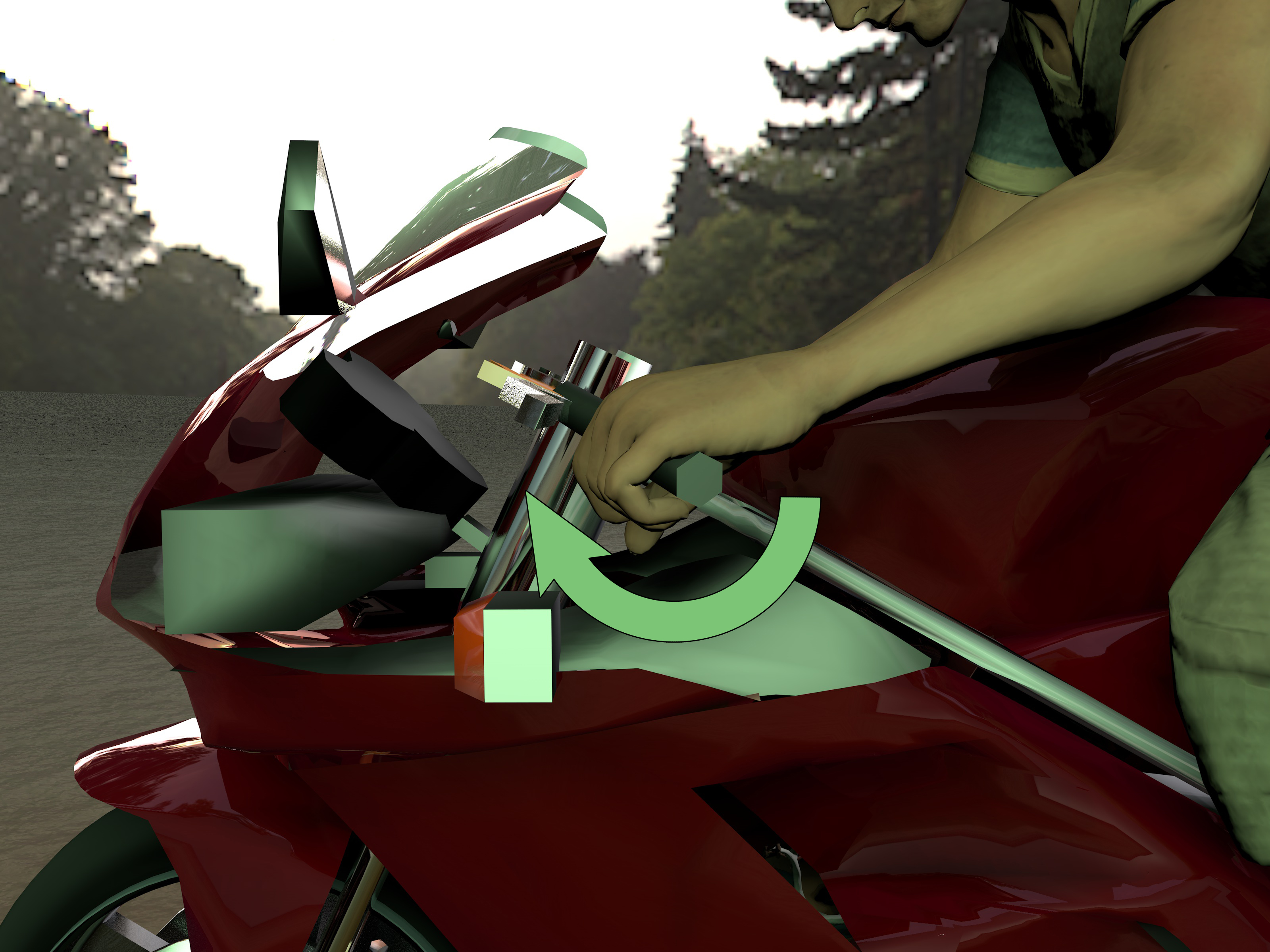
2. Hold the Front Brake Firmly
Use the front brake to stabilize the motorcycle. The purpose is to keep the bike from rolling forward while the rear tire begins to spin. The front brake should feel solid and predictable before you begin. If the lever feels soft, spongy, inconsistent, or unfamiliar, stop and inspect the braking system rather than trying to “see what happens.”
ABS can help reduce wheel-lock risk during braking, but it is not a stunt-control system. IIHS reports that motorcycle ABS reduces crash risk by helping prevent skids that can lead to serious falls. That does not mean ABS can guarantee control during a burnout or compensate for poor judgment.
3. Use Smooth Throttle and Clutch Control
With the motorcycle in first gear, use a controlled throttle input and bring the clutch into its friction zone gradually. The goal is to load the drivetrain smoothly until the rear tire begins to spinnot to snap the clutch out, pin the throttle, or attack the controls like they insulted your family.
A controlled burnout comes from smooth coordination. Abrupt clutch release can make the motorcycle lurch forward, stall, hop, wheelie, or lose stability. Abrupt throttle can create a sudden surge in power that overwhelms traction and rider control.
4. Keep the Burnout Short
For learning, think in terms of a brief, controlled rear-tire spin rather than a long smoke show. The moment you achieve controlled wheelspin, you have already practiced the relevant skill. Continuing for applause adds heat, wear, and risk without adding much technique.
Long burnouts can rapidly wear the rear tire, generate extreme heat, and stress the clutch and drivetrain. If the tire begins to hop, the motorcycle creeps forward, smoke becomes excessive, the front brake feels weak, or the bike feels unstable, stop immediately.
5. End the Burnout Smoothly
To end the maneuver, reduce throttle smoothly, pull in the clutch, and allow the rear tire to stop spinning before releasing the front brake. Keep the motorcycle upright and pointed straight. Do not release the front brake while the rear tire is still spinning aggressively, because the bike can surge forward unexpectedly.
After stopping, give the motorcycle time to cool. Avoid immediately touching the rear tire, wheel, brake rotor, exhaust, or nearby engine components. They may be much hotter than they look, and “it did not look that hot” is not a useful first-aid strategy.
How Motorcycle Electronics Affect Burnouts
Modern motorcycles may have traction control, wheelie control, ride modes, ABS, cornering ABS, or integrated braking systems. These systems are designed to manage traction and stability during normal ridingnot to make stunt riding safer.
Honda owner manuals explain that torque-control systems can detect rear-wheel spin during acceleration and reduce the torque sent to the rear wheel. Yamaha similarly describes traction control as detecting signs of rear-wheel spin and adjusting engine behavior to support smoother acceleration.
That means your motorcycle may refuse to spin the rear tire, reduce power unexpectedly, or behave differently depending on ride mode and traction-control settings. Never disable safety systems unless you are in a sanctioned environment, understand your manufacturer’s instructions, and have appropriate supervision. A disabled traction-control system does not add skill; it only removes a safety net.
Common Motorcycle Burnout Mistakes
Trying It on Public Roads
Public roads add traffic, pedestrians, legal consequences, unpredictable surfaces, and limited escape space. A burnout belongs at a track or controlled event, not outside a coffee shop because someone said, “Do it for the video.” That person will not be helping you replace a tire.
Using Worn or Damaged Tires
A tire that is already worn, cracked, underinflated, or damaged is not a stunt tire. It is a risk. Burnouts can accelerate wear and may expose hidden tire problems. Inspect the tire after every burnout session and replace it if it shows cords, blistering, unusual deformation, severe flat spotting, cracking, or damaged sidewalls.
Holding the Front Brake Too Long
The front brake is doing serious work during a stationary burnout. Excessive use can add heat to the brake system. If brake feel changes, stop. Never keep trying to “push through” a fading or inconsistent brake lever.
Ignoring Tire Hop
Tire hop is a warning sign, not an invitation to add more throttle. It can upset the motorcycle, stress drivetrain components, and reduce your ability to maintain control. Back off immediately and assess the surface, tire condition, suspension setup, and rider technique.
Trying to Create More Smoke Than Control
Smoke is not a scorecard. A short, clean, controlled burnout is more impressive than a long, messy one that ends with an overheated tire and a stressed-out rider. Controlled restraint is still a flex, even if it makes fewer TikTok comments.
What to Check After a Burnout
Once the motorcycle has cooled, inspect it before riding away. Look for:
- Rear tire wear, chunks, cracks, or exposed cords.
- Flat spots or unusual tire deformation.
- Front brake fade, overheating smell, or changed lever feel.
- Chain, sprocket, belt, or shaft-drive issues.
- Clutch smell, slipping, or unusual engagement.
- Loose fasteners, damaged fender components, or rubber debris.
If anything feels different afterward, do not assume it will “probably be fine.” Motorcycle problems have a charming habit of becoming obvious at the least convenient possible time.
Real-World Burnout Experiences: What Riders Learn the Hard Way
Ask riders who have spent time around drag strips, stunt lots, track-day paddocks, and bike nights, and you will hear the same lesson in different accents: burnouts look much easier than they feel from the saddle. The video usually captures the smoke, the noise, and the crowd reaction. It rarely captures the rider’s left hand trying to make millimeter-level clutch adjustments while their brain is shouting, “Please do not launch into that fence.”
Many first attempts are not dramatic at all. The rear tire may chirp once, the motorcycle may nudge forward a few inches, and the rider may immediately decide that their motorcycle has developed a deep philosophical disagreement with physics. That is normal. A burnout is not just “more throttle.” It is a balance between engine power, clutch engagement, brake pressure, body position, tire grip, pavement condition, and the motorcycle’s electronics.
Experienced riders often say the first useful lesson is learning what not to do. Do not stare at the rear tire. Do not grip the handlebars like you are trying to bend them into handlebars for a second motorcycle. Do not dump the clutch. Do not continue after the bike starts creeping forward. Do not let a group of spectators convince you that “just one more” is a responsible maintenance plan.
Another common experience is discovering how quickly a rear tire can disappear. A fresh tire can feel like a permanent part of the motorcycle until a few long burnouts turn it into a surprisingly expensive reminder that rubber and asphalt are not best friends. Riders who compete in drag racing understand tire wear as part of the budget. Casual riders sometimes discover it after staring at a flattened tread pattern and wondering why the ride home suddenly feels less confidence-inspiring.
Heat is another teacher. Riders often notice the smell first: hot rubber, warm brakes, clutch material, or a faint mechanical odor that makes everyone suddenly become an amateur technician. A short, controlled burnout may leave little more than tire haze. A long burnout can create enough heat to make the entire motorcycle feel like it has been training for a volcano documentary. This is why experienced riders stop early, inspect often, and let the motorcycle cool between attempts.
Electronic rider aids also surprise many people. On a modern motorcycle, traction control may cut power just as the rear tire starts to spin. Some riders assume something is wrong with the bike. Usually, the motorcycle is doing exactly what it was designed to do: preventing uncontrolled wheelspin. The correct response is not to angrily fight the electronics in a random parking lot. It is to understand the motorcycle’s settings, read the owner’s manual, and use sanctioned environments for any advanced riding practice.
The most respected riders are rarely the ones who make the biggest cloud. They are the ones who know the machine, respect the limits, keep the bike straight, stop before anything overheats, and ride away without needing a new tire, a new clutch, or a new explanation for the insurance company.
Frequently Asked Questions About Motorcycle Burnouts
Can any motorcycle do a burnout?
No. Power delivery, tire type, motorcycle weight, gearing, clutch design, traction control, surface grip, and drivetrain layout all affect whether a motorcycle can spin the rear tire. Some motorcycles may not produce enough torque, while others may have electronic systems that limit wheelspin.
Do burnouts ruin motorcycle tires?
They can. Even a short burnout increases rear-tire wear. Long burnouts can dramatically reduce tread life, create flat spots, overheat the tire, and potentially damage the tire structure. Treat the rear tire as a consumable part only if you are prepared to replace it.
Can a burnout damage the clutch?
Yes. Repeated clutch slipping generates heat and can accelerate clutch wear. Poor technique can also stress the chain, belt, sprockets, transmission, and rear wheel.
Should beginners practice burnouts?
No. Beginners should focus on smooth starts, braking, cornering, hazard avoidance, and low-speed control. Those skills make everyday riding safer and build the control foundation needed for advanced riding environments later.
Are burnouts legal?
Rules vary by state, city, property owner, and event organizer. On public roads, burnouts may lead to citations, reckless-driving allegations, property-damage claims, noise complaints, or vehicle impoundment. Use only approved private or sanctioned venues.
Conclusion
Learning how to do a burnout on a motorcycle is less about producing smoke and more about understanding traction, throttle response, clutch control, brake stability, and mechanical limits. A controlled burnout should happen only in a safe, legal setting with proper gear, a mechanically sound motorcycle, and enough rider experience to stop the moment things feel wrong.
Keep it short, keep the bike straight, respect the tire, and remember the real goal: ride home safely with a storynot ride home in a pickup truck with a melted rear tire and a heroic explanation that begins with, “So, technically, it was under control…”