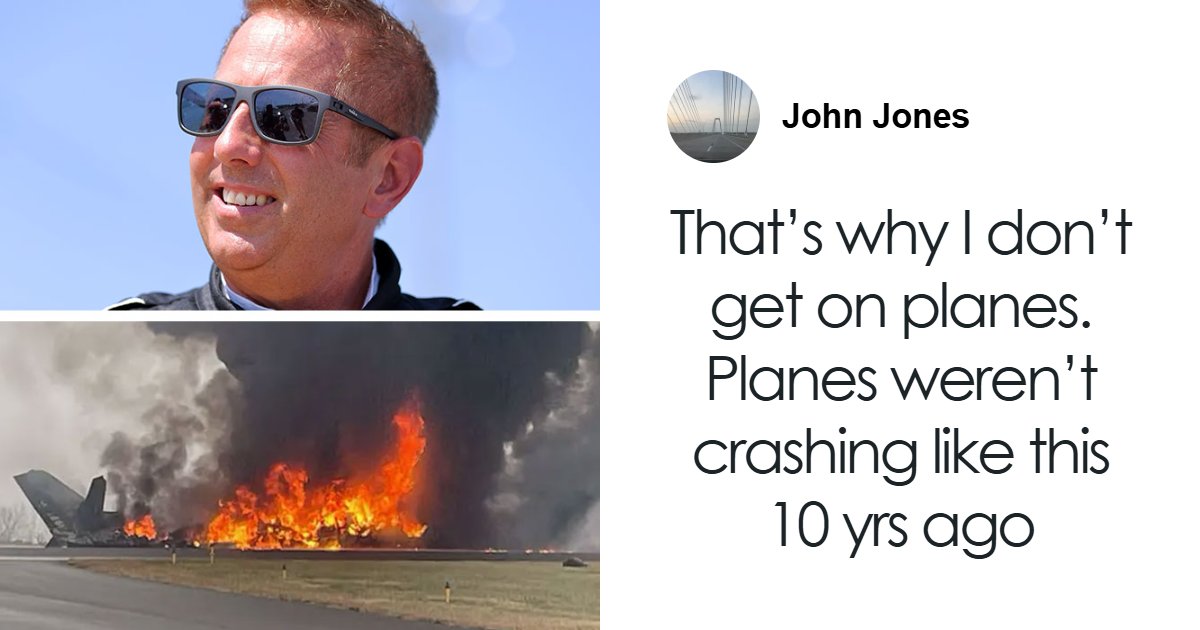
Editor’s note: This article reflects publicly available information and preliminary federal findings as of July 28, 2026. The National Transportation Safety Board investigation remains open, and no final probable cause has been announced. Although the headline uses the widely reported phrase “entire family,” the tragedy involved Greg Biffle, his wife, and the two children traveling with them, as well as three other people. Speculation about responsibility has been deliberately excluded.
A family birthday trip was supposed to begin with a short flight south. Instead, it ended approximately 10 minutes after takeoff, near the runway from which the group had just departed.
Retired NASCAR star Greg Biffle, his wife Cristina Grossu Biffle, their five-year-old son Ryder, and Greg’s 14-year-old daughter Emma were among seven people killed when a Cessna Citation 550 crashed near Statesville Regional Airport in North Carolina on December 18, 2025. Dennis Dutton, his son Jack Dutton, and family friend Craig Wadsworth also died.
The tragedy became even more haunting after Cristina’s mother revealed that her daughter had sent a final message from the aircraft. The short text did not offer technical details or a dramatic explanation. It simply communicated that something had gone terribly wrong.
There is no clever twist in this story and no tasteful punchline. What remains is a devastating timeline, an unfinished aviation investigation, and the memory of seven people whose lives were much larger than the final minutes now attached to their names.
A Family Trip That Ended Minutes After Takeoff
The aircraft, registered as N257BW, was a twin-engine Cessna 550 business jet manufactured in 1981. It departed Statesville Regional Airport shortly after 10 a.m. on December 18, reportedly bound for Florida as part of a birthday trip.
Flight-tracking information and official accounts showed that the jet did not continue south for long. It turned back toward Statesville and attempted to land at the same airport. At approximately 10:15 a.m., it struck objects near the approach end of the runway and crashed, producing an intense post-impact fire.
Early reporting created understandable confusion. Initial statements gave conflicting passenger totals, and investigators initially said they did not know who had been operating the aircraft. Those uncertainties were gradually narrowed as records, cockpit information, witness accounts, and wreckage evidence were examined.
What was never in doubt after authorities confirmed the loss was its scale: all seven people aboard died. The flight had lasted only about 10 minutes.
The Final Text From Cristina Biffle
Cristina’s mother, Cathy Grossu, said she had been communicating with her daughter throughout the day, including while the family was in the air. According to Grossu, Cristina sent a brief warning from the aircraft: “We’re in trouble.”
In another account, Grossu recalled the message as including the words “emergency landing.” She responded by asking what was wrong with the plane. Instead of receiving another ordinary text, she later received an automated emergency alert associated with Cristina’s phone.
Grossu contacted the airport and learned that there was a fire. The sequence transformed a few words on a phone screen into the last direct communication she would receive from her daughter.
It is important not to inflate the message into something it was not. Cristina did not identify a failed component, blame a pilot, or describe conditions inside the cockpit. The text confirms that the passengers knew the flight was in difficulty and that the aircraft was attempting to return. It does not establish why the emergency developed.
That distinction matters. In the first hours after a major accident, a small fragment of information can become a magnet for theories. In this case, the text is emotionally powerful precisely because it is so limited. It captures awareness and fear, but it leaves the technical questions to investigators.
Who Was Aboard the Aircraft?
The seven people killed represented two families and a close circle of friends connected through aviation, racing, and personal relationships:
- Greg Biffle, 55: Retired NASCAR driver, championship winner, licensed pilot, businessman, and humanitarian.
- Cristina Grossu Biffle, 35: Greg’s wife and Ryder’s mother, remembered by relatives for her generosity and dedication to family.
- Ryder Biffle, 5: Greg and Cristina’s energetic young son, who relatives said dreamed of becoming a Formula One driver.
- Emma Biffle, 14: Greg’s daughter with former wife Nicole Lunders, remembered by her family as kindhearted and deeply loved.
- Dennis Dutton: A retired airline pilot who was qualified to operate the Cessna Citation 550.
- Jack Dutton: Dennis Dutton’s son, a licensed private pilot who occupied the right cockpit seat.
- Craig Wadsworth: A friend of Biffle and a familiar figure within racing circles.
A joint family statement described Greg and Cristina as devoted parents whose lives centered on Ryder and Emma. The statement called Emma a wonderful person with a kind soul and Ryder an active, curious, joyful child. It also requested privacy and compassion for the families processing an almost unimaginable loss.
What the Preliminary NTSB Findings Revealed
The NTSB’s preliminary findings changed one major part of the early narrative: Greg Biffle was not flying the jet when it crashed.
Investigators determined that Dennis Dutton was operating the aircraft, with Jack Dutton seated in the right cockpit seat. Biffle was aboard and held pilot credentials, but he was not at the controls. Federal records also indicated that neither Biffle nor Jack Dutton held the endorsement required to serve as second-in-command in that particular aircraft.
The Cessna Citation 550 generally requires two appropriately qualified flight crew members. Dennis Dutton possessed the necessary qualification to act as pilot in command, while questions remained concerning the qualifications of the person occupying the other cockpit seat.
Problems Reported Before Takeoff
According to summaries of the preliminary report, the crew noticed an inoperative thrust-reverser indicator light before departure. The issue was discussed and evaluated, but the flight proceeded.
After takeoff, additional problems reportedly emerged. The left-side altimeter and other cockpit instruments malfunctioned or provided unreliable information. During the troubleshooting process, control of the aircraft was briefly transferred to the person in the right seat.
The crew also attempted to communicate with air traffic control and activate an instrument flight rules flight plan. Some communications were unsuccessful or delayed because of radio traffic and controller workload. Portions of the cockpit voice recording reportedly contained intermittent gaps, further complicating reconstruction of the flight.
The Final Approach
The jet turned back toward Statesville and descended for landing. It approached below the proper path, struck airport approach-light poles and vegetation, and crashed before reaching the runway. The aircraft was destroyed by impact forces and fire.
These details identify a chain of abnormal events, but they do not yet prove which event caused the crash. Instrument malfunctions, cockpit staffing, crew decision-making, aircraft performance, maintenance records, weather, and recorded data must be evaluated together.
A preliminary report is primarily a factual snapshot. It is not a final ruling, and it should not be treated like a courtroom verdict with wings attached. The NTSB’s official investigation page continued to list the case as ongoing in July 2026, with the agency reserving probable-cause conclusions for its final report.
Why the Final Message Became the Center of the Story
Air-crash investigations are built from technical material: radar tracks, instrument readings, maintenance documentation, weather observations, wreckage patterns, crew qualifications, audio recordings, and laboratory examinations. Most readers will never see more than a fraction of those records.
A text from a loved one is different. Everyone understands the ordinary experience of seeing a family member’s name appear on a phone. That familiarity makes Cristina’s message immediate in a way that an altitude graph or mechanical diagram cannot be.
Yet describing it as “chilling” should not turn it into entertainment. For Cathy Grossu, the message was not an irresistible headline. It was the last unfinished conversation with her daughter.
Grossu said she had seen the family the day before the crash and remembered hugging them, although she could not recall the final words they exchanged. Her recollection reflects a painful experience common after sudden loss: ordinary moments are replayed because nobody knew they were becoming final moments.
Remembering Greg Biffle Beyond the Crash
Greg Biffle’s name had been familiar to racing fans for decades. He earned 56 victories across NASCAR’s three national series, including 19 Cup Series wins. He won the Truck Series championship in 2000 and the series now known as Xfinity in 2002.
Biffle became the first driver to win championships in both of those national divisions and later finish second in the Cup Series standings. NASCAR included him among its 75 Greatest Drivers, recognition of a career built through persistence rather than a storybook fast track.
He was often presented as a blue-collar success story. Biffle worked on and built racecars, climbed through regional competition, and developed into one of the most consistent drivers of his generation. His No. 16 car became a familiar sight to fans who followed NASCAR during the 2000s and 2010s.
A Humanitarian Legacy in North Carolina
His most widely praised work outside racing came after Hurricane Helene devastated western North Carolina in 2024. Biffle used his personal helicopter to help deliver food, supplies, and assistance to isolated communities.
Racing figures, elected officials, teams, and fans repeatedly emphasized those relief missions when honoring him. Their tributes did not describe charity as a branding exercise. They remembered someone willing to use the equipment and abilities he had when people urgently needed help.
Hundreds gathered at a memorial service in Charlotte in January 2026. Racecars from Biffle’s career were displayed outside, while seven wreaths represented the seven people killed. Speakers remembered him as a champion, friend, father, adventurer, and person who routinely showed up when someone needed assistance.
The Family Life Behind the Public Headline
The crash did not only remove a famous driver from NASCAR history. It erased the daily routines of a household: school schedules, holiday plans, unfinished projects, family jokes, childhood ambitions, and countless small responsibilities that never appear in a racing biography.
Cathy Grossu said the group was traveling for a birthday celebration. She also recalled that shortly before the flight, Cristina had been working to mail personalized Santa letters to families in need. Cristina reportedly paid for the project herself and wanted to ensure the final batch was mailed before leaving.
That detail says more about her life than the frightening final text alone. The text documented a crisis lasting minutes. The letters reflected the person she had chosen to be over time.
Ryder was remembered as an energetic child who loved vehicles and wanted to race. Emma was honored separately at a celebration of life before the larger NASCAR memorial. Family members and friends described both children through their personalities rather than treating them as footnotes attached to a famous last name.
Responsible coverage should do the same. The aircraft accident is how the public learned that they died. It should not become the only thing the public learns about how they lived.
What Investigators Still Have Not Determined
The central unanswered question remains the most important one: What combination of factors caused the Cessna Citation 550 to descend below a safe approach path?
Investigators must determine how the reported instrument problems affected the crew, whether the cockpit indications reflected individual instrument failures or a broader electrical or system problem, how effectively tasks were divided, and whether aircraft configuration or performance contributed to the final descent.
They must also evaluate maintenance documentation, training histories, certification requirements, weather information, physical wreckage, recorded audio, electronic data, and human-performance factors.
The preliminary findings should not be used to declare a single person or mechanical component responsible. Aviation disasters frequently involve a sequence of decisions, conditions, and failures rather than one cinematic moment in which everything suddenly breaks.
Until the final NTSB report is released, claims of a definitive cause remain premature. The most accurate statement is less exciting than online speculation but considerably more honest: investigators have identified serious anomalies, and the complete causal relationship among them has not yet been established.
Experiences and Lessons Connected to Sudden Aviation Loss
Final Messages Can Become Emotional Anchors
When a death is sudden, relatives often search the final conversation for hidden meaning. A routine goodbye may feel inadequate. A missed call can produce guilt. An emergency message may be reread until every word seems unbearably heavy.
There is rarely a perfect final exchange. People normally end conversations with practical phrases because they expect another conversation tomorrow. The inability to predict tragedy is not a personal failure, and surviving relatives should not be judged by what they did or did not say before an accident.
For readers, this is a reminder to avoid turning a private final message into a puzzle. Cristina’s text deserves to be understood as communication from a person in danger, not as an invitation for strangers to reverse-engineer the cockpit from a handful of words.
The Waiting Period Can Be Its Own Form of Distress
Transportation investigations are intentionally methodical. Families and the public may wait months or years for a probable-cause report because investigators must test evidence rather than reward the fastest theory.
That waiting can be exhausting. Each new headline may reopen grief while offering only another fragment of information. The NTSB provides family-assistance resources and investigative-update channels because families need reliable communication, emotional support, and help navigating a process that can otherwise feel distant and technical.
Federal guidance recognizes that reactions to traumatic loss differ widely. Grief may involve sadness, anger, numbness, disrupted sleep, concentration problems, or repeated mental replay of the event. There is no universal timetable and no five-step conveyor belt that carries everyone neatly from shock to acceptance.
Breaking News Requires Patience
The Biffle crash demonstrated how rapidly early information can change. Initial passenger counts were revised. The identity of the pilot was uncertain. Later evidence established that Biffle had not been operating the jet, contradicting assumptions that circulated immediately after the crash.
A useful rule for consuming breaking news is simple: early reports describe what appears to have happened; final investigations explain what the evidence supports. Those are different products.
Readers should be cautious when a headline claims the crash was “caused” by an instrument, a pilot, the weather, or a regulatory violation before investigators have completed their work. A preliminary report can document a malfunction without proving that it alone produced the accident.
Communities Grieve People They Never Met
Celebrity deaths can cause genuine grief among fans. A person may associate a driver with childhood weekends, time spent with a parent, a first race, or a period of life that now feels distant. The emotional connection is real even though the relationship was one-sided.
Public mourning can be constructive when it centers on remembrance, charitable action, and support for those closest to the victims. It becomes harmful when private pain is treated like serialized entertainment or when graphic material is circulated merely because it generates attention.
The memorial response to Biffle showed the healthier version. Fans brought flowers. Fellow drivers told stories. Friends emphasized service, generosity, and family. The focus gradually moved from the violence of the crash toward the character of the people who were lost.
Legacy Is Built Before the Headline Arrives
The final minutes of a person’s life can become the most searched portion of the story, but they are rarely the most representative.
Greg Biffle’s life included championships, mechanical curiosity, business ventures, aviation, friendships, and disaster-relief flights. Cristina’s included parenting, family relationships, and personal acts of generosity. Emma and Ryder had interests, personalities, and futures imagined by everyone who loved them. Dennis and Jack Dutton and Craig Wadsworth also left families and communities carrying memories that no accident report can summarize.
The most meaningful experience readers can take from the tragedy is not fear of every flight or obsession with a final text. It is the recognition that ordinary time with other people is never as ordinary as it looks while it is happening.
Conclusion
Cristina Biffle’s last message remains one of the most painful details associated with the Statesville plane crash. It communicated an emergency in only a few words and was followed by silence that her family could never undo.
Federal investigators have since established important facts: Greg Biffle was not flying the jet, the crew encountered multiple cockpit-instrument problems, the aircraft returned shortly after departure, and it struck approach structures before reaching the runway. What investigators have not established publicly is the final probable cause.
Until that determination arrives, the responsible approach is to resist easy blame and remember all seven people as more than occupants on a manifest. The crash lasted minutes. Their relationships, accomplishments, generosity, and influence lasted yearsand continue through the people who remember them.