Lots of famous people have played doctors on screen. A smaller (and way more interesting) group actually
went to medical school, survived the anatomy lab, and earned the right to put letters like MD
or DO after their names. Some practiced for years. Some pivoted hard into entertainment, writing,
media, or politics. And a few somehow managed to become famous because they’re doctors.
This article is your no-nonsense, fun-but-factual guide to celebrity physicians and famous people who went to med school
plus what their medical training helped them do once they stepped into the spotlight.
Quick reality check: “Went to med school” isn’t one-size-fits-all
In the U.S., becoming a practicing physician is usually a long chain: medical school → residency → (sometimes) fellowship →
licensing and board certification. Some famous physician-celebrities completed the whole route and practiced full-time.
Others earned the degree and then chose a different path (which is honestly relatablejust with better lighting).
- MD = Doctor of Medicine (traditional medical school path)
- DO = Doctor of Osteopathic Medicine (fully licensed physician, with additional osteopathic training)
- Residency = supervised specialty training after med school (where sleep becomes a rumor)
Why medicine keeps producing surprisingly good entertainers and storytellers
Med school is basically a masterclass in three things that translate beautifully to public life:
communication (explaining scary things calmly), pattern recognition (noticing what others miss),
and performance under pressure (making decisions when the stakes are high and the clock is rude).
Whether someone ends up doing stand-up comedy, hosting TV segments, writing thrillers, or shaping policy,
the training tends to leave them with sharp observation skills and a low tolerance for nonsense. (As it should.)
The list: celebrities who are medical doctors (and famous people who went to med school)
Here are notable namesgrouped by the kind of fame they foundalong with what they studied and how that background shows up
in their public work.
1) The comedian-and-actor doctors
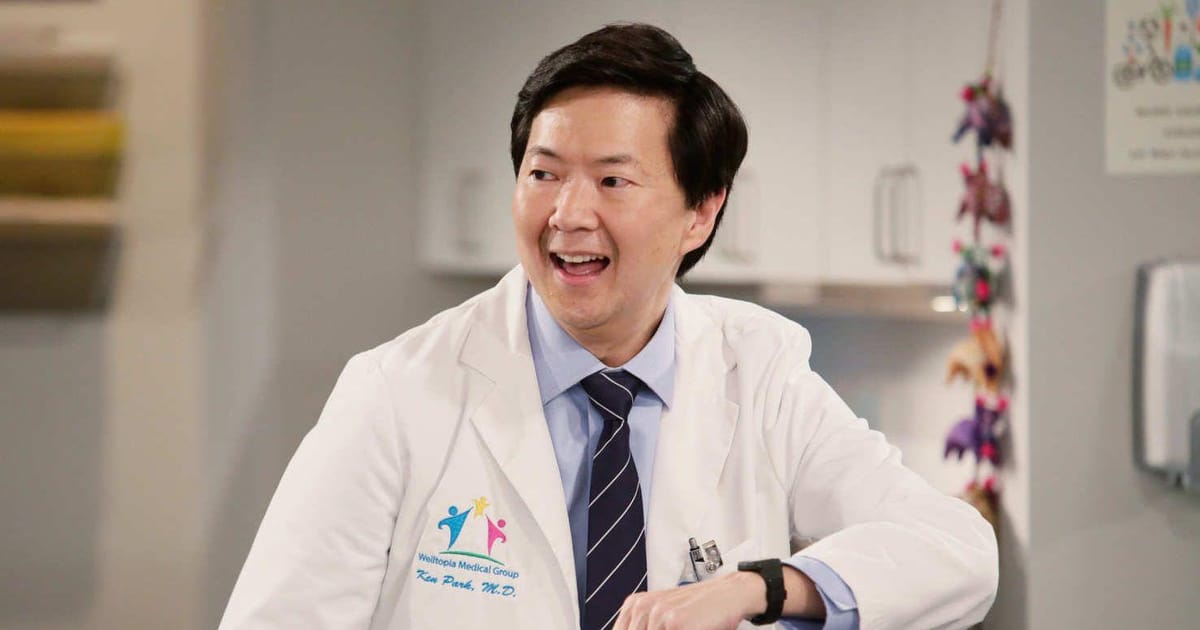
Ken Jeong, MD (actor, comedian)
Ken Jeong is the rare entertainer who can deliver a punchline and a differential diagnosis. He earned his medical degree
and trained in medicine before comedy became the main gig. Jeong has spoken about how medicine shaped his work ethic and
his “show up and do the job” mentalityuseful whether you’re seeing patients or trying to make a room laugh.
Why it’s memorable: his career is a reminder that a medical degree doesn’t lock you into one identity.
It’s not “doctor or artist.” Sometimes it’s “doctor and artist,” plus a cameo you didn’t expect.
Travis Stork, MD (TV host)
Travis Stork is known for hosting health-focused daytime TV, but he also trained as a physician. That background matters,
because health communication isn’t just about “tips”it’s about translating medical concepts into language that helps people
make better decisions without panic-scrolling into oblivion.
Why it’s memorable: he’s part of a larger trend: physicians becoming “medical interpreters” for the public,
which is harder than it looks and easier to mess up than people realize.
2) The TV doctors who are actually doctors
Sanjay Gupta, MD (neurosurgeon, medical journalist)
Dr. Sanjay Gupta built a national profile explaining medicine in real timeoften during high-stress news cycles. He’s trained
in neurosurgery and has held academic roles, which helps explain why his on-air style tends to focus on evidence and nuance:
medicine rarely offers perfect answers, only best-available ones.
Why it’s memorable: he’s a case study in how clinical training can strengthen public communicationespecially
when the public wants certainty and science can only offer probabilities.
Mehmet Oz, MD, MBA (TV personality, surgeon)
Dr. Mehmet Oz trained as a surgeon and became one of the most recognizable “TV doctor” brands in America. His career also shows
how medicine and media can collide: a medical credential can open doors, but it also raises the bar for responsibility.
Why it’s memorable: his path highlights the difference between being medical and being
medically reliable on televisiontwo things the public sometimes (understandably) assumes are identical.
Drew Pinsky, MD (“Dr. Drew,” media personality)
“Dr. Drew” is a long-running example of a physician who became a familiar voice in public conversations around addiction,
recovery, and mental health topics. Media medicine is tricky: it rewards clarity and confidence, even when the honest answer is
“it depends.” Physicians who do it well learn to be both clear and careful.
Why it’s memorable: it’s a reminder that “doctor with a microphone” is still a doctorand the microphone
doesn’t come with automatic guardrails.
3) Reality-TV surgeons and internet-famous clinicians
Paul Nassif, MD (plastic surgeon; “Botched”)
Dr. Paul Nassif is a well-known plastic surgeon in pop culture, partly because reality TV made complex reconstructive work
visible to mainstream audiences. Behind the branding is real surgical trainingmeaning the work involves anatomy, risk management,
and patient counseling, not just before-and-after photos.
Why it’s memorable: his fame reflects how the public’s curiosity about medicine often focuses on the dramatic,
visible outcomeseven when the hardest work is the planning you never see.
Terry Dubrow, MD (plastic surgeon; “Botched”)
Dr. Terry Dubrow is another household name in the “surgeon-celebrity” category. What makes this niche complicated is that the
doctor is doing two jobs at once: caring for a patient and performing for an audience. The ethical and emotional demands are real.
Why it’s memorable: it spotlights a truth most people don’t think about: patient trust isn’t a prop, and the
physician’s first obligation doesn’t change just because there’s a camera.
Sandra Lee, MD (“Dr. Pimple Popper,” dermatologist)
Dr. Sandra Lee became internet-famous for dermatology content that’s equal parts medicine and “I cannot look away.”
While the clips are dramatic, the foundation is clinical training in diagnosing skin conditions and treating them safely.
Why it’s memorable: she helped normalize dermatology visits for people who might otherwise avoid care out of
embarrassment. The best medical communication reduces shamenot just symptoms.
Mikhail “Dr. Mike” Varshavski, DO (family medicine; social media educator)
Dr. Mike is a modern version of the celebrity doctor: a practicing physician who built a huge audience by teaching health topics
in an accessible, camera-friendly way. He’s also a good example of why credentials matter onlinebecause a confident voice is common,
but a medically trained one is rarer (and easier to verify).
Why it’s memorable: his popularity reflects a huge shift: for many people, “health education” now happens on phones,
not in waiting rooms.
4) Bestselling authors who actually went to med school
Michael Crichton, MD (novelist; “Jurassic Park,” “ER” creator)
Michael Crichton earned an MD and then became one of the most influential science-thriller storytellers of modern pop culture.
His books and screen work often feel “medical” even when they’re about dinosaurs or rogue technology, because they’re built on
clinical-style thinking: observe, hypothesize, test, reassess.
Why it’s memorable: he showed how medical training can power storytelling without turning a novel into a textbook.
You feel the rigor, but you still get the page-turning chaos.
Khaled Hosseini, MD (novelist; “The Kite Runner”)
Khaled Hosseini trained in medicine before becoming a globally recognized novelist. That physician’s lensdeep attention to human
suffering, family dynamics, and what people carry silentlyshows up in his storytelling. Medicine can teach you how to listen, and
great fiction is basically listening with structure.
Why it’s memorable: he’s proof that “doctor skills” aren’t only clinicalempathy, observation, and patience are
transferable superpowers.
Tess Gerritsen, MD (novelist; medical thrillers)
Tess Gerritsen earned her medical degree and later became famous for thrillers that feel authentic because they’re grounded in real
medical knowledge. When a writer understands how hospitals functionthe hierarchy, the urgency, the languageit changes the realism
of the entire story.
Why it’s memorable: her work shows how medicine can be a creative engine: the stakes are built-in, and the moral
questions are endless.
5) Public figures and politicians who went to med school
Bill Frist, MD (physician; policy leader)
Bill Frist trained in medicine and became known for leadership in public policy. Whatever your politics, a physician entering
government brings a particular perspective: systems thinking, population health trade-offs, and the reality that good outcomes
often require boring, persistent infrastructure work.
Why it’s memorable: it’s a reminder that medicine doesn’t end at the bedside. Policy decisions shape who gets care,
how fast, and at what quality.
Rand Paul, MD (physician; politician)
Rand Paul’s background includes medical training and clinical work prior to political life. It’s a classic example of “medicine to
public life” in a different direction than entertainmentbut the core challenge remains the same: translating complex realities into
decisions that affect real people.
Why it’s memorable: it highlights how medical authority can follow someone into every room they entereven rooms
where the topic is no longer purely medical.
What these celeb-doctors tend to share (even when their careers look totally different)
- Comfort with uncertainty: medicine trains you to act responsibly without perfect information.
- People skills with stakes: a “good bedside manner” is really advanced emotional intelligence.
- Discipline: the habit of studying and showing up doesn’t vanish after graduation.
- Ethical pressure: public-facing doctors constantly balance education, entertainment, and influence.
- A bias toward evidence: the best physician-communicators explain what’s known, what’s not, and why.
How to verify “celebrity doctors” online (without becoming the internet’s hall monitor)
Because misinformation travels at the speed of “share,” it’s reasonable to want to confirm whether a famous person really has a
medical background. Here are practical, respectful ways to check:
- Look for a real degree path: medical school + residency details tend to be consistent across reputable bios.
- Check licensing: U.S. physicians typically have state licensure (public records) and often an NPI number.
- Board certification and affiliations: hospital privileges, board certification, and academic roles add credibility.
- Be cautious with “miracle” claims: real medicine talks about benefits, risks, and limitsnot magic.
- Don’t confuse fame with expertise: an audience is not a credential (even if it has a blue checkmark).
Note: This article is for informational and entertainment purposes and is not medical advice.
Experiences that connect famous physicians (a 500-word reality tour of med school life)
Even though these careers divergedcomedy stages, operating rooms, bestseller lists, TV studiosthe shared “med school experience”
tends to sound strangely similar when doctors talk about it. First, there’s the early shock: you arrive as the smart kid from your
hometown, and within a week you’re surrounded by other former “smart kids,” all of whom can memorize a textbook and still run a
half-marathon. Humbling happens fast.
Then comes anatomy, which is equal parts awe and “I need to call my mom, but I also need a snack and a new personality.” It’s where
many future physicians learn a quiet respect for the human bodynot the glossy “fitness poster” version, but the real, complex, fragile
reality. It’s also where you learn that medical humor is often a coping tool, not a personality flaw (although sometimes it’s both).
Clinical rotations add a new layer: you stop studying medicine in theory and start meeting it in people. You watch a patient try to
be brave while hearing scary news. You see families negotiate hope and fear in the same sentence. You learn that “compliance” is a messy,
human wordbecause life has jobs, bills, stress, childcare, stigma, and a million reasons people struggle to do the “perfect” thing.
The nights can be long, and the learning can feel endless. Many doctors describe a particular kind of exhaustion that isn’t just sleep
deprivationit’s emotional saturation. You’re absorbing grief, urgency, responsibility, and the constant pressure to not miss something
important. And yet, there are tiny moments that keep people going: the patient who finally feels heard, the mentor who explains a concept
in a way that makes the world click, the first time you catch a subtle sign and realize you’re starting to think like a physician.
If you wonder how someone can go from med school to writing a thriller or hosting a show, this is part of the answer: medical training is
intense storytelling. Every case is a plot with clues, conflict, and consequences. Doctors learn to ask better questions, to notice details,
and to communicate with precisionskills that translate beautifully to books, comedy, journalism, and leadership. The best “celebrity doctors”
don’t just trade on credibility; they carry forward the core lesson medicine tries to teach: take people seriously, because their lives are
not a subplot.
Bottom line
The most interesting thing about famous people who went to med school isn’t the triviait’s what the training tends to leave behind:
discipline, empathy, and the ability to explain complicated things to real humans. Whether they’re operating, writing, performing, or
shaping public conversations, their medical education is often the invisible backbone of what makes them compelling.