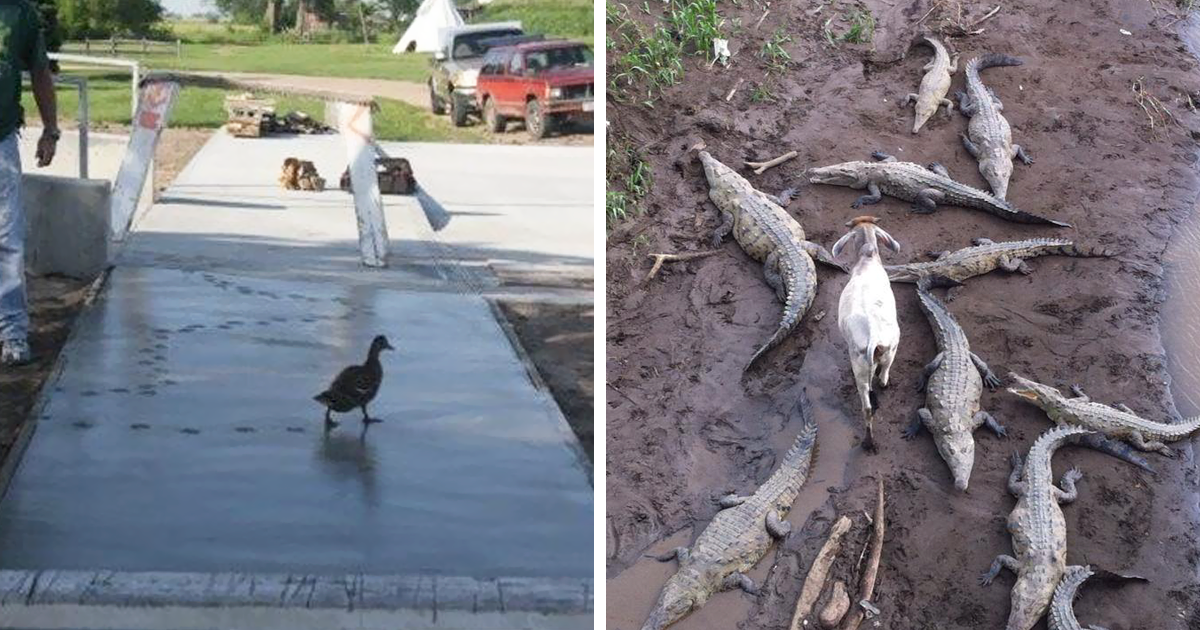
Note: This article uses a funny, human-style title to describe real animal behaviors such as confidence, curiosity, stubbornness, opportunistic feeding, urban adaptation, and impressive survival instincts. Please admire wildlife from a respectful distance. The animals may look unbothered, but they are still wild, not background actors in your vacation selfie.
When Nature Has Main Character Energy
Some animals tiptoe through life. Others enter the scene like they own the planet, the sidewalk, the picnic blanket, and possibly your sandwich. These are the creatures that seem to wake up every morning, stretch dramatically, and decide that rules are merely decorative suggestions. They are not always “rude,” of course. Most are simply doing what evolution trained them to do: find food, protect territory, explore new opportunities, avoid predators, or take advantage of humans who keep leaving snacks in flimsy packaging.
The phrase “animals who absolutely don’t give a damn” is funny because it captures a familiar moment: a goat standing on a car as if it paid for parking, a crow solving a trash-bag puzzle faster than most people solve their email inbox, or a sea lion hauling itself onto a dock with the confidence of a retired CEO. Behind the comedy is a fascinating truth. Many animals are bolder, smarter, more adaptable, and more personality-packed than we give them credit for. Some thrive in cities. Some ignore social expectations. Some are built like tiny tanks with fur. And some simply refuse to be embarrassed, which is honestly inspirational.
Here are 30 animals that appear to have misplaced their concern somewhere in the evolutionary lost-and-found.
30 Animals Who Look Completely Unbothered
1. Honey Badgers: The Original Chaos Professionals
Honey badgers are famous for their fearless reputation, and while the internet turned them into a meme, the real animal is impressive enough without exaggeration. Thick skin, strong claws, powerful jaws, and a stubborn hunting style make the honey badger look like nature designed a small armored troublemaker and forgot to install hesitation.
2. Raccoons: Tiny Bandits With Hands
Raccoons do not raid trash cans because they are “bad.” They do it because they are opportunistic omnivores with excellent problem-solving skills and extremely useful paws. In neighborhoods and parks, raccoons quickly learn where food appears, which lids are weak, and which humans underestimate them. That is not mischief. That is research.
3. Crows: Feathered Geniuses With Attitude
Crows are intelligent, adaptable, and comfortable around human spaces. They recognize patterns, exploit food sources, and often behave as if the city is a puzzle built for their entertainment. A crow walking across a road with no hurry at all is not confused. It may simply be calculating how many cars it can inconvenience before lunch.
4. Gulls: Boardwalk Snack Inspectors
Gulls have earned a dramatic reputation for stealing fries, chips, and sandwiches, although not every gull is a criminal mastermind. Some individuals are bolder than others, and many are careful around humans. Still, the ones that do swoop in for your beach snack have the confidence of a restaurant critic with wings.
5. Goats: Climbing, Chewing, Judging
Goats are agile, curious, and famously willing to climb things that do not look climbable. In Morocco, goats are known for climbing argan trees to reach fruit. On farms, they climb fences, hay bales, equipment, and sometimes other goats. A goat does not ask, “Should I be up here?” A goat asks, “Is there a higher place from which to judge everyone?”
6. Capybaras: Calm Kings of the Animal Group Chat
Capybaras are the world’s largest rodents, but their true superpower is looking peacefully unimpressed by everything. Birds perch on them. Other animals gather near them. Humans adore them. The capybara response is usually a serene expression that says, “Yes, this is my life, and no, I will not be taking questions.”
7. Bison: Majestic, Massive, and Not Your Photo>7. Bison: Majestic, Massive, and Not Your Photo Prop
Bison often appear calm while grazing, but that calm should not be mistaken for permission>7. Bison: Majestic, Massive, and Not Your Photo Prop
B to approach. These large animals are powerful, fast, and unpredictable. Their don’t-care energy is less “cute rebellion” and more “I am a living monument with horns.” Respect the space. Admire the fluff from far away.
8. Octopuses: Escape Artists With Eight Exit Plans
Octopuses are intelligent, flexible, curious animals known for problem-solving and escape behavior. Some can open jars, squeeze through tiny spaces, and explore with astonishing determination. If an octopus finds a gap, it does not see a problem. It sees a door that management failed to label properly.
9. Sea Lions: Dock Owners Without Paperwork
California sea lions are social, vocal, and highly comfortable in coastal environments where humans also fish, dock boats, and drop opportunities. They may haul out in groups, bark loudly, and occupy space with zero concern for anyone’s schedule. A dock full of sea lions is not a crowd. It is a board meeting.
10. Squirrels: Parkour Specialists With Snacks To Hide
Squirrels move through cities like tiny athletes in a low-budget action movie. They leap across branches, raid bird feeders, bury food, dig it up, and sometimes stare directly at humans while chewing. Their fearless vibe comes from speed, alertness, and the confidence of an animal that knows every tree is an emergency staircase.
11. Cats: Domestic Royalty With Flexible Office Hours
Cats may love their people, but they also maintain a strong independent streak. They choose when to socialize, where to sit, and which important object deserves to be knocked from a table. A cat walking across your keyboard during a meeting is not an accident. It is a quarterly performance review.
12. Ravens: Backpack Engineers
Ravens are clever birds that can learn to access food in human environments. In national parks, visitors are warned to secure food because animals can learn quickly, and ravens have been known for impressive problem-solving around bags, zippers, and unattended snacks. That is not theft. That is advanced field testing.
13. Coyotes: Urban Adaptation Experts
Coyotes have adapted to many urban and suburban landscapes. Studies show that urban coyotes can be bolder and more exploratory than rural ones, though boldness does not automatically mean aggression. In other words, the city coyote is not necessarily looking for drama. It may just be very comfortable using the crosswalk of life.
14. Pigeons: Sidewalk CEOs
Pigeons are so common in cities that people forget how successful they are. They navigate crowds, find food, avoid traffic, and maintain a relaxed public presence. A pigeon does not care that you are late. A pigeon will hold a meeting in the exact place your foot was planning to land.
15. Moose: Long-Legged Traffic Controllers
Moose are enormous animals that can appear strangely casual while blocking roads, wandering through towns, or standing in water like they are waiting for a spa appointment. Their size alone gives them don’t-care energy. When a moose chooses the road, the road becomes a moose-adjacent suggestion.
16. Penguins: Formalwear, Slapstick, and Zero Shame
Penguins are elegant in documentaries and ridiculous in motion, which is a perfect combination. They waddle, slide, stumble, recover, and continue with heroic dignity. Their secret is commitment. If a penguin falls, it does not spiral emotionally. It simply becomes horizontal for a moment and resumes being iconic.
17. Opossums: Night Shift Survivors
Opossums are often misunderstood, but they are useful scavengers and resilient urban neighbors. Their famous defense response can make them seem dramatic, yet it is a survival strategy. An opossum crossing a fence at midnight looks like someone’s tired uncle leaving a party early, and honestly, that is relatable.
18. Ducks: Pond-Level Entitlement
Ducks can be charming, social, noisy, and surprisingly bold around people. In parks, they often approach with the confidence of animals that have read the picnic contract and believe bread crumbs are included. They do not need an invitation. They heard a wrapper and formed a committee.
19. Camels: Desert Professionals With Opinions
Camels are built for harsh environments, and they often carry themselves with the unimpressed expression of someone who has survived worse than your complaint. Their long lashes, padded feet, and water-saving adaptations are practical marvels. Their face, however, says, “I have endured deserts. Your itinerary means nothing.”
20. Lemurs: Sunbathing Like Tiny Royalty
Some lemurs are famous for sunning themselves with arms spread wide, soaking up warmth in a pose that looks deeply theatrical. They are not posing for social media, but they certainly understand presentation. A sunbathing lemur looks like it has canceled three meetings and chosen wellness.
21. Sloths: Slow Living, Maximum Commitment
Sloths move slowly because their biology is built around energy conservation. That does not make them lazy; it makes them specialists. A sloth does not rush because rushing is expensive. In a world obsessed with speed, the sloth says, “I will arrive when my metabolism approves.”
22. Geese: Lawn Security With Wings
Geese can be protective, territorial, and loud enough to make a jogger reconsider life choices. Their boldness often comes from defending mates, nests, or goslings. Still, few animals can turn a peaceful park path into a negotiation quite like a goose standing sideways and yelling.
23. Elephants: Gentle Giants With Boundaries
Elephants are intelligent, social, emotional animals with strong family bonds. They can be gentle, playful, grieving, curious, and occasionally very clear about what they will not tolerate. When an elephant decides something is in the way, the “something” should update its plans.
24. Kangaroos: Hoppers With Gym Membership Energy
Kangaroos are powerful animals whose posture, muscles, and spring-loaded movement give them natural confidence. They can look like they are about to challenge a mailbox to a boxing match. Most are simply moving through life, but the visual effect is pure “square up, shrub.”
25. Bears: Picnic Legends For A Reason
Bears are intelligent and food-motivated, which is why secure food storage matters in bear country. They can learn where easy calories come from, and once they connect humans with food, problems follow. A bear does not raid a cooler because it is evil. It raids a cooler because calories are persuasive.
26. Donkeys: Stubborn Or Sensible?
Donkeys have a reputation for stubbornness, but their caution can be a sign of self-preservation. Unlike animals that flee first and ask questions later, a donkey may stop, assess, and refuse to move if something seems unsafe. That is not attitude. That is risk management with ears.
27. Monkeys: The Pickpockets Of The Primate World
In many tourist areas around the world, monkeys have learned that people carry food, shiny objects, and weak situational awareness. Their bold behavior is often learned and rewarded by human mistakes. A monkey stealing sunglasses is not random comedy. It is a tiny economist exploiting market conditions.
28. Turtles: Slow But Unbothered
Turtles have survived for ages by relying on patience, protection, and persistence. A turtle crossing a path does not care about your schedule because its entire lifestyle is built around long-term planning. It may be slow, but it has never once apologized for being on turtle time.
29. Foxes: Elegant Neighborhood Opportunists
Foxes are adaptable, intelligent, and increasingly visible in some urban and suburban spaces. They move lightly, hunt skillfully, and often seem to glide through backyards with cinematic confidence. A fox does not sneak because it feels guilty. It sneaks because style matters.
30. Chickens: Tiny Dinosaurs With Social Drama
Chickens are more complex than many people assume. They have social hierarchies, vocal communication, preferences, and bold individuals who will absolutely inspect your shoelaces. A chicken sprinting toward food has no dignity problem. It has priorities.
Why These Animals Seem So Fearless
What looks like “not giving a damn” is usually a mix of biology, experience, and opportunity. Urban animals such as raccoons, crows, gulls, coyotes, and pigeons often learn that human spaces provide food, shelter, warmth, and fewer traditional predators. Over time, individuals that tolerate noise, traffic, people, and new objects may do better in those environments. That does not mean they are trying to be funny. It means the city rewards the animals that can adapt without panicking every time a scooter goes by.
Personality also matters. Scientists often discuss animal behavior along traits like boldness, shyness, exploration, aggression, and sociability. Within the same species, one animal may avoid humans while another investigates a trash can like it has a PhD in leftovers. This is why one gull may keep its distance while another attempts an airborne nacho extraction. Nature is not a factory. It produces individuals, and some of those individuals have the energy of a customer asking to speak to the manager.
There is also a serious lesson hiding inside the comedy. When animals lose fear of people because they are fed, approached, or rewarded with easy food, conflicts become more likely. Wildlife that seems bold may be stressed, defensive, hungry, protecting young, or simply following learned behavior. The funniest animal moment is still best enjoyed from a safe distance, with your snacks secured and your camera zoom doing the work your feet should not.
Personal Experiences: What These Unbothered Animals Teach Us
Everyone who has spent time around animals has at least one “how is this real?” story. Maybe it was a squirrel hanging upside down from a bird feeder, eating like gravity was a rumor. Maybe it was a cat sitting directly on a freshly folded pile of laundry with the confidence of someone occupying a throne. Maybe it was a goose that turned a casual walk into a diplomatic incident. These moments are funny because animals do not perform embarrassment the way humans do. They simply act, react, and move on.
The best experience related to “animals who absolutely don’t give a damn” is realizing that their confidence is not random. A crow opening a bag, a raccoon testing a lid, or a dog pretending not to hear its name is not just comedy; it is behavior shaped by attention, reward, learning, and personality. Animals notice patterns. They remember what works. They repeat successful strategies. In human language, we call that audacity. In animal language, it is Tuesday.
Watching pets makes this especially clear. A cat may ignore a luxury bed and sleep in the cardboard box it arrived in. A dog may carry a stick three times wider than its body and act offended when the doorway disagrees. A chicken may chase a leaf like it owes money. These are small, harmless dramas that remind us animals experience the world through their own priorities. Comfort, food, safety, curiosity, territory, companionship, and play often matter more than our idea of “proper behavior.”
Wildlife adds another layer. A calm-looking bison, moose, or bear is not inviting closeness. A bold raccoon or coyote is not asking to be fed. A sea lion on a dock is not a plush mascot with whiskers. The experience of seeing these animals should include respect, not just amusement. The most responsible animal lover is the one who can laugh, appreciate, and still give the creature enough space to stay wild.
There is something oddly comforting about animals that seem unbothered. They remind us not to overthink every awkward moment. Penguins fall and keep going. Sloths refuse to rush. Donkeys pause when something feels wrong. Capybaras radiate peace in a chaotic world. Even the raccoon, chaotic little trash scholar that it is, teaches a useful lesson: adapt to the environment, use your tools, and never underestimate the value of persistence.
So the next time an animal looks like it has absolutely no concern for public opinion, enjoy the scene. Laugh at the duck committee, the squirrel acrobat, the cat supervisor, and the pigeon board meeting. Just remember that what looks like attitude is often intelligence, adaptation, survival, or instinct wearing a very funny costume.
Conclusion
Animals that appear to “not give a damn” are some of the most entertaining creatures to watch, but they are also some of the most revealing. Their behavior shows how flexible, intelligent, bold, and resourceful the animal kingdom can be. From honey badgers and raccoons to octopuses, crows, goats, gulls, bison, and capybaras, these creatures remind us that nature is not always graceful, quiet, or polite. Sometimes it is loud, stubborn, snack-obsessed, and standing on top of something it definitely was not supposed to climb.
The real magic is that the joke and the science can exist together. We can laugh at a penguin’s wobble, admire a crow’s cleverness, respect a bison’s boundaries, and still understand that every behavior has a reason. The animal world is full of personalities, strategies, and survival skills. Some animals hide. Some cooperate. Some investigate. And some walk into the scene like they have already read the script and decided to improvise.