Cartoon characters are usually protected from the ordinary hazards of adulthood. They do not compare health insurance plans, answer emails marked “just circling back,” or discover that one decorative pillow somehow costs $89. Yet they do grow up in our imagination. Spanish digital artist Tati MoonS taps into that curiosity by transforming familiar animated heroines into semi-realistic young adults with contemporary hair, makeup, clothing, tattoos, piercings, and attitude.
Her 16-illustration collection brings together personalities from Disney and Pixar movies, Cartoon Network favorites, video games, and the fashion-forward halls of Monster High. The results are not intended as literal casting photographs. They are creative reinterpretations: recognizable enough to trigger instant nostalgia, but different enough to feel like people who might be standing in line at a coffee shop, heading to a concert, or silently judging everyone’s playlist.
Who Is Tati MoonS?
Tati MoonS, whose first name is Tatiana, is a self-taught digital artist from Spain. She began developing her digital painting skills through online tutorials, videos, time-lapse demonstrations, reference studies, and close observation of other artists’ techniques. That background matters because her work has the energy of someone who learned by experimenting rather than following one rigid academic formula.
Her portraits blend fantasy illustration with contemporary beauty photography. Skin has dimension, hair catches light, and clothing appears textured, while the subjects retain the exaggerated color palettes and defining symbols of their animated originals. A character may receive more realistic facial anatomy, but the design still communicates her identity through signature hair, jewelry, scars, costumes, or expressions.
MoonS has also explained that references play an important role in her process. Earlier in her development, she worked more directly beside original images to study proportions. Later, she favored combining several references for poses, lighting, shadows, and anatomy. That shift gave her more freedom to interpret rather than merely copya crucial difference when the goal is to imagine a character’s unwritten future.
Why These Modern Cartoon Makeovers Are So Appealing
They Combine Recognition With Surprise
The pleasure begins with a tiny visual puzzle. Before reading the label, viewers search for clues: red braids and a cowgirl hat, pink skin and candy-colored hair, a lightning-bolt scar, a heart-shaped beauty mark, or an unmistakable pair of vampire fangs. Recognition arrives a second later, followed by the fun of comparing the reinterpretation with the original design.
They Let Nostalgia Grow Up With the Audience
Many people first met these characters as children or teenagers. Seeing them reimagined as modern adults creates a bridge between past and present. The viewer has changed, so the character changes too. Nostalgia research suggests that revisiting meaningful memories can strengthen feelings of connection, belonging, and continuity. In other words, a digital portrait of a grown-up cartoon heroine can be more than a clever makeover; it can feel like unexpectedly meeting an old friend who now owns better boots.
They Turn Simplified Animation Into Personality-Rich Portraiture
Animation often relies on clean shapes, bold silhouettes, and limited details. Semi-realistic portraiture asks different questions. What does the character’s bone structure look like? How would her hairstyle behave under real lighting? Would her original outfit become streetwear, formal fashion, gothic couture, or festival clothing? MoonS answers those questions through visual choices rather than lengthy explanations.
The 16 Tati MoonS Illustrations, Reimagined for Today
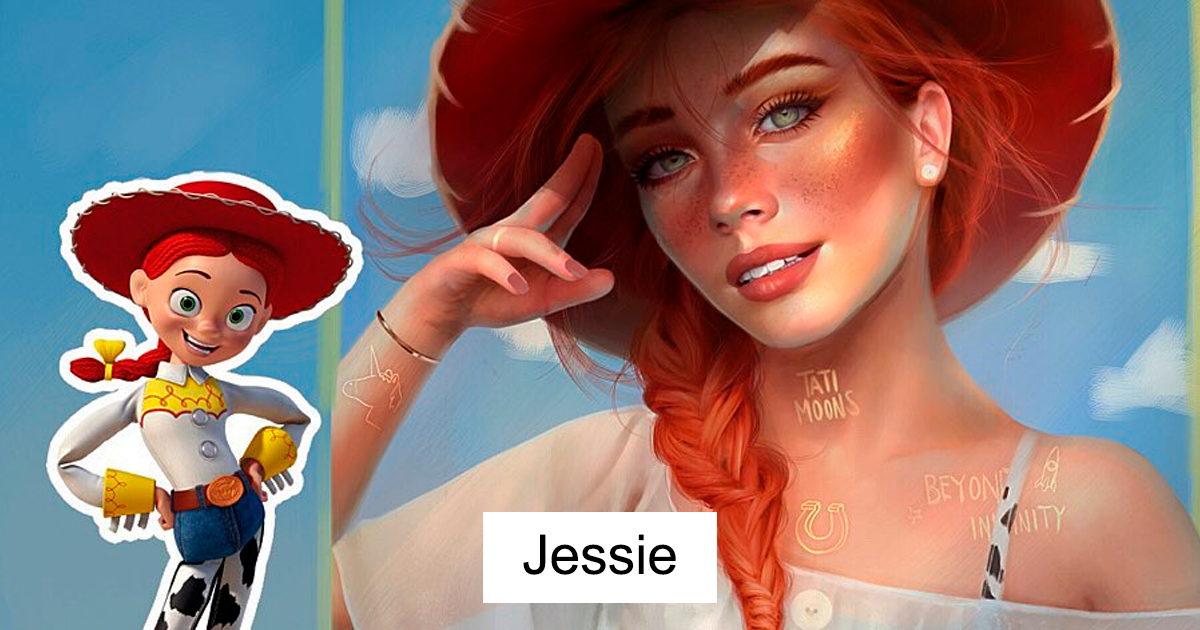
1. Jessie From Toy Story
Jessie’s original personality is energetic, daring, and ready for action, so a modern version cannot simply pose politely and hope the cow-print accessories do all the work. MoonS keeps the unmistakable Western identity while giving the character the confidence of a young adult who could run a ranch, front an indie band, and win an argument before breakfast. The result preserves Jessie’s adventurous spirit without freezing her inside a toy-box aesthetic.
2. Marceline From Adventure Time
Marceline is ideal material for a contemporary redesign because she already feels like a musician who has lived through several style erastechnically, she has. Her dark wardrobe, supernatural complexion, sharp features, and rebellious calm translate naturally into semi-realistic digital art. MoonS emphasizes the character’s rock-star energy without turning her into a generic goth model.
3. Lilo From Lilo & Stitch
A grown-up Lilo is one of the collection’s most emotionally interesting ideas. The original story centers on a lonely Hawaiian girl, her sister, and an alien who helps their damaged family become whole. MoonS’s interpretation suggests that Lilo’s eccentricity survived adulthood intact. The design feels creative, independent, and personal, with visual references that honor her connection to family rather than reducing her to a standard glamorous makeover.
4. Princess Bubblegum From Adventure Time
Princess Bubblegum combines royal polish with scientific intelligence and an occasionally intimidating need to control the experiment. Her modern portrait balances sweetness and authority. Pink remains central, naturallyignoring pink in a Princess Bubblegum redesign would be like redesigning Batman around cheerful beigebut the realism gives her a more composed, analytical presence.
5. Mavis From Hotel Transylvania
Mavis already occupies the border between cute and gothic, so MoonS expands the character’s existing visual language rather than replacing it. Dark hair, pale skin, expressive eyes, and black clothing create an immediately readable silhouette. The grown-up interpretation looks fashionable and slightly mysterious, as though she has just left a vampire-owned boutique with a loyalty card and strong opinions about daylight.
6. Vanessa Doofenshmirtz From Phineas and Ferb
Vanessa’s animated design is built around cool detachment and alternative style. In semi-realistic form, those qualities become sharper: dark fashion, controlled expression, and a sense that she is perfectly capable of handling the latest absurd invention created by her father. MoonS keeps Vanessa recognizable while making her look like a credible contemporary young adult rather than a cartoon copied into human proportions.
7. Rapunzel From Tangled
Rapunzel’s defining traits are creativity, optimism, curiosity, and courage. A successful reinterpretation therefore needs more than extremely committed hair care. MoonS’s portrait retains the luminous fairy-tale quality while making the princess feel modern and self-directed. Soft textures and a romantic palette connect her to the original movie, while the styling suggests someone who has finally seen the world beyond the towerand probably photographed all of it.
8. A Second Take on Marceline
The collection includes another Marceline interpretation, proving that one vampire musician can support more than one visual mood. This second version is useful because it shows how fan art can explore alternate facets of the same character. One portrait may emphasize mystery and elegance; another may lean into grunge, vulnerability, or stage presence. Character design is not a math problem with one officially correct eyebrow.
9. Frankie Stein From Monster High
Frankie Stein’s stitched-together identity, contrasting colors, and electric details make the character a natural fit for detailed digital painting. MoonS translates the signature seams and bold fashion into a more lifelike portrait while preserving the playful monster heritage. The design works because the unusual features are not hidden or “corrected.” They remain the main event, which aligns with Monster High’s long-running celebration of individuality.
10. Aurora From Sleeping Beauty
Aurora’s classic design is graceful, romantic, and rooted in mid-century Disney elegance. MoonS modernizes that softness without making the princess visually anonymous. The portrait maintains a dreamy quality through hair, makeup, and expression, yet gives Aurora more presence than the traditional image of a princess waiting for the plotand a princeto wake her up.
11. Clawdeen Wolf From Monster High
Clawdeen Wolf has always been associated with confidence, fashion, and werewolf-inspired details. MoonS heightens those traits with strong styling and a poised expression. Ears, fangs, hair, and accessories work together as part of a complete identity rather than costume pieces added at the last minute. She looks less like someone attending a monster-themed party and more like the person who organized it, promoted it, and rejected your outfit at the door.
12. Star Butterfly From Star vs. the Forces of Evil
Star Butterfly is bright, chaotic, adventurous, and visually packed with magical symbols. MoonS gives those elements a modern edge through accessories, makeup, and styling while keeping the character’s playful energy. The challenge is avoiding visual overload, and the portrait succeeds by treating Star’s quirks as coordinated personality signals rather than dumping the entire craft-store aisle onto one face.
13. Princess Peach From Super Mario
Princess Peach is recognized worldwide through pink clothing, blond hair, royal accessories, and an optimistic public image. MoonS’s reinterpretation experiments with the tension between polished princess imagery and contemporary fashion. Peach still reads as regal, but the portrait suggests more independence and attitude. That feels especially appropriate for a character who has long participated in racing, sports, adventures, and starring roles of her own.
14. Flame Princess From Adventure Time
Flame Princess presents a delicious technical challenge: how do you make living fire feel human without turning the portrait into a photograph of an emergency? MoonS uses warm light, intense color, and fiery hair to suggest heat while preserving facial detail. The character’s emotional intensity comes through in the palette, making the portrait feel powerful rather than merely decorative.
15. Draculaura From Monster High
Draculaura’s pink-and-black palette, heart motifs, fangs, and cheerful vampire personality make her instantly recognizable. MoonS keeps the sweetness but adds enough realism and fashion detail to prevent the portrait from feeling childlike. The result is charming, dramatic, and a little theatricalexactly what one hopes for from Dracula’s daughter. Subtlety can wait outside until the bats have finished.
16. Widowmaker From Overwatch
Unlike several figures in the collection, Widowmaker is already an adult with a highly detailed game design. The challenge is therefore not aging her up but translating a stylized three-dimensional hero into MoonS’s portrait language. Her cool expression, blue-purple skin, sharp silhouette, and controlled menace remain intact. She looks elegant, dangerous, and entirely unlikely to accept a team-building invitation.
What Makes Tati MoonS’s Style Distinctive?
Many artists create realistic cartoon characters, but MoonS’s work is less interested in strict photorealism than in mood. The faces are polished and believable, yet they remain idealized. Large eyes, smooth skin, dramatic lighting, and carefully styled hair preserve a fantasy-art quality. That choice allows the portraits to live between two worlds: too human to be conventional cartoon art, but too stylized to be mistaken for casting headshots.
Fashion is equally important. Contemporary clothing, piercings, tattoos, makeup, and hairstyles operate as storytelling tools. A modern character redesign succeeds when the viewer can infer personality before reading a caption. MoonS’s strongest portraits achieve exactly that. Marceline looks musical and rebellious; Rapunzel looks artistic and openhearted; Clawdeen looks fashion-conscious and fearless.
The collection also reveals the difficulty of balancing personal style with character accuracy. Some viewers prefer redesigns that closely match original proportions and costumes. Others enjoy bolder changes. Fan art becomes interesting precisely at that point of disagreement. It invites audiences to ask which visual details are essential and which can be reinvented without losing the character.
A Viewer’s Experience: Meeting Childhood Favorites as Adults
Imagine opening the gallery without reading the title. The first portrait appears, and your brain begins sorting clues before you consciously know what it is doing. A hairstyle seems familiar. A color combination rings a tiny bell. Then you notice the cowgirl details and recognize Jessie. That half-second between confusion and recognition is one of the collection’s greatest pleasures. It feels like seeing a former classmate across a crowded room: the face has changed, the style has evolved, but something unmistakable remains.
As the gallery continues, the experience becomes a conversation between memory and interpretation. Lilo may trigger memories of watching a movie about family on a worn-out DVD. Princess Bubblegum and Marceline may recall afternoons spent with Adventure Time, when its candy-colored absurdity gradually revealed surprisingly mature emotions. Monster High characters may remind collectors of dolls, webisodes, school notebooks, or the liberating message that unusual features can be celebrated rather than concealed.
There is also a playful urge to imagine the characters’ adult lives beyond the frame. Jessie might coach horseback riding on weekends. Rapunzel could run a wildly successful art channel from a sunlit studio. Vanessa might manage a record label while calmly deleting twelve voicemails from her father. Princess Peach could oversee a kingdom, compete in tennis, and still find time to correct everyone who assumes pink is not a power color.
Not every interpretation will match every viewer’s mental picture, and that disagreement is part of the fun. A person may think one character looks too glamorous, too edgy, too mature, or not enough like the original. Such reactions reveal how strongly audiences feel ownership over fictional figures that helped shape their childhoods. We do not literally own these characters, of course, but memory is possessive. It keeps a private version of each one and becomes suspicious when someone changes the haircut.
The portraits can also inspire artists. A beginner may notice how MoonS retains a limited set of signature elements while redesigning everything around them. Instead of copying a costume line for line, the artist asks what the costume communicates. Instead of reproducing a flat color, she explores how that color behaves in skin, fabric, hair, or reflected light. The gallery becomes an informal lesson in adaptation: identify the visual DNA, then build a new body around it.
Finally, the viewing experience carries a gentle reminder about growing up. Childhood media does not have to be discarded when adulthood arrives. It can be revisited, questioned, redesigned, and enjoyed with a different eye. Tati MoonS’s illustrations do not simply place older faces on cartoon characters. They allow viewers to bring their present selves into conversation with the stories they once loved.
That is why the collection feels warmer than a standard makeover gallery. Beneath the fashionable clothes and dramatic lighting, it is about continuitythe comforting idea that imagination can mature without becoming boring. Adults may have responsibilities, calendars, bills, and passwords that must contain one capital letter, three symbols, and apparently a sample of their DNA. They can still feel delighted when a familiar fictional face returns in an unexpected form.
Why Grown-Up Cartoon Character Art Thrives Online
Reimagined cartoon characters are particularly suited to social media because the concept can be understood almost instantly. A viewer does not need an art-history degree or a 40-minute explanation. The original design and modern portrait can be compared side by side, producing an immediate reaction. People recognize the character, inspect the changes, choose a favorite, and begin debating whether the artist captured the personality accurately.
The format also encourages sharing across multiple fan communities. Disney enthusiasts may arrive for Rapunzel, Aurora, Jessie, or Lilo. Gamers may focus on Princess Peach and Widowmaker. Monster High fans have three designs to discuss, while Adventure Time viewers can compare different interpretations of Marceline, Princess Bubblegum, and Flame Princess.
This broad appeal does not mean the artwork is universally accepted without criticism. Semi-realistic redesigns often spark conversations about beauty standards, character ages, body types, cultural details, and how much artistic freedom is appropriate. Constructive criticism can deepen the discussion, especially when it focuses on design decisions instead of attacking the artist. Fan art is interpretation, not a replacement for the source material.
Lessons Aspiring Digital Artists Can Learn From the Series
Preserve Recognizable Visual Anchors
A redesign can change clothing, proportions, hairstyle, pose, and setting, but it needs a few visual anchors. These might include a signature color, accessory, facial marking, hairstyle, or emotional quality. Remove every identifying feature and the result becomes an unrelated original character wearing someone else’s name tag.
Use References Without Becoming Trapped by Them
References can help artists understand anatomy, fabric, lighting, poses, and facial structure. The goal is not to trace one photograph or reproduce an animated frame exactly. Combining multiple references allows the artist to construct something new while maintaining technical credibility.
Translate Personality, Not Just Clothing
The most memorable redesigns communicate behavior. Jessie should appear energetic. Marceline should feel musically rebellious. Rapunzel should project curiosity. Widowmaker should look controlled and dangerous. A recognizable jacket is helpful, but expression and posture often tell the stronger story.
Allow Personal Style to Remain Visible
Fan art becomes more compelling when the artist contributes a distinct point of view. MoonS does not erase her own preferences in pursuit of clinical realism. Her taste for dramatic lighting, stylized beauty, fantasy details, and contemporary fashion connects portraits from very different fictional worlds into a recognizable body of work.
Conclusion
Tati MoonS’s 16 illustrations show why realistic cartoon character art remains so shareable. Each portrait offers two rewards at once: the comfort of recognition and the excitement of reinvention. Jessie, Lilo, Rapunzel, Princess Peach, the Monster High crew, the Adventure Time heroines, and the rest retain their defining personalities while stepping into a visual world shaped by modern fashion and semi-realistic digital painting.
The collection is strongest when it treats adulthood not as a loss of magic but as a new design opportunity. These characters may look older, sharper, and more contemporary, yet their original stories still glow beneath the surface. Growing up, apparently, does not mean abandoning cartoons. Sometimes it simply means giving them better lighting, more complicated wardrobes, and the confidence to ignore an overflowing inbox.