If you have ever texted someone, “Let’s meet this evening,” and they replied at 10:47 p.m. like that was perfectly normal, congratulations: you have entered the wonderfully fuzzy world of evening vs. night. These two words seem simple, but the difference between them is more slippery than a wet flip-flop at a pool party.
In everyday American English, evening usually means the later part of the day, when work is winding down, dinner plans appear, and the sky starts flirting with sunset. Night, on the other hand, usually feels later, darker, quieter, and a little more committed. Evening says, “Let’s grab tacos.” Night says, “Why is this raccoon staring at me from the trash can?”
That is the short version. The longer version is more interesting. Dictionary definitions, common speech, astronomy, and social habits all shape how we use these terms. So if you have ever wondered when evening becomes night, why “good evening” and “good night” are not interchangeable, or why “Saturday night” can begin before the sky is fully dark, this guide clears it up.
The Quick Answer: What Is the Difference Between Evening and Night?
The easiest way to understand the difference between evening and night is this: evening is the transition from afternoon into darkness, while night is the period when darkness has more fully taken over.
Evening often includes the hours around sunset, dinner, early social plans, and winding down from the day. Night usually suggests later hours, deeper darkness, sleep, nightlife, or events that happen after the day is clearly over.
That said, there is no universal clock that rings and announces, “Attention everyone, it is officially night now.” Language does not work like that. Context matters. Season matters. Latitude matters. Your grandma, your bartender, and your weather app may all have slightly different opinions.
What “Evening” Really Means
In standard American English, evening usually refers to the latter part of the day and the early part of the darker hours. It comes after afternoon and before late night. It is the time people often associate with dinner, early entertainment, errands after work, and the polite version of being tired.
That is why phrases like these sound natural:
- “I’ll call you this evening.”
- “We’re going out for an evening walk.”
- “There’s an evening concert downtown.”
- “I take evening classes on Tuesdays.”
Evening has a soft edge to it. It feels social, transitional, and slightly more civilized than night. Nobody says, “I enjoyed a lovely night tea on the patio” unless they are either being poetic or have been awake far too long.
In some regional uses, especially older or more local speech patterns, evening can stretch earlier and overlap with late afternoon. That is one reason the word is flexible. But in most everyday modern usage, when people say “evening,” they usually mean the stretch after late afternoon and before it gets properly late.
What “Night” Really Means
Night usually refers to the darker period of the day, especially after dusk and into the hours when people sleep, commute home, go out, work late, or suddenly remember they forgot to defrost the chicken.
Night feels later and darker than evening. It can refer to the literal absence of daylight, but it also carries a social meaning. In other words, night is not just about the sky. It is also about what people normally do at that time.
These phrases sound natural because they match how Americans use the word:
- “Don’t drive there alone at night.”
- “I barely slept last night.”
- “We stayed out all night.”
- “Saturday night was amazing.”
Notice something important here: night can sometimes include activities that start before full darkness. A “Friday night game” or “date night” may begin at 7:00 p.m., when some places in summer still look almost annoyingly sunny. That does not make the phrase wrong. It simply shows that night is part clock, part darkness, and part cultural expectation.
So When Does Evening Become Night?
This is where people want a clean answer and language politely refuses to provide one.
There is no single official moment when evening becomes night in everyday English. But there are three practical ways people draw the line: by custom, by light, and by context.
1. By Custom
Many people think of evening as roughly the hours after work and before late-night hours. A commonly cited rough guide places evening around 5 p.m. to 9 p.m. and night around 9 p.m. to early morning. This is not a law. It is more like a social shortcut. It works pretty well until summer shows up and sunset decides to clock out late.
2. By Light
From an astronomy and weather perspective, the shift is tied to sunset, twilight, and darkness. After sunset, the sky does not instantly become full night. There is a twilight period when sunlight still illuminates the atmosphere. That is why the world can feel very much like evening even after the sun has technically set.
3. By Context
If you say, “Come by in the evening,” most people picture earlier, more open-ended hours. If you say, “Come by at night,” they often imagine later, darker, or more specific hours. The same clock time may feel like evening in one situation and night in another.
Twilight, Dusk, and Darkness: The Science Behind the Feeling
If you want the clearest answer to when evening becomes night, it helps to look at twilight.
After sunset, the atmosphere keeps scattering sunlight for a while. That period is called twilight. In simple terms, twilight is the in-between stage where daytime is over, but nighttime has not fully arrived. That is prime evening territory.
Civil Twilight
This begins at sunset and lasts until the sun is 6 degrees below the horizon. During civil twilight, there is still enough natural light for many outdoor activities. You can usually see the horizon and objects around you pretty clearly. This is why a lot of post-sunset time still feels like evening instead of night.
Nautical Twilight
Then comes nautical twilight, when the sun drops farther below the horizon. The sky gets darker, brighter stars appear, and the horizon becomes harder to make out. The mood shifts. Your patio dinner is ending. Your porch light suddenly feels like a better investment than it did 20 minutes earlier.
Astronomical Twilight
Finally, astronomical twilight ends when the sun is 18 degrees below the horizon. After that, the sky is about as dark as it gets. This is what most people think of as true night.
So if you want a neat summary, evening often overlaps with sunset and twilight, while night usually feels more established after twilight fades and darkness fully settles in.
Why “Good Evening” and “Good Night” Are Not the Same
This is one of the most useful real-world differences.
Good evening is a greeting. You say it when you meet someone in the evening. It is basically the classy cousin of “hey.” It sounds polite, warm, and slightly more polished.
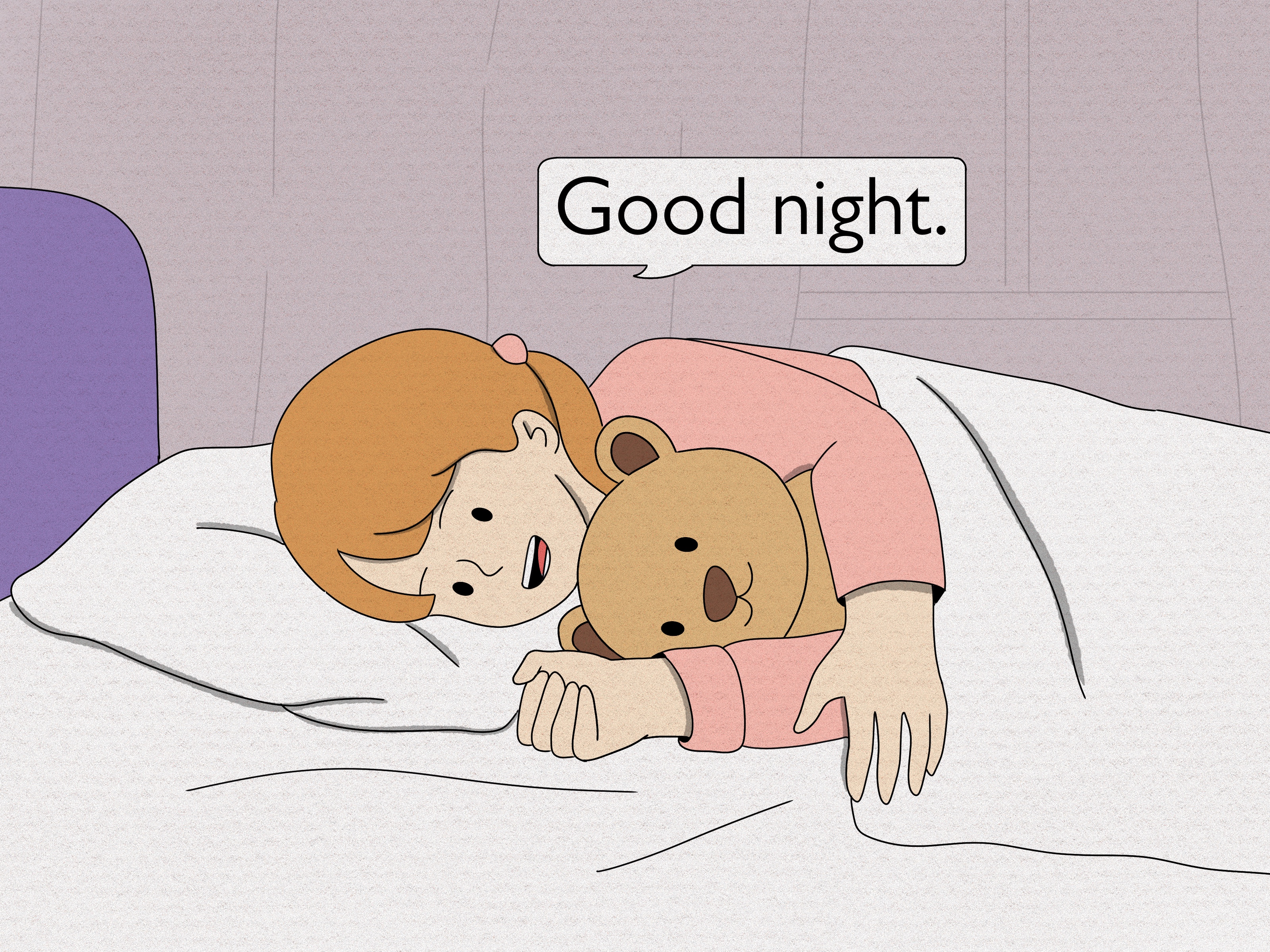
Good night is usually not a greeting. It is a farewell. You say it when someone is leaving, going to bed, or ending the day. If you greet a dinner party host with “good night” at 6:30 p.m., you may sound like you are either leaving instantly or hexing the evening.
Here is the easy rule:
- Good evening = hello
- Good night = goodbye
That small distinction is one of the clearest signs that English treats evening and night as related but different parts of the day.
How Americans Use “Evening” and “Night” in Everyday Life
One reason people mix these terms up is that everyday usage is driven by habit, not astronomy charts pinned to the refrigerator.
Scheduling
If a restaurant says it has “evening reservations,” that usually suggests earlier dinner hours. If an event is called a “night market,” “late-night screening,” or “night tour,” it sounds later, darker, and more atmospheric.
Work and School
“Evening classes” usually start after the normal workday but before very late hours. “Night shift” sounds later, more intense, and tied to overnight or near-overnight work.
Entertainment
An “evening performance” sounds refined, planned, maybe even a little dressed up. “Nightlife” sounds louder, later, and less likely to involve sitting quietly in row G with a program in your lap.
Family Life
Parents often talk about the evening routine and the night waking. That difference is not random. Evening is the wind-down. Night is what comes after everyone is supposed to be asleep, including the one child who somehow becomes a philosopher at 2:13 a.m.
Why the Boundary Feels Different in Summer and Winter
Another reason the evening vs. night distinction gets messy is that daylight changes across the year. In summer, you may still have bright skies well into what the clock calls evening. In winter, it can feel like night long before dinner has even made it onto the table.
That means your brain often uses both light and routine to label the time. At 7:30 p.m. in July, you might say, “What a beautiful evening.” At 5:30 p.m. in December, with darkness already outside, you may say, “I hate driving at night,” even though it is technically earlier.
So the difference is not only linguistic. It is experiential. Humans are not clocks with eyebrows. We respond to light, habit, and mood.
Common Phrases That Reveal the Difference
Language often explains itself through common phrases. Here are a few examples that show how these words behave:
- This evening usually sounds more formal or more specific than tonight.
- Tonight can cover the current evening and night more broadly.
- Last night is standard; people rarely say last evening unless they are writing in a more formal tone.
- Evening wear suggests formal clothes for social events held in the evening.
- Night owl describes someone who naturally stays up late.
- Nighttime sounds broader and more literal than evening.
These little patterns matter because they show that evening meaning and night meaning overlap, but they are not interchangeable twins wearing fake mustaches.
Evening vs. Night in Tone and Mood
Even beyond dictionary definitions, these words create different emotional effects.
Evening feels open, social, mellow, transitional, and often pleasant. It suggests possibility. Dinner plans. A walk outside. A concert. A glowing sky. Maybe a little optimism.
Night feels deeper, more settled, more private, and sometimes more mysterious. It can be peaceful, romantic, spooky, exhausting, glamorous, or all four if your plans take a weird turn.
That tonal difference is why writers choose carefully between them. “A warm summer evening” creates a very different picture from “a dark summer night,” even if the clock times are not that far apart.
Real-Life Experiences That Make the Difference Obvious
The easiest way to understand evening vs. night is not from a dictionary. It is from real life.
Think about leaving work on a Friday around 6:00 p.m. The day feels finished, but it does not feel like the day has disappeared. The sky may still have color. Traffic is heavy. Restaurants are filling up. People are texting things like, “See you this evening.” That moment has an evening energy. It is social, in motion, and still connected to the daytime world.
Now think about stepping outside at 11:30 p.m. The same city feels completely different. Fewer cars. Fewer families. More delivery drivers, insomniacs, shift workers, and people making questionable snack choices. The world is still awake, but in a different register. That is night. It is not just later on the clock. It feels like a different chapter.
Travel makes this distinction even clearer. If your flight lands in the evening, you imagine checking in, grabbing dinner, maybe taking a short walk, and texting everyone that you arrived safely. If your flight lands at night, the whole mood changes. Now you are scanning for the hotel shuttle, wondering if room service is still open, and hoping your phone battery survives long enough to guide you somewhere with pillows.
Family life has its own version. Evening is homework, dishes, showers, television, and that optimistic belief that bedtime will go smoothly tonight. Night is what comes after lights-out. It is the dog barking at nothing, the teenager looking for a charger, or a toddler suddenly needing water, a story, a hug, and perhaps a full legal explanation of why clouds exist.
Seasonal changes also make the experience vivid. On a summer evening, people linger outside because the light hangs around like a guest who keeps saying goodbye but never actually leaves. Kids ride bikes. Neighbors talk longer. Grills stay hot. It feels relaxed. But on a winter night, darkness arrives with dramatic confidence. You go from afternoon errands to “Why does it feel like midnight?” in what seems like 14 minutes.
Even social plans show the difference. “Come over this evening” sounds easygoing and flexible. “Come over at night” sounds later, maybe more deliberate, maybe even a little dramatic. A wedding may have an evening reception. A comedy club may advertise a night show. A museum might host an evening event. A ghost tour absolutely prefers night. Branding knows what it is doing.
My favorite example is the neighborhood walk. During the evening, people wave, joggers are out, and somebody is always pretending their dog is not the one causing chaos near the mailbox. At night, the same walk becomes quieter. Porch lights matter more. Sounds seem sharper. You notice the moon, the breeze, and every suspicious rustle in a bush. Evening invites you out. Night makes you aware you are out.
That is really the heart of it. Evening feels like the day is ending. Night feels like the day is over. One transitions. The other settles. One still carries traces of daylight, activity, and openness. The other belongs more fully to darkness, rest, privacy, and late-hour life. Once you notice that difference in your own experience, the words stop being confusing and start feeling exactly right.
Final Thoughts
So, evening vs. night: what is the real difference? Evening is generally the later part of the day and the transition into darkness. Night is the darker, later period that follows. Evening often overlaps with sunset and twilight. Night usually feels more established once darkness fully settles in. But everyday English is flexible, so context matters just as much as the clock.
If you want the simplest rule, use evening for earlier, transitional, social hours and night for later, darker, more settled hours. Use good evening when saying hello. Use good night when saying goodbye. And if someone invites you over “tonight,” maybe ask a follow-up question unless you enjoy arriving fashionably confused.
English loves fuzzy edges, and this is one of them. But once you understand the blend of light, habit, timing, and tone behind these words, the difference between evening and night becomes much easier to spot.