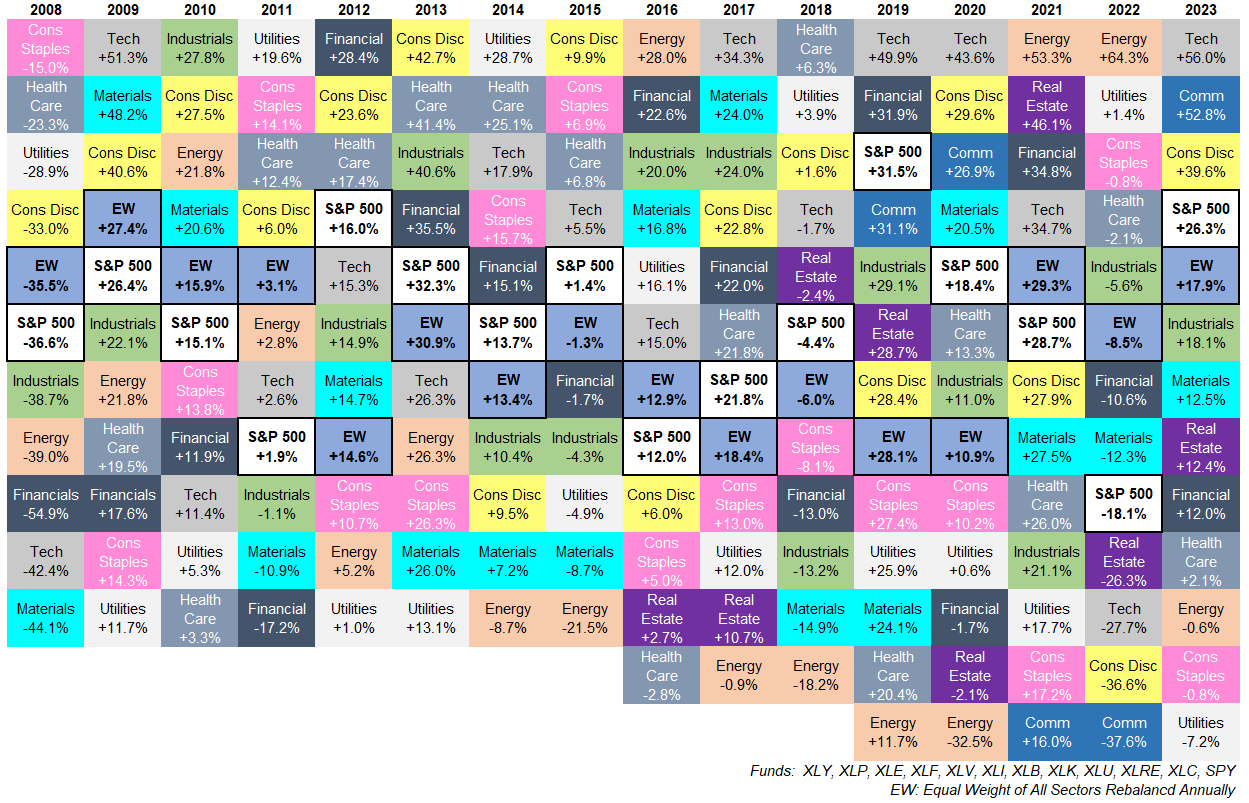
Equal weight investing sounds almost too simple to be interesting: take a group of stocks, give each one the same importance, rebalance regularly, and refuse to let the biggest names hog the spotlight. In a world where giant technology companies can make a broad market index feel like a luxury bus driven by five passengers in the front row, equal weight investing offers a refreshingly democratic idea: every company gets one vote.
Of course, simple does not mean risk-free, magical, or guaranteed to outperform. Equal weight investing is not a secret Wall Street spell whispered by hedge fund wizards over expensive coffee. It is a portfolio construction method with clear advantages, real trade-offs, and a personality of its own. Used wisely, it can help reduce concentration risk, create broader market exposure, and encourage disciplined rebalancing. Used blindly, it can increase turnover, costs, volatility, and disappointmentfour guests nobody wants at a retirement party.
This guide explains what equal weight investing is, how it works, why investors use it, where it can go wrong, and how real-world investors can think about it inside a long-term portfolio.
What Is Equal Weight Investing?
Equal weight investing is an investment strategy that gives every holding in a portfolio the same percentage allocation. If a portfolio owns 10 stocks, each stock starts at 10%. If an index owns 500 stocks, each stock starts at 0.2%. The goal is to avoid letting the largest companies dominate portfolio performance simply because they have the biggest market capitalization.
The most familiar comparison is the difference between a market-cap-weighted index and an equal-weighted index. In a market-cap-weighted index, companies with larger market values receive larger weights. In the traditional S&P 500, for example, the largest companies can have a much greater influence on returns than smaller members of the same index. In an equal-weighted version of the S&P 500, every company receives the same starting weight at each rebalance, whether it is a trillion-dollar technology giant or a smaller industrial firm quietly making useful things while nobody tweets about it.
How Equal Weight Investing Works
The basic math is straightforward. Divide 100% by the number of holdings. That is the target weight for each investment.
A Simple Example
Imagine a portfolio with five stocks:
- Stock A: 20%
- Stock B: 20%
- Stock C: 20%
- Stock D: 20%
- Stock E: 20%
After several months, Stock A rises sharply and becomes 30% of the portfolio, while Stock D falls to 12%. The portfolio is no longer equal weight. A rebalance trims Stock A and adds to underweight holdings until each stock returns closer to 20%.
This creates a built-in “sell high, buy low” discipline. It does not guarantee profits, but it forces the portfolio to avoid endlessly chasing yesterday’s biggest winners. In emotional markets, that discipline can be useful because investors are famously skilled at buying enthusiasm at full retail price.
Equal Weight vs. Market-Cap Weight
Market-cap weighting is the standard approach used by many major stock indexes. It gives more influence to companies with higher market values. This method is efficient, low-cost, and easy to maintain because weights naturally adjust as stock prices move. If a company grows larger, it becomes a bigger part of the index. If it shrinks, its weight falls.
Equal weighting does the opposite. It refuses to let size decide importance. Every holding receives the same allocation at the rebalance date. This produces a portfolio with different behavior, different sector exposure, and often a greater tilt toward smaller companies within the index.
Market-Cap Weighting: The Popular Kid
Market-cap-weighted funds are popular because they are cheap, scalable, and tax-efficient. They also naturally reflect where investors have placed the most market value. If large companies keep outperforming, market-cap-weighted indexes can look brilliant. The downside is concentration risk. When a handful of mega-cap stocks dominate the index, the “broad market” may not be as broad as investors assume.
Equal Weighting: The Classroom Monitor
Equal weighting spreads exposure more evenly. It reduces the impact of any one company and gives more room for mid-sized and smaller large-cap companies to contribute. This can be helpful when market leadership broadens beyond a few mega-cap names. However, equal weighting can lag badly when the biggest companies are leading the market, especially during periods driven by technology, artificial intelligence, or other dominant growth themes.
Why Investors Choose Equal Weight Investing
Investors are often drawn to equal weight investing for one big reason: diversification that feels more real. Owning 500 stocks does not automatically mean each stock matters. If the top 10 companies control a large portion of a market-cap-weighted index, the portfolio’s return may depend heavily on a small group of stocks.
1. Reduced Concentration Risk
Equal weight investing limits the impact of any single company. In an equal-weighted 500-stock index, one company starts at only 0.2%. That means even a dramatic move in one stock has a limited direct effect on the total portfolio. For investors worried about too much exposure to mega-cap technology companies, equal weight funds may provide a cleaner way to broaden participation.
2. Broader Market Participation
Equal weight portfolios often give more exposure to sectors and companies that are underrepresented in market-cap-weighted indexes. Industrials, materials, utilities, real estate, financials, and consumer staples may receive greater influence depending on the number of companies in the index. This can help when the market rally expands beyond the most famous names.
3. Built-In Rebalancing Discipline
Rebalancing is a central feature of equal weight investing. Over time, winners become overweight and laggards become underweight. Rebalancing trims the winners and adds to the laggards. That can feel uncomfortable because it asks investors to sell what has been working and buy what has been sulking in the corner. But disciplined investing often feels awkward in the moment and sensible in hindsight.
4. Exposure to Size and Value Factors
Because equal weight indexes give the same allocation to every company, they tend to overweight smaller companies within the chosen universe and underweight the largest firms. They may also lean slightly toward value characteristics because rebalancing adds to stocks that have fallen in relative weight. This does not make equal weight investing the same as small-cap or value investing, but it can create factor tilts that differ from traditional index funds.
The Risks and Downsides of Equal Weight Investing
Equal weight investing has plenty of charm, but it is not a superhero cape. Investors should understand the trade-offs before jumping in.
Higher Turnover
Equal weight funds must rebalance regularly to restore target weights. This creates more trading than a typical market-cap-weighted index fund. More trading can mean higher transaction costs inside the fund. In taxable accounts, turnover may also matter if it leads to capital gains distributions, although ETF structures can sometimes reduce this issue.
Potentially Higher Expense Ratios
Equal weight ETFs often cost more than the cheapest plain-vanilla index funds. The difference may look small, but fees compound over time. A fund charging 0.20% is still inexpensive compared with many active funds, but it is more expensive than some ultra-low-cost S&P 500 ETFs. Investors should compare costs carefully instead of assuming “smart” means “free.” Wall Street is generous with brochures, not fee waivers.
More Volatility
Because equal weight portfolios increase exposure to smaller companies within an index, they may experience higher volatility. Smaller companies can be more sensitive to economic cycles, interest rates, credit conditions, and investor risk appetite. Equal weight investing may diversify company-specific risk, but it can increase exposure to cyclical market forces.
Tracking Error
An equal weight fund can perform very differently from a market-cap-weighted benchmark. This difference is called tracking error. When equal weight outperforms, tracking error feels like genius. When it underperforms, it feels like your portfolio missed the party and arrived just in time to help clean up.
Equal Weight Investing and the S&P 500
The S&P 500 Equal Weight Index is one of the best-known examples of equal weight investing. It owns the same companies as the traditional S&P 500 but assigns each company the same weight at quarterly rebalancing. That simple change creates a meaningfully different portfolio.
In the traditional S&P 500, the largest companies can dominate index performance. In the equal-weighted version, those same companies have no more starting influence than any other member. This can reduce dependence on a small group of mega-cap stocks and increase exposure to the “average” company in the index.
Investors can access equal weight strategies through ETFs and mutual funds. The Invesco S&P 500 Equal Weight ETF, commonly known by its ticker RSP, is one of the most recognized equal weight ETFs. Other fund providers also offer equal weight strategies across different indexes, sectors, and market segments.
When Equal Weight Investing May Work Well
Equal weight investing tends to look attractive when market leadership broadens. If smaller large-cap companies, cyclical sectors, value stocks, or overlooked industries begin outperforming mega-cap leaders, equal weight portfolios may benefit.
Broad Bull Markets
When many stocks participate in a market rally, equal weight funds can shine. Instead of relying on a few large companies, they capture gains from a wider group. This is especially useful after long periods of narrow market leadership.
Recoveries After Market Concentration
After periods when a few giant stocks dominate returns, investors may look for ways to diversify away from crowded trades. Equal weighting can help reduce dependence on the biggest names without abandoning the entire index universe.
Long-Term Rebalancing Benefits
The rebalancing mechanism may help investors avoid overconcentration in stocks that have already surged. While this does not guarantee better returns, it encourages a systematic approach rather than emotional decision-making.
When Equal Weight Investing May Struggle
Equal weight investing can underperform for long stretches. It often struggles when mega-cap growth stocks lead the market. If the largest companies are delivering strong earnings, expanding margins, and attracting investor enthusiasm, a market-cap-weighted index may outperform because it owns more of those winners.
Equal weight funds may also struggle during economic slowdowns if their greater exposure to cyclical sectors becomes a disadvantage. A portfolio with more industrial, financial, real estate, or smaller-company exposure may feel the pain when investors flee toward defensive mega-cap leaders.
Who Should Consider Equal Weight Investing?
Equal weight investing may suit investors who want broad stock exposure but are uncomfortable with heavy concentration in the largest companies. It can also appeal to investors who believe long-term returns should come from a wider set of businesses rather than a handful of market celebrities.
It may be especially useful as a complement rather than a complete replacement. For example, an investor might hold a traditional broad-market index fund as a core position and add an equal weight ETF as a satellite allocation. This approach can reduce concentration risk without fully abandoning the efficiency of market-cap weighting.
Possible Portfolio Uses
- Core diversifier: A partial substitute for traditional large-cap U.S. equity exposure.
- Satellite allocation: A smaller position designed to balance mega-cap concentration.
- Factor tilt: A way to add modest size and value exposure within a large-cap universe.
- Rebalancing tool: A disciplined strategy for trimming winners and adding to laggards.
How to Evaluate an Equal Weight Fund
Before choosing an equal weight ETF or mutual fund, investors should look beyond the name. Not all equal weight funds are built the same way.
Check the Index
Does the fund track the S&P 500 Equal Weight Index, an equal-weighted Nasdaq index, a sector index, or a custom benchmark? The underlying universe matters. Equal weighting a broad index is different from equal weighting a narrow technology or thematic index.
Review the Rebalancing Schedule
Most equal weight indexes rebalance quarterly, but schedules can vary. More frequent rebalancing may keep weights closer to target but can increase trading. Less frequent rebalancing may reduce trading but allow weights to drift.
Compare Fees
Expense ratios reduce returns. Compare the fund’s fee with market-cap-weighted alternatives and other equal weight funds. A slightly higher fee may be acceptable if the strategy fits your goals, but it should be a conscious choice.
Look at Sector Exposure
Equal weighting changes sector weights. A sector with many companies may receive more weight than it does in a market-cap-weighted index. Review holdings and sector breakdowns to understand what you actually own.
Understand Tax Placement
Because equal weight strategies rebalance regularly, tax-aware investors may prefer to hold them in retirement accounts when appropriate. This depends on the fund structure, tax situation, and investment plan.
Equal Weight Investing vs. Active Management
Equal weight investing is rules-based, not traditional stock picking. It does not analyze company earnings, competitive advantages, debt levels, or management quality. It simply gives each company the same weight and rebalances according to a schedule.
That makes it different from active management. An active manager may avoid weak companies, overweight strong ones, or adjust based on valuation. Equal weight investing does not ask whether a company deserves 0.2%; it just hands over the same slice of pie. Sometimes that discipline is a strength. Sometimes it means owning more of companies that are cheap for a reason.
Common Mistakes Investors Make With Equal Weight Investing
Mistake 1: Expecting Constant Outperformance
Equal weight investing can outperform during certain market environments and underperform during others. Investors who buy only after reading about recent outperformance may be late. Chasing performance is still chasing performance, even if the vehicle has a clever name.
Mistake 2: Ignoring Costs
A higher expense ratio, wider bid-ask spread, or tax drag can reduce the benefits of the strategy. Always evaluate total cost, not just the headline idea.
Mistake 3: Confusing More Holdings With Better Diversification
Equal weight can improve stock-level diversification inside an index, but it does not replace asset allocation. A 100% stock portfolio is still a 100% stock portfolio. Bonds, cash, international stocks, and other assets may still matter depending on goals and risk tolerance.
Mistake 4: Forgetting Personal Risk Tolerance
Equal weight strategies can be volatile. If an investor panics during underperformance, the strategy will not help. The best portfolio is not the one that looks smartest in a spreadsheet; it is the one an investor can actually hold when markets start acting like a raccoon trapped in a garage.
Practical Experiences With Equal Weight Investing
One of the most useful ways to understand equal weight investing is to imagine the experience of holding it through different market moods. On paper, the strategy is clean and logical. In real life, it can test patience, especially when market headlines are obsessed with a small group of superstar stocks.
An investor who adds an equal weight ETF after noticing that the largest technology companies dominate a traditional index may feel smart at first. The logic is sound: spread risk, reduce dependence on mega-cap names, and give more companies a chance to contribute. But then comes the first awkward moment. Suppose those mega-cap names continue rising while the rest of the market drifts sideways. The equal weight position may lag the standard index for months or even years. That underperformance can feel personal, even though it is simply the expected behavior of a different weighting method.
This is where expectations matter. Equal weight investing is not a prediction that the biggest stocks will crash tomorrow. It is a structural decision to avoid letting any single company or small group of companies dominate the portfolio. That distinction is important. Investors who treat equal weighting as a short-term bet may become frustrated quickly. Investors who treat it as a long-term diversification tool are more likely to stay disciplined.
Another real-world experience involves rebalancing. Equal weight funds quietly do something many individual investors struggle to do: they trim winners and buy laggards. Emotionally, this can feel backward. People like winners. People like owning what is going up. Nobody wants to add money to the stock that looks like it just walked out of a rainstorm holding a broken umbrella. But rebalancing is designed to prevent the portfolio from becoming too dependent on recent winners.
For investors building their own equal weight portfolio of individual stocks, the workload can become surprisingly high. Tracking weights, placing trades, managing taxes, and avoiding overtrading all require discipline. A 20-stock equal weight portfolio is manageable for some investors, but a 100-stock version can become a second job. And unlike a fun second job, it may involve spreadsheets and capital gains. This is why many investors prefer equal weight ETFs: the fund handles rebalancing, recordkeeping, and index tracking.
There is also the psychological benefit of broader participation. During periods when the market rally expands beyond mega-cap growth stocks, equal weight investing can feel satisfying. Investors may see gains coming from industrials, financials, healthcare, consumer companies, and other sectors that were previously ignored. This can make the portfolio feel less fragile because returns are not tied to just a few famous companies.
However, equal weight investing can also expose investors to more economically sensitive areas of the market. If interest rates rise or recession fears increase, smaller and more cyclical companies may struggle. In those periods, equal weight funds may underperform defensive mega-cap-heavy indexes. This does not mean the strategy is broken. It means the investor is being paidor not paidfor a different kind of exposure.
A practical approach is to size the allocation thoughtfully. Instead of replacing an entire U.S. stock allocation with equal weight exposure, many investors may use it as a partial complement. For example, someone might hold 70% of their U.S. equity allocation in a broad market-cap-weighted fund and 30% in an equal weight fund. Another investor might use a smaller 10% to 20% satellite position. The exact number depends on goals, tax situation, time horizon, and comfort with tracking error.
The biggest lesson from real-world experience is this: equal weight investing works best when investors know why they own it before it starts behaving differently. If the goal is reduced concentration, broader exposure, and systematic rebalancing, temporary underperformance is part of the package. If the goal is to beat the S&P 500 every year, disappointment may arrive wearing tap shoes.
Conclusion: Is Equal Weight Investing Worth It?
Equal weight investing is a thoughtful strategy for investors who want broader participation and less dependence on the biggest companies in the market. It can reduce concentration risk, create disciplined rebalancing, and provide different exposure from traditional market-cap-weighted funds. But it also comes with higher turnover, possible higher costs, greater tracking error, and periods of underperformance.
The smartest way to view equal weight investing is not as a magic replacement for every index fund, but as a useful portfolio tool. It can work well for investors who understand its behavior, accept its trade-offs, and use it in a plan built around time horizon, risk tolerance, taxes, and long-term goals.
In short, equal weight investing gives every company a seat at the table. Just remember: some seats are more comfortable in certain markets than others.
Note: This article is for educational purposes only and should not be considered personal financial advice. Investors should review fund documents, fees, tax implications, and personal risk tolerance before making investment decisions.