Enneagram compatibility is not about finding the one magical number that will love you forever, refill the coffee pot, and never ask, “What do you want for dinner?” like it is a courtroom interrogation. It is much more useful than that. The Enneagram helps couples understand why they react, love, argue, withdraw, chase, plan, overthink, overgive, or pretend everything is fine while aggressively folding laundry.
Unlike personality systems that focus mainly on behavior, the Enneagram looks at motivation. It asks: What does this person fear? What do they crave? What emotional pattern do they repeat when they are stressed? In romantic relationships, those questions matter because two people can do the same thing for totally different reasons. One partner may plan every detail of a vacation because they love structure. Another may do it because uncertainty makes their brain sound like a smoke alarm.
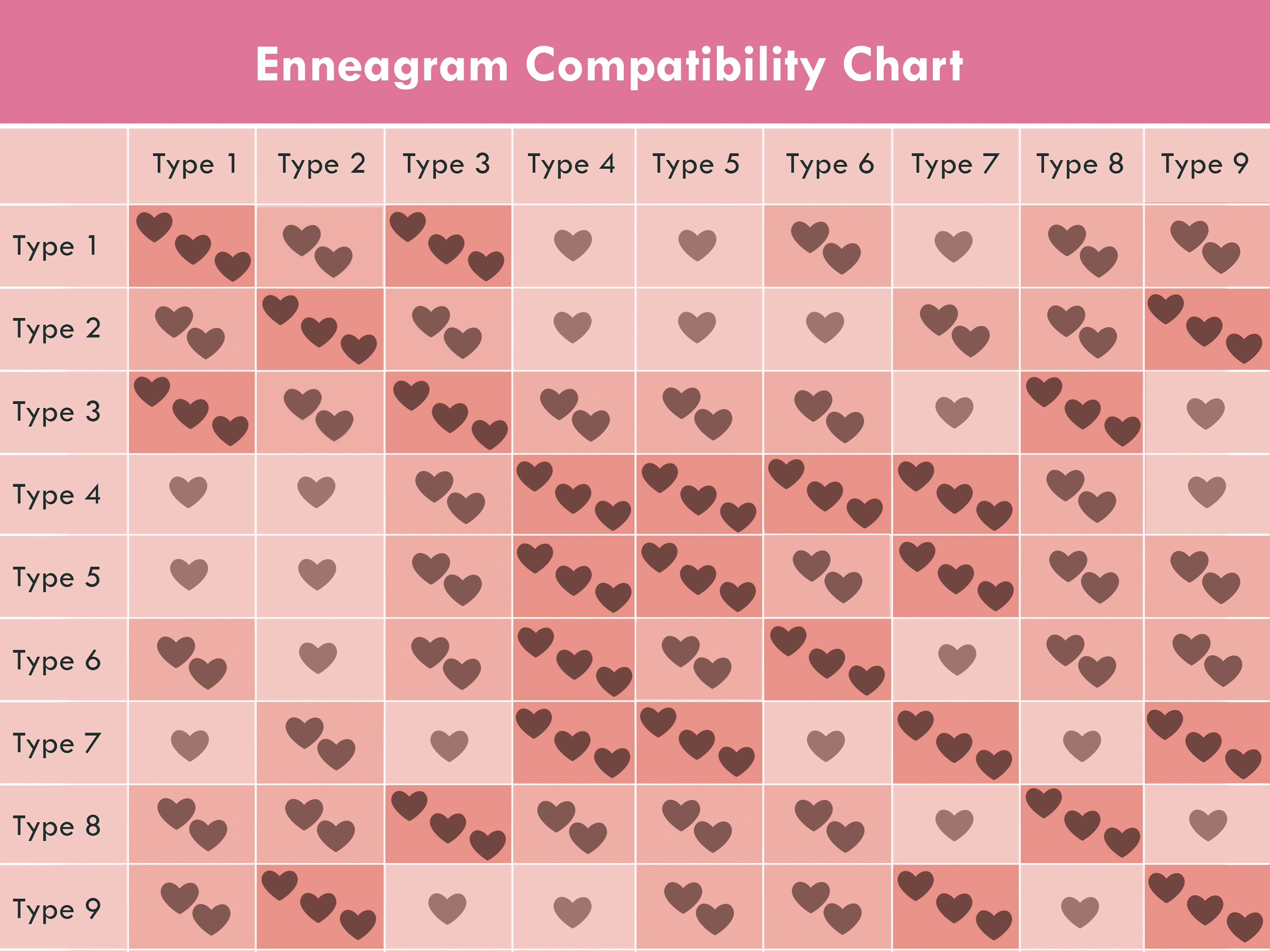
This guide explores Enneagram compatibility through nine romantic pairings, plus practical tips for making each relationship healthier. Think of these pairings as relationship weather reports, not permanent forecasts. A Type 1 and Type 7 can thrive. A Type 4 and Type 5 can build a deep emotional world. A Type 8 and Type 2 can become a power couple with a heart. The key is not having the “perfect” Enneagram match. The key is learning how your patterns dance together without stepping on each other’s emotional toes.
What Is Enneagram Compatibility?
Enneagram compatibility describes how the nine Enneagram personality types may interact in love, dating, marriage, conflict, emotional intimacy, and daily life. Each type has a core motivation, basic fear, preferred way of connecting, and predictable stress pattern. When two types come together, their strengths can complement each other beautifullyor create a sitcom with fewer laugh tracks and more passive-aggressive dishwashing.
The most important thing to know is this: no Enneagram pairing is automatically doomed, and no pairing is guaranteed to be effortless. Compatibility depends on maturity, communication, shared values, emotional availability, and the willingness to grow. The Enneagram simply gives couples a clearer map. It explains why one partner needs reassurance, another needs space, another needs appreciation, and another needs everyone to please stop moving the furniture without a five-year plan.
The 9 Enneagram Types in Love
Type 1: The Reformer
Type 1s are principled, responsible, and improvement-focused. In love, they often show care by being dependable, thoughtful, and committed. Their challenge is learning that a relationship is not a renovation project with two bathrooms and emotional granite countertops.
Type 2: The Helper
Type 2s are warm, generous, and relationship-centered. They give love through support, attention, and nurturing. Their growth edge is learning to ask directly for what they need instead of hoping their partner develops psychic powers by Thursday.
Type 3: The Achiever
Type 3s are driven, adaptable, and goal-oriented. They often bring ambition and energy into relationships. Their challenge is remembering that love is not a performance review, and vulnerability is not a failed brand strategy.
Type 4: The Individualist
Type 4s are emotionally rich, creative, and authenticity-seeking. They want deep connection, not surface-level “How was your day?” followed by six hours of scrolling. Their challenge is not letting emotional intensity become the relationship’s permanent weather system.
Type 5: The Investigator
Type 5s are thoughtful, private, and knowledge-oriented. In romance, they offer loyalty, insight, and calm analysis. Their growth edge is staying emotionally present instead of retreating into a mental cave with snacks and fourteen browser tabs.
Type 6: The Loyalist
Type 6s are committed, responsible, and security-focused. They often make loyal, devoted partners. Their challenge is managing worry and trust so that every unanswered text does not become a three-season mystery drama.
Type 7: The Enthusiast
Type 7s are playful, spontaneous, and optimistic. They bring fun, adventure, and possibility into love. Their challenge is staying present when relationships require difficult conversations, patience, or a calendar that contains something besides “vibes.”
Type 8: The Challenger
Type 8s are strong, protective, and direct. In love, they can be fiercely loyal and courageous. Their growth edge is softening their guard and realizing that tenderness is not the same thing as handing their partner the nuclear codes.
Type 9: The Peacemaker
Type 9s are accepting, steady, and calming. They bring patience and comfort into relationships. Their challenge is speaking up before “I’m fine” becomes a full-time emotional disguise with dental benefits.
9 Romantic Enneagram Pairings & Tips
1. Type 1 and Type 2: The Principled Partner and the Loving Supporter
This pairing can feel warm, purposeful, and deeply committed. Type 1 brings structure, values, and integrity. Type 2 brings affection, emotional generosity, and personal warmth. Together, they can build a relationship that feels both responsible and caring.
The potential issue? Type 1 may become critical when stressed, while Type 2 may feel unappreciated or emotionally overlooked. If the One keeps correcting and the Two keeps overgiving, both partners can start feeling like they are working unpaid overtime in the Department of Relationship Maintenance.
Compatibility tip: Type 1 should practice appreciation before correction. Type 2 should express needs clearly instead of giving until resentment arrives wearing tap shoes.
2. Type 1 and Type 7: The Planner and the Adventurer
At first glance, Type 1 and Type 7 may look like opposites. One wants order; the other wants options. One reads the instructions; the other has already built something colorful that may or may not be a bookshelf. But this difference can be exciting. Type 1 helps Type 7 follow through, while Type 7 helps Type 1 relax and enjoy life.
Conflict often appears when Type 1 sees Type 7 as irresponsible, and Type 7 sees Type 1 as controlling. The relationship works best when both partners stop treating their style as the only adult in the room.
Compatibility tip: Create a balance between structure and spontaneity. Plan the important things, then leave room for surprise. Yes, even Type 1 can survive brunch without a spreadsheet.
3. Type 2 and Type 8: The Heart and the Protector
Type 2 and Type 8 can create a passionate, loyal, action-oriented relationship. Type 2 brings warmth and emotional connection. Type 8 brings confidence, protection, and directness. This pairing can feel powerful because both types care deeply, even if they show it differently.
The challenge is control. Type 2 may try to earn love through helpfulness, while Type 8 may resist feeling managed or emotionally cornered. If things go sideways, the Two may feel rejected and the Eight may feel pressured.
Compatibility tip: Type 2 should love without overextending. Type 8 should receive care without treating vulnerability like a suspicious package at the front door.
4. Type 2 and Type 9: The Nurturer and the Peacekeeper
This is often a gentle, affectionate pairing. Type 2 wants to care; Type 9 wants harmony. Together, they can create a soft landing place where both partners feel accepted. It is the kind of relationship where soup appears when someone coughs once.
However, both types may avoid conflict in different ways. Type 2 may hide needs behind helpfulness, while Type 9 may minimize problems to preserve peace. Over time, the relationship can become pleasant on the surface but emotionally under-discussed.
Compatibility tip: Schedule honest check-ins. Make direct communication normal, not a dramatic event requiring candles, tissues, and a committee.
5. Type 3 and Type 6: The Achiever and the Loyalist
Type 3 and Type 6 can be a strong team. Type 3 brings ambition, optimism, and forward momentum. Type 6 brings loyalty, preparation, and long-term commitment. Together, they can build a stable life with goals, plans, and probably a shared password manager.
The tension comes from anxiety and image. Type 3 may focus on success and efficiency, while Type 6 may need reassurance and transparency. If the Three moves too fast, the Six may worry. If the Six questions too much, the Three may feel doubted.
Compatibility tip: Type 3 should slow down and share the emotional truth, not just the highlight reel. Type 6 should ask for reassurance without turning every plan into a courtroom cross-examination.
6. Type 3 and Type 9: The Performer and the Calming Presence
Type 3 and Type 9 can balance each other beautifully. Type 3 brings drive, energy, and direction. Type 9 brings calm, patience, and emotional steadiness. The Nine can help the Three remember that rest is not a criminal offense. The Three can help the Nine take action and claim personal priorities.
The challenge is emotional avoidance. Type 3 may avoid vulnerability by staying busy. Type 9 may avoid conflict by blending in. This can create a relationship where both people are nice, supportive, and quietly not saying the important thing.
Compatibility tip: Type 3 should make space for feelings that are not productive. Type 9 should practice naming desires, even small ones, like “I actually want Thai food,” which can be a heroic act.
7. Type 4 and Type 5: The Romantic and the Thinker
Type 4 and Type 5 can create a private, fascinating, deeply thoughtful connection. Type 4 brings emotional depth, creativity, and meaning. Type 5 brings insight, objectivity, and intellectual curiosity. Their conversations can go from childhood dreams to obscure documentaries in under ten minutes.
The tension appears around emotional availability. Type 4 may want more expression and reassurance. Type 5 may need more space and quiet. If both partners are stressed, the Four may pursue while the Five withdraws, creating the classic “Come closer” and “I live in a cave now” dynamic.
Compatibility tip: Type 4 should respect Type 5’s need for space. Type 5 should offer emotional signals regularly, even brief ones. A simple “I care about you” can prevent an entire emotional opera.
8. Type 5 and Type 7: The Observer and the Explorer
Type 5 and Type 7 often connect through curiosity. Both types enjoy ideas, discovery, and independence. Type 5 dives deep; Type 7 ranges wide. Together, they can make life intellectually exciting and full of unexpected adventures, such as learning a new language for a trip they may or may not take.
The challenge is pace. Type 7 may want stimulation and shared experiences, while Type 5 may need solitude and low-demand time. Type 7 can feel rejected; Type 5 can feel invaded.
Compatibility tip: Negotiate energy honestly. Type 7 should not interpret every need for alone time as abandonment. Type 5 should not treat every invitation like an attack on the national power grid.
9. Type 6 and Type 9: The Loyalist and the Peacemaker
Type 6 and Type 9 can build a comforting, loyal, steady relationship. Type 6 brings commitment and alertness. Type 9 brings calm and acceptance. The Six can help the Nine prepare for reality, while the Nine can help the Six breathe before drafting an emergency plan for an event that has not happened.
The main issue is avoidance versus anxiety. Type 6 may push for clarity and certainty. Type 9 may withdraw from tension. If they are not careful, one partner becomes the alarm system and the other becomes the snooze button.
Compatibility tip: Type 6 should ask questions gently. Type 9 should stay engaged during hard conversations. Peace is not the absence of discussion; it is the result of honest discussion handled with care.
Universal Enneagram Relationship Tips
Use Your Type as a Mirror, Not a Weapon
The Enneagram works best when it helps you understand yourself. It works terribly when it becomes a tiny courtroom hammer. Saying “You are such a Type 8” during an argument is not communication; it is personality-flavored poking. Instead, say what you feel, what you need, and what pattern you notice in yourself.
Learn Your Partner’s Core Need
Every type has a core emotional need. Type 1 needs respect and goodness. Type 2 needs appreciation and love. Type 3 needs value beyond achievement. Type 4 needs authenticity. Type 5 needs space and competence. Type 6 needs security. Type 7 needs freedom and joy. Type 8 needs trust and honesty. Type 9 needs peace and belonging. When you understand the need beneath the behavior, compassion becomes much easier.
Respect Stress Patterns
People do not always act like their healthiest selves under pressure. A stressed partner may criticize, cling, perform, withdraw, worry, distract, dominate, or shut down. The goal is not to excuse harmful behavior. The goal is to understand the pattern early enough to interrupt it.
Build a Shared Conflict Style
Some couples argue loudly and recover quickly. Others go quiet and need time. Neither style is automatically wrong. What matters is creating rules that protect both people. Try using time-outs, “I” statements, clear requests, and repair conversations. A good apology is still one of the most romantic technologies ever invented.
Common Mistakes People Make With Enneagram Compatibility
Mistake 1: Treating Type as Destiny
Your Enneagram type is not a prison sentence. It is a pattern. Patterns can soften, mature, and change through self-awareness. A healthy Type 8 may be more emotionally gentle than an unhealthy Type 2. A healthy Type 4 may communicate more clearly than an unhealthy Type 1. Maturity matters more than matching numbers.
Mistake 2: Ignoring Real-Life Values
Two people can have “compatible” Enneagram types and still disagree about money, family, faith, lifestyle, parenting, ambition, or where the thermostat should live. Personality chemistry is helpful, but shared values and daily respect are the furniture of the relationship. Without them, the house gets weird.
Mistake 3: Typing Your Partner Without Permission
Guessing someone’s type can be fun, but declaring it like a royal announcement is risky. People know their inner motivation better than you do. Ask questions. Stay curious. Let your partner explore their type instead of handing them a number like an emotional parking ticket.
Extra Experiences: What Enneagram Compatibility Looks Like in Real Relationships
One of the most helpful things about Enneagram compatibility is that it shows up in ordinary moments. Not grand movie scenes. Not dramatic airport reunions. Regular life. Grocery lists. Text replies. Weekend plans. The mysterious emotional meaning of “k.” That is where relationship patterns reveal themselves.
Imagine a Type 1 dating a Type 7. The One may feel loved when life feels reliable: plans are confirmed, promises are kept, and no one says “Let’s just see what happens” thirty minutes before leaving for the airport. The Seven may feel loved when there is room for play, surprise, and flexibility. Early in the relationship, the One may admire the Seven’s sparkle, while the Seven admires the One’s integrity. Later, the exact same traits can become irritating. The sparkle starts looking like chaos. The integrity starts looking like criticism. Their breakthrough comes when they stop asking, “Why are you not like me?” and start asking, “What does safety feel like for you?”
Or consider a Type 2 and Type 8. This couple may look strong from the outside. They take care of business. They defend each other. They may be the pair everyone calls during a crisis because one will bring emotional support and the other will somehow negotiate with the universe. But behind closed doors, the Two may feel hurt if the Eight seems too blunt, while the Eight may feel crowded if the Two gives help that was not requested. Their growth happens when care becomes honest instead of strategic. The Two learns, “I can ask directly.” The Eight learns, “I can be soft and still be strong.” That is not just compatibility; that is emotional weight training.
A Type 4 and Type 5 relationship often has a different rhythm. These two may bond over depth, art, ideas, unusual interests, and conversations that make other people slowly back away from the dinner table. The Four wants emotional resonance. The Five wants understanding and space. When healthy, they create a relationship that is intimate without being ordinary. When stressed, the Four may feel abandoned and the Five may feel overwhelmed. Their practical solution may be surprisingly simple: predictable connection. A nightly check-in, a weekly walk, or a clear “I need quiet time, but I am not leaving you” can work wonders.
Then there is the Type 6 and Type 9 pairing, which can feel safe, loyal, and homey. The Six notices possible problems. The Nine helps reduce panic. The Six asks, “Are we prepared?” The Nine says, “Let’s not panic before breakfast.” This can be wonderful unless the Six becomes too anxious and the Nine becomes too passive. Over time, the Six may feel alone carrying responsibility, while the Nine may feel pressured by constant worry. Their best relationship habit is shared problem-solving: name the concern, choose one practical action, then stop feeding the anxiety monster after midnight.
The biggest real-life lesson is that Enneagram compatibility is less about finding a flawless pairing and more about building emotional translation skills. Your partner may not love the way you love. They may not fear what you fear. They may not recover from conflict at your speed. That does not mean the relationship is broken. It means you need a better dictionary.
Healthy couples use the Enneagram to become more generous interpreters of each other. A quiet partner may not be cold; they may be overloaded. A questioning partner may not be attacking; they may be seeking security. A driven partner may not be shallow; they may be trying to feel worthy. A peacekeeping partner may not be careless; they may be afraid conflict will damage the bond.
In real romance, compatibility is built in small choices: asking instead of assuming, repairing instead of winning, listening instead of preparing a TED Talk in your head, and remembering that your partner is a personnot a number with shoes. The Enneagram can point you toward the pattern. Love asks what you do with it next.
Conclusion
Enneagram compatibility can be a powerful tool for understanding romantic relationships, but it should never replace honest communication, shared values, emotional maturity, or basic kindness. The nine types reveal common motivations and stress patterns, helping couples see why they connect easily in some areas and clash in others. Whether you are a Type 1 learning flexibility, a Type 2 practicing directness, a Type 5 opening up emotionally, or a Type 9 finding your voice, the Enneagram gives you language for growth.
The best romantic pairing is not the one that looks perfect on a chart. It is the one where both people are willing to learn, laugh, repair, and become healthier together. Compatibility is not a number. It is a practice. And yes, sometimes that practice includes apologizing before bed, sharing dessert, and admitting that maybe your partner’s way of loading the dishwasher is not actually a moral emergency.
SEO Tags
Note: This article is written for general self-awareness and relationship education. The Enneagram can support communication and reflection, but it should not be used to label, diagnose, or limit a partner.