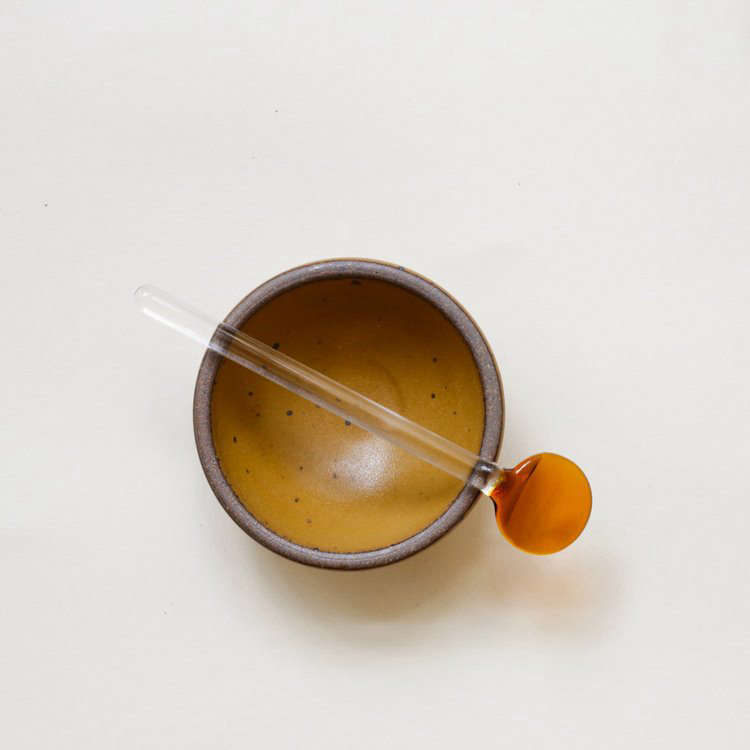
Some kitchen tools are practical. Some are pretty. And a rare few manage to be both while also making you feel like the main character in a very calm, very photogenic dessert scene. That is the particular magic of East Fork Pottery’s Glass Dessert Spoon. It is small, elegant, a little unexpected, and exactly the sort of object that makes you wonder why all your spoons can’t be this charming.
At first glance, the idea sounds almost too delicate to be useful. A glass spoon for dessert? Isn’t that just inviting a tiny tragedy involving gelato and a tiled floor? But the appeal here is precisely in the contradiction. This spoon is airy yet intentional, artful yet functional, and playful without drifting into novelty-for-novelty’s-sake territory. It belongs to the same design universe that made East Fork a favorite among people who want everyday objects to feel good in the hand and look quietly fantastic on the table.
If you have followed the rise of East Fork Pottery, you already know the brand’s reputation. The Asheville company built its name on sturdy, handsome ceramic dinnerware with earthy glazes, useful shapes, and a refreshingly un-fussy approach to beauty. East Fork pieces do not beg to be locked in a cabinet “for special occasions.” They want to be used. They want pasta, coffee, peaches, soup, birthday cake, and leftover noodles. They are the kind of dishes that make Tuesday night leftovers look suspiciously curated.
So where does a glass dessert spoon fit into that world? Surprisingly well. In fact, it may be one of the clearest expressions of what makes East Fork’s design orbit so compelling: the belief that even the smallest ritual at the table can be elevated by a thoughtful object.
Why This Tiny Spoon Leaves Such a Big Impression
The object known as East Fork Pottery’s Glass Dessert Spoon has been described as a petite borosilicate-glass spoon designed by Max Frommeld. That detail matters, because borosilicate glass is not ordinary, fragile, decorative glass. It is associated with durability and heat resistance, which means the spoon is not just there to sit around looking like a tiny sculpture with a sweet tooth. It is built to be used.
And use it you can. A spoon like this is ideal for ice cream, pudding, panna cotta, soft fruit, yogurt, affogato, jam, sugar, and the sort of one-bite indulgences that deserve a touch of ceremony. The scale encourages a slower pace. Suddenly dessert is not something you inhale while standing over the sink. It becomes an event. A very small event, yes, but a delicious one.
That slowness is part of the charm. When people talk about beautiful tableware, they often focus on color, finish, or whether it looks good on open shelving. Fair enough. Open shelving has launched a thousand questionable purchases. But the best tabletop pieces do something more subtle: they change behavior. A small glass spoon nudges you to take smaller bites, notice texture, and linger for a second longer. That is a lot of emotional labor for one tiny utensil, but here we are.
East Fork’s Aesthetic Makes the Spoon Make Sense
East Fork did not become beloved because it makes flashy tableware. Quite the opposite. Its pottery tends to feel grounded, tactile, and thoughtfully restrained. The colors are rich without being loud. The silhouettes are simple without being boring. The pieces have enough personality to stand out, but enough humility to let food remain the star. It is a difficult balance, and East Fork has made it look almost suspiciously easy.
That design language gives the Glass Dessert Spoon a perfect backdrop. Against East Fork’s matte, speckled ceramics, glass introduces contrast. You get opacity next to translucence, heft next to lightness, earthiness next to clarity. A scoop of vanilla bean ice cream in an East Fork bowl already looks inviting, but add a slim glass spoon and suddenly the whole setup feels editorial. Not in an intimidating, “please don’t touch this” way. More in a “why does my snack look better than my retirement plan?” sort of way.
This is also why the spoon works so well with East Fork’s broader tabletop identity. The brand has expanded beyond pottery into glassware and other home goods, but the throughline remains consistent: objects should be beautiful, useful, and emotionally resonant in daily life. The spoon may be small, but it fits that philosophy exactly.
What Glass Does That Metal Usually Can’t
Most of us are used to dessert spoons being stainless steel, silver-plated, or occasionally the random teaspoon that escaped from a mismatched drawer. A glass spoon changes the experience in a few interesting ways.
It looks lighter on the plate
A metal spoon brings visual weight. A glass spoon barely interrupts the composition. That matters when you are serving something delicate, colorful, or layered. Fruit compote, semifreddo, lemon posset, or a glossy chocolate mousse all benefit from a utensil that does not muscle its way into the scene.
It feels cooler, cleaner, and more tactile
Glass has a unique sensory presence. It feels smooth, cool, and slightly more ceremonial than standard cutlery. Even before the first bite, it signals that this is not an ordinary spoonful of whatever. This is dessert. Act accordingly.
It turns utility into conversation
A good dessert spoon is helpful. A glass dessert spoon is helpful and mildly irresistible. Guests notice it. They pick it up. They ask where it came from. Someone inevitably says, “Wait, this is glass?” and then everyone spends thirty seconds pretending they have discovered the concept of design for the first time. That is not a flaw. That is excellent hosting support.
The Spoon as a Lesson in Dessert Ritual
East Fork’s appeal has always been tied to the rituals of eating and gathering. The company’s bowls, mugs, and plates are celebrated not because they solve a dramatic problem, but because they make familiar acts feel better. Morning coffee feels steadier. Soup feels more generous. A grain bowl looks somehow more intentional. Dessert, naturally, is fertile ground for this same design logic.
A dessert ritual does not need to be elaborate. It can be as simple as scooping gelato into a favorite bowl, slicing a peach over whipped ricotta, or serving a square of olive oil cake with a spoonful of cream. The right spoon amplifies the mood. That is where the Glass Dessert Spoon earns its keep. It tells you to slow down, appreciate the plating, and maybe stop eating directly from the pint for just one evening. Growth.
There is also something fitting about pairing glass with dessert specifically. Desserts often play with gloss, translucence, and softness: syrups, custards, compotes, sorbets, creams. A glass utensil echoes those qualities. Instead of interrupting the visual language of the dessert, it feels like part of it.
Who Will Love East Fork Pottery’s Glass Dessert Spoon
Not every piece of tableware needs to be for everyone. That is part of what keeps life interesting and kitchen drawers overcrowded. This spoon is especially appealing for a few kinds of people.
The design enthusiast
If you care about handmade objects, material contrast, and the difference between “nice” and “noticeably thoughtful,” this spoon is catnip. It is the kind of detail that communicates taste without screaming about it.
The host who loves little finishing touches
Some people throw a dessert on a plate and call it a day. Others add linen napkins, chilled glasses, maybe a sprig of mint, and somehow make store-bought cookies look like a lifestyle aspiration. This spoon is for the second group.
The East Fork collector
If you already own East Fork bowls or mugs, the spoon feels like a natural extension of the collection. It adds a new texture and material without disrupting the brand’s recognizable warmth.
The person who believes small pleasures matter
This may be the most important group of all. Not everything in a home needs to be optimized, automated, or justified by a spreadsheet. Sometimes a beautiful little spoon is enough reason.
How to Style It at Home Without Looking Like You’re Trying Too Hard
The easiest way to use a piece like this is also the best way: keep the setting simple. Let the spoon be the interesting twist, not one of seventeen competing ideas.
Pair it with matte ceramics
East Fork’s signature bowls and plates provide the perfect contrast. The spoon’s clarity and shine stand out beautifully against clay’s depth and texture.
Use it for soft, scoopable desserts
Think ice cream, sherbet, pudding, pots de crème, whipped mascarpone with berries, or even a tiny bowl of jam at brunch. This is not the spoon for wrestling with a frozen brick of gelato straight from the freezer. Let us be civilized.
Repeat the glass elsewhere on the table
If you are serving dessert after dinner, add tumblers, coupes, or a simple handblown water glass nearby. Repeating glass in a few places helps the spoon feel intentional rather than random.
Keep the palette restrained
Earthy glazes, creamy whites, muted greens, smoky blues, or warm browns all play especially well with clear or lightly tinted glass. Dessert looks richer when the palette around it is calm.
Is It Practical, or Is It Mostly a Beautiful Idea?
The honest answer is: both. And that is not a dodge.
A glass dessert spoon is not your all-purpose kitchen workhorse. It is not replacing the teaspoon you use for coffee, cereal, soup, sauce tasting, and whatever else the day throws at you. But it does not need to. The point of a piece like this is not maximal utility; it is focused delight.
That said, focused delight can still be very practical. The spoon is useful for serving condiments, stirring sugar into tea, or bringing a little elegance to small bites and sweets. It earns its space by being genuinely functional while also enhancing the table. In the same way a candle is technically “just light” but emotionally much more than that, this spoon is technically “just cutlery” while doing considerably more work for the mood.
And if you are wondering whether a tiny design-forward spoon can really matter that much, consider how often memorable meals come down to the details. The right plate shape. A satisfying glass. Linen instead of paper. A spoon that makes dessert feel like a pause rather than an afterthought. Tiny decisions build atmosphere.
What East Fork Pottery’s Glass Dessert Spoon Says About Modern Tableware
For years, the best tabletop brands have been moving away from stiff formality and toward expressive everyday use. People want dinnerware that can survive the dishwasher, handle real meals, and still feel special. They want pieces that mix and match, that age gracefully, and that do not require a trust fund or a butler named Sebastian.
East Fork has been central to that shift. Its success helped prove that handmade, design-forward tableware could be approachable and daily rather than precious and performative. The Glass Dessert Spoon fits neatly into that evolution. It is whimsical, yes, but it is also grounded in use. It suggests that beauty has a place in ordinary routines, especially the sweet ones.
In that sense, the spoon is more than a novelty. It is a small manifesto for living with intention. Or at least for eating ice cream with slightly more flair.
A Longer, More Personal Look: The Experience of Using a Spoon Like This
The first time you use a glass dessert spoon, the experience is oddly memorable. Not dramatic. Not life-altering. You are still just eating dessert, not unlocking a mystical portal to a better version of yourself. But something about the combination of scale, material, and visual lightness changes the mood immediately.
Picture this: dinner is over, the plates are stacked, and the kitchen is only half-clean because you are choosing happiness over perfection. You pull out a small East Fork bowl, maybe one in a soft eggshell glaze or a moodier earthy tone, and scoop in vanilla ice cream. The bowl feels substantial in your palm. Then you add the glass spoon. Suddenly the whole thing looks composed, even if the rest of your evening is being held together by a single bobby pin and pure willpower.
When the spoon touches the dessert, you notice the quietness of it. Metal has a familiar clink. Glass is subtler. It glides. It does not announce itself. That changes the rhythm of the moment. You take smaller bites. You notice the texture of the ice cream as it softens at the edges. You pay attention to the curl of a citrus zest garnish or the little puddle of melted chocolate at the bottom. It turns dessert from a quick reward into a miniature ritual.
There is also a strange pleasure in contrast. East Fork’s ceramics tend to have a comforting physicality: matte surfaces, iron-speckled glazes, rounded forms, and a grounded, almost reassuring heft. A glass spoon cuts through that heaviness in the best way. It adds light. It brings a flicker of delicacy to an otherwise earthy setup. The combination feels balanced, like wearing a linen shirt with one very good piece of jewelry.
Guests respond to that balance, too. If you serve affogato, pudding, sorbet, or even just berries with whipped cream, people notice the spoon almost immediately. They turn it in their hands. They smile. They ask if it is actually glass. Someone will almost certainly call it “adorable,” and in this case they will be correct. But the real success is not that it gets attention. It is that it makes the dessert feel more thoughtful without becoming fussy.
Over time, a piece like this tends to become part of your hosting memory. You start pairing it with specific desserts. Lemon posset in the spring. Chocolate mousse in the winter. Peach ice cream in late summer. You remember who used it last, what music was playing, how the table looked under low light, and whether you were pretending you had made the caramel from scratch. The spoon becomes less of a utensil and more of a recurring supporting actor in the theater of your kitchen.
Even on ordinary nights, it earns its place. Maybe you use it for jam with toast in the morning, or to stir sugar into tea in the afternoon, or to eat one heroic spoonful of ricotta with honey while standing at the counter and contemplating your inbox. Small objects can anchor habits. They can make rushed moments feel edited, softened, and a little more human.
That is the deeper appeal of East Fork Pottery’s Glass Dessert Spoon. It is not really about luxury. It is about attention. About choosing one tiny object that asks you to slow down and enjoy what is already in front of you. In a world full of oversized mugs, giant water bottles, and kitchen gadgets that look like they could launch a rocket, there is something refreshing about a spoon whose greatest ambition is simple: make dessert feel special.
Conclusion
East Fork Pottery’s Glass Dessert Spoon is the kind of tabletop detail that proves good design does not have to shout. It can whisper. It can shimmer. It can show up beside a bowl of ice cream and make the whole moment feel more intentional. Whether you see it as a collectible accent, a functional dessert utensil, or a tiny piece of design theater, its appeal is easy to understand. It slows you down, looks beautiful doing it, and pairs naturally with the earthy, useful elegance that made East Fork a household name among modern dinnerware fans.
In other words: it is just a spoon. And it is very much not just a spoon.