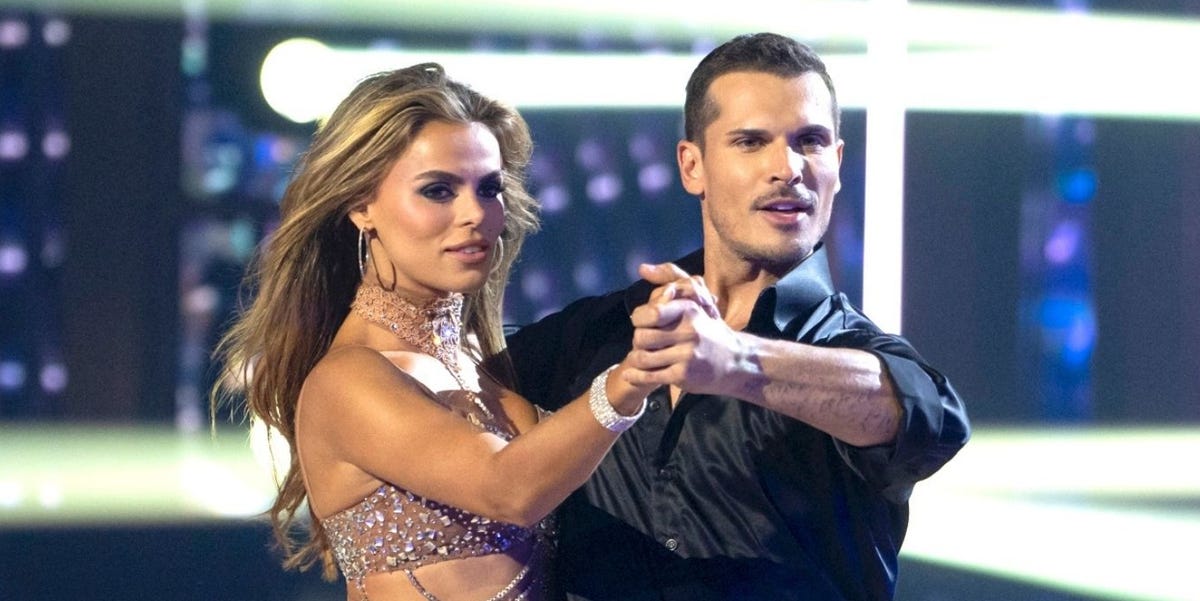
Dancing With the Stars has survived controversial eliminations, questionable scoring, unexpected cast choices, spray-tan emergencies, and enough sequins to be visible from space. Yet before Season 34 even reached the ballroom, some viewers were already threatening to stop watching.
The reason was not a shocking celebrity contestant or a newly invented dance involving roller skates and emotional-support llamas. The uproar began when longtime professional dancer Gleb Savchenko suggested on social media that he might not return for the show’s milestone season.
A brief TikTok exchange quickly turned into a full-scale fandom alarm. Disappointed followers demanded answers, declared Savchenko irreplaceable, and used the word “boycott.” However, the situation was more complicated than the most dramatic comments suggested. The professional lineup had not yet been officially announced, Savchenko’s status remained uncertain, and the ballroom doors were still several weeks away from opening.
What followed was a revealing case study in modern reality television: one cryptic reply, thousands of emotional reactions, competing rumors, and an eventual twist that made the original panic look like a dress rehearsal.
Sources:
What Started the Dancing With the Stars Season 34 Boycott Threat?
Gleb Savchenko’s TikTok Reply Set Off the Alarm
In August 2025, Savchenko posted a TikTok video addressing reports surrounding his personal life and his future on Dancing With the Stars. A fan commented that they could not wait to see him on television again in September.
Savchenko replied, “Afraid you won’t.”
That short response did what cryptic celebrity comments do best: it created more questions than a ballroom judge explaining why a nearly perfect dance deserved a seven.
Fans interpreted the message as confirmation that Savchenko had not been invited back for Season 34. Some expressed sadness, while others escalated their language dramatically. One follower reportedly said they would boycott the season. Another declared that fans should “ride at dawn,” suggesting that the revolution would apparently begin immediately after everyone located comfortable shoes.
At that point, ABC had not announced the complete professional dancer roster. The network also had not publicly explained whether Savchenko had been dropped, temporarily left without a partner, or remained involved in unfinished negotiations.
Why One Comment Became a Major Entertainment Story
The reaction spread because it combined three ingredients that reliably energize television fandoms: uncertainty, loyalty, and a recognizable star.
Savchenko was not a temporary background dancer viewers had met last Tuesday. He had been part of the franchise for years. Fans had watched him train celebrities, create routines, argue with judges, survive eliminations, and deliver performances ranging from elegant to gloriously theatrical.
When a familiar professional suddenly appears to be missing, loyal viewers do not treat the change like a minor scheduling adjustment. They treat it like someone removed a member of the family from Thanksgiving dinner and replaced him with an enthusiastic stranger who brought quinoa stuffing.
Why Gleb Savchenko Has Such a Loyal DWTS Fan Base
Savchenko first joined the American edition of Dancing With the Stars in 2013 and later became a regular professional beginning in 2016. During his time on the show, he was partnered with celebrities including Jana Kramer, Lauren Alaina, Chrishell Stause, Mel C, Shangela, Mira Sorvino, and Brooks Nader.
Although he had not won the Mirrorball Trophy before Season 34, Savchenko had reached the finals and contributed several memorable routines. His partnership with Shangela produced an especially talked-about freestyle in which he performed in drag as “Natasha,” helping create one of the show’s boldest and most celebratory finales.
His appeal comes from more than technical dancing. Savchenko has developed a recognizable television identity: intense in rehearsals, polished during performances, occasionally unpredictable in interviews, and fully aware that an open shirt can apparently function as choreography.
Long-running professionals also provide continuity. Celebrity contestants disappear after a season, but the pros return year after year. Viewers watch them mature, form friendships, become parents, change teaching styles, and pursue the Mirrorball with new partners. The professionals become the connective tissue of the franchise.
Sources:
Was There Really a Mass DWTS Boycott?
The phrase “fans threaten to boycott” sounds as though millions of viewers held an emergency meeting and unanimously voted to hide their televisions. The evidence was considerably less organized.
The boycott language came from social-media comments reacting to the possibility that Savchenko would be absent. Those comments showed genuine frustration, but they did not establish the existence of a coordinated national campaign.
In entertainment coverage, “boycott” often describes an emotional declaration made in the immediate aftermath of disappointing news. Sometimes viewers follow through. Frequently they return for the premiere because curiosity defeats outrage, the cast looks interesting, or someone posts a clip of a celebrity accidentally kicking a prop.
That distinction matters. A vocal group of fans can influence the online conversation without representing the entire audience. Social media highlights intensity, not necessarily scale. Ten furious comments can look more dramatic than ten thousand quiet viewers who plan to watch as usual.
The later performance of Season 34 strongly suggests that the early backlash did not become a damaging mass boycott. The premiere attracted about 5.5 million viewers, while the show reported approximately 21 million premiere-night votes. The season continued building momentum, and its finale drew more than nine million viewers, becoming the program’s strongest finale in years.
Those numbers do not prove that every unhappy fan returned. They do show that the show’s audience remained enthusiastic enough to vote in enormous quantities and keep the ballroom culturally relevant.
Sources:
The Personal Controversy Behind Savchenko’s Uncertain Status
The casting speculation became more sensitive because it followed Savchenko’s relationship with his Season 33 celebrity partner, model Brooks Nader.
Savchenko and Nader developed a romantic relationship after being paired on the show. Their relationship later ended amid public claims that Savchenko had been unfaithful. Nader and members of her family suggested there was evidence supporting the allegation, while Savchenko firmly denied cheating.
When discussing his apparent Season 34 absence, Savchenko suggested that his years of loyalty to the program had been affected by what he described as a lie. That statement led some fans to believe producers had reacted to the personal dispute.
However, no official network statement confirmed that explanation. Casting decisions on competition shows involve numerous factors, including celebrity height, personality compatibility, available partners, production strategy, contracts, injuries, and how many male and female professionals are needed.
It would therefore have been inaccurate to state as fact that Savchenko was fired because of the allegations. What viewers had was his interpretation, public speculation, and silence from the network. Naturally, the internet filled that silence with approximately twelve thousand theories before lunch.
Sources:
Why the Professional Dancer Lineup Is Never Completely Predictable
Dancing With the Stars does not simply invite every familiar professional back and then distribute celebrities at random. The lineup operates more like a complicated ballroom puzzle.
Producers must consider height differences, dance experience, chemistry, public image, scheduling, storytelling possibilities, and the number of available contestants. A professional can be popular and still miss a season because there is no suitable partner.
Season 33 offered a useful example. Sasha Farber was initially expected to have a reduced role, but a late celebrity addition resulted in him partnering with former Bachelorette Jenn Tran. The arrangement demonstrated how quickly plans can change before an official cast reveal.
Season 34 also involved significant roster movement. Mark Ballas returned as a competing professional, former Taylor Swift Eras Tour dancer Jan Ravnik joined as a new pro, and Farber did not receive a celebrity partner. These changes generated their own waves of excitement and disappointment.
Fans understandably form attachments, but the professional roster has never been permanent. Familiar dancers leave, return, move into judging, appear in troupe numbers, or wait for a future season. In the ballroom, even job security has choreography.
The Twist: Gleb Savchenko Actually Returned for Season 34
Despite his ominous social-media reply and reports that he had not been invited back, Savchenko ultimately appeared in the official Season 34 cast announcement on September 3, 2025.
He was paired with author and wellness personality Hilaria Baldwin.
The official announcement came less than a month after fans had threatened to boycott the season over his apparent departure. The development demonstrated why unofficial casting reports should be treated like an early rehearsal: important, interesting, and still capable of changing before the live show.
Season 34 premiered on September 16 as the franchise celebrated its 20th anniversary. Alfonso Ribeiro and Julianne Hough returned as hosts, while Carrie Ann Inaba, Derek Hough, and Bruno Tonioli resumed judging duties. Episodes aired live on ABC and Disney+, with next-day streaming on Hulu.
Savchenko and Baldwin performed a cha-cha, tango, samba, and a Star Wars-themed quickstep during their run. Their final performance produced a lively disagreement among the judges, with Carrie Ann Inaba and Bruno Tonioli offering strong praise while Derek Hough criticized the amount of traditional quickstep content.
The couple earned 23 points out of 30 but was eliminated during the October 7 episode. Savchenko had returned after all, though his season ended earlier than his most devoted fans probably hoped.
Sources:
What the Controversy Revealed About Dancing With the Stars
The Professional Dancers Are Stars Too
The incident confirmed that many viewers tune in for the professionals as much as the celebrities. A famous contestant might attract initial attention, but audiences often stay invested because of the dancers teaching them.
Professionals create the routines, manage difficult rehearsals, protect inexperienced partners during lifts, and convert nervous performers into convincing ballroom competitors. They also carry much of the emotional storytelling. When a celebrity finally completes a difficult routine, the audience understands that the pro helped build that moment step by step.
Fans Want Greater Transparency
The panic surrounding Savchenko’s status grew because the official lineup had not yet been announced. That secrecy creates suspense, but it also allows rumors to become accepted as fact.
Producers are unlikely to reveal private negotiations, yet clearer communication about announcement dates could reduce confusion. A simple reminder that contracts and pairings remain unsettled until the official reveal would not eliminate speculation, but it might keep viewers from emotionally canceling a season that has not started.
Social Media Has Become Part of the Show
The modern DWTS competition extends far beyond the live broadcast. TikTok clips, rehearsal videos, fan edits, interviews, podcasts, and comment sections influence how audiences perceive the cast.
A professional dancer’s five-word reply can now generate headlines before a producer issues a press release. That gives cast members direct access to fans, but it also means frustration can escape into public view before negotiations are complete.
Lessons Producers Can Take From the Season 34 Backlash
First, veteran professionals have measurable emotional value. They are not interchangeable instructors wearing different shades of glitter. When producers rotate the lineup, they should expect fans to notice and respond.
Second, speculation grows fastest when official information is scarce. Strategic mystery can build anticipation, but too much uncertainty invites misinformation.
Third, casting controversies do not necessarily damage ratings. In some cases, they increase curiosity. Viewers who threaten to leave may still tune in to see whether their favorite professional appears, how the new cast performs, or whether Bruno Tonioli remains physically capable of sitting in a chair for an entire critique.
Finally, online anger should be acknowledged without being mistaken for the whole audience. Producers must listen to devoted fans while remembering that social media naturally amplifies the loudest reactions.
The Fan Experience: Why Losing a Favorite Pro Feels Personal
For a regular viewer, a new season of Dancing With the Stars often feels like returning to a familiar neighborhood. The celebrity contestants are the new residents, but the professional dancers are the people who have lived on the street for years. Fans recognize their personalities before the first rehearsal package begins.
One pro is known for ambitious lifts. Another specializes in emotional contemporary routines. Someone else can turn a stiff athlete into a surprisingly charming ballroom performer. Viewers develop expectations, favorites, and running jokes. They remember which dancers have never won, which ones always seem to receive difficult partners, and which professionals can produce a respectable foxtrot from a celebrity who appears to have recently discovered knees.
That history changes how casting news feels. When a favorite professional is rumored to be absent, viewers are not merely losing one name from a roster. They are losing anticipated partnerships, choreography, backstage moments, and the possibility of finally seeing that dancer win.
The emotional response can be especially strong when the explanation appears unfair. Savchenko’s suggestion that his loyalty had been erased encouraged fans to see the situation as a personal rejection rather than a routine casting adjustment. Whether or not that interpretation reflected the full production process, it gave viewers a clear hero, a possible injustice, and a reason to mobilize.
Then comes the familiar social-media ritual. One person posts a disappointed comment. Another raises the emotional stakes. A third announces a boycott. Soon, fans are discussing petitions, alternate networks, and the collapse of ballroom civilization. Most of this unfolds before anyone has seen an official press release.
When the missing professional later returns, the emotional energy does not vanish; it becomes relief. Fans celebrate, share the casting announcement, and behave as though their comments personally persuaded the network. Perhaps they did influence the conversation. Perhaps negotiations were already moving. Television production rarely offers a neat answer.
The experience also demonstrates why live competition shows remain powerful in a streaming era. Viewers do not simply consume episodes. They debate, vote, campaign, defend contestants, criticize judges, and monitor casting developments between seasons. Watching becomes participation.
That participation can be fun, but it benefits from perspective. A rumor is not an announcement. A cryptic comment is not a complete contract history. A boycott declaration is not always a permanent decision. Fans can care deeply while leaving room for new information.
Season 34 provided the perfect example. The initial story suggested that a beloved veteran would be missing. The official reveal showed him standing beside a new partner. The threatened boycott transformed into another chapter of ballroom drama, complete with a surprise reversal and significantly more rhinestones than the average employment dispute.
Conclusion
The threat to boycott Dancing With the Stars Season 34 began with genuine fan loyalty but incomplete information. Gleb Savchenko’s social-media comments appeared to indicate that he would not return, prompting disappointed viewers to criticize the show before the professional cast had been officially confirmed.
The situation highlighted how important veteran dancers have become to the franchise. Fans no longer view the professionals as supporting players; they are central personalities whose partnerships, choreography, and personal journeys help define each season.
In the end, the biggest twist happened before the premiere. Savchenko returned, partnered with Hilaria Baldwin, and competed during the show’s 20th-anniversary season. Meanwhile, Season 34 produced strong ratings, extraordinary voting activity, and renewed evidence that the ballroom remains capable of turning a few social-media comments into a national entertainment conversation.
The lesson is simple: on Dancing With the Stars, never assume the final lineup until the music starts. Even casting rumors are subject to a last-minute choreography change.
Note: This article examines the fan reaction reported in August 2025 and includes the subsequently confirmed Season 34 casting and broadcast results for accuracy.