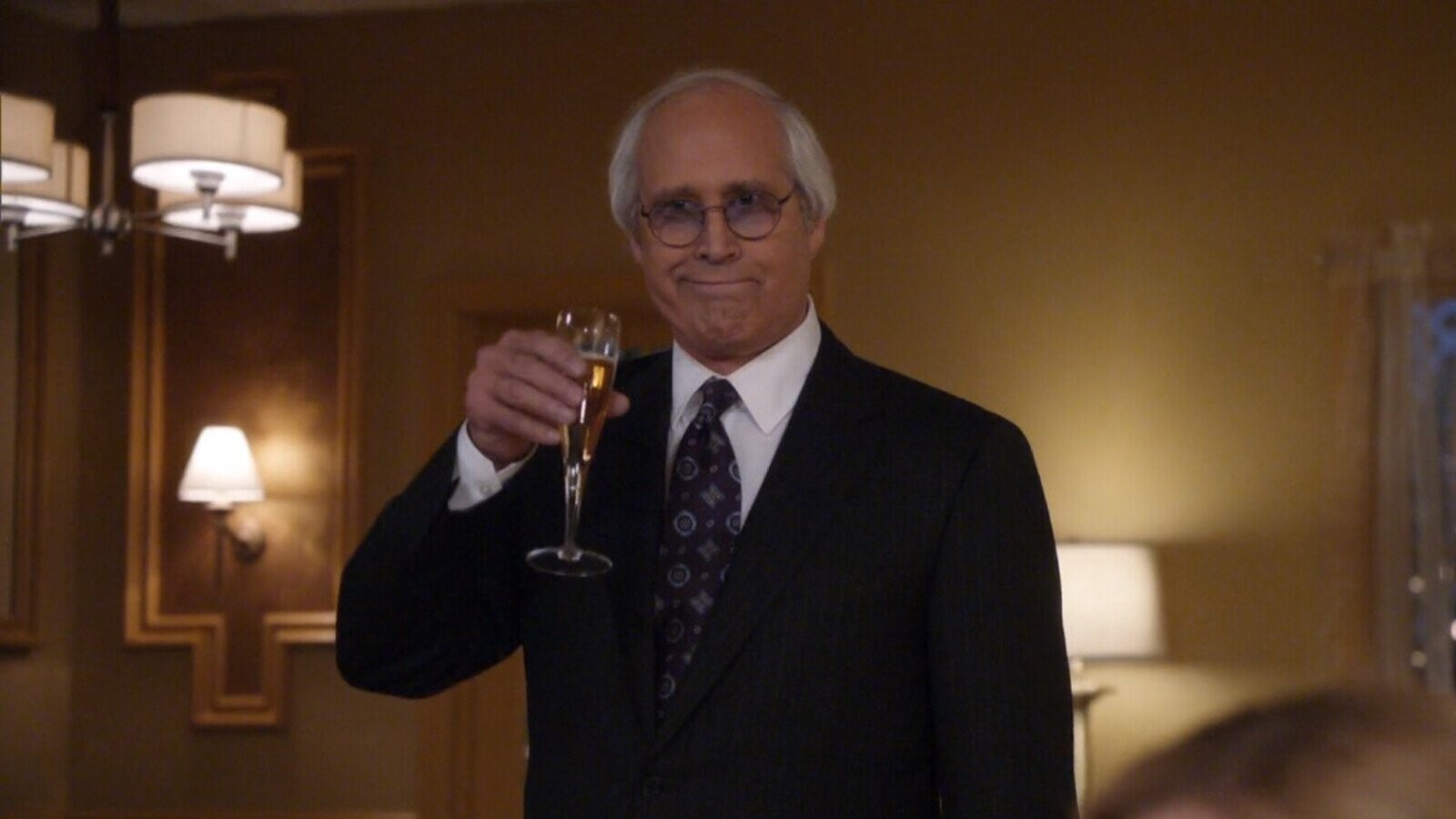
Note: This article is written as cultural commentary and analysis based on public reporting, documentary coverage, and entertainment-industry accounts. Anonymous claims are treated as claims, not verified fact.
For decades, Chevy Chase has occupied one of the strangest seats in American comedy: legend, punchline, cautionary tale, and walking HR training module, sometimes all before lunch. He helped define Saturday Night Live, turned deadpan arrogance into an art form, and starred in comedies that still live rent-free in cable marathons and family quote battles. Yet ask many pop-culture fans about him today and the first answer is not “Fletch,” “Clark Griswold,” or “Weekend Update.” It is usually some version of: “Wasn’t he famously impossible?”
That is why a recent report claiming that Chevy Chase has softened with age landed like a cream pie in a boardroom. According to that report, people close to the actor believe he is kinder now, more considerate, and more focused on family than ego. In other words, the headline practically writes itself: Chevy Chase is no longer an asshole. Stop the presses, alert the Griswolds, and somebody check whether Cousin Eddie has seen a flying pig.
Of course, the real story is more complicated than a miracle personality update. Chase’s public image has been built from decades of brilliant work, bruised coworkers, sharp interviews, reported set conflicts, and a new wave of documentary coverage that shows him as older, physically changed, emotionally guarded, sometimes vulnerable, and still capable of saying the kind of thing that makes a room inhale through its teeth. The more useful question is not whether Chevy Chase has magically transformed into America’s cuddliest grandfather. It is whether a long, difficult reputation can evolve when the person behind it is finally forced to slow down, look back, and live with the receipts.
The Report: Has Chevy Chase Really Changed?
The “Chevy Chase has changed” storyline began with anonymous-source reporting that described the comedian as less nasty, more family-centered, and more thoughtful about other people’s feelings. The claim suggested that his wife, Jayni Chase, and his daughters have played a major role in softening his edges. It also described him as generous in everyday situations, happy to help neighbors, pleasant with strangers, and likely to pick up the lunch tab with friends.
That version of Chase is almost comically opposite from the reputation that has followed him through entertainment history. For years, he has been portrayed as sharp-tongued, dismissive, impatient, and sometimes cruel. He has also been accused by colleagues and reporters of behavior involving racist or homophobic remarks, physical clashes, and ugly on-set confrontations. So when a report says the “nasty spots” are gone, readers are naturally going to respond with one eyebrow raised so high it needs its own agent.
Still, there is a plausible human story underneath the tabloid-ish framing. Chase is now in his 80s. He has lived through serious health problems, including a major heart failure episode in 2021 that reportedly led to a medically induced coma and memory issues. He has spent more time with family and less time chasing studio approval. Age, illness, sobriety, and family pressure can change a person’s daily behavior, even if they do not erase the past.
Why Chevy Chase’s Reputation Became So Complicated
To understand why “Chevy Chase is nice now” sounds so shocking, you have to understand how enormous his early success was. Born Cornelius Crane Chase, he became one of the first breakout stars of Saturday Night Live in 1975. His “Weekend Update” persona was smug, polished, and perfectly suited to a television era discovering that news satire could wear a tuxedo and still trip over a chair.
After leaving SNL, Chase became a major movie star with hits such as Foul Play, Caddyshack, National Lampoon’s Vacation, Fletch, Three Amigos, and National Lampoon’s Christmas Vacation. His best characters often had the same engine: confidence so inflated it floated several inches above reality. Clark Griswold is lovable because he believes in the perfect family moment even as the universe throws squirrels, power outages, and emotional bankruptcy at him. Fletch works because Chase’s sarcasm feels like an Olympic event.
The problem is that Chase’s comic persona and public persona seemed to blur. What plays as hilarious on screen can feel exhausting in a workplace. A deadpan insult with a camera crew and script supervisor becomes something else when real coworkers are on the receiving end. Over time, the legend of Chevy Chase became less about comic precision and more about whether being funny gave him permission to be difficult.
The Community Years: A Reputation Reignited
For younger viewers, Chase’s most infamous chapter may not be SNL or his film career, but Community. On the NBC sitcom, he played Pierce Hawthorne, an aging, wealthy, frequently offensive member of a study group. At first, the role seemed like smart casting: Chase could satirize the exact arrogance that had become attached to his own image. But behind the scenes, reports of tension grew louder.
Accounts from that period describe creative frustration, clashes with creator Dan Harmon, uncomfortable moments involving cast members, and a racially charged incident that contributed to Chase’s exit from the show. Donald Glover later became part of the conversation after reports that Chase made racial cracks or comments intended to throw him off during filming. Chase has denied being racist and has said some incidents were misunderstood or connected to objections about his character’s bigotry, but the damage to his public image was enormous.
The Community chapter matters because it complicated the nostalgia. Many older fans remembered Chase as a comedy king. Many younger viewers first encountered him as the difficult veteran on a beloved ensemble show. The result was a rare pop-culture split screen: one generation saw Clark Griswold; another saw Pierce Hawthorne refusing to leave the study room gracefully.
The CNN Documentary Adds a New Layer
The 2026 CNN documentary I’m Chevy Chase and You’re Not, directed by Marina Zenovich, is central to the latest reassessment. The title itself comes from Chase’s classic SNL catchphrase, but the film is not a victory lap with confetti cannons. It is described as authorized yet unfiltered, and the coverage around it suggests a portrait that refuses to sand down all the splinters.
The documentary explores Chase’s rise, his troubled reputation, his family life, his struggles with substance use, his childhood trauma, and his serious health scare. It includes interviews with family members and major comedy figures, while also confronting the fact that many people associated with Community did not participate. That absence says plenty. Sometimes silence is not empty; sometimes it is a very loud “no, thanks.”
One viral moment from the documentary shows Chase telling Zenovich that she is “not bright enough” to figure him out. Some viewers read it as a joke, others as vintage Chevy being rude on camera, and still others as proof that both interpretations can be true at the same time. That is the core Chevy Chase problem: the line between bit and insult has always been thin, and he seems weirdly determined to tap-dance on it in golf shoes.
Health, Memory, and the Human Cost of Looking Back
Recent reporting on Chase’s health makes the “changed man” narrative more understandable, though not automatically redemptive. His family has said that he suffered heart failure in 2021, was hospitalized for weeks, and spent roughly eight days in a coma. Chase has also said that the episode affected his memory, requiring reminders about parts of his life and conflicts.
That detail complicates any documentary attempt to examine accountability. What happens when a subject is asked to revisit ugly incidents he says he does not clearly remember? Memory loss does not erase impact. It does not un-hurt coworkers or rewrite old headlines. But it does change the emotional texture of the interview. A man who once seemed defiant may now seem foggy, defensive, fragile, or all three.
There is also a difference between public accountability and private change. A person can become kinder to neighbors and still owe better answers about past harm. A person can love his family deeply and still have left colleagues feeling belittled. A person can be funny, wounded, generous, defensive, and difficult. Human beings, annoyingly for headline writers, refuse to stay in one box.
Childhood Trauma Does Not Excuse Bad Behavior, But It May Explain Some of It
The documentary and related interviews also revisit Chase’s childhood, including accounts of physical and emotional abuse. This part of the story should be handled carefully. Trauma is not a coupon that says “redeem for unlimited bad behavior.” It does not excuse racism, cruelty, workplace hostility, or years of alienating people. But it can help explain why someone might build a personality around deflection, sarcasm, control, and refusal to appear vulnerable.
Chase’s comedy has always depended on a kind of emotional armor. He plays men who believe they are in charge even when the floor is about to collapse. That is funny in a movie. In real life, the same armor can make apologies hard, empathy awkward, and self-reflection feel like a hostile interview. If the new documentary makes viewers see more than the caricature, that is useful. But seeing more than the caricature should not mean pretending the caricature came from nowhere.
So, Is Chevy Chase No Longer an Asshole?
The honest answer is: maybe in some rooms, not in others, and not in a way that can be certified like organic kale. The report that Chase is kinder now is interesting, but it rests heavily on anonymous claims and private observations. The documentary coverage shows a man who is loved by his family, still admired by some peers, still funny in flashes, and still capable of sharp comments that trigger old debates within seconds.
That does not make the change meaningless. Reputations are built publicly, but behavior changes privately first. If Chase is more patient with family, more generous with friends, more careful with strangers, and more aware of his health limits, that matters. It may not be enough to repair every professional relationship. It may not satisfy fans who want a clean confession and apology tour. But it suggests that the story is not frozen in 2012, 1985, or 1978.
The better headline might be: Chevy Chase is still Chevy Chase, but age has edited the script. The old timing is there. The ego is not exactly in witness protection. The vulnerability is more visible. The consequences are harder to dodge. And if the latest reports are accurate, the man who once seemed to weaponize disdain may now be learning, however late, that kindness is also a performance choiceone that gets better with practice.
What This Means for His Comedy Legacy
Chevy Chase’s legacy was never going to be simple. He was too influential to dismiss and too controversial to celebrate without footnotes. His physical comedy helped shape early SNL. His movie characters remain part of American comedy DNA. Every holiday season, Clark Griswold’s lights still fail upward into glory. Every time someone says “ball bearings” in a suspicious accent, Fletch fans appear like raccoons at a campsite.
But influence is not immunity. Modern audiences are less willing to separate “comic genius” from workplace behavior, especially when former colleagues have spoken about feeling targeted or disrespected. That shift is healthy. Comedy history should be able to hold two facts at once: Chevy Chase was gifted, and Chevy Chase hurt people. Neither fact cancels the other.
The new wave of coverage does not rehabilitate him completely. It reframes him. Instead of a one-note villain, we see an aging performer with family devotion, health struggles, childhood scars, pride, regret, and a self-protective instinct that may be both his comic fuel and his personal curse. That is not a fairy-tale redemption arc. It is messier, more believable, and frankly more interesting.
Experience Section: What Chevy Chase’s Story Teaches About Changed Reputations
Anyone who has ever worked with a “difficult genius” knows the Chevy Chase debate is not limited to Hollywood. Most offices, creative teams, restaurants, classrooms, and family businesses have had their own version of the brilliant person everyone tiptoes around. They may be funny, talented, productive, or experienced, but they leave a trail of emotional dents. People say, “That’s just how he is,” or “She means well,” or “Don’t take it personally.” Translation: please absorb the chaos so the machine can keep running.
The problem with that arrangement is that charm can become a shield. When someone is entertaining, people often forgive behavior they would never tolerate from a less charismatic person. A sharp joke gets mislabeled as honesty. A cruel comment gets excused as old-school humor. A pattern of disrespect becomes “quirky.” Then years pass, and everyone realizes the same person has been given a lifetime achievement award in avoiding consequences.
That is why reports of personal change are both hopeful and tricky. People can change. Many do. A health scare can humble someone. Aging can soften a person’s priorities. Family can teach emotional skills that fame never required. Sobriety, therapy, illness, grief, and plain old exhaustion can all make someone ask, “Do I really want to spend my remaining years being the person everyone braces for?” That question can be powerful.
But changed behavior is not the same as reputation repair. Reputation belongs partly to the people who experienced the old behavior. If former coworkers are not ready to praise the transformation, that does not make them bitter. It may mean they remember the cost. Growth is real when it is consistent, not when it is announced. The lunch tab matters less than the apology. The friendly neighborhood moment matters less than whether the person stops punching down when no camera is rolling.
In everyday life, the Chevy Chase story offers a useful test: are people saying someone has changed because that person is genuinely safer to be around, or because everyone is tired of talking about the harm? Those are different things. Real change usually looks boring. It means listening without performing. It means not turning every criticism into a duel. It means apologizing without demanding applause. It means understanding that being misunderstood is painful, but being harmed by someone powerful is also painful.
So if Chevy Chase is truly kinder now, good. That is not a punchline; it is a human improvement. The world has enough aging men clinging to grievance like it is a varsity jacket. If he has become more generous, more family-centered, and less eager to wound, that deserves acknowledgment. But the public does not have to pretend the past was imaginary. The healthiest response is neither total cancellation nor instant sainthood. It is a grown-up shrug with standards: glad you are doing better; the receipts still exist; please keep doing better.
Conclusion
“Chevy Chase is no longer an asshole” is a funny headline because it sounds impossible, rude, hopeful, and suspicious all at once. But underneath the joke is a serious question about how we judge public figures whose work mattered and whose behavior hurt people. The latest reporting suggests that Chase may be softer in private life, shaped by family, age, health scares, and a long overdue confrontation with his own story. The CNN documentary adds nuance without giving him a free pass. It shows a complicated man: comic icon, wounded child, difficult coworker, devoted husband and father, aging performer, and still, occasionally, a human live wire.
Maybe Chevy Chase has changed. Maybe he has changed enough for the people closest to him, but not enough for everyone who remembers the old stories. Maybe that is the only honest place to land. Redemption is not a press release. It is a pattern. And if Chase is finally choosing kindness more often than cruelty, then the best ending is not applause. It is accountability with better jokes.