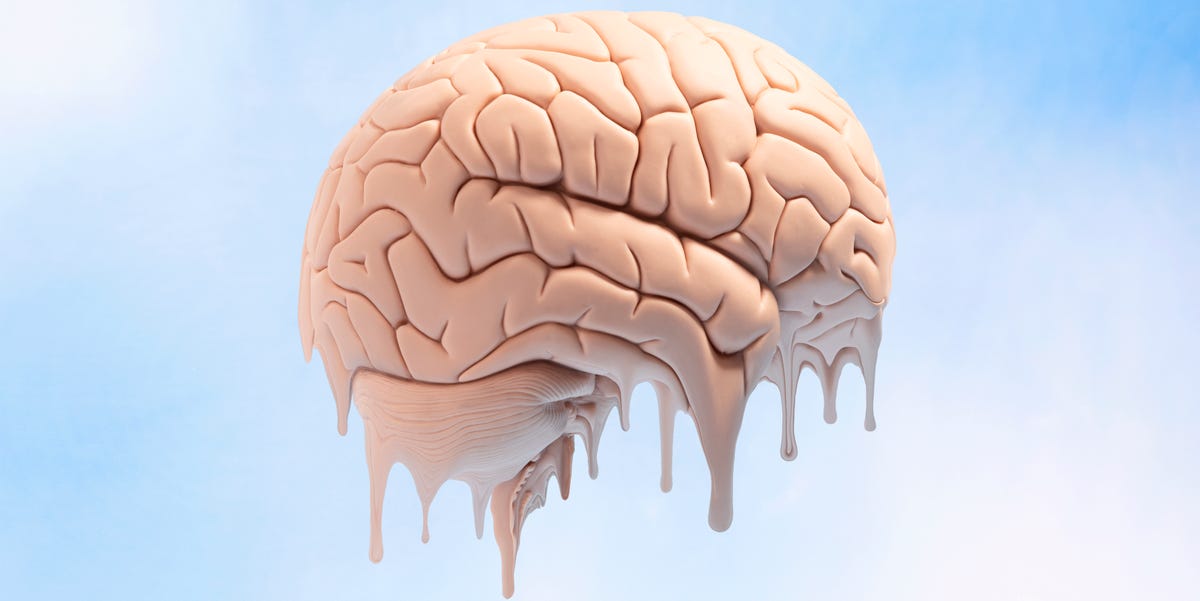
Consciousness is the universe’s strangest party trick. A few pounds of warm, salty, electrically excitable brain tissue somehow produces the taste of coffee, the color red, the embarrassment of waving back at someone who was definitely waving at the person behind you, and the private feeling of being “you.” Neuroscience has mapped many brain processes, physics has described matter with astonishing precision, and yet the basic question remains stubbornly mysterious: why should physical activity feel like anything from the inside?
That mystery is why the phrase “quantum consciousness” has such magnetic power. Quantum physics already sounds like reality forgot to read its own instruction manual. Particles can behave like waves, probabilities replace certainties, and measurement appears to matter in ways that make common sense sweat through its shirt. So when people ask, “Can quantum physics explain consciousness?” they are not asking a silly question. They are asking whether the weirdest theory in science can help explain the weirdest fact of existence.
The honest answer is: maybe, but not yet. Quantum mechanics definitely applies to the atoms and molecules inside the brain, because it applies to all matter. The bigger question is whether uniquely quantum effectssuch as superposition, entanglement, coherence, or quantum collapseplay a direct, functional role in conscious experience. That claim is fascinating, controversial, and still far from proven.
What Do We Mean by Consciousness?
Before dragging quantum physics into the room, we should define consciousness without making everyone’s head spin faster than an electron in a textbook diagram. In everyday terms, consciousness means subjective experience: the felt quality of seeing sunlight, hearing music, feeling pain, remembering a childhood street, or silently judging someone’s pizza topping choices.
Scientists often separate consciousness into related but different questions. One question is about wakefulness: are you awake, asleep, under anesthesia, or in a coma? Another is about awareness: are you aware of a stimulus, a thought, or yourself? A deeper philosophical question is the famous “hard problem of consciousness”: why does brain activity produce inner experience at all?
Modern neuroscience has made real progress on the easier, though still difficult, problems. Researchers can study how attention works, how visual information moves through the brain, how anesthesia changes neural signaling, and which brain regions light up when people report seeing or feeling something. But none of that fully explains why neural firing is accompanied by the private glow of experience. A brain scan can show activity when someone tastes chocolate; it cannot taste the chocolate for them. Tragic, really. A billion-dollar machine and not even one bite.
Why Quantum Physics Enters the Conversation
Quantum physics describes nature at very small scales: atoms, electrons, photons, and subatomic particles. Unlike classical physics, which describes billiard balls, planets, and dropped phones with cracked screens, quantum mechanics deals in probabilities. A quantum system may exist in multiple possible states until interaction or measurement produces a definite outcome. Particles can become entangled, meaning their properties remain linked even when separated. Quantum tunneling allows particles to pass through barriers that classical physics would treat as impossible.
These ideas tempt consciousness theorists for several reasons. First, consciousness appears unified. You do not experience color, sound, memory, emotion, and body position as thousands of disconnected brain events. They arrive as one scene. Quantum entanglement, with its non-classical linking of parts, seems to offer a seductive metaphor for unity.
Second, conscious choice feels open-ended. We experience decisions as more than mechanical domino chains. Quantum indeterminacy, where outcomes are probabilistic rather than strictly deterministic, has been proposed by some thinkers as a possible opening for free will or non-computable mental processes.
Third, the brain operates through molecular machinery. If consciousness depends not only on networks of neurons but also on subcellular events inside neurons, then quantum-level processes might be relevant. That is the key move made by the most famous quantum consciousness theory: Orchestrated Objective Reduction, usually called Orch OR.
The Penrose-Hameroff Theory: Consciousness in Microtubules
The best-known quantum theory of consciousness was developed by physicist Roger Penrose and anesthesiologist Stuart Hameroff. Penrose argued that human understanding may involve non-computable processes, meaning processes that cannot be fully captured by ordinary algorithmic computation. Hameroff suggested a possible biological location for those processes: microtubules.
Microtubules are tiny structural components inside cells. They help maintain cell shape, support transport within cells, and play important roles in cell division. In neurons, they are part of the internal scaffolding that helps organize the cell. Hameroff proposed that microtubules might do more than provide cellular architecture. They might support quantum computations connected to conscious moments.
In Orch OR, “orchestrated” refers to biological regulation inside neurons, while “objective reduction” refers to Penrose’s idea that quantum states collapse not merely because an observer looks at them, but because of a physical process related to gravity and spacetime. According to the theory, quantum states in microtubules reach a threshold and collapse, producing moments of conscious awareness. In simpler terms, your inner life would be built from tiny quantum events inside neurons, like a cosmic jazz drummer tapping out the rhythm of experience.
It is an ambitious theory. It attempts to connect neuroscience, quantum mechanics, gravity, computation, anesthesia, and the hard problem of consciousness. That is either wonderfully bold or the intellectual equivalent of trying to make a smoothie with a particle accelerator. Possibly both.
The Main Objection: The Brain Is Warm, Wet, and Noisy
The strongest criticism of quantum consciousness is environmental decoherence. Quantum effects such as superposition and entanglement are famously fragile. In quantum computers, engineers work extremely hard to isolate quantum bits from heat, vibration, and outside interference. The brain, by contrast, is warm, wet, chemically active, electrically noisy, and generally not what anyone would design as a luxury resort for delicate quantum states.
Physicist Max Tegmark famously argued that quantum coherence in the brain would disappear far too quickly to influence neural processing. If quantum states collapse almost instantly, then they cannot meaningfully shape thoughts, perceptions, or conscious decisions. From this view, the brain may be made of quantum matter at the lowest level, but cognition operates effectively as a classical biological process.
This objection matters because neurons work on millisecond timescales. If a proposed quantum effect lasts only a tiny fraction of that time, it may be irrelevant to consciousness. A lightning-fast quantum flicker inside a neuron would be like a single firefly trying to guide air traffic at JFK. Charming, but not operationally persuasive.
The Counterargument: Quantum Biology Is Real
Supporters of quantum brain theories respond that biology is not automatically hostile to quantum effects. Quantum biology has shown that living systems can use quantum phenomena in surprising ways. Researchers have investigated quantum effects in photosynthesis, bird navigation, enzyme activity, and possibly olfaction. Nature, as usual, did not wait for human permission before becoming complicated.
This does not prove quantum consciousness. Photosynthesis using quantum effects does not mean your memory of third-grade recess is stored in an entangled microtubule orchestra. But it weakens the old assumption that warm biological systems can never preserve useful quantum behavior. Life is messy, but it is also exquisitely organized. Proteins, membranes, molecular pockets, and cellular structures may create protected environments where certain quantum effects persist long enough to matter.
Recent interest in microtubules and anesthesia has also kept the debate alive. Some studies suggest that anesthetics may interact with microtubule-related processes, and proponents argue this fits predictions of quantum consciousness theories. Since anesthesia can switch consciousness off and on with eerie reliability, any clue about how anesthetics work is important. Still, connecting anesthetic action to microtubules is not the same as proving consciousness is quantum. It is a clue, not a courtroom confession.
Quantum Physics vs. Quantum Mysticism
One reason the topic gets messy is that “quantum” has become the glitter glue of modern speculation. Add it to anything and suddenly it sounds profound: quantum healing, quantum manifestation, quantum dog grooming. The problem is that real quantum physics is mathematical, testable, and painfully precise. It does not mean “anything is possible if you believe hard enough.” If it did, my houseplants would have learned responsibility by now.
A responsible discussion of quantum consciousness must separate science from vibes wearing a lab coat. It is scientifically legitimate to ask whether quantum effects occur in the brain and whether they influence cognition. It is not scientifically justified to claim that quantum physics proves telepathy, immortality, universal mind, or the idea that thinking about a parking space collapses reality into giving you one near the entrance.
The best researchers in this field usually speak carefully. They ask whether quantum phenomena might contribute to neural function, whether microtubules can sustain meaningful coherence, whether quantum models make testable predictions, and whether experiments can distinguish quantum theories from classical neuroscience. That is how science moves: not by declaring victory, but by building tests sharp enough to draw blood from bad ideas.
What Mainstream Neuroscience Says
Most neuroscientists do not currently think quantum physics is necessary to explain consciousness. The leading scientific theories are generally classical in structure, meaning they rely on neurons, networks, information processing, attention, memory, and brain-wide communication rather than quantum collapse.
Global Neuronal Workspace Theory
Global Neuronal Workspace Theory suggests that information becomes conscious when it is broadcast widely across the brain. In this model, unconscious processing happens locally and automatically, while conscious access occurs when information enters a shared “workspace” that many systems can use. Imagine the brain as a large office building. Most work happens quietly in departments, but consciousness is the announcement that gets sent to everyone’s inbox. Unfortunately, unlike real inboxes, the brain’s version may be useful.
Integrated Information Theory
Integrated Information Theory focuses on how much information a system integrates. According to this view, consciousness corresponds to the system’s capacity to combine information into a unified whole. The theory is mathematically ambitious and philosophically bold, though it remains controversial. It tries to explain why consciousness is unified rather than a pile of separate signals.
Higher-Order and Predictive Theories
Other theories argue that consciousness involves the brain representing its own mental states, or that conscious perception arises through prediction and error correction. In predictive processing, the brain is not simply receiving the world like a camera. It is constantly guessing what is out there and updating those guesses based on sensory input. Basically, your brain is a prediction machine with excellent marketing and occasional bugs.
These mainstream theories do not solve everything. In fact, recent large-scale tests comparing major consciousness theories suggest that no current model has fully won. That is important. Classical neuroscience is powerful, but it has not finished the job. The door is not wide open for quantum consciousness, but it is not welded shut either.
Could Quantum Physics Help with the “Binding Problem”?
The binding problem asks how the brain combines features processed in different places into one coherent experience. Color, shape, motion, sound, memory, and emotion are handled by distributed systems, yet experience arrives as a unified scene. You do not see “red,” “round,” “rolling,” and “dangerously close to my foot” as separate mental files when a ball approaches. You see one ball.
Quantum entanglement seems, at first glance, like a possible solution because it links separated parts into one system. That is why some quantum consciousness proposals emphasize unity. However, the brain already has many classical ways to bind information: synchronized neural firing, recurrent loops, attention, memory integration, and network dynamics. A quantum explanation must show not merely that it sounds elegant, but that it performs better than classical explanations and makes predictions those explanations do not.
That is the scientific bar. “This reminds me of quantum physics” is not enough. Science requires the less glamorous sentence: “Here is the experiment that could prove me wrong.”
Does Quantum Physics Explain Free Will?
Another popular claim is that quantum indeterminacy could rescue free will. If the brain is not fully deterministic, perhaps choices are genuinely open. This is an interesting idea, but it has a problem: randomness is not the same as freedom.
If your decision is determined by prior causes, some people worry it is not free. But if your decision is caused by random quantum events, that does not obviously make it more free. A roulette wheel in your neurons would not be moral agency; it would be biology with a casino theme. For quantum physics to help explain free will, it would need to show how indeterminacy is meaningfully organized by the person, not merely injected as noise.
Orch OR attempts to address this by proposing that quantum reductions are biologically orchestrated rather than random in a simple sense. Still, this remains speculative. The relationship between consciousness, causation, and free will is one of the deepest problems in philosophy and science. Anyone who says it is solved probably also has a bridge, a miracle supplement, or a suspiciously confident podcast to sell you.
What Would Count as Real Evidence?
For quantum consciousness to move from fascinating hypothesis to accepted science, it needs strong evidence. The most convincing evidence would show that specific quantum states exist in the brain, persist long enough to influence neural activity, and are necessary for conscious experience. Even better, the theory should make predictions that differ from classical neuroscience.
For example, researchers might test whether microtubules display biologically meaningful quantum coherence under realistic brain conditions. They might investigate whether anesthetics disrupt specific quantum processes more directly than classical processes. They might design experiments showing that altering proposed quantum substrates changes conscious awareness in ways no standard neural model predicts.
The challenge is technical and conceptual. The brain is difficult to measure at the relevant scales without disturbing it. Consciousness is difficult to define precisely. Quantum systems are difficult to isolate. Combining all three is like trying to solve a crossword puzzle during a thunderstorm while riding a unicycle. Still, science has solved hard problems before. “Difficult” is not the same as “impossible.”
Why the Question Still Matters
Even if quantum consciousness turns out to be wrong, the question is useful. It forces scientists to clarify what consciousness theories must explain. It pushes neuroscience down into molecular and subcellular levels that are sometimes overlooked. It encourages physicists to think carefully about measurement, information, and the boundary between quantum and classical behavior in living systems.
It also reminds us that consciousness is not just another brain function. Memory, attention, and perception are astonishing, but subjective experience adds a special puzzle. A robot might process visual data, avoid obstacles, and identify a strawberry. But does it experience redness? Does it feel curiosity? Does it silently wonder whether strawberries are overrated? The question of consciousness affects artificial intelligence, medicine, animal welfare, coma diagnosis, anesthesia, and our understanding of personhood.
That is why the topic deserves both imagination and discipline. Too much skepticism can freeze inquiry. Too much speculation can turn science into fog machine theater. The sweet spot is curious, careful, and allergic to nonsense.
So, Can Quantum Physics Explain Consciousness?
Quantum physics may eventually explain part of consciousness, but it has not yet explained consciousness as a whole. The strongest current evidence still supports the view that conscious experience depends on organized brain activity across neurons and networks. Quantum mechanics underlies the chemistry of those neurons, but whether distinct quantum effects are essential to awareness remains unsettled.
The Penrose-Hameroff Orch OR theory is the most developed quantum consciousness proposal, and it deserves attention because it offers a concrete mechanism involving microtubules. It also faces serious objections, especially decoherence and the lack of decisive experimental proof. Meanwhile, mainstream neuroscience theories continue to generate useful research, even though they too have not solved the hard problem.
The best answer is therefore balanced: quantum physics is not a magic wand, but it is not irrelevant either. It may provide clues about the physical basis of mind, especially at molecular scales. But any successful theory must connect those clues to real brain function, measurable consciousness, and testable predictions. Until then, quantum consciousness remains a bold hypothesis standing at the edge of science, waving enthusiastically and asking for better instruments.
Experiences and Reflections Related to Quantum Consciousness
Anyone who has stared at the ceiling at 2:17 a.m. wondering why they are aware of staring at the ceiling has already performed the unofficial human version of consciousness research. No lab coat required. The mystery is not abstract when it is happening to you. You are not merely processing photons from the ceiling. You are experiencing a room, a body, a mood, a memory, and possibly the terrible realization that tomorrow’s alarm is not your friend.
One experience that makes the consciousness question feel especially strange is waking from a dream. In a dream, the brain builds an entire world: places, people, emotions, danger, comedy, nonsense architecture, and plots that collapse under the slightest daylight inspection. While dreaming, it often feels real. Then you wake up and realize your mind generated a convincing reality simulation without asking permission from the external world. This does not prove quantum consciousness, of course. But it shows why consciousness is so difficult to explain. The brain is not a passive screen. It is an active world-maker.
Another everyday example is anesthesia. People do not experience anesthesia as darkness passing slowly. In many cases, one moment they are counting backward, and the next moment they are awake after surgery. Subjective time seems to vanish. This makes anesthesia one of the most practical windows into consciousness. Something changes in the brain, and the light of experience turns off. Then conditions change again, and the light returns. Whether that switch is best explained by neural networks, molecular interactions, microtubules, quantum processes, or some combination remains an open scientific puzzle.
Meditation also gives ordinary people a way to notice consciousness directly. Sit quietly for a few minutes and the mind begins its circus act. Thoughts appear without being invited. Sensations move through awareness. Sounds arise and disappear. A person may notice that consciousness is not the same as any single thought. It is more like the space in which thoughts, feelings, and sensations occur. Again, this does not validate any quantum theory. But it helps explain why purely mechanical descriptions can feel incomplete. A list of neural events does not automatically capture what awareness feels like from the inside.
Then there is the experience of sudden insight. You struggle with a problem, give up, take a shower, and suddenly the answer arrives as if delivered by an invisible intern. Neuroscience can describe memory consolidation, unconscious processing, and network reorganization. Quantum theories may ask whether deeper physical processes contribute to such moments. The careful answer is that we do not know. The practical answer is that showers deserve more research funding.
The topic also changes how we think about artificial intelligence. If consciousness is mainly a pattern of information processing, then advanced machines might someday have some form of awareness. If consciousness depends on specific biological or quantum processes, then digital computers may simulate intelligent behavior without inner experience. This distinction matters. A chatbot can discuss sadness without feeling sad. A thermostat can respond to temperature without enjoying spring. The hard question is what kind of physical organization turns information into experience.
Personally, the most useful way to approach quantum consciousness is with two mental tools: wonder and a broom. Wonder keeps the question alive. The broom sweeps away exaggerated claims. Quantum physics is genuinely mysterious, but it is not a permission slip for sloppy thinking. Consciousness is genuinely mysterious, but mystery alone is not evidence. The exciting possibility is that future research may find a bridge between the twonot a mystical shortcut, but a real scientific connection built from experiments, mathematics, biology, and humility.
For readers, the takeaway is simple: stay curious, but keep your skepticism plugged in. Quantum physics may help explain consciousness someday, especially if researchers uncover meaningful quantum behavior inside neural structures. For now, however, consciousness remains a frontier where neuroscience, physics, philosophy, and cognitive science meet. It is one of the few subjects where the scientist studying the mystery is also made of the mystery. That is inconvenient, beautiful, and very on-brand for the universe.
Conclusion
Quantum physics offers one of the most intriguing possible routes into the mystery of consciousness, but it is not yet the final answer. The brain is built from quantum matter, and quantum biology has shown that living systems can use subtle physical effects in surprising ways. Still, the claim that consciousness itself depends on quantum processes remains unproven. The most responsible position is neither dismissal nor blind enthusiasm. It is disciplined curiosity.
If future experiments show that microtubules or other brain structures preserve quantum states that directly influence conscious awareness, the science of mind could change dramatically. If not, the search will still deepen our understanding of the brain. Either way, consciousness remains one of the grand scientific puzzles: the place where matter somehow becomes experience, and where the universe wakes up long enough to ask what it is.
Note: This article is written for web publication in standard American English and synthesizes reputable scientific, neuroscience, and philosophy sources without inserting source links into the body content.