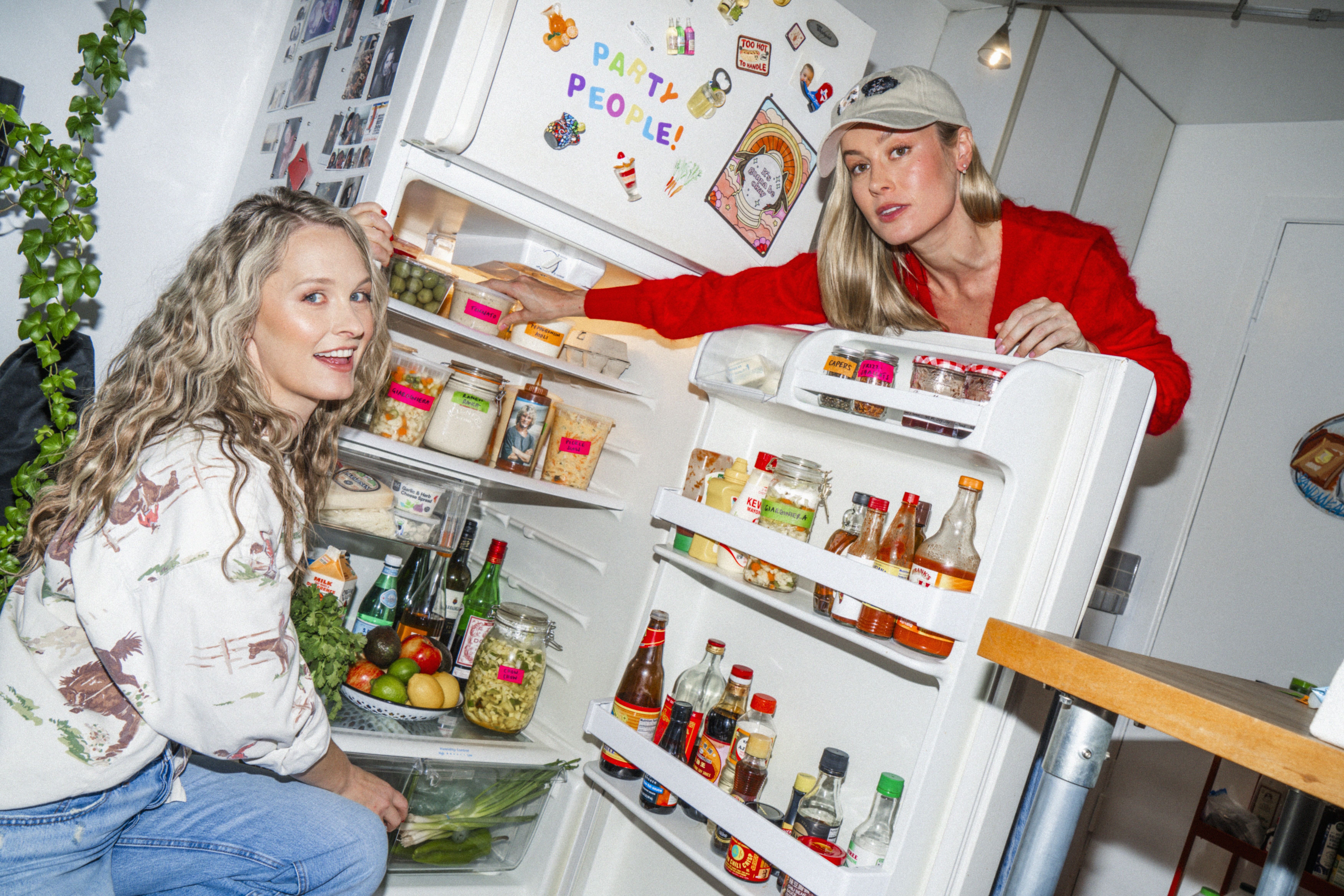
Somewhere along the way, hosting got weirdly competitive. A casual dinner turned into a full-contact sport featuring twelve tabs open, seventeen “must-make” recipes, a grocery bill that could fund a tiny moon mission, and at least one panic-cleaning session where you aggressively organize a junk drawer like your reputation depends on it. Brie Larson and Courtney McBroom are offering a much better idea: throw parties that are actually fun for the people who matter most, including the host.
That philosophy is the heartbeat of their entertaining style. Instead of treating a gathering like a performance review for your home, your cooking, and your emotional stability, they lean into something looser, warmer, and far more human. Think make-ahead food, playful themes, easy wins, shared responsibility, and the radical notion that people came to see younot inspect your baseboards with a magnifying glass.
In other words, this is not about becoming the sort of host who produces a six-course masterpiece while looking mysteriously dewy and unbothered. It is about creating a space where everyone feels welcome, conversation flows, and nobody has to fake-laugh while the host vanishes into the kitchen every eleven minutes to rescue a sauce.
If you love the idea of gathering people but hate the pressure that usually tags along, Larson and McBroom’s approach is refreshingly doable. Here’s how to throw a pressure-free party that feels stylish, personal, and genuinely joyfulwithout making yourself miserable in the process.
Why Their Hosting Advice Feels So Refreshing
What makes Larson and McBroom’s take stand out is that it doesn’t worship perfection. It respects real life. Their entertaining point of view is built around accessibility, connection, and confidencenot expensive ingredients, formal table manners, or the fantasy that every host lives in a magazine-ready home with a second kitchen hidden behind a secret panel.
That attitude matters because modern hosting often comes with invisible pressure. Your menu is supposed to impress. Your tablescape is supposed to look “effortless,” even though it took three hours and two existential crises. Your playlist must whisper, “I’m casually cool,” while your candles say, “I definitely know what taper height means.” It’s exhausting.
Larson and McBroom flip that script. Their version of entertaining makes room for casseroles, dips, appetizers that can sit out, theme parties with a wink, and homes that are cozy instead of cavernous. A good gathering, in their world, does not depend on square footage or a spotless dining room. It depends on comfort, rhythm, generosity, and a vibe that tells guests, “Relax. This isn’t a test.”
The New Hosting Rule: Connection Beats Perfection
1. Stop waiting for the “perfect” house
One of the smartest ideas in this whole pressure-free party mindset is also the simplest: your current home is good enough. Not someday. Not after you buy the bigger table, repaint the walls, or finally replace that chair with the suspicious wobble. Right now.
That matters because one of the biggest reasons people don’t host is embarrassment. The apartment feels too small. The kitchen feels too cramped. There aren’t matching plates. The couch has “seen some things.” But a fun gathering does not require real estate grandeur. It requires warmth. Some of the best parties happen when people squeeze onto the floor with pizza, pass around drinks, and talk until somebody notices it’s wildly past bedtime.
A smaller space can even work in your favor. It creates instant intimacy. Guests don’t scatter into twelve separate corners. Conversation stays lively. The energy feels close and easy. So stop treating your home like the obstacle. It might actually be the secret sauce.
2. Build a menu that lets you leave the kitchen
This may be the golden rule of pressure-free hosting: choose food that behaves itself. In other words, stop picking dishes that demand constant babysitting right when people arrive.
The best party menus are the ones that can be made ahead, reheated, assembled quickly, or set out without drama. This is where casseroles, dips, snack boards, baked pastas, room-temperature appetizers, easy desserts, and batch cocktails earn their crown. They are not “boring.” They are freedom in edible form.
If you are hosting for the first time, skip the elaborate sit-down dinner unless you truly enjoy that challenge. A snacky spread is often smarter. Guests naturally graze, mingle, refill, and settle in without needing your constant coordination. Nobody needs a restaurant-level service experience in your living room. They need tasty food and a host who is present.
That’s the real trick: serve things that allow you to act like a guest at your own party. The moment you are laughing in the middle of the room instead of sweating over a pan, you’ve won.
3. Let guests help without turning it into a committee meeting
Pressure-free parties are almost never solo productions. The easiest hosts know how to delegate. Not vaguely. Clearly.
That means assigning simple, useful roles: one person brings ice, another writes out the menu on a card, someone else manages music, another helps pour drinks, and your most reliable friend becomes the unofficial “where do I put this?” ambassador. People generally like helping when the job is obvious and manageable.
This also makes the party feel more communal. Guests become part of the experience rather than passive observers waiting for the host to perform excellence on command. Shared effort creates shared ownership, and shared ownership creates the relaxed feeling that makes a party memorable.
Translation: if someone asks, “What can I bring?” the answer should not always be, “Nothing!” Sometimes the best answer is, “A bag of ice, actually.” Heroic. Useful. Weirdly beloved.
4. Pick a playful idea and let it guide the night
Pressure-free does not mean boring. In fact, a light theme can make hosting easier because it gives the night shape. Larson and McBroom’s entertaining style embraces that beautifully. A quirky concept turns a regular gathering into an event without requiring circus-level effort.
The magic is in choosing themes that are low stakes and high charm. Think game night, soup swap, hot dog night, PowerPoint party, spooky snack night, retro movie dinner, or “everything from the freezer but make it chic.” When you pick a lane, decisions become easier. The menu is clearer. The playlist makes sense. The decor can stay minimal because the theme does the heavy lifting.
You do not need to build a Broadway set in your dining room. A few candles, one good playlist, and one inside-joke-worthy element can carry the whole evening. The point is to give people something to lean into, laugh about, and remember later.
5. Create mood with sound, light, and snacksnot stress
Ask anyone who has ever walked into a great party and they’ll usually remember the feeling first. Not the napkin fold. Not the centerpiece geometry. The feeling.
That feeling often comes from simple things done well: warm lighting, a good playlist, and food available early. Soft lamps beat harsh overhead lights nearly every time. Candles help. Music fills awkward silences before conversation gets moving. And snacks waiting when guests arrive send the universal message: you are welcome here, and no one is going to make you hover hungrily beside an empty counter.
This is especially helpful if your gathering includes people who don’t all know one another. A comfortable room and something to nibble on give strangers a social bridge. It is much easier to become charming while holding chips.
6. Make drinks easy and self-serve
Nothing turns a host into an overworked beverage intern faster than becoming the only person who knows where the ice, glasses, soda, wine opener, sparkling water, and cocktail ingredients live. Set up a drink zone instead.
A self-serve bar does not have to be fancy. It can be a tray on a sideboard, a corner of the counter, or a small cart with cups, bottles, ice, napkins, and garnishes grouped together. The goal is clarity, not cocktail-theater.
Signature drinks also help. One easy cocktail, one zero-proof option, chilled water, and you’re done. You are hosting a party, not opening a resort in the kitchen. When guests can help themselves, you free up time to actually talk to themwhich is, conveniently, the entire point.
7. Put down the phones once in a while
This may be the most modern tip of all. When every gathering becomes content, people stop relaxing. A pressure-free party feels better when the room is not constantly being documented from twelve angles like a red carpet with hummus.
That does not mean banning photos like a dramatic headmaster from a boarding school movie. It just means encouraging presence. If people want pictures, fine. But don’t let the whole evening turn into a lighting consultation. Old-school options like disposable cameras, instant film, or one designated snapshot moment can keep the fun alive without making everyone perform for the algorithm.
Real connection tends to happen when people stop curating and start participating.
How to Throw a Pressure-Free Party, Step by Step
Choose your party type first
Before you make a menu or text a single invitation, decide what kind of gathering this is. Is it a focused dinner? A loose, snacky hang? A game night where the games matter, or a game night where Uno is just there for emotional support? Clarity here saves you from making contradictory choices later.
Make a “do-ahead” menu
Choose dishes that can be prepped early, stored easily, and finished with minimal effort. One hot main, a few room-temperature items, one simple dessert, done. Resist the urge to prove yourself with one extra complicated thing. That “one extra thing” is always the plot twist.
Prep the room the day before
Set out serving pieces, glasses, trash bags, napkins, candles, and bathroom basics ahead of time. Declutter the areas people will actually use. Nobody is opening your winter coat closet to judge your soul.
Use a tiny timeline
Break the day into simple checkpoints: chill drinks, set out snacks, light candles, turn on playlist, put casserole in oven, take five minutes to sit down before the doorbell rings. This keeps the day from turning into one long panicked blur.
Accept shortcuts with pride
Store-bought appetizers, bakery dessert, bottled mixers, or ready-made dip are not moral failures. They are smart editing. Hosting gets easier when you stop confusing “from scratch” with “worth it.”
Have one emergency reset plan
Keep paper towels, extra ice, sparkling water, a spare trash bag, and one backup snack within easy reach. That tiny preparedness trick makes you feel calm even if nothing goes wrong. And if something does? You’ll look suspiciously competent.
What Good Guests Bring to a Good Party
Pressure-free hosting also depends on pressure-free guests. Larson and McBroom have a wonderfully practical view of this. The best guest contribution is not some elaborate “surprise” dish that needs oven space immediately. It is something useful, easy, and thoughtful.
Ice is a perfect example. So is a simple host gift that doesn’t create more work. What should guests leave at home? Bad attitude, unnecessary drama, and that mysterious instinct some people have to criticize the playlist while contributing absolutely nothing to it.
A great gathering is a group project disguised as fun. The best guests understand that and make the room lighter, not harder.
What Pressure-Free Hosting Looks Like in Real Life
Here’s the part that matters most: pressure-free hosting is not just a cute idea in theory. It works in actual homes, with actual schedules, and actual people who have jobs, laundry, budget limits, and at least one pan that should probably be replaced. The beauty of this approach is how normal it feels once you try it.
Maybe the first experience looks like this: you invite six friends over on a Friday night and decide that “dinner party” is too fancy a phrase for what you actually want. So you make baked pasta the night before, buy a salad kit without shame, put olives and chips into bowls, and set out one very good store-bought cake. When people arrive, the food is basically done, the music is on, and your only real task is taking the pasta out of the oven before it becomes a charcoal sculpture. Everyone eats. Everyone talks. No one asks why the napkins don’t match. Miraculously, civilization survives.
Or maybe it’s a small-space gathering. You have no dining room, the coffee table is doing its best, and two guests are sitting on cushions because chairs are apparently a luxury item now. But the room feels lively. The lights are low, the drinks are cold, and the playlist is carrying the social atmosphere like a seasoned professional. By the end of the night, people are leaning against the couch, stealing the last chips, and telling the kind of stories that never show up in polished party photos. That is success.
Then there’s the themed-party experience, which often sounds silly until it absolutely saves the night. A simple ideaa soup swap, a game night, a spooky snack evening, a “wear your favorite weird sweater” get-togethergives people an instant conversation starter. Suddenly, the pressure to be impressive disappears because the fun is built into the format. Guests arrive already understanding the mood. You don’t need elaborate decor when everyone is busy arguing over the best board game strategy or ranking the snacks with unnecessary seriousness.
And perhaps the most important experience is the host’s own emotional one. The first time you give up the fantasy of the flawless party, something shifts. You stop trying to control every detail. You let a friend pour drinks. You buy the fancy dip instead of making three scratch recipes at midnight. You sit down while people are still there instead of cleaning aggressively to prove you are responsible. You notice laughter happening in your house and realize, with some surprise, that you are part of it.
That is the real lesson behind pressure-free parties. The win is not hearing, “Wow, you did so much.” The win is hearing, “That was so fun,” and knowing you felt it too.
Final Thoughts
Brie Larson and Courtney McBroom’s hosting philosophy lands because it gives people permission to stop overcomplicating togetherness. You do not need an enormous budget, a perfect house, or a menu that deserves its own publicist. You need a little planning, a little flexibility, food that works with you instead of against you, and a willingness to let the gathering be delightfully human.
So throw the party. Make the casserole. Light the candles. Put out the chips. Let someone bring ice. And when the room gets loud in the best possible way, resist the urge to disappear into the kitchen and “fix” things that are not broken. The fun is happening now. Stay for it.