Some headlines make archaeology sound like a detective finally slamming a case file shut. Real archaeology is usually messier, slower, and far more interesting than that. So when a new study appeared to reveal the “secret origin” of one of America’s most mysterious monuments, the smartest response was not, “Case closed, everybody go home.” It was more like, “Well, now things just got way more fascinating.”
The monument in question is Poverty Point, the enormous earthwork complex in northeastern Louisiana that has puzzled researchers for generations. Long before steel skyscrapers, long before Roman roads, and long before anyone in North America was building the kind of centralized agricultural cities many people assume are necessary for grand public works, Indigenous communities at Poverty Point reshaped the land on a breathtaking scale. They built massive ridges, mounds, and a giant open space that still feels intentional, dramatic, and a little eerie thousands of years later.
Now, a recent study argues that the site’s origin story was not mainly about kings, bosses, or some early version of a construction company with terrible deadlines and zero employee benefits. Instead, the researchers suggest Poverty Point was created by egalitarian hunter-gatherer communities who gathered in large numbers for ritual, exchange, and a shared effort to restore order in a world rattled by environmental stress. In plain English: the monument may have been born not from hierarchy, but from cooperation, belief, and a very human need to make sense of chaos.
The Monument That Never Fit the Old Script
Poverty Point has always been hard to explain with the usual ancient-history script. The site dates to roughly 3,400 to 3,700 years ago and includes sweeping C-shaped ridges, several major mounds, and a broad central plaza laid out with astonishing geometric intent. The complex covers a huge area and required moving extraordinary amounts of earth by hand, without wheels, draft animals, or metal tools. That alone makes it a jaw-dropper.
For years, many researchers assumed that a place this monumental must have been built by a society with strong top-down power. After all, the old academic habit was to treat big construction projects as the calling card of chiefs, rulers, elites, or permanent urban populations. If a monument looked grand, then surely someone important had ordered it into existence.
But Poverty Point has always been a little too slippery for that explanation. The site contains evidence of long-distance exchange, sophisticated planning, and large-scale labor, yet it has not delivered the neat package archaeologists would expect from a classic ruler-centered settlement. There is no clear sign of a palace. No unmistakable throne-room moment. No obvious cemetery for a line of local super-bosses. No tidy historical label saying, “Congratulations, you have discovered a prehistoric capital.”
That mismatch matters. Poverty Point has spent decades quietly refusing to behave like the kind of monument scholars once thought it had to be. The new study takes that refusal seriously and turns it into the center of the story.
What the New Study Really Says
The big idea from the new research is not that Poverty Point suddenly popped out of nowhere like an ancient special effect. It is that the site’s social origin may have been misunderstood. Rather than a permanent town run by powerful leaders, the researchers argue that Poverty Point was likely a temporary or periodic gathering place where people from across a broad region assembled in the thousands.
Why gather there? The new interpretation points to a combination of trade, social connection, ritual activity, and a deeper cosmological purpose. The researchers place the site within a time of climatic and environmental instability in the Lower Mississippi Valley, including flooding and ecological disruption. In that context, building at Poverty Point may have been a collective act of renewal, a way to restore balance between human communities and a troubled universe.
That is the part that gives the study its dramatic edge. It suggests the monument was not merely functional and not simply political theater. It may have been a sacred landscape shaped by people who believed they had a moral responsibility to respond to disorder in the world around them.
Archaeology rarely gets handed a neat instruction manual from the ancient builders, so this interpretation is not presented as an absolute final answer. But it is a powerful reframing. Instead of asking, “Which ruler commanded this?” the new study asks, “What if no ruler had to?” That question changes almost everything.
The Evidence Behind the New Interpretation
One reason this argument has gained attention is that it does not appear out of thin, humid Louisiana air. It builds on years of research that has steadily chipped away at older assumptions.
1. The site shows extraordinary cooperation
Earlier work on Poverty Point demonstrated that parts of the earthworks were built rapidly, in some cases over weeks or months rather than through lazy centuries of gradual piling. That matters because rapid construction implies organized labor on a big scale. But organized labor does not automatically equal dictatorship. It can also mean a community with shared goals, strong traditions, and impressive coordination. Think less “pharaoh with a whip” and more “thousands of people showing up because the event actually matters.”
2. The builders were highly skilled engineers
Studies of the site’s soils have shown that the builders were not just moving dirt around like overenthusiastic gardeners. They appear to have mixed sediments in sophisticated ways, creating durable earthworks that have survived for more than three millennia. That kind of engineering knowledge points to deep environmental understanding. These were not “simple” people stumbling into greatness. They knew exactly what they were doing, and the landscape still proves it.
3. The artifact trail is wide and impressive
Poverty Point has yielded materials from far beyond the local area, including quartz crystal from Arkansas, soapstone from what is now Georgia, and copper linked to the Great Lakes region. Those finds support the idea that the site was connected to wide exchange networks stretching across major portions of eastern North America. In short, Poverty Point was plugged in. It was not isolated. It was a place where people, goods, ideas, and probably stories flowed together.
4. There is weak evidence for a classic permanent city
The new study leans heavily on something archaeologists have not found in the way they might expect at a continuously occupied capital. Researchers have argued that there is no strong evidence for the long-term dwellings or burial patterns that would make the old “permanent great town ruled by elites” model feel rock-solid. That absence does not prove the new theory by itself, but it does make the older theory look less comfortable in its chair.
5. Regional chronology is getting sharper
New radiocarbon dating and revised chronologies from Poverty Point and related sites in the Lower Mississippi Valley suggest a more dynamic history than older, broad-brush interpretations allowed. Instead of one slow, inevitable march toward monumentality, the picture emerging now is one of changing gatherings, shifting regional relationships, and bursts of large-scale activity tied to specific moments and conditions.
Why This Changes the Story of Ancient America
The importance of the new Poverty Point interpretation goes beyond one Louisiana site. It touches a much bigger question: How do complex societies actually work?
For a long time, popular history loved a simple ladder. First, people hunt and gather. Then they farm. Then they settle down. Then they get leaders, hierarchy, monuments, cities, and, eventually, taxes and bad bureaucracy. Poverty Point has long complicated that neat progression, and this new study complicates it even more.
If the researchers are right, then a massive monument in North America was not built because a centralized authority forced labor into line. It was built because dispersed communities could come together voluntarily for shared sacred and social purposes. That idea pushes back against outdated assumptions that only agricultural chiefdoms or early states can organize grand public works.
It also restores proper respect to the Indigenous builders of Poverty Point. Too often, ancient Native American achievements have been flattened, underestimated, or treated like weird exceptions waiting for “real civilization” to arrive later. Poverty Point makes that view look embarrassingly small. This was a landscape of engineering, planning, ritual meaning, and regional reach. The new study adds something even more profound: it may also have been a landscape of collective moral imagination.
The Mystery Is Not Gone, But It Is Better
One of the best things about this research is that it does not pretend to eliminate mystery. Good archaeology rarely does. It sharpens the mystery, gives it stronger boundaries, and replaces weak guesses with better ones.
We still do not know every detail of how gatherings at Poverty Point were scheduled, how different groups negotiated their roles, or exactly what ceremonies took place there. We do not have a surviving speech from a Late Archaic organizer saying, “Welcome, everyone, please place your offerings to the left of the plaza.” Archaeology does not work like that.
But the new study offers a model that fits the evidence more gracefully than older top-down explanations. It makes sense of the monument’s scale, the exotic artifacts, the environmental context, and the lack of strong evidence for a typical elite-run settlement. Most importantly, it treats the builders as intellectually serious people whose motivations may have included ethics, spirituality, and reciprocal obligation, not just material self-interest.
That is a bigger intellectual shift than it might sound. It asks modern readers to stop assuming that ancient people only worked hard for power, profit, or coercion. Sometimes they worked hard because they believed the world needed repair.
Why Poverty Point Still Feels So Mysterious
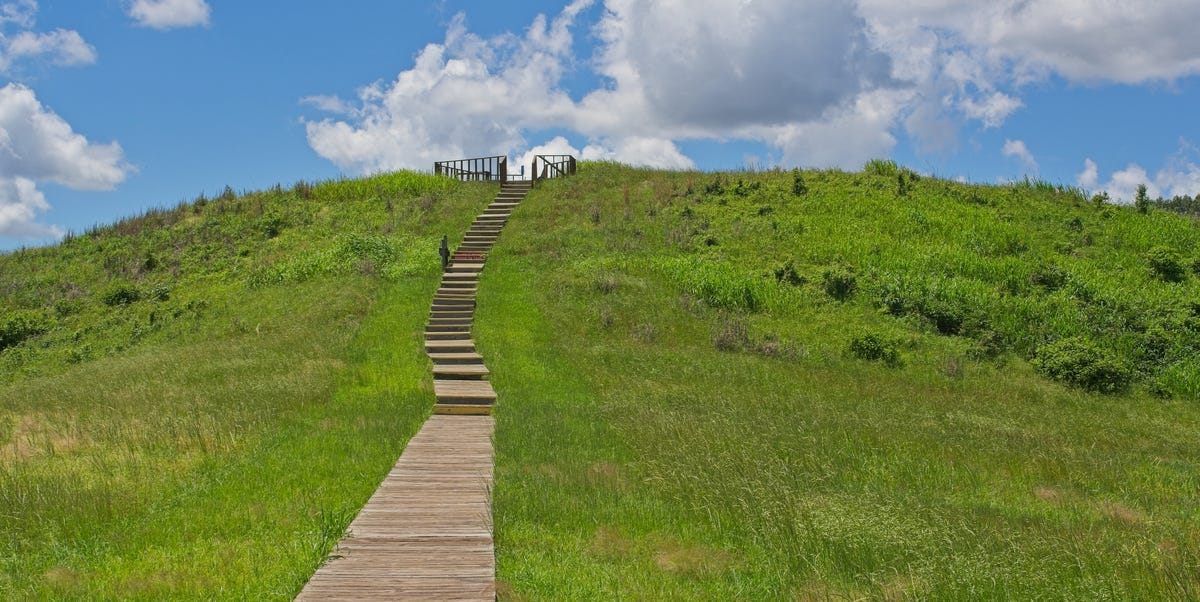
Part of Poverty Point’s power is visual. From the air, the site looks bold and deliberate, almost like a giant design pressed into the land. On the ground, however, the monument can feel subtler than visitors expect. This is not a pyramid with a dramatic stone face. It is an earthwork landscape, and that means its scale unfolds gradually. You do not just “see” it; you begin to understand it piece by piece.
And then there is the name. “Poverty Point” sounds almost comically misleading for such a rich archaeological wonder. The name comes from a much later plantation, not from the Indigenous builders themselves. That mismatch adds another layer of mystery. Even the label most people know is really a historical afterthought pasted over a site of far older significance.
The monument also sits in a category that tends to confuse casual readers: it is unmistakably monumental, but it does not resemble the stone architecture many people associate with “great ancient civilizations.” Poverty Point reminds us that monuments do not have to be built of marble or granite to be world-class achievements. Earth can carry memory too. In Louisiana, it clearly does.
What It Feels Like to Encounter Poverty Point Today
There is a particular kind of experience that only places like Poverty Point can give you. It begins with the strange realization that you are standing in a landscape that does not immediately show off. It does not shout the way a famous cathedral does. It does not stab the sky like a skyscraper. Instead, it asks for your patience. Then, once you give it a little time, it quietly rearranges your sense of scale.
If you walk the grounds or even imagine approaching them as a visitor, the first emotional jolt is often disbelief. The ridges seem natural until you remember they are not. The mounds seem like ordinary rises in the earth until your brain catches up and says, “Wait, people made this.” Then comes the second jolt: people made all of this without the technologies modern audiences instinctively expect. No engines. No metal bulldozers. No drone survey crews in neon vests. Just people, tools, baskets, knowledge, organization, and intent.
That is where the site starts to become personal. Poverty Point is not mysterious because it feels alien. It is mysterious because it feels human in a way that is almost unsettling. The labor was human. The gathering was human. The desire to create order in a difficult world was deeply human. Standing there, the distance of 3,500 years can suddenly feel much shorter than expected.
The experience also plays tricks on modern assumptions. Most of us have been trained to think that big achievements require rigid systems, famous leaders, and a lot of paperwork. Poverty Point suggests another possibility: people can build astonishing things because they share a worldview strong enough to hold them together. That idea lands differently when you are looking across an ancient engineered landscape that still survives storms, seasons, and centuries.
There is also something humbling about the physical setting. Poverty Point sits in a region shaped by water, floodplains, heat, and movement. It is not hard to imagine how environmental instability could have made life feel fragile and unpredictable. In that context, the monument stops seeming like an abstract archaeological puzzle and starts feeling like a response to pressure. You can almost sense why people might have gathered there: to trade, to reconnect, to perform rituals, to affirm that community still existed even when the wider world felt unstable.
And that may be the strongest emotional experience tied to the new study. It transforms Poverty Point from a monument of raw “mystery” into a monument of relationship. Relationship between distant communities. Relationship between labor and belief. Relationship between the human world and a larger cosmos that people felt responsible for maintaining. That is not just a clever academic theory. It is a way of seeing the site that gives it emotional weight.
By the time you leave the subject, whether from a museum exhibit, a park visit, a map, or a deep reading session at your desk, Poverty Point tends to linger in the mind. Not because it is unsolved in a cheap, spooky way, but because it expands the imagination. It reminds us that ancient North America produced monumental places of stunning sophistication, and that some of the most impressive builders in history may have been communities who gathered not for conquest, but for connection.
That is a pretty remarkable origin story for any monument. And honestly, it is a lot more interesting than the old idea that greatness only shows up when somebody important starts giving orders.
Conclusion
The new study on Poverty Point does not merely update one archaeological debate. It reframes one of America’s most mysterious monuments as the product of shared belief, regional exchange, and collective action in a time of environmental uncertainty. That matters because it changes the way we think about power, monument-building, and Native American history long before European contact.
Poverty Point was already extraordinary as an engineering feat. Now it looks even more extraordinary as a social and spiritual one. The site may not have been built to glorify a ruler at all. It may have been built to bring people together, restore balance, and respond to a world that felt unstable. For modern readers, that possibility makes the monument feel less like a leftover puzzle and more like a meaningful act of human courage.