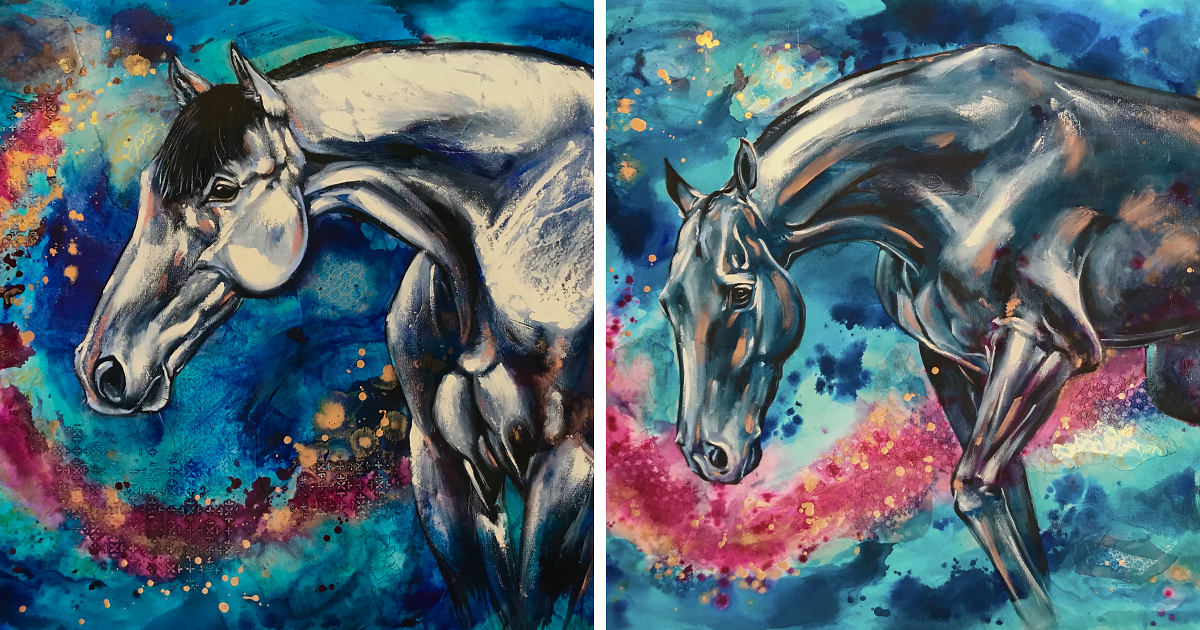
Note: This original feature is written for web publication and inspired by the growing public fascination with young contemporary artists whose bold color, emotional storytelling, and shareable visual style are reshaping how people discover paintings online and in galleries.
When Color Becomes the Main Character
Some paintings politely ask for attention. Others kick open the door wearing neon shoes, carrying a bouquet, and somehow making the whole room feel underdressed. The work of a new and youthful artist with extraordinarily vibrant paintings belongs to that second category. Her art does not whisper from the wall; it glows, hums, and practically waves at viewers from across the room.
In a digital age where people scroll through thousands of images before lunch, it takes more than “pretty colors” to stop a thumb mid-swipe. What makes these paintings stand out is not just brightness, but intention. The colors are energetic without becoming chaotic. The figures, landscapes, objects, or dreamlike scenes feel alive, as if each canvas has been plugged into a secret emotional power outlet. It is this combination of youthful imagination, technical confidence, and visual warmth that helps explain why her work is drawing a crowd.
Vibrant painting has a long and respected history. From the daring color choices of Fauvism to the rhythmic abstractions of modern American painters, artists have often used color to express what words trip over while trying to explain. This young artist appears to understand that instinctively. Her palette does not merely decorate the picture; it carries mood, movement, memory, and personality. In simpler terms, the paint is doing the emotional heavy liftingand it has clearly been going to the gym.
Why Young Artists Are Capturing So Much Attention Right Now
The popularity of young and emerging artists is not accidental. Audiences today are hungry for work that feels immediate, personal, and visually memorable. Traditional gallery walls still matter, but social platforms, online art communities, digital magazines, and artist-run shops have changed the route between creator and viewer. A painter no longer needs to wait quietly in the corner for permission to be seen. She can post a new piece, share process videos, build a following, and invite viewers directly into her creative universe.
This shift is especially powerful for artists with bold visual identities. Bright colors, expressive brushwork, and imaginative compositions translate well online because they remain recognizable even on a phone screen. A vibrant painting can stop viewers quickly, but a meaningful one keeps them looking. That second part is where the artist’s skill matters. A loud palette may win the first glance; emotional depth earns the second, third, and fourth.
Collectors and casual art lovers alike are also paying closer attention to emerging painters because fresh voices often bring fresh subject matter. Younger artists are less likely to separate “serious art” from daily life. They paint bedrooms, pets, city corners, food, friendship, anxiety, nature, fashion, identity, and little private moments that somehow feel universal. Their work often says, “Yes, life is complicated, but have you noticed how beautiful a pink shadow can be?”
The Power of an Extraordinarily Vibrant Palette
Color is one of the first things viewers notice, and it often shapes how they feel before they understand what they are seeing. Warm reds, oranges, and yellows can suggest joy, tension, appetite, heat, or celebration. Blues and greens can feel calm, mysterious, nostalgic, or even electric depending on how they are handled. A skilled painter knows that color is not a box of crayons dumped onto canvas; it is a language.
In these paintings, vibrancy works like emotional lighting. A face may be painted with unexpected purples and golds, giving it a dreamlike glow. A simple room may become theatrical through turquoise walls, coral shadows, and sunlit yellow highlights. A landscape may feel less like a literal place and more like a memory of being there on the best possible day. The colors exaggerate reality, but they do not erase it. Instead, they make ordinary subjects feel newly awake.
This is why vibrant paintings often feel youthful even when their themes are mature. Youthfulness in art is not only about the age of the artist. It is about curiosity, risk, play, and the refusal to treat the world as visually boring. A youthful painting can make a coffee cup look like a tiny monument. It can make a houseplant feel heroic. It can make a quiet figure appear surrounded by invisible music.
8 Pics That Show Why Her Paintings Are Getting Noticed
While every artwork deserves to be experienced directly, the following eight visual ideas represent the kind of moments that make a vibrant young painter’s portfolio so magnetic. They are the pieces viewers tend to pause on, share, discuss, and remember after closing the tab.
1. A Portrait That Feels Like a Firework
The first image likely grabs attention through a portrait filled with saturated color. Instead of relying on traditional skin tones, the artist may use pinks, oranges, blues, and violets to show personality rather than simple likeness. The result feels expressive, confident, and a little mischievous, as if the subject knows they are about to become someone’s favorite painting.
2. A Dreamy Interior Bursting With Personality
Interior scenes are especially effective when painted with vibrant imagination. A room can become a self-portrait without showing a face. Patterned rugs, glowing lamps, crooked frames, plants, books, and playful color contrasts can reveal mood and memory. In the hands of a young artist, even a couch can look like it has strong opinions.
3. A Floral Painting With More Drama Than a Soap Opera
Flowers are classic subjects, but vibrant contemporary painters often make them feel fresh by exaggerating scale, contrast, and movement. Instead of a polite bouquet, viewers may see flowers stretching, twisting, and glowing against a bold background. The painting becomes less about botanical accuracy and more about abundance, joy, and the beautiful chaos of growth.
4. A Colorful City Scene Full of Motion
A youthful artist can turn an ordinary street into a festival of shapes. Crosswalks, windows, signs, shadows, and passersby can become part of a rhythmic composition. Bright colors help express the speed and sensory overload of modern life. The city is not gray concrete anymore; it is a living collage with excellent timing.
5. A Playful Still Life With Hidden Meaning
Still life painting has always been more than fruit sitting quietly on a table. A vibrant still life might include snacks, flowers, cosmetics, headphones, dishes, or personal objects arranged like clues. Through color and composition, these everyday items can suggest identity, routine, comfort, and humor. Yes, even a banana can have narrative range if painted with enough confidence.
6. A Nature-Inspired Work That Feels Almost Musical
Nature gives color-loving artists an endless playground. Leaves, water, skies, birds, and gardens can be pushed beyond realism into emotional atmosphere. A young painter may use rhythmic brushstrokes and unexpected color pairings to make the scene feel like music. The viewer does not just see the landscape; they feel its tempo.
7. A Figure in Motion
Paintings of bodies in motion often reveal an artist’s ability to combine anatomy, gesture, and mood. A dancer, skater, runner, or person simply turning their head can become a study in energy. With vibrant color, movement becomes visible even in stillness. The painting seems to capture the exact second before something happens.
8. A Large Statement Piece That Pulls Viewers Closer
Every memorable portfolio needs at least one piece that feels like a declaration. A large painting with intense color, layered imagery, and confident brushwork can become the work people gather around. These are the paintings that make viewers lean in, step back, squint, smile, and then call over a friend with the universal museum phrase: “Come look at this.”
What Makes Her Paintings Feel So Fresh?
Freshness in contemporary painting usually comes from a mixture of familiarity and surprise. If a painting is too familiar, viewers may admire it politely and move on. If it is too strange, they may feel locked out. The sweet spot is where the subject is recognizable, but the treatment feels unexpected. This artist appears to work in that exciting middle zone.
Her paintings likely appeal because they offer access without becoming simple. A viewer does not need an advanced art history degree, a black turtleneck, and three opinions about post-structuralism to enjoy them. The color speaks first. The composition invites the eye to wander. Then the details begin to reveal deeper emotional notes. That layered experience makes the work friendly on the surface and rewarding underneath.
Another reason her paintings feel current is the way they seem built for both gallery viewing and digital sharing. The strongest contemporary artworks do not merely look good on Instagram; they survive beyond it. They have enough structure, texture, and concept to remain interesting in person. Vibrant color may help an image travel online, but craft gives it staying power.
The Role of Social Media in Building a Crowd
For emerging artists, the crowd often forms in two places at once: online and offline. A viewer may first discover a painting through a shared post, then later visit an exhibition, buy a print, follow the artist’s studio updates, or recommend the work to a friend. This path is now normal. The art world has not become less serious because of social media; it has become more visible.
Vibrant paintings have an advantage in this environment because they communicate quickly. But the best artists use social platforms for more than showing finished pieces. They share sketches, studio messes, color tests, failed attempts, progress shots, and short reflections on process. This turns viewers into witnesses. People become invested not only in the final artwork but in the journey from blank canvas to finished painting.
That sense of participation matters. When people feel connected to an artist’s process, they are more likely to celebrate her growth. They do not simply see a painting; they remember the first layer, the color decision, the moment when the composition changed, and the tiny studio disaster involving wet paint and possibly an innocent sleeve. Art becomes personal before it becomes collectible.
Why Vibrant Art Feels Especially Meaningful Today
There is a reason colorful, emotionally open painting resonates strongly right now. Many people are tired. The world can feel loud, uncertain, and overloaded with bad news delivered at high speed. Vibrant art does not solve those problems, but it offers a different kind of attention. It asks viewers to pause, look closely, and experience pleasure without apology.
That does not mean colorful paintings are shallow. In fact, brightness can make difficult emotions more complex. A joyful palette can hold loneliness. A playful scene can reveal unease. A cheerful pattern can sit beside a quiet figure and create tension. Some of the most interesting contemporary paintings use beauty as an invitation and complexity as the reward.
This young artist’s growing appeal may come from exactly that balance. Her work seems to offer optimism without pretending life is perfect. The paintings are vibrant, but not empty. They are approachable, but not generic. They feel youthful, but not naive. That is a difficult balance to achieve, and when an artist finds it, people notice.
How Her Work Fits Into a Bigger Art Tradition
Although the artist feels fresh and contemporary, her approach connects to a larger story of painters using color as emotional force. Modern art history is filled with creators who rejected dull literalism and embraced color as a way to intensify experience. Fauvist painters shocked early twentieth-century audiences with bold, non-naturalistic color. Abstract painters later explored rhythm, movement, and sensation through hue and form. Contemporary artists continue to push color into new conversations about identity, memory, environment, and daily life.
What makes a youthful artist exciting is not that she has invented color from scratch. Thankfully, nobody has to do that; imagine the paperwork. What matters is how she uses color now, in this cultural moment, with her own subjects and instincts. The best emerging artists absorb influence without becoming copies. They learn from art history, popular culture, personal experience, and visual life around them, then mix those ingredients into a language that feels unmistakably theirs.
That is why vibrant painting continues to attract viewers. It is both old and new. It belongs to museums and phone screens, studios and bedrooms, serious collectors and casual fans who just know a painting makes them feel something. In a world full of visual noise, a distinct artistic voice is still powerful.
What Viewers Can Learn From These Paintings
One of the pleasures of following a young artist is watching confidence develop in real time. Early works may show experimentation. Later works may reveal clearer themes, sharper compositions, and braver color choices. This growth can be inspiring for viewers, especially those who want to make art themselves but feel intimidated by the blank canvas.
The biggest lesson is simple: start looking more closely. Vibrant paintings train the eye to notice relationships between colors, shapes, and moods. A red shadow can feel warmer than a gray one. A green outline can make a figure vibrate against a pink background. A patch of yellow can pull the entire composition into balance. Once viewers notice these choices in paintings, they may start seeing them everywherein street signs, grocery aisles, sunsets, sneakers, and the suspiciously dramatic lighting inside the refrigerator at midnight.
The second lesson is that personal vision matters. A painting does not need to imitate reality perfectly to feel true. Sometimes distortion, exaggeration, and bold color reveal more than realism can. A youthful artist often understands this because she has not yet been trained out of play. Her work reminds us that imagination is not a childish habit to outgrow; it is a serious creative tool.
Experiences Related to Vibrant Young Artists and Their Crowd-Pulling Paintings
Anyone who has attended a small gallery opening, local art fair, student exhibition, or open studio event knows the special energy that appears around a painting people genuinely love. It starts quietly. One person stops. Another slows down nearby. Someone tilts their head, which is the international sign for “I am either thinking deeply or trying to figure out if that shape is a cat.” Then a few more people gather. Soon the painting has created its own little weather system of curiosity.
Vibrant paintings are particularly good at creating this effect because they are generous from a distance. A soft gray conceptual work may require patience, silence, and possibly a wall label with the emotional density of a legal contract. A bright, expressive painting reaches out immediately. It says, “Come here. I have something to show you.” That first invitation can make art feel less intimidating, especially for people who do not visit galleries often.
In community exhibitions, youthful artists often bring a refreshing lack of stiffness. Their work may combine influences that older categories try to keep separate: fine art, illustration, animation, fashion, street culture, internet humor, family memory, and personal symbolism. A painting might have the compositional seriousness of museum art, the color punch of a poster, and the emotional honesty of a diary entry. This blend can feel incredibly alive because it reflects how people actually experience visual culture today.
For young artists themselves, creating vibrant paintings can also become a way to build confidence. Choosing bold color is an act of commitment. There is nowhere to hide when a canvas contains electric blue, hot pink, lemon yellow, and a green so bright it looks like it pays rent in a nightclub. The artist has to make those colors work together. She has to balance energy with structure, spontaneity with control. When it succeeds, the painting feels fearless.
Viewers often respond to that fearlessness. They may not know the technical vocabulary, but they recognize courage when they see it. They can feel when an artist has made a decision instead of decorating around uncertainty. This is part of what makes a young painter’s rise so enjoyable to watch. The crowd is not only responding to color; it is responding to momentum.
There is also something deeply human about watching an artist transform private imagination into public experience. A painting begins in solitude: sketches, doubts, revisions, mistakes, and the occasional tragic brush dropped exactly where it should not land. But once displayed, it becomes social. People bring their own memories and moods to it. One viewer sees joy. Another sees nostalgia. Someone else sees a color combination that reminds them of their grandmother’s kitchen, summer vacation, or the best popsicle of childhood. The artist creates the object, but the audience completes the experience.
That is why features like “8 Pics” are so popular online. They give viewers a quick but satisfying entry into an artist’s world. Each image becomes a doorway. Some people will simply enjoy the colors and move on happier than they arrived. Others will look up the artist, follow her work, share it, or begin painting again after years away from the easel. In that sense, a vibrant young artist drawing a crowd is not just a nice art story. It is a reminder that creativity still spreadsbrightly, unpredictably, and sometimes faster than wet acrylic on a white shirt.
Conclusion
A new and youthful artist drawing a crowd with extraordinarily vibrant paintings is more than a feel-good headline. It reflects a larger movement in contemporary art: audiences are responding to color, sincerity, personality, and accessible emotional storytelling. Her paintings stand out because they combine immediate visual impact with deeper layers of mood and meaning. They are colorful without being careless, youthful without being simplistic, and joyful without ignoring complexity.
Whether seen in a gallery, on a social feed, or through a curated set of eight striking images, this kind of art reminds viewers why painting continues to matter. A canvas can still surprise us. A color can still change the atmosphere of a room. A young artist with a strong voice can still gather a crowdnot by shouting, but by painting the world as if it has been waiting all along to become brighter.