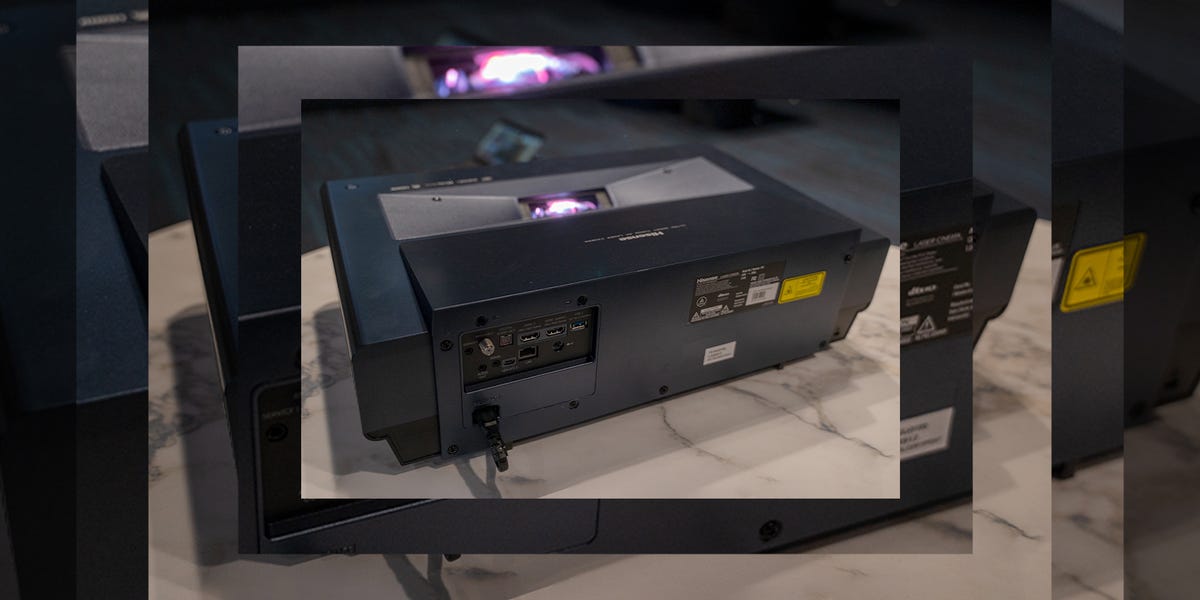
If a regular projector is the home theater equivalent of rearranging your living room around a ceiling mount, an ultra short throw projector is the friend who says, “Relax, I brought the movie theater in a shoebox.” Ultra short throw projectors, often called UST projectors or laser TVs, can create a massive image while sitting just inches from the wall or screen. No long cables across the room. No ceiling drilling. No shadow puppets every time someone reaches for popcorn.
For homeowners, apartment dwellers, gamers, sports fans, and movie lovers who want a 100-inch or 120-inch picture without buying a television roughly the size of a garage door, a UST projector can be a smart and seriously fun upgrade. But it is not a magic box. The screen matters. The room matters. Brightness, contrast, throw ratio, input lag, sound, and smart features all matter too.
This guide breaks down how ultra short throw projectors work, what to look for before buying, when they beat a TV, when they do not, and how to set one up without turning your wall into a trapezoid-shaped science experiment.
What Is an Ultra Short Throw Projector?
An ultra short throw projector is a projector designed to sit very close to the projection surface while still creating a large image. Instead of being placed at the back of the room like a traditional long-throw projector, a UST projector usually sits on a media console directly below the screen.
Most ultra short throw projectors use special wide-angle lenses and mirrors to bounce the image upward at a steep angle. This lets them produce screen sizes commonly ranging from about 80 inches to 150 inches, depending on the model. Some premium models can go larger, but for most living rooms, the sweet spot is 100 to 120 inches.
The term “laser TV” is often used because many modern UST projectors use laser light sources and include built-in speakers, streaming apps, voice control, and TV-like interfaces. Models from brands such as Epson, Hisense, LG, Samsung, Formovie, Optoma, and others are designed to replace a traditional big-screen TV in a living room rather than behave like old-school conference room projectors.
How Ultra Short Throw Projectors Work
The secret is throw ratio. Throw ratio compares the distance from the projector to the screen with the width of the image. A standard projector may need to sit many feet away to create a large picture. A short throw projector gets closer. An ultra short throw projector gets very close, often less than a foot from the wall for a 100-inch image.
For example, a UST projector with a 0.22:1 throw ratio can create a wide image from a very short distance. The exact placement depends on the model, screen size, and height of the projector. This is why you should always check the manufacturer’s placement chart before buying a console or screen. “Close to the wall” does not mean “randomly shoved against the baseboard and hoped for the best.”
Laser Light Sources
Most current ultra short throw projectors use laser light engines instead of traditional lamps. Laser projectors usually offer long life, quick startup, stable brightness, and lower maintenance. Many laser light sources are rated around 20,000 hours or more, which means you are more likely to replace the projector because technology improved than because the light source gave up.
Some projectors use single laser systems, while others use triple laser systems with separate red, green, and blue lasers. Triple laser UST projectors can produce a wider color gamut and more vibrant images, especially with HDR content. However, they may also cost more and, in some cases, can show laser speckle depending on the screen and viewing conditions.
4K Resolution and Pixel Shifting
Many ultra short throw projectors advertise 4K UHD resolution. Some use native 4K imaging chips, while many use pixel-shifting technology to display 8.3 million pixels on screen. For real-world movie watching, sports, and gaming, a good 4K UST projector can look impressively sharp, especially at 100 inches or larger.
Still, resolution is only one piece of image quality. Brightness, contrast, color accuracy, processing, screen quality, and room lighting can make a bigger difference than the resolution number printed on the box.
Why People Love Ultra Short Throw Projectors
The biggest appeal is obvious: huge screen, small footprint. A 100-inch TV is expensive, heavy, and about as subtle as parking a billboard in your living room. A UST projector can deliver a cinematic image while sitting neatly on a cabinet.
They Are Great for Small Spaces
Because the projector sits close to the screen, you do not need a deep room. This makes UST projectors especially useful in apartments, multipurpose living rooms, media rooms, and spaces where ceiling mounting is not practical.
They Reduce Shadows
With a traditional projector, someone walking between the projector and the screen can block the image. With an ultra short throw projector, the light path is right at the front of the room, so family members, pets, and snack-seeking guests are much less likely to interrupt the picture. Your dog can still judge your movie choice, but at least he will not cast a giant shadow on it.
They Feel More Like TVs
Many UST projectors include smart TV platforms such as Google TV, Android TV, webOS, or Tizen, depending on the brand. They may also include built-in speakers, HDMI ports, eARC or ARC support, Bluetooth, Wi-Fi, and voice assistant compatibility. This makes them easier to use daily than traditional projectors that require separate streaming boxes and sound systems.
The Screen Is Not Optional If You Want the Best Picture
Can you project a UST projector onto a plain white wall? Technically, yes. Should you expect it to look like the demo videos online? Absolutely not.
Ultra short throw projectors send light upward at a steep angle, which makes the projection surface extremely important. Small wall imperfections, paint texture, waves, bumps, or uneven surfaces can cause visible distortion. A wall that looks smooth during breakfast may reveal its secret mountain range when hit by a UST projector.
UST ALR and CLR Screens
For most living rooms, the best companion for an ultra short throw projector is a UST-specific ambient light rejecting screen, often called an ALR or CLR screen. ALR stands for ambient light rejecting. CLR usually refers to ceiling light rejecting. These screens are engineered to reflect light coming from the projector below while rejecting light coming from above or from the sides.
This matters because projectors do not create black the way TVs do. They depend on the screen and room lighting. In a bright room, a regular white screen can look washed out. A UST ALR screen improves perceived contrast, keeps colors more vivid, and makes daytime viewing much more enjoyable.
Fixed Frame vs. Motorized Screens
A fixed frame screen usually gives the flattest, most reliable surface. That is ideal for UST projection because even tiny waves can bend straight lines. Motorized floor-rising screens are popular because they disappear when not in use, but quality matters. A cheap pull-up screen can ripple, and UST projectors are not forgiving. They are basically the projector world’s brutally honest friend.
Brightness: How Many Lumens Do You Need?
Brightness is usually listed in ANSI lumens, ISO lumens, or another manufacturer rating. While measurements can vary, the general rule is simple: brighter rooms need brighter projectors and better screens.
For dark rooms, a lower-brightness UST projector can still look excellent. For living rooms with lamps, windows, or daytime sports viewing, you should look for a brighter model and pair it with a proper UST ALR screen. Many popular UST projectors fall in the range of roughly 1,800 to 4,000 lumens, while some premium models go higher.
Brightness alone does not guarantee a great picture. A projector with strong brightness but weak black levels can look flat during dark movie scenes. A projector with excellent color and contrast but lower brightness may shine in a controlled room and struggle in sunlight. The best choice depends on how and where you watch.
Contrast, HDR, and Color Quality
Contrast is the difference between the brightest whites and darkest blacks a projector can produce. In real life, contrast is heavily affected by room lighting and screen quality. That is why a UST projector that looks fantastic in a dark demo room may look less dramatic beside a sunny window.
HDR support is another feature to examine. Many UST projectors support HDR10, HLG, HDR10+, or Dolby Vision. Dolby Vision and HDR10+ can help compatible content adjust brightness and tone mapping scene by scene, but the quality of implementation still matters. A projector is not a TV; it usually cannot reach the same peak brightness as a premium OLED or mini-LED television. Good tone mapping is what keeps bright highlights from looking blown out and dark scenes from becoming a gray soup.
Color performance is often a strength of triple laser projectors. Some models claim very wide BT.2020 or Rec.2020 color coverage, which can make animated films, nature documentaries, and high-quality 4K content look rich and lively. For the most accurate picture, choose a model with good out-of-box color or calibration options.
Ultra Short Throw Projector vs. TV
A UST projector is not automatically better than a TV. It is better for certain people, rooms, and priorities.
Choose a UST Projector If:
- You want a 100-inch to 120-inch image without paying giant-TV prices.
- You prefer a cinematic experience for movies, sports, and gaming.
- You have space for a screen and media console.
- You can control at least some room lighting.
- You like the idea of a display that can disappear or feel less dominant than a huge TV panel.
Choose a TV If:
- You watch mostly in bright daylight.
- You want the deepest blacks and highest HDR impact.
- You need the simplest possible setup.
- You do not want to buy or install a screen.
- You sit very close and want perfect sharpness from every angle.
In short, a TV wins for convenience and bright-room punch. A UST projector wins for sheer size, movie-night drama, and that wonderful “I live in a private cinema now” feeling.
Important Features to Check Before Buying
1. Throw Ratio and Placement
Measure your room before shopping. Check how far the projector must sit from the wall to create your desired screen size. Also check how tall your console should be, because UST projectors often need precise vertical placement. A beautiful cabinet that is two inches too tall can become a very expensive lesson in geometry.
2. Screen Size Range
Many UST projectors are optimized for 100-inch or 120-inch screens. Some support 80 to 150 inches, while higher-end models may go larger. Bigger is exciting, but do not ignore seating distance. A 150-inch image in a tiny room can feel like watching a tennis match from the net.
3. Gaming Performance
If you game, check input lag, refresh rate, and HDMI support. Some UST projectors offer low input lag around 16ms to 20ms at 4K/60Hz, while others support 1080p at higher refresh rates such as 120Hz or 240Hz. Competitive gamers may still prefer a gaming monitor or high-refresh TV, but casual and console gamers can have an absolute blast on a wall-sized image.
4. Built-In Sound
Many UST projectors include surprisingly capable speakers. Some premium models use branded audio systems from companies such as Harman Kardon, Yamaha, Bowers & Wilkins, Bose, or Devialet. Built-in sound is convenient, especially in a living room. Still, for true home theater impact, a soundbar, subwoofer, or surround system can make explosions, music, and dialogue feel much more immersive.
5. Smart Platform and Apps
Check whether the projector has the apps you actually use. Some platforms include Netflix, Disney+, Prime Video, YouTube, Hulu, Max, Apple TV, and others. App support can vary by model and region, so do not assume. If the built-in system is weak, an external streaming device such as Apple TV, Roku, Fire TV, or Google TV can solve the problem.
6. Connectivity
Look for enough HDMI ports for your devices. HDMI eARC or ARC is helpful if you want to send audio to a soundbar or receiver. Gamers should check HDMI 2.1 features carefully, because not every projector labeled “gaming friendly” supports every next-generation console feature.
Setup Tips for the Best Picture
Ultra short throw setup is easy compared with ceiling mounting, but it still rewards patience. Start by placing the screen first. Then position the projector based on the manufacturer’s recommended distance and height. Use the adjustable feet to level the unit before reaching for digital correction.
Avoid relying heavily on keystone correction if possible. Digital keystone can make the image rectangular, but it may reduce sharpness and usable resolution. Physical alignment is better. Center the projector carefully, make sure the console is stable, and keep the lens area clean.
Control your lighting. Even with an ALR screen, direct sunlight is the enemy. Use curtains, blinds, or shades during daytime viewing. Place lamps away from the screen when possible. Overhead lights can wash out the picture unless your screen is designed to reject ceiling light effectively.
Common Mistakes to Avoid
Buying the Projector Before Planning the Screen
The screen is part of the system, not an accessory you think about later. Budget for both. A great UST projector on a bad screen is like putting racing tires on a shopping cart.
Using a Textured Wall
UST projection reveals wall texture, uneven paint, seams, bumps, and waves. If you are not using a screen, test carefully before committing. For serious use, a proper screen is strongly recommended.
Ignoring Cabinet Depth
UST projectors need room behind and around them. Some units must sit several inches or more from the wall, and the body of the projector may be deep. Make sure your media console is wide and deep enough.
Expecting OLED-Level Blacks
UST projectors can look stunning, but they are still projectors. In a lit room, black levels depend heavily on the screen and environment. If you demand perfect blacks in every condition, a premium TV may be a better fit.
Best Uses for Ultra Short Throw Projectors
UST projectors are excellent for movie nights, sports parties, casual gaming, family rooms, and multipurpose home theaters. They are especially appealing for people who want a huge image without permanent ceiling installation. They also work well in rental homes or apartments where drilling into the ceiling is not an option.
For sports, the large screen makes games feel social and immersive. For movies, the cinematic scale can transform familiar films. For gaming, racing, adventure, and sports titles become larger-than-life. Just be prepared: after playing on a 120-inch screen, your old TV may look like it shrank in the laundry.
How Much Should You Spend?
Budget ultra short throw projectors may cost less than premium models, but the total setup price should include the screen, stand, sound system, cables, and possibly installation. Midrange and premium UST projectors often deliver better brightness, contrast, color, processing, sound, and smart features.
For many buyers, the best value is not the cheapest projector. It is the projector-and-screen combination that fits the room. A balanced setup with a good ALR screen will usually beat a more expensive projector aimed at a bad wall.
Real-World Experiences: Living With an Ultra Short Throw Projector
The first thing most people notice after setting up an ultra short throw projector is not the technical performance. It is the size. A 100-inch or 120-inch image changes the mood of a room immediately. Movie night feels less like “watching something” and more like “hosting a tiny premiere where the dress code is sweatpants.” Even familiar shows feel bigger, brighter, and more eventful.
The second thing people notice is that setup precision matters. On paper, placing a projector near the wall sounds almost too easy. In practice, small movements make a big difference. Slide the projector half an inch left, and the image may shift dramatically. Raise one side slightly, and the corners may stop lining up. The good news is that once everything is aligned, you usually do not have to touch it again. The bad news is that the first alignment session can test your patience, your measuring tape, and possibly your relationship with whoever is helping you.
Daily use feels much more TV-like than people expect. Press the power button, open a streaming app, and watch. Laser projectors start quickly, and built-in speakers are often good enough for news, sitcoms, YouTube, and casual viewing. For movies, though, external audio makes a big difference. A soundbar with a subwoofer can turn a large picture into a complete experience. Without better audio, the image may feel cinematic while the sound politely says, “I am doing my best from inside this box.”
Room lighting becomes a habit. During the day, you may close blinds before watching a dark movie. At night, you may leave a soft lamp on behind the seating area. With a good UST ALR screen, casual daytime viewing is possible, especially for sports, animation, and bright TV content. Dark dramas and moody sci-fi still look best when the room is dim. That is not a flaw; it is simply projector physics wearing a tiny lab coat.
Families often appreciate that a UST projector does not dominate the wall the way a giant black TV panel does. With a retractable screen, the room can look normal when the system is off. Even with a fixed screen, the setup can feel cleaner than a huge television. Parents also like that there is no ceiling-mounted projector and fewer chances for someone to walk through the beam.
Gaming is where the “wow” factor comes back fast. Open-world games, racing titles, sports games, and cinematic adventures are fantastic on a huge screen. Competitive shooters require more attention to input lag, but for most casual players, a modern low-lag UST projector feels responsive enough. The experience is less about chasing every millisecond and more about grinning because your character is suddenly the size of a refrigerator.
The biggest lesson from real-world ownership is simple: buy the system, not just the projector. Measure the room, choose the right screen, plan the cabinet, think about lighting, and decide how important sound is. When all those pieces work together, an ultra short throw projector can become the most exciting display in the house. When they do not, it can become an expensive rectangle generator. Plan well, and the giant-screen magic is absolutely worth it.
Conclusion: Is an Ultra Short Throw Projector Right for You?
An ultra short throw projector is one of the easiest ways to bring a true big-screen experience into a modern home. It can deliver a massive image from inches away, reduce installation headaches, and make movies, sports, and games feel bigger than any ordinary TV night. The best setups pair a quality UST projector with a proper UST ALR or CLR screen, thoughtful lighting control, and audio that matches the size of the picture.
It is not the perfect choice for everyone. If you want maximum brightness in full daylight, perfect black levels, and a zero-effort setup, a large TV may still be better. But if your dream is a 100-inch-plus screen without a ceiling mount, an ultra short throw projector may be exactly the home theater upgrade you have been waiting for.
Note: This article is written as original web content based on current public product specifications, manufacturer guidance, and home theater buying best practices; source links are intentionally omitted per request.