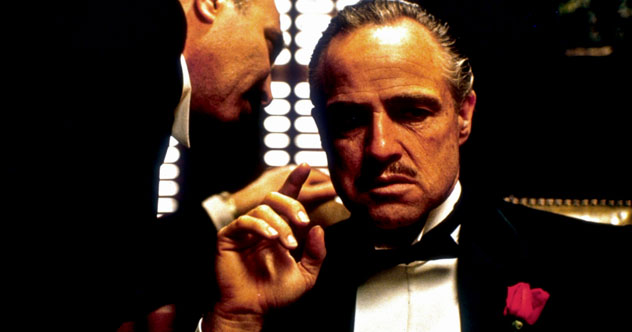
The Godfather feels so convincing that generations of viewers have wondered where fiction ends and organized-crime history begins. The answer is deliciously complicated. Mario Puzo did not simply open a police file, change a few names, and call it a novel. The Corleone saga is a work of fiction built from American history, Mafia folklore, newspaper stories, show-business gossip, family dynamics, and the recognizable behavior of powerful men.
That distinction matters. Some real-life inspirations for characters in The Godfather are widely documented, such as the similarities between Hyman Roth and Meyer Lansky. Others are better understood as composites or historical parallels. Even Vito Corleone, perhaps the most famous fictional Mafia boss ever created, appears to contain pieces of several real figures rather than one convenient criminal photocopy.
The list below spans The Godfather trilogy, examining ten real people commonly associated with major characters. Think of it less as a police lineup and more as a cinematic family tree: sometimes the resemblance is unmistakable, and sometimes the DNA is a little messier. That, frankly, is part of the fun.
1. Frank Costello Inspired Vito Corleone
A quiet kind of power
Vito Corleone was not a direct portrait of a single Mafia boss, but Frank Costello is the real-life figure most frequently connected to the character. Costello was known for political influence, diplomacy, restraint, and an ability to exercise power without behaving like a gangster who had wandered into a room carrying his own drumroll.
That style closely resembles Don Vito. Both men preferred influence to unnecessary chaos. Both understood that a politician, judge, businessman, or union connection could sometimes accomplish more than a gunman. Costello’s reputation as a sophisticated mediator earned him the famous nickname “the Prime Minister,” while Vito’s authority similarly rests on favors, relationships, and obligations.
Still, the fictional Don is a composite. Writers and historians have also identified echoes of Carlo Gambino’s low-profile leadership, Joseph Bonanno’s traditionalism, and Joe Profaci’s use of a legitimate olive-oil business. The best conclusion is not that Frank Costello was Vito Corleone, but that he supplied one of the strongest historical foundations for a character assembled from several sources.
2. Frank Sinatra Inspired Johnny Fontane
The resemblance Hollywood could not ignore
Johnny Fontane, the singer and actor who asks Don Corleone to rescue his struggling movie career, has long been associated with Frank Sinatra. The parallels were impossible for contemporary readers to miss. Both were Italian-American singers who became major celebrities, both moved into acting, and both had career narratives surrounded by stories of powerful friends.
The most obvious connection is Fontane’s desire for a prestigious film role that could revive his career. Sinatra’s performance in From Here to Eternity famously helped restore his Hollywood standing. Meanwhile, stories surrounding Sinatra’s departure from bandleader Tommy Dorsey’s organization became part of American mob folklore, although the most dramatic versions of those stories remain disputed.
Sinatra himself reportedly disliked the comparison intensely. Accounts of the production describe a hostile encounter between Sinatra and Puzo, even though Puzo resisted the idea that Fontane was a straightforward one-man portrait. The safest reading is that Fontane borrowed recognizable elements from Sinatra’s public mythology while remaining fictional. In other words, the resemblance was close enough to make everyone uncomfortablewhich is usually where Hollywood gets interesting.
3. Willie Moretti Inspired Luca Brasi
The feared enforcer behind the boss
The proposed connection between Willie Moretti and Luca Brasi is one of the more interpretive entries on this list. Brasi is almost mythological: a terrifyingly loyal enforcer whose reputation is so frightening that even other criminals appear relieved when he leaves the room.
Moretti was a powerful New Jersey mob figure associated with Frank Costello and was often described as an important source of muscle. His name also became attached to the enduring story that organized-crime pressure helped Frank Sinatra escape an unfavorable professional contract. The most cinematic versions of that tale should be treated as mob lore rather than courtroom-certified fact.
What makes the comparison useful is the role each man plays in a larger power structure. Brasi gives Vito Corleone a frightening enforcement arm; Moretti represented hard power within Costello’s circle. The personalities were hardly identicalMoretti could be talkative and publicly humorous, while Brasi seems capable of making a birthday party feel like a hostage situationbut the functional resemblance helped fuel the theory.
4. Salvatore “Bill” Bonanno Inspired Michael Corleone
The son who was supposed to choose another life
One of the most compelling real-life parallels involves Salvatore “Bill” Bonanno, son of Mafia boss Joseph Bonanno. Like Michael Corleone, Bill was the educated son of a powerful crime-family patriarch and was initially pushed toward a respectable path outside the family business.
That is where the resemblance becomes fascinating. Michael begins as the Corleone family’s apparent exception: a war hero, college-educated, romantically connected to the American mainstream, and determined not to become his father. Circumstances pull him inward until he eventually becomes more ruthless than almost anyone around him.
Bill Bonanno’s actual life followed a different trajectory, and his personality did not mirror Michael’s icy efficiency. Even sources that identify him as an inspiration note that the similarities quickly end. Yet the basic dramatic ideaa powerful father hoping his educated son might live differently, only for the son to become involved in the family organizationoffers a persuasive real-world echo of Michael’s story.
5. Vito Genovese Inspired Emilio Barzini
The rival who wants the whole board
Don Emilio Barzini is the calculating rival who operates behind the conflict of the first film. He understands changing criminal markets, manipulates alliances, and seeks to weaken the Corleones while expanding his own influence.
Vito Genovese provides a strong historical comparison. Genovese was famously ambitious and became a major rival of Frank Costello. The struggle between those two real-life figuresincluding an assassination attempt that helped push Costello into retirementresembles the broader dramatic pattern of an old, politically connected boss facing a more aggressive challenger.
Barzini is too polished and fictionalized to be labeled Vito Genovese with a different business card. Nevertheless, Genovese’s reputation for ambition, power politics, and his effort to dominate a changing underworld make him a logical historical influence. The Corleone-Barzini conflict transforms messy organized-crime history into elegant tragedy, which is considerably easier to follow than an actual Mafia organizational chart.
6. Bugsy Siegel Inspired Moe Greene
Las Vegas, glamour, and a very memorable ending
The connection between Bugsy Siegel and Moe Greene is among the most recognizable in the entire saga. Greene is a flamboyant casino operator associated with the rise of Las Vegas. Siegel, meanwhile, became one of the most famous gangsters connected to the development of the city’s casino industry and the Flamingo resort.
It would be inaccurate to say that Siegel single-handedly invented Las Vegas. The city had gambling long before he arrived. What he did represent was a particular vision of the glamorous casino resort, supported by organized-crime money and designed to attract a wealthier, more fashionable crowd.
Greene carries much of that mythology onto the screen: flashy, temperamental, independent, and increasingly inconvenient to more powerful partners. His death also deliberately evokes Siegel’s violent end. The film turns a complicated chapter of Las Vegas history into a few unforgettable scenesand ensures that generations of viewers become slightly nervous around eyeglasses during massage appointments.
7. Tommy Lucchese Inspired Philip Tattaglia
A looser comparison built on alliances and business
The proposed link between Tommy Lucchese and Don Philip Tattaglia is considerably less direct than the Siegel-Greene connection. It is best understood as an interpretive historical parallel rather than a firmly documented one-to-one source.
Tattaglia appears at first to be the principal enemy of the Corleones, but Vito eventually realizes that Barzini is the more important strategist behind the war. Tattaglia’s family is associated with prostitution and the emerging narcotics conflict, and he relies on alliances to increase his power.
Lucchese, a significant New York crime boss, became known for organizational skill, strategic relationships, and the expansion of criminal interests through networks rather than theatrical public behavior. The details do not line up neatly enough to call Tattaglia a portrait. Still, the comparison reflects Puzo’s broader method: take recognizable structures and personalities from the real underworld, then rearrange them until they serve the drama.
8. Gaspar DiGregorio Inspired Salvatore Tessio
The trusted insider who chooses betrayal
Salvatore Tessio’s betrayal works because he seems so dependable. He is experienced, intelligent, and less obviously emotional than other Corleone associates. That makes the revelation devastatingand perfectly consistent with a world in which survival can outrank loyalty.
Gaspar DiGregorio is widely cited as a real-life inspiration. During internal conflict in the Bonanno crime family, DiGregorio opposed Joseph Bonanno’s efforts to preserve influence around his son. The dispute helped fuel the factional struggle commonly known as the Banana War.
The strongest parallel involves a supposed peace meeting that concealed the possibility of an ambush. In The Godfather, Tessio arranges what appears to be a safe meeting for Michael, only to expose himself as the traitor helping set up an assassination. The historical details differ, but the underlying mechanisman insider, a divided organization, and a supposedly diplomatic meeting that may be anything but diplomaticis striking.
9. Meyer Lansky Inspired Hyman Roth
The clearest real-life model in The Godfather Part II
If some names on this list require careful qualifications, Meyer Lansky and Hyman Roth require far fewer. Roth is broadly recognized as a fictional character inspired by Lansky, the influential organized-crime figure associated with gambling, finance, Cuba, and partnerships that crossed traditional ethnic boundaries.
Like Lansky’s popular historical image, Roth is quiet, financially minded, internationally connected, and far more dangerous than his modest appearance suggests. He does not need to pound a table. He has accountants for that sort of thing.
The Cuba storyline in The Godfather Part II also draws strength from Lansky’s historical connections to gambling operations there before the Cuban Revolution. Roth’s relationship with Italian-American organized crime similarly reflects Lansky’s partnerships with figures such as Lucky Luciano and Bugsy Siegel.
This is a perfect example of how the trilogy uses reality. It does not reproduce a biography scene by scene. Instead, it takes a recognizable historical figure, alters the details, and places the resulting character inside Michael Corleone’s fictional downfall.
10. Joseph Colombo Inspired Joey Zasa
Public image, Italian-American advocacy, and danger in the spotlight
Joey Zasa of The Godfather Part III is often compared with the flashy mob celebrity John Gotti, but Joseph Colombo provides several more specific structural parallels. Colombo was a New York crime boss who founded the Italian-American Civil Rights League and publicly challenged portrayals he believed unfairly linked Italian Americans with organized crime.
That history has an extraordinary connection to The Godfather itself. Colombo and his organization pressured the film’s production, and producer Albert S. Ruddy ultimately reached an accommodation that helped filming proceed. The real Mafia and the fictional Mafia were now circling each other so closely that American pop culture practically needed a traffic cop.
Colombo was shot at a public rally in 1971 and survived for years with devastating injuries. Zasa’s fictional fate is different in its exact details, but the combination of public visibility, community-facing image management, criminal power, and spectacular violence supports the comparison. Zasa is probably best understood as a composite: Colombo provides important historical architecture, while Gotti-like celebrity swagger adds extra shine.
Were The Godfather Characters Really Based on Real People?
Yesbut rarely in the simple sense implied by the phrase “based on a true story.” The Corleone universe works because Puzo and Coppola transformed fragments of reality rather than merely copying them. One character might borrow a career trajectory from one person, a business model from another, a public manner from a third, and then receive an entirely fictional family tragedy.
That creative process also explains why arguments about the “real” Vito Corleone or the “real” Michael Corleone never quite end. The characters are too carefully constructed to belong to one historical figure. They are dramatic composites representing broader patterns: the diplomatic boss, the reluctant son, the ambitious rival, the glamorous casino operator, the financial mastermind, and the trusted lieutenant who decides that loyalty has become a bad investment.
Experience: Watching The Godfather After Learning the Real History
Learning about the real-life inspirations behind The Godfather changes the viewing experience in a surprising way. The films do not become less mysterious because you know more. They become more layered.
On a first viewing, Don Vito may simply seem like the definitive fictional Mafia boss. After learning about Frank Costello, Carlo Gambino, Joseph Bonanno, and other historical figures, the performance begins to look like a carefully assembled study of power. You notice how rarely Vito wastes movement. He listens. He lets other people become uncomfortable first. His authority comes from the belief that he can reach institutions outside the criminal world. Suddenly, the quiet scenes feel more threatening than the shootings.
The same thing happens with Johnny Fontane. Without historical context, his storyline is an entertaining Hollywood subplot. Once you know why audiences immediately thought of Frank Sinatra, the scenes gain another level. The character becomes a reminder that celebrity, organized crime, labor, nightlife, and the entertainment business sometimes occupied overlapping social worlds in mid-century America. The horse-head sequence remains outrageous, of course. Historical context does not make that bedroom any easier to clean.
Moe Greene also looks different after reading about Bugsy Siegel. Viewers can separate the movie’s mythology from actual Las Vegas history while appreciating why the parallel works so well. Greene is not a documentary version of Siegel, but both embody the dangerous collision of criminal investment and American ambition. The casino is more than a business. It represents the future, and everyone wants ownership of it.
Then there is Hyman Roth. Knowing about Meyer Lansky makes Roth’s ordinary appearance even more effective. He looks like someone’s elderly neighbor discussing baseball, medication, and lunch. Yet the surrounding network stretches across borders and governments. That contrast is central to the trilogy’s understanding of modern power: the most consequential person in the room may be the one who looks least like a movie villain.
The historical connections also make Michael Corleone’s story more tragic. Real Mafia families struggled with succession, generational change, legitimacy, loyalty, and sons who inherited expectations they did not necessarily choose. Michael remains fictional, but the pressures surrounding him feel historically plausible. His transformation works because it is both intimate and institutional. He is protecting his father, inheriting a system, and slowly becoming unable to distinguish those two things.
Perhaps the most rewarding experience is recognizing where the films deliberately depart from reality. Actual organized crime was often chaotic, petty, brutal, and far less elegantly scripted. The Corleones inhabit a world shaped by dramatic symmetry. Betrayals arrive with thematic precision. Doors close at exactly the right moment. Real life rarely has such considerate editing.
That gap between history and fiction is not a weakness. It is the reason The Godfather endures. The trilogy takes scattered personalities, rumors, crimes, political relationships, family struggles, and American ambitions and reshapes them into a story about power. Knowing the inspirations lets viewers appreciate both sides of the equation: the reality that fed the fiction and the artistic choices that transformed that reality into myth.
Conclusion
The most fascinating real-life inspirations for characters in The Godfather reveal that the trilogy was never simply a disguised history lesson. Frank Costello helped shape the image of Vito Corleone, Frank Sinatra loomed over discussions of Johnny Fontane, Bugsy Siegel echoed through Moe Greene, Meyer Lansky became the unmistakable shadow behind Hyman Roth, and several other mob figures supplied pieces of characters throughout the saga.
But the real genius lies in transformation. Puzo and Coppola took recognizable pieces of American history and rearranged them into something more psychologically precise than a documentary and more enduring than a collection of gangster biographies. The result is a fictional world that feels real because reality is buried inside itnot in neat copies, but in fragments.
Note: Historical claims about organized crime frequently mix documented fact, memoir, law-enforcement records, journalism, and long-repeated underworld folklore. This article therefore treats “inspired by” as a spectrum. Strongly documented connections are identified as such, while weaker pairings are presented as commonly cited parallels rather than proven one-to-one character models. The research synthesis draws on established film-history, biographical, archival, and organized-crime references, including Biography, Smithsonian, Vanity Fair, TIME, HISTORY, PBS American Experience, The Mob Museum, AFI, the Library of Congress, Paramount materials, and additional cross-checking sources.