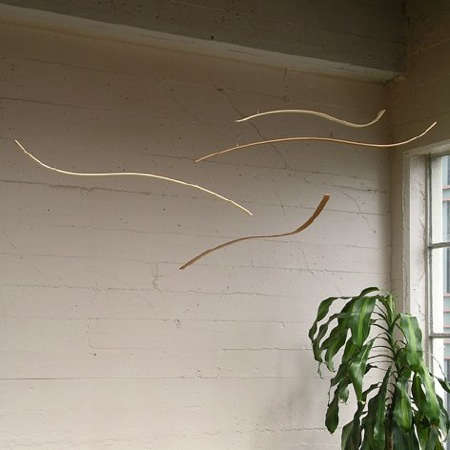
Some home accessories shout for attention like a reality TV contestant who just discovered espresso. The Samara Mobile from Adrift Mobiles in Sacramento does the opposite. It whispers. It hovers. It sways just enough to make a room feel alive without turning your ceiling into a circus act. And honestly, that restraint is part of its charm.
In a design world crowded with trendy objects that seem created mainly to look good in one Instagram post and then emotionally disappear, the Samara Mobile feels refreshingly grounded. It is sculptural but not fussy, modern but not cold, and delicate without becoming precious. That is a tricky balance to achieve. Plenty of décor items try to be “minimalist” and end up looking like they forgot to finish getting dressed. Samara, by contrast, looks intentional from every angle.
At its core, this is a modern hanging mobile that draws from nature, motion, and material honesty. The piece is associated with Sacramento designer Brian Schmitt, whose Adrift Mobiles line earned attention for turning bamboo, balance, and kinetic movement into warm contemporary décor. The Samara design stands out because it does not rely on loud color or gimmicks. Instead, it uses curved bamboo forms, quiet asymmetry, and subtle motion to create something that feels almost meditative.
What the Samara Mobile Actually Is
The Samara Mobile is not a gadget, not a phone accessory, and definitely not the sort of “mobile” that needs a charging cable and a software update. It is a ceiling-hung sculptural object. Its appeal comes from movement, silhouette, and spatial presence rather than utility in the traditional sense.
The design is inspired by maple samaras, those winged seeds sometimes called “helicopters” or “whirligigs” that spin to the ground in a way that delights children and distracts adults who were just trying to walk to the mailbox. That natural reference matters. The Samara Mobile does not mimic a leaf or a seed in a literal, copy-and-paste way. Instead, it translates the graceful curve and drifting feeling of those seed forms into a streamlined composition of bent bamboo elements.
That means the piece lands in a sweet spot between nature-inspired décor and kinetic sculpture. It feels organic, but it also feels architectural. It is soft enough for a bedroom, refined enough for a living room, and interesting enough for a workspace that needs something more inspiring than a beige lamp and a mug full of dying pens.
Why Adrift Mobiles Still Feels Relevant
Adrift Mobiles emerged from a moment when many homeowners and design enthusiasts wanted modern décor that felt less industrial and more human. Brian Schmitt’s work answered that call beautifully. Rather than using flashy finishes or trying to overpower a room, his mobiles emphasized balance, negative space, and natural materials. The result was a version of modern design that felt warmer and more livable.
That warmth is still one of the strongest reasons the Samara Mobile from Adrift Mobiles continues to hold interest. Good design ages well when it is built on proportion, material quality, and emotional response instead of trend-chasing. Samara does not depend on a specific era’s color palette or a social media aesthetic of the month. It belongs to a longer tradition of décor objects that create atmosphere through movement and calm.
In fact, that is one reason mobiles have moved well beyond nurseries. Yes, hanging mobiles have a long association with children’s rooms, but modern interiors have increasingly embraced them as grown-up art pieces. When used well, a mobile adds dimension overhead, draws the eye upward, and introduces motion in a way framed wall art simply cannot. It is like giving the room a pulse.
The Alexander Calder Connection, Without the Copycat Energy
Any conversation about mobiles eventually walks into the long shadow of Alexander Calder, because he helped define the mobile as an art form. His work showed that sculpture could move, respond to air, and create poetry through balance. The Samara Mobile sits within that broad artistic lineage, but it does not feel like a museum-shop imitation. It feels like a design descendant with its own personality.
That distinction matters for SEO and for shoppers alike. People searching for a Calder-inspired mobile are often not looking for a reproduction. They want the same feeling: lightness, motion, abstract beauty, and a little wonder. Samara delivers that feeling in a more accessible, home-friendly way. It is sophisticated, but it does not demand a penthouse, a curator, or a trust fund.
Where Calder often played with bold color and dramatic spatial relationships, Samara leans into softer minimalism. Its beauty comes from curve, suspension, and compositional tension. It feels less like performance art and more like a quiet conversation between air and wood.
Materials Matter: Why Bamboo Works So Well Here
One of the smartest aspects of the Samara Mobile is its use of bamboo veneer. Bamboo has long attracted designers because it combines visual warmth with structural lightness. For a hanging mobile, those qualities are gold. The material needs to be light enough to move gracefully and sturdy enough to hold a crisp form. Bamboo can do both without looking flimsy.
It also helps that bamboo carries a strong environmental appeal. Consumers often associate it with renewability and fast growth, which has made it popular in furniture, flooring, and other home goods. That said, smart buyers know sustainability is not magic just because a label says “bamboo.” Responsible sourcing still matters. The most credible design stories are the ones that pair renewable materials with thoughtful fabrication and lasting usefulness. Samara’s appeal is strongest when viewed through that lens: a long-lasting object made with a material chosen for both performance and aesthetic value.
Visually, bamboo also softens the modern look. A steel mobile can be gorgeous, but it often brings a sharper, cooler feeling. The Samara Mobile uses bamboo to keep the composition airy and natural. It makes the piece easier to integrate into homes that mix styles, whether your room leans midcentury modern, Japandi, Scandinavian, California casual, or “I bought one nice chair and now I’m pretending the rest is curated.”
The Sacramento Identity Gives It Character
There is also something appealing about the fact that this piece is tied to Sacramento design. Major design stories often get flattened into New York, Los Angeles, or San Francisco narratives, as if the rest of America is just one enormous waiting room. Sacramento offers a different design identity: creative, regional, practical, and a little less interested in showing off.
That local character fits Samara well. The mobile feels studio-made rather than mass-manufactured. It reflects a maker-driven approach where attention to form and finish still matters. For buyers tired of generic home accessories churned out by the algorithmic gods of big-box retail, that is a genuine selling point.
There is a subtle confidence in objects made outside the usual hype capitals. They often seem more interested in being good than in being loud about being good. Samara carries exactly that energy.
Where the Samara Mobile Works Best in a Home
Living Rooms
In a living room, the Samara Mobile works best where it has space to breathe. Think near a window, over a reading corner, or in an area where the ceiling height allows it to float rather than feel cramped. A mobile needs room around it. If you wedge it between a ceiling fan, a cabinet top, and a giant faux olive tree, it stops being art and starts looking like it lost a fight.
Bedrooms
Bedrooms are another strong match because the piece has a calming quality. The gentle motion can add softness to the room without introducing clutter. Over a bench, in a corner, or near a window, it can function almost like visual white noisesomething your eye enjoys without needing to “solve.”
Nurseries and Kids’ Rooms
Yes, it absolutely works in nurseries too. But unlike many nursery mobiles, the Samara Mobile does not feel disposable once the crib is gone. That gives it an advantage. It can grow with the room, transition into another part of the house, or remain a meaningful art piece long after the stuffed giraffes have retired.
Home Offices
Home offices benefit from anything that adds visual relief without adding functional chaos. A mobile overhead introduces movement and dimension in a way that is subtle enough not to distract. It is especially effective in workspaces dominated by screens, straight lines, and the creeping suspicion that your desk chair knows too much about your spine.
What Makes This Accessory Different From Trend Decor
The best home accessories do more than fill an empty spot. They create a mood. Samara does that through a few design strengths that deserve attention.
First, it uses negative space beautifully. The air around the piece is part of the design. That makes it feel light and elegant rather than visually heavy.
Second, it invites repeated looking. A lot of decorative objects are understood in one glance. Samara changes slightly as you move around it and as the room’s airflow shifts. It stays interesting.
Third, it avoids over-explaining itself. There is no slogan, no novelty hook, no desperate attempt to seem quirky. It simply does what good artful décor should do: it gives a room more emotional texture.
That is why the mobile can appeal to very different audiences. Design lovers appreciate the minimalist craftsmanship. Nature-inspired decorators appreciate the botanical reference. Fans of modern art appreciate the kinetic sculpture connection. And people who just want their room to feel less flat appreciate the fact that it is genuinely beautiful without needing a TED Talk.
Buying Considerations Before You Hang One
If you are shopping for a bamboo hanging mobile like Samara, there are a few practical considerations worth remembering.
Scale matters. A mobile that is too small can disappear in a large room. One that is too large can dominate a tight space and make the ceiling feel lower.
Airflow matters. Gentle motion is lovely; constant spinning like a caffeinated weather vane is not. Placement near vents, fans, or aggressively drafty windows should be considered carefully.
Lighting matters. Natural light can make a mobile sing. Shadows from curved forms often add another layer of visual interest, especially during morning or late-afternoon light.
Context matters. Samara works best when the surrounding décor gives it room to stand out. It plays well with natural woods, neutral walls, midcentury furniture, and clean-lined spaces. It can also soften more industrial rooms by adding warmth and movement overhead.
Why the Samara Mobile Still Feels Fresh
In 2026, people are still looking for homes that feel calmer, more personal, and less stuffed with meaningless stuff. The Samara Mobile from Adrift Mobiles in Sacramento fits that desire almost perfectly. It is decorative, yes, but it also serves a deeper purpose. It changes the energy of a room without creating visual noise.
That is not easy to do. Plenty of accessories add color. Plenty add texture. Fewer add atmosphere. Samara belongs to that last category. It introduces movement, softness, and a sense of pause. In a time when so much of life blinks, pings, scrolls, and demands immediate attention, there is real value in an object that simply sways a little and reminds you that stillness can be beautiful too.
Experience and Atmosphere: What It Feels Like to Live With a Piece Like Samara
Living with a piece like the Samara Mobile is less like owning décor and more like inviting a small weather system into the room. Not the dramatic kind with thunder and emotional damage. More like a gentle indoor breeze made visible. You do not always notice it at first. Then the light changes, someone walks past, the air shifts, and suddenly the whole piece begins to move with this slow, thoughtful grace that makes the room feel more awake.
That is the experience many static accessories never deliver. A vase sits. A lamp glows. A framed print behaves itself. The Samara Mobile participates. It reacts to the environment in a subtle way, which makes your home feel less staged and more lived in. It is almost impossible to rush past it forever. At some point, you look up and think, “Well, that is lovely,” and for three whole seconds you forget about your unread emails. Frankly, that alone may justify the category.
In a morning setting, the mobile can feel crisp and airy, especially if it hangs where daylight catches the edges of the bamboo. The shadows become part of the composition. In the afternoon, the piece softens and seems quieter, like it has settled into the rhythm of the house. At night, under a warm lamp or ambient lighting, it can read almost like a floating sketch in the air.
There is also a tactile satisfaction in knowing the object was designed with intention. Even when you are not touching it, you sense the crafted quality. The curves feel measured. The balance feels earned. The material feels chosen, not generic. That gives the mobile a presence that mass-market décor often lacks. It does not read as filler. It reads as a decision.
Emotionally, the Samara Mobile works especially well in spaces where you want a little exhale. A reading nook becomes gentler. A bedroom corner becomes more reflective. A home office becomes less like a tax form with furniture. Because the piece hangs overhead, it also changes how you move through a room. You become more aware of vertical space, more aware of light, and maybe even more aware that your ceiling has been underachieving this whole time.
For people who like meaningful objects, the Samara Mobile can also become a conversation piece without behaving like a needy one. Guests notice it, but it does not hijack the room. It invites curiosity. They ask what it is made from, where it came from, or why it feels so calming. Those are good questions. They lead to better conversations than, “So, where did you get that giant word-art sign that says LIVE LAUGH LASAGNA?”
Over time, a mobile like this tends to become part of the memory of a place. You remember the way it looked on a bright spring afternoon, the way it moved during an open window in October, the way a child stared at it, or the way it softened an otherwise sharp modern room. That is when you know an accessory has crossed into something more personal. It is no longer just décor. It is part of the emotional architecture of the home.
And that may be the best way to describe the Samara Mobile overall. It is beautiful, yes. It is well-designed, yes. But more than that, it gives a room an inner life. Not loudly. Not theatrically. Just enough to make the space feel more human, more observant, and a little more serene.