Note: Original research-informed HTML article in standard American English. No source links included.
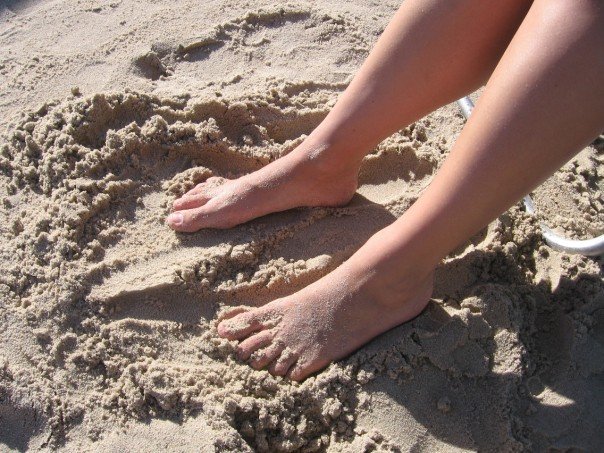
There are glamorous beach moments, and then there are real beach moments. The glamorous version is the postcard: turquoise water, perfect sunset, hair behaving suspiciously well in ocean wind. The real version is much better. It is the instant you kick off your shoes, take three steps, and feel that glorious, crunchy, squishy, warm-cool, grainy little miracle under your feet. That is the moment this article is about.
Neil Pasricha’s long-running celebration of life’s tiny joys gave this experience its own spot as #872, and honestly, fair enough. The feeling of scrunching sand in your feet is one of those everyday pleasures that sounds almost too small to deserve attention until you actually do it. Then your whole nervous system seems to go, “Oh. Right. This is nice. We like this.”
And that is what makes it such an excellent topic for a deeper look. This tiny beach sensation is not just a cute summer detail. It sits at the intersection of touch, movement, memory, mindfulness, nostalgia, and nature. In other words, it is a small experience doing some very heavy lifting. So let’s give sandy feet the respect they deserve.
Why This Tiny Beach Moment Feels So Big
Some pleasures arrive with trumpets. Others sneak in wearing flip-flops. Scrunching sand in your feet belongs to the second category. It is subtle, immediate, and weirdly satisfying. You do not need a lesson, an app, or a self-help podcast voice telling you to optimize the moment. Your feet understand the assignment instantly.
Part of the magic is contrast. Most of modern life happens on hard, flat, obedient surfaces. Floors are smooth. Sidewalks are rigid. Shoes are little portable walls. Sand is the opposite. It shifts. It gives way. It moves back. It makes every step feel slightly different, as if the ground itself suddenly developed personality. Your feet stop going through the motions and start paying attention.
That attention matters. The experience is playful in a way adult life often forgets to be. It invites stomping, dragging, curling, digging, and absentminded toe wiggling. You are not just walking anymore. You are collaborating with the ground. The beach becomes less like scenery and more like a conversation.
The Science Behind the Squish
Your feet are sensory overachievers
The feeling of sand underfoot is satisfying because touch is not a background sense. It is one of the body’s main ways of learning about the world through direct contact. Texture, pressure, temperature, vibration, and position all work together to tell your brain what kind of surface you are dealing with. Sand happens to be a sensory all-star: loose, textured, responsive, and constantly changing.
That is why dry sand feels different from packed sand, and why hot afternoon sand creates a completely different mood from cool wet sand at sunrise. Each version feeds the brain fresh information. Every step is a tiny update. It is like the ground is sending your nervous system a stream of highly entertaining messages.
And unlike plenty of modern sensory input, this kind does not usually feel overwhelming. There is no notification sound. No flashing banner. No “urgent” email that is actually just a calendar invite wearing a fake mustache. Sand gives you rich input without demanding performance. It asks only that you notice it.
Sand is simple, ancient, and gloriously weird
Sand may seem basic, but it is not boring. It forms over very long stretches of time as rock breaks down. Different beaches carry different mixes of minerals, shells, coral fragments, and local geology, which is why one beach feels powder-soft while another feels coarse, pebbly, or firmly packed. So when you scrunch sand in your feet, you are not stepping on generic beige dust. You are stepping on the local biography of a coastline.
That gives the experience more charm than we usually admit. Even if you never think, “Ah yes, geological storytelling under my toes,” your body still registers the uniqueness. Some beaches feel silky. Some feel squeaky. Some feel like warm sugar. Some feel like a natural foot massage designed by a very patient planet.
Why the Beach Turns Your Brain Down a Notch
Nature makes “being present” less annoying
Mindfulness often sounds noble and slightly exhausting. Sit still. Breathe deeply. Observe your thoughts floating by like polite little clouds. Meanwhile, your real thoughts are usually more like raccoons in a trash can. But the beach cheats in the best possible way. It makes present-moment awareness easier because there is so much to sense all at once: the texture underfoot, the salt in the air, the light on the water, the rhythm of waves, the shifting temperature of shoreline and sun.
In other words, scrunching sand in your feet is a sneaky form of grounding. You are not forcing yourself to be in the moment. The moment is simply too interesting to ignore. Your attention has somewhere wholesome to go. That is part of why a short walk by the shore can feel mentally different from a short walk in a parking lot. One asks your brain to monitor traffic. The other offers a gentle sensory buffet.
Natural settings also seem to give tired minds a break. When life gets cluttered, being outdoors can feel like someone quietly turning the volume knob down. The beach, in particular, has a way of making people slow their pace without being told to. Nobody power-stomps across sand looking efficient. The beach humbles all of us eventually.
Movement helps too
There is also the simple fact that beach moments usually involve walking, standing, balancing, strolling, or wandering in a way that is more playful than formal exercise. Physical activity supports mood, focus, and brain health, and the coast gives people an unusually pleasant reason to move. You are not “doing a workout.” You are just following the waterline like a curious seagull with better vocabulary.
That combination of sensory richness and easy movement is powerful. It explains why a beach walk can feel restorative even when nothing dramatic happens. No breakthrough. No life plan. No cinematic voice-over. Just feet, sand, ocean, and a body remembering that being alive can feel pleasantly physical.
Wet Sand, Dry Sand, Hot Sand, Cool Sand: The Many Personalities of a Beach
Not all sand experiences are created equal, and that is part of the fun. Dry sand is the comedian. It slips, shifts, and sneaks into absolutely everything you own. It is messy, carefree, and a little chaotic. It makes you work harder and laugh more. Wet sand is the calm friend. It is smooth, firm, cool, and deeply satisfying when it molds beneath your feet. It holds the print of your step for a second, as if saying, “Yes, I saw you. Carry on.”
Then there is sun-baked sand, which can be magical for about one second before it becomes a sprinting event. Cool evening sand, on the other hand, feels like relief itself. Morning sand carries possibility. Afternoon sand carries vacation energy. Night sand carries that quiet, reflective mood that makes people stare at the horizon and briefly become philosophers.
Even the edge of the tide deserves its own award. That thin strip where water slides over packed sand and then retreats is a sensory masterpiece. Your feet sink a little, the ground tightens, the temperature changes, and the next wave edits the whole experience again. It is less like walking on a surface and more like stepping inside a constantly rewritten sentence.
The Emotional Magic of Sandy Feet
Why does this simple feeling linger in memory? Because it is rarely just about texture. Scrunching sand in your feet is often bundled with bigger emotions: summer freedom, family trips, first vacations, school breaks, road trips, honeymoons, reunions, quiet mornings, healing weekends, and those afternoons when nobody checks the time for a suspiciously long stretch.
It is also delightfully democratic. You do not need luxury to enjoy it. The beach does not care whether you arrived with designer sunglasses or a gas-station iced tea and a towel that has seen things. Sandy feet are available to children digging moats, grandparents taking careful shoreline walks, couples pretending not to take too many sunset pictures, and solo travelers having deep conversations with the horizon.
There is freedom in that. The experience feels special, but not exclusive. It belongs to ordinary people on ordinary days. That may be why it fits the “awesome things” spirit so well. It reminds us that joy does not always arrive in gigantic, expensive, life-altering packages. Sometimes it arrives as a ridiculous amount of tiny rocks hugging your toes.
How to Enjoy the Feeling Without Ruining the Moment
As romantic as barefoot beach walking sounds, a little common sense goes a long way. Choose a clean, safe stretch of sand and pay attention to what is underfoot, especially where shells, sharp debris, hot surfaces, or hidden objects may be an issue. If you have foot pain, diabetes, nerve problems, or balance concerns, it is smart to be more cautious. Barefoot movement can feel great on the right surface, but “listen to your body” remains annoyingly solid advice.
Once you find a safe patch, do less. That is the trick. Slow down. Drag your feet. Curl your toes. Stand still for a second where wet and dry sand meet. Notice how the ground changes between shade and sun. This is one of the few experiences that gets better when you stop trying to improve it.
Also, accept the cleanup phase with dignity. Yes, sand will follow you. It will move into your sandals, your car, your bag, and somehow the pages of a book you never opened. This is the beach equivalent of confetti. Resist the urge to treat it like betrayal.
Why Small Pleasures Deserve Big Respect
The feeling of scrunching sand in your feet matters because it proves a larger point: tiny pleasures are not trivial. They are often the most reliable parts of a good life. Grand achievements are wonderful, but they are rare and exhausting. Small joys are portable. Repeatable. Human-sized. They ask for attention instead of ambition.
And maybe that is the real genius of the beach moment. It does not impress us by being complicated. It impresses us by being enough. Enough texture. Enough movement. Enough freshness. Enough wonder. Enough relief. Enough of a reminder that our bodies are not just machines for sitting in chairs and answering messages.
When you feel sand give way beneath your feet, the world briefly becomes tangible again. You are not just observing nature. You are in contact with it. Literally. For one small moment, the distance between you and the planet disappears.
Extra Reflections: Experiences That Make This Feeling Even Better
The first version of this experience usually happens in childhood. You are too young to call it grounding or sensory awareness or coastal restoration. You just know the beach feels amazing and that adults are talking too much when there is clearly a very important hole to dig. Sand gets between your toes, onto your snacks, inside your swimsuit, and somehow up the back of your neck. None of this reduces the fun. In fact, it might increase it. Childhood has a talent for treating inconvenience like proof that a day was worth having.
Then there is the teenage version, when the beach feels cinematic. Every step across the sand seems loaded with meaning. Maybe you are with friends, maybe you are trying to look casual while fully aware of your existence, maybe someone brought a speaker that was a terrible idea but somehow perfect at the time. You walk along the edge of the water and feel the sand shift under you, and suddenly even your awkwardness seems beautifully seasonal.
Adulthood changes the feeling, but does not ruin it. If anything, it makes it richer. After weeks of deadlines, errands, and too much indoor air, the first barefoot step onto a beach can feel like your body filing a formal complaint against your lifestyle. “You mean to tell me,” your feet seem to say, “this was available the whole time?” The sand feels softer because life has been harder. The beach does not erase stress, but it gives it less room to shout.
One of the best versions of the moment happens early in the morning, before the beach gets loud. The light is soft, the air is cooler, and the shoreline still feels half asleep. You step onto packed sand and hear almost nothing except water and gulls. Your footprints appear behind you like temporary evidence that you were wise enough to wake up for this. In those moments, scrunching sand in your feet feels less like recreation and more like a reset button.
Another unforgettable version comes after a swim. Your skin is salty, your hair is chaotic, and your feet meet the beach differently on the way back. The sand sticks, clings, and coats your soles as if it has decided you are part of the landscape now. It is mildly inconvenient, completely predictable, and still somehow delightful. The body feels awake in every direction.
There is also the sunset version, when everything becomes embarrassingly beautiful. Couples stroll. Families linger. Kids run feral in the most wholesome possible way. People who would normally never use words like serene stand quietly and watch the sky perform. At that hour, the feeling of sand underfoot becomes part of a larger softness. The day is loosening its grip. Nobody wants to be the first one to say it is time to go.
And then there is the solitary version, maybe the most underrated of all. Just one person, one shoreline, and one set of feet pressing into a surface that never quite repeats itself. No schedule. No conversation to carry. No performance. Just the small satisfaction of walking on something that answers back. That experience can be funny, peaceful, nostalgic, and strangely emotional all at once. It reminds you that a good moment does not need witnesses to count.
Maybe that is why people remember sandy feet so vividly. Not because sand is rare, but because full-body presence is rare. We remember the feeling because we were actually there for it.
Conclusion
#872 earns its place because it captures something bigger than a beach detail. The feeling of scrunching sand in your feet is a tiny pleasure with surprising depth. It engages the senses, encourages movement, invites mindfulness, sparks memory, and turns an ordinary walk into something vivid and oddly restorative.
It is playful, grounding, inexpensive, and available to almost anyone lucky enough to reach a shoreline. Best of all, it asks for nothing fancy in return. Just take off your shoes, find a safe patch of beach, and let your feet remember what delight feels like when it is simple, physical, and impossible to scroll past.