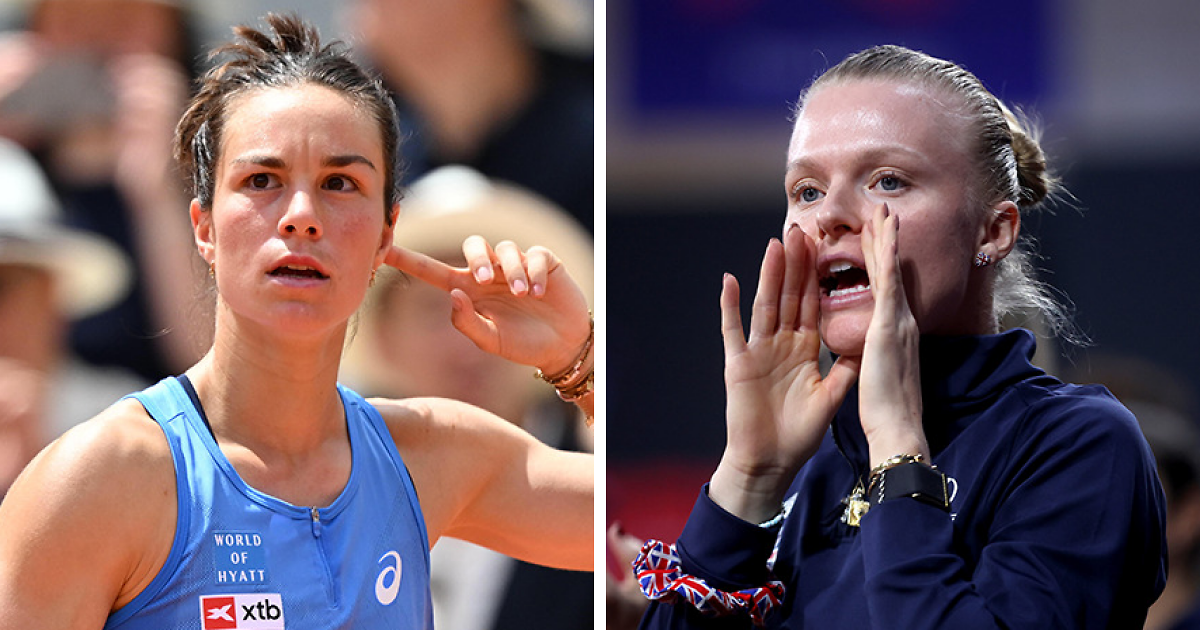
Tennis has given us plenty of odd mid-match moments: racket smashes, icy handshakes, mysterious bathroom-break debates, and the occasional player staring at a ball mark as if it personally betrayed them. But the Rouen Open added something far stranger to the highlight reel when British player Harriet Dart was caught on a courtside microphone asking the chair umpire to tell French opponent Lois Boisson to wear deodorant because, in Dart’s words, “she smells really bad.”
The comment quickly escaped the court, sprinted across social media, and became the kind of viral sports controversy that makes everyone suddenly an expert in etiquette, sweat, clay-court tennis, and microphone placement. What might have been an ordinary first-round match at a WTA 250 event turned into a global discussion about sportsmanship, pressure, public embarrassment, and how to respond when someone tries to turn your personal hygiene into a talking point.
Boisson’s answer? A clean winner. Instead of firing back angrily, she responded with humor, posting a playful edited image of herself with a deodorant product and joking that a collaboration might be needed. In one move, she shifted the story from insult to self-control, from awkwardness to wit, and from a hot-mic mess to a masterclass in taking the high road without sounding like a corporate apology template.
The Match That Became Bigger Than The Scoreline
On paper, the first-round match at the 2025 Rouen Open was notable enough. Lois Boisson, a French wildcard ranked far below Harriet Dart at the time, defeated the British player 6-0, 6-3. For Boisson, the win was meaningful: she was returning to the WTA Tour after injury, playing in front of a home crowd, and trying to rebuild momentum.
Dart, meanwhile, entered the match with more tour experience and a higher profile. But tennis does not care much for résumés once the first serve lands. Boisson played the cleaner, sharper match. She handled break points, controlled important rallies, and made the scoreboard look more one-sided than many expected. A 6-0 first set in professional tennis is rarely quiet, and Dart’s frustration appeared to grow as the match moved away from her.
Then came the changeover moment. Dart approached the umpire and made the now-viral remark about Boisson’s odor. The issue was not simply that she complained; athletes sometimes raise discomforts with officials. The problem was the way she phrased it, the personal nature of the comment, and the fact that microphones caught it clearly enough for the internet to replay, quote, criticize, meme, and dissect.
What Harriet Dart Said And Why It Sparked Backlash
Dart’s remark was widely reported as a request for the umpire to tell Boisson to put on deodorant because she “smells really bad.” That line landed badly for obvious reasons. It was personal, humiliating, and unnecessary in a sport where athletes are sweating under pressure, often for hours, in close competitive conditions.
Fans reacted quickly, and not kindly. Many viewed the comment as unsportsmanlike, especially because it came during a match Dart was losing heavily. In sports, frustration is understandable; using that frustration to take a shot at an opponent’s body or hygiene is something else. It can look less like gamesmanship and more like a cheap swipe from someone who is having a bad day at the office.
Dart later apologized publicly. She described the comment as something said in the heat of the moment, expressed regret, took responsibility, and acknowledged respect for Boisson’s performance. The apology mattered because it recognized that the issue was not a funny little sideline complaint. It was a public remark about another person that could easily have become deeply embarrassing.
Lois Boisson’s Response: Humor With A Backhand Slice
Boisson’s response is the reason the story took on a second life. Instead of writing a long statement, blaming Dart, or escalating the drama, Boisson leaned into humor. She posted an edited image connected to deodorant and tagged Dove, suggesting a possible collaboration. It was cheeky, controlled, and just pointed enough to let everyone know she had seen the conversation.
That response worked because it did three things at once. First, it showed Boisson was not rattled. Second, it allowed her to control the tone of the story. Third, it made Dart’s comment look even clumsier without Boisson needing to say anything cruel in return.
In modern sports, that is media judo: using the force of an awkward moment and redirecting it. Boisson did not deny, overexplain, or beg the internet to stop talking. She simply turned the insult into a joke and walked away with the win, both on the court and in the court of public opinion.
Why The Incident Hit A Nerve With Tennis Fans
Tennis has a reputation for politeness, but anyone who watches the sport closely knows it can be emotionally brutal. Players stand alone. There are no teammates to hide behind, no coach calling timeout during regular WTA matches, and no bench full of people to absorb the stress. When things go wrong, everyone can see it: the footwork, the facial expression, the rushed serve toss, the argument with the umpire, the muttered complaint.
That is partly why Dart’s comment spread so widely. Fans recognized the frustration behind it, but many still felt it crossed a line. Tennis players sweat. Athletes sweat. Clay courts are physical. Long rallies are exhausting. The sport demands explosive movement, constant recovery, and intense focus. Complaining publicly about an opponent’s body odor during competition felt to many observers like targeting the person rather than the play.
The backlash also reflected a larger cultural shift. Audiences are less tolerant of comments that shame people’s bodies, appearance, or personal presentation. What might once have been dismissed as “trash talk” now gets examined through a different lens: Was it necessary? Was it respectful? Was it punching down? Was it meant to distract? Was it simply mean?
Sportsmanship In The Age Of Hot Mics
One lesson from the Rouen Open incident is painfully simple: microphones are undefeated. Athletes know they are being filmed, but they can still forget how much sound modern broadcasts capture. A quiet complaint at a changeover can become a headline within minutes. A sentence said in frustration can become the top search result attached to a player’s name.
For Dart, the comment became a reminder that emotional honesty and public professionalism are not the same thing. You can feel irritated, uncomfortable, or overwhelmed without turning that feeling into a personal insult. The best athletes often separate the problem from the person. If there is a genuine issue affecting play, there are ways to raise it through officials without making it degrading.
For Boisson, the episode became an unexpected spotlight. Before the controversy, many casual fans may not have known much about her. Afterward, they knew she had beaten Dart decisively, handled a strange viral moment gracefully, and possessed enough humor to turn a rude comment into a branding opportunity.
The Bigger Context: Pressure, Frustration, And Losing Badly
It is worth noting that professional tennis players live under intense pressure. Rankings affect entry into tournaments, sponsorships, prize money, travel schedules, and career momentum. A bad loss is not just a bad afternoon; it can feel like a threat to months of planning. That pressure does not excuse Dart’s remark, but it helps explain how emotions can boil over.
Losing 6-0 in the opening set is especially difficult for a competitor. It can feel like being locked outside your own game while your opponent casually rearranges the furniture. Every missed break point becomes heavier. Every hold by the opponent feels like another door closing. By the second set, Dart’s frustration may have been searching for somewhere to land.
Unfortunately for her, it landed on Boisson. That is why the apology was necessary. In sports, frustration is human. Where it goes is character. Dart’s statement after the match suggested she understood that the remark did not reflect the standard she wanted to set.
Boisson’s Win Should Not Be Lost In The Drama
The odor comment dominated the headlines, but the tennis itself matters. Boisson defeated Dart convincingly. She did not sneak through on a retirement, a lucky net cord, or a chaotic final-set tiebreak. She controlled the match. Her return from injury, her wildcard opportunity, and her strong performance were all significant before the internet turned the match into a deodorant debate.
That is one of the frustrating parts of viral sports moments. A young player can deliver an impressive win, only for the conversation to shift away from tactics and resilience toward someone else’s remark. Boisson’s humorous response helped pull attention back toward her personality, but fans should not forget the athletic achievement underneath the meme.
In a sport where confidence can be fragile, especially after injury, a win like this can matter. Boisson had reason to feel proud not because she became a viral figure, but because she handled her job on court. The joke afterward was extra seasoning; the main dish was the scoreboard.
Why Boisson’s Response Was So Effective Online
The best social media responses are short, clear, and emotionally intelligent. Boisson’s post checked every box. It did not drag the controversy into a long feud. It did not invite a courtroom-level debate over who smelled what and when. It simply said, in effect: I saw it, I’m fine, and I can laugh too.
That tone matters. If Boisson had responded angrily, some fans would have supported her, but the story might have turned into a messy back-and-forth. If she had ignored it completely, the internet would have continued speaking for her. By responding playfully, she owned the moment without being owned by it.
It also made her seem relatable. Most people have experienced an embarrassing comment, a rude aside, or a moment when someone else tried to make them feel small. Boisson’s response showed a way to answer without matching the insult. Sometimes the sharpest comeback is not louder; it is lighter.
Lessons For Athletes, Fans, And Anyone With A Microphone Nearby
The Dart-Boisson episode offers several useful lessons beyond tennis. For athletes, it is a reminder that competitive fire needs boundaries. You can be fierce without being personal. You can complain without humiliating someone. You can lose without adding a viral apology to your post-match routine.
For fans, the incident is a reminder to criticize behavior without turning the pile-on into something equally ugly. Dart’s comment deserved criticism. That does not mean every reaction online needed to become cruel. Sports culture often claims to care about respect, then celebrates digital mobs when someone slips. Accountability is healthier when it leaves room for people to learn.
For everyone else, the hot-mic lesson is timeless: assume the microphone is on. At work, in sports, on a livestream, near a camera, or standing next to someone with a phone, the private sentence may not stay private. If a comment would sound terrible as a headline, it is probably worth swallowing before it becomes one.
Experience-Based Reflections: What This Moment Says About Handling Embarrassment
What makes the Lois Boisson and Harriet Dart situation so interesting is that it feels bigger than tennis because almost everyone has been near some version of it. Maybe not on a professional court, and hopefully not with thousands of fans replaying the moment, but most people know what it feels like when someone makes a personal remark that lands with a thud. It can happen in school, at work, in sports, during a family gathering, or in a group chat where one person suddenly decides to turn private discomfort into public comedy.
The first instinct in those moments is usually defense. You want to fire back. You want to explain. You want to prove the other person is wrong, rude, dramatic, or all three. That reaction is understandable. Public embarrassment can feel like a spotlight being switched on without your permission. But Boisson’s response showed another option: do not let someone else’s awkward comment choose your personality for you.
Her humor worked because it did not seem desperate. It was not the nervous laugh of someone pretending not to care. It felt like a calm little wink from a person who knew she had already won the match. That matters. When you have results behind you, you do not need to fight every insult with equal force. Sometimes the strongest answer is to make the insult look small by refusing to shrink around it.
There is also a lesson here about timing. Boisson did not interrupt the match to make the incident the center of attention. She played. She won. Then she responded. In real life, that order can be powerful. Finish the job first. Answer later. When someone makes a comment designed to distract or embarrass you, continuing to perform can be its own reply.
Dart’s side of the story also has a lesson, though a less flattering one. Everyone has said something poorly under stress. The difference between a forgettable mistake and a reputation-damaging moment often comes down to the target. Complaining about conditions is one thing. Commenting on another person’s body is much riskier, especially in public. Once a remark becomes personal, it can stop being a complaint and start sounding like an attack.
The apology was therefore necessary, but apologies after viral moments face a difficult challenge. People want sincerity, not PR polish. They want responsibility without excuses. Dart’s apology did the important basics: she expressed regret, accepted responsibility, and acknowledged respect for Boisson. Whether fans accepted it fully is another matter, but the structure was correct. A good apology should not try to win the argument; it should try to repair the harm.
For young athletes, this incident is a useful case study in emotional control. Competition is not only about serves, returns, speed, and strategy. It is also about what comes out of your mouth when the match is slipping away. Talent gets you into high-pressure spaces. Character decides how you behave once pressure starts squeezing.
For everyday readers, the takeaway is practical. If someone embarrasses you, you do not always need a perfect comeback immediately. Breathe. Keep your dignity. Decide whether the moment deserves a response, and if it does, choose one that reflects who you want to be rather than how angry you feel. Boisson’s playful reply worked because it was not just funny; it was self-possessed.
That is why this story lasted longer than a normal first-round scoreline. It was not really about deodorant. It was about pressure, manners, microphones, public accountability, and the strange way sports can turn one sentence into a character test. Dart had the unfortunate line. Boisson had the better match and the better punchline. In tennis terms, that is a straight-sets victory with a bonus point for style.
Conclusion
The Rouen Open incident between Lois Boisson and Harriet Dart will likely be remembered less for the tennis score than for the comment that followed it around the internet. But beneath the viral headline is a more useful story. Dart made a personal remark, apologized, and faced criticism. Boisson won the match, responded with humor, and showed how composure can turn an uncomfortable moment into a public-relations ace.
In the end, the cleanest part of the story was not the deodorant joke. It was Boisson’s ability to move with grace when someone else made things awkward. She did not need a long speech. She had the scoreboard, a sense of humor, and the good judgment to let the internet laugh with her instead of at her.