Clean, great-tasting water should not require a second mortgage, a chemistry degree, or a kitchen cabinet that looks like it belongs on a submarine. The good news: today’s best water filters come in every budget and style, from simple pitchers to faucet-mounted filters, countertop systems, under-sink units, and reverse osmosis systems. The slightly less glamorous news: not every filter does the same job, and the cheapest one is not always the best deal after replacement cartridges start eating your grocery budget like a raccoon in a cereal aisle.
This guide breaks down the top-tested water filters that deliver strong performance without draining your wallet. Instead of chasing shiny marketing claims, we are focusing on what matters: independent certification, contaminant reduction, filter lifespan, cost per gallon, ease of use, and whether the thing is actually pleasant to live with. Because a filter that technically works but takes 45 minutes to fill a glass is not a water filter; it is a patience test.
Why a Water Filter Can Be Worth It
Most municipal tap water in the United States is treated and monitored, but that does not mean every glass tastes like it came from a mountain spring guarded by friendly woodland animals. Chlorine taste, aging pipes, lead service lines, hard-water minerals, sediment, PFAS concerns, agricultural runoff, and private well issues can all influence what comes out of the faucet.
A home water filter can improve taste and odor, reduce certain contaminants, and make drinking tap water more appealing. That last point matters. If filtered water helps your household drink more water and buy fewer plastic bottles, the savings can add up quickly. A budget pitcher or faucet filter may pay for itself in weeks if it replaces bottled water. Under-sink systems cost more upfront, but they can be a better long-term value for families that drink and cook with filtered water every day.
How to Choose a Budget-Friendly Water Filter
Start With Your Water, Not the Filter Aisle
The smartest way to shop is to identify what you want to reduce. If your main complaint is swimming-pool flavor, look for chlorine taste and odor reduction. If you live in an older home, lead reduction may be more important. If your area has PFAS concerns, look specifically for filters certified to reduce PFAS. If you use private well water, testing is especially important because wells are not managed the same way municipal systems are.
Do not assume that “filtered” means “removes everything.” Water filters are specialists, not magicians. Some improve taste. Some reduce lead. Some target PFAS. Some reverse osmosis systems reduce a wider range of dissolved contaminants. Many common pitcher and refrigerator filters are not designed to remove germs, so if microbial contamination is a concern, you need a system designed and certified for that purpose.
Look for NSF, WQA, or IAPMO Certification
The most important shopping shortcut is certification. Look for products tested to NSF/ANSI standards by trusted third-party organizations such as NSF, the Water Quality Association, or IAPMO. A filter may be certified for one contaminant but not another, so read the specific claims.
- NSF/ANSI 42: Focuses on aesthetic issues such as chlorine, taste, odor, and particulates.
- NSF/ANSI 53: Covers health-related contaminants such as lead and certain PFAS claims, depending on the product listing.
- NSF/ANSI 58: Applies to reverse osmosis drinking water treatment systems.
- NSF/ANSI 401: Covers certain emerging contaminants, including some pharmaceuticals and chemicals.
The label matters because independent certification helps confirm that a product’s claims are more than packaging poetry. “Removes bad stuff” is not a certification. It is a vibe. You want proof.
The Best Affordable Water Filter Types
1. Water Filter Pitchers: Best for Tight Budgets
Water filter pitchers are usually the least expensive entry point. They are simple, portable, renter-friendly, and require no installation. Popular examples include Brita Everyday Elite, PUR Plus pitchers, ZeroWater pitchers, LifeStraw Home, Clearly Filtered, and similar carafe-style systems.
A pitcher is a great choice if you want better-tasting drinking water, have limited space, or do not want to touch plumbing. The best models can reduce chlorine taste, lead, mercury, cadmium, microplastics, and other contaminants depending on the cartridge. Some premium pitchers also target PFAS, fluoride, and a wider list of substances.
The main tradeoffs are capacity and maintenance. You have to refill the pitcher, wait for water to pass through the cartridge, and wash the container regularly to prevent buildup. Large pitchers reduce refill frequency but can become heavy. Small pitchers are easier to handle but may lead to the classic household argument: “Who left the pitcher empty again?” Spoiler: nobody confesses.
Best for: Apartments, small households, dorm rooms, budget shoppers, and anyone who wants better water without installation.
Budget tip: Compare replacement filter prices before buying. A cheap pitcher with expensive cartridges may cost more over a year than a slightly pricier model with long-life filters.
2. Faucet-Mounted Filters: Best for Renters Who Want Convenience
Faucet-mounted filters attach directly to the end of a standard kitchen faucet. They usually install without tools, switch between filtered and unfiltered water, and deliver water on demand. PUR, Brita, Culligan, and other brands offer popular faucet systems that can reduce chlorine taste and certain contaminants depending on the cartridge.
The biggest advantage is convenience. Unlike pitchers, faucet filters do not require refilling. They are also more affordable than under-sink systems and easier to remove when you move. That makes them a strong option for renters, students, and anyone who wants filtered water now without calling a plumber named Gary who charges by the dramatic sigh.
The downside is compatibility. Many faucet filters do not work with pull-down, spray-style, or unusual designer faucets. They can also look bulky, and filter flow may slow as the cartridge ages. Still, for the price, a certified faucet filter can be one of the most practical upgrades in the kitchen.
Best for: Renters, families that drink a lot of tap water, and people who want filtered water without refilling pitchers.
Budget tip: Check faucet compatibility before buying. Returning a filter because it does not fit your faucet is not a personality-building exercise anyone needs.
3. Countertop Filters: Best for More Capacity Without Plumbing
Countertop water filters sit on the counter and either hold filtered water in a dispenser or connect to the faucet. Gravity-fed models are simple and usually do not need electricity. Powered countertop filters can move water faster. Countertop reverse osmosis systems provide stronger filtration without permanent under-sink installation.
These systems are useful for households that want more capacity than a pitcher but are not ready for plumbing changes. Some countertop units hold enough water for cooking, coffee, tea, and multiple refills throughout the day. Others are compact enough for apartments, offices, or kitchens where every square inch of cabinet space is already occupied by mystery lids.
The tradeoff is counter space. If your kitchen counter is already home to a toaster, coffee maker, blender, air fryer, fruit bowl, mail pile, and one suspiciously permanent screwdriver, a countertop filter may feel crowded. But for many households, the convenience and capacity are worth it.
Best for: Families, renters, offices, and people who want larger filtered-water capacity without permanent installation.
Budget tip: Compare gallons per filter, not just cartridge price. A $50 filter that lasts 150 gallons may beat a $25 filter that lasts 40 gallons.
4. Under-Sink Filters: Best Long-Term Value
Under-sink filters are installed beneath the kitchen sink and usually dispense filtered water through a dedicated faucet. They cost more upfront than pitchers and faucet filters, but they offer excellent convenience because water is filtered on demand. Once installed, you simply turn the tap and get filtered water without refilling, waiting, or rearranging the fridge.
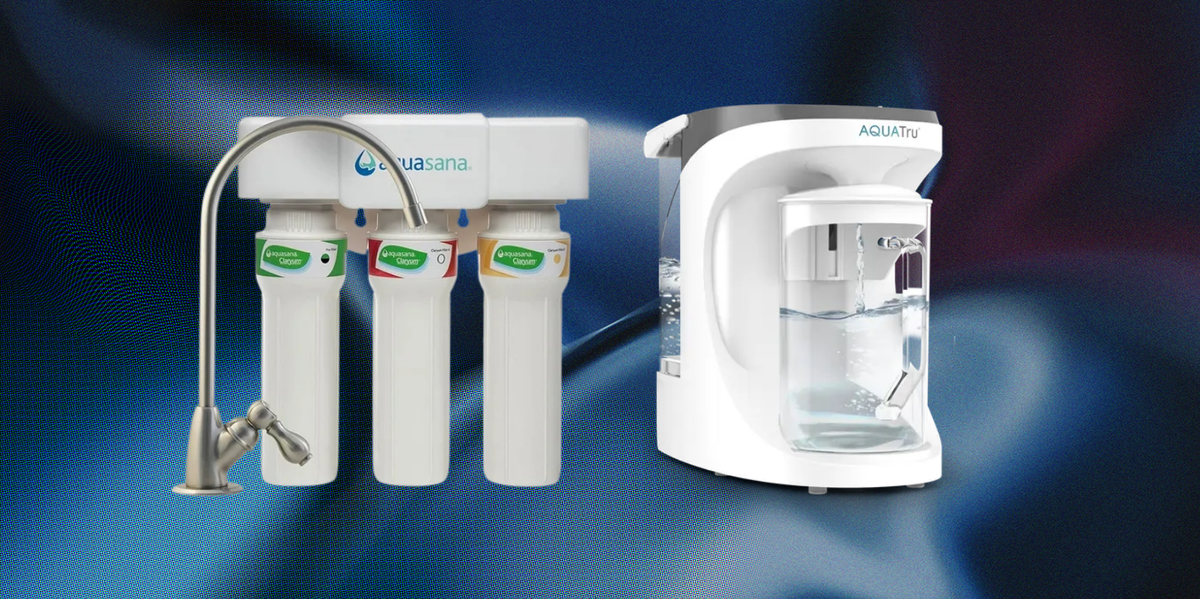
Systems such as Aquasana Claryum models, Culligan under-sink systems, Waterdrop units, Multipure filters, and APEC reverse osmosis options often show up in testing-focused recommendations because they combine strong contaminant-reduction claims with practical daily use.
Under-sink filters can be especially economical for households that use filtered water constantly. Instead of buying bottled water or replacing small pitcher cartridges frequently, you typically change larger filters every several months. Some systems have higher annual replacement costs, but they also provide higher flow, broader filtration, and better convenience.
The downside is installation. Some systems are DIY-friendly, while others may require drilling, plumbing modifications, or professional help. If you rent, check with your landlord before installing anything that involves tools, holes, or the phrase “it should be fine.”
Best for: Homeowners, families, serious coffee drinkers, frequent cooks, and anyone who wants filtered water on demand.
Budget tip: Factor in installation costs, replacement cartridges, and filter lifespan. The best value is the system you can maintain properly.
5. Reverse Osmosis Systems: Best for Tougher Contaminant Concerns
Reverse osmosis, often called RO, pushes water through a semi-permeable membrane to reduce many dissolved contaminants. RO systems are commonly recommended when households are concerned about total dissolved solids, nitrates, arsenic, PFAS, fluoride, or other contaminants that standard carbon filters may not fully address.
Popular RO systems include under-sink models from APEC, iSpring, Waterdrop, Brondell, and countertop units from brands such as AquaTru and others. In testing-focused reviews, RO systems often perform strongly for contaminant reduction, but they are not always the cheapest or easiest option.
RO systems may require more space, slower water production, storage tanks, electricity for some tankless models, and more complicated maintenance. Some also waste water during filtration, though modern systems are becoming more efficient. RO can remove beneficial minerals along with unwanted contaminants, so some models include remineralization stages to improve taste.
Best for: Homes with specific contaminant concerns, private wells, high TDS, PFAS worries, or users who want broad filtration coverage.
Budget tip: Do not buy RO just because it sounds powerful. Test your water first. If your only problem is chlorine taste, a certified pitcher or faucet filter may be enough.
Top-Tested Picks by Real-Life Need
Best Overall Budget Pitcher: Brita Everyday Elite-Style Pitchers
For many households, a Brita pitcher with a long-life Elite-style filter hits the sweet spot: low upfront price, easy availability, simple design, and strong everyday taste improvement. It is not the most aggressive filter for every contaminant category, but it is practical, affordable, and easy to keep using. That matters because the best filter is not the one with the fanciest box; it is the one you actually maintain.
Best Pitcher for TDS Reduction: ZeroWater-Style Pitchers
ZeroWater pitchers are known for reducing total dissolved solids and often include a TDS meter so users can see when the filter is nearing replacement. They are a strong choice for people who dislike mineral-heavy taste or want a more dramatic before-and-after experience. However, replacement frequency can vary greatly depending on your local water quality. If your tap water has high TDS, the filter may wear out faster.
Best Premium Pitcher: Clearly Filtered or Epic-Style Pitchers
Premium pitchers cost more upfront but may target a wider range of contaminants, including PFAS, lead, fluoride, microplastics, and other substances depending on certification and testing. They can make sense for renters who want stronger filtration but cannot install an under-sink system. The key is to verify claims through independent testing or certification rather than trusting a long contaminant list without context.
Best Faucet Filter: PUR Plus or Brita Faucet Systems
For easy on-demand filtered water, faucet-mounted filters from PUR and Brita are hard to beat. They are usually affordable, quick to install, and convenient for families that fill glasses, bottles, pots, and coffee makers throughout the day. They are also a good bridge between a pitcher and an under-sink system.
Best Long-Term Under-Sink Value: Aquasana or APEC-Style Systems
Under-sink systems can feel expensive at first, but they often deliver the best mix of convenience, performance, and cost per gallon over time. Aquasana-style carbon systems are popular for certified contaminant reduction and strong flow, while APEC-style RO systems are well-liked for deeper filtration needs. Choose based on your water test results, available space, and willingness to handle maintenance.
Best Countertop Option: AquaTru or Aquasana Countertop-Style Systems
Countertop systems are ideal when you want stronger filtration or larger capacity without permanent installation. Powered countertop filters can be fast and compact, while countertop RO units provide more advanced treatment without drilling into cabinets. They cost more than pitchers but can be a smart compromise for renters, offices, and small homes.
What Contaminants Should You Care About?
Not every household needs the same filter. Here are common concerns and the type of filter usually worth considering:
- Chlorine taste and odor: Look for carbon filters certified to NSF/ANSI 42.
- Lead: Look for NSF/ANSI 53 certification for lead reduction.
- PFAS: Look for NSF/ANSI 53 or NSF/ANSI 58 listings specifically for PFAS reduction.
- High TDS: Consider reverse osmosis or a TDS-focused pitcher.
- Microplastics: Look for models with specific microplastics reduction claims.
- Germs: Do not assume a regular pitcher filter is enough; look for microbial purifier claims or other appropriate treatment.
- Well water: Test first, then choose treatment based on results.
How to Save Money on Water Filters
Calculate Cost Per Gallon
Do not compare filters only by shelf price. A $30 pitcher may seem cheaper than a $90 model, but if the cheaper filter needs frequent replacement, the annual cost may be higher. Divide the cartridge price by the number of gallons it is rated to filter. This gives you a clearer picture of long-term value.
Buy Replacement Filters in Multipacks
Many brands sell multipacks at a lower per-filter cost. This is especially useful for pitchers and faucet filters. Just make sure you are buying genuine replacement cartridges. Knockoff filters can be tempting, but poor fit or uncertified media can reduce performance.
Use Filtered Water Where It Counts
If you are using a small pitcher, save filtered water for drinking, coffee, tea, baby formula preparation when appropriate, and cooking where taste matters. You do not need filtered water to mop the floor unless your floor is very fancy and has started making demands.
Replace Filters on Schedule
Stretching a filter beyond its rated life may save a few dollars today but can reduce performance, slow flow, and create unpleasant taste. Some filters have indicators or timers. Others require you to track gallons or calendar months. Set a reminder on your phone if needed. Future you will appreciate it.
Common Water Filter Mistakes to Avoid
Buying Based on Taste Alone
Good taste does not automatically mean water is free from contaminants. Some serious contaminants have no obvious taste, color, or smell. If health-related reduction is your goal, look for certification and test your water when needed.
Ignoring Replacement Costs
The filter itself is only part of the price. Replacement cartridges are the subscription plan you did not realize you signed up for. Always check annual maintenance costs.
Choosing the Most Powerful System Without Testing
Reverse osmosis sounds impressive, and it often is. But if your water is already good and your only issue is chlorine taste, RO may be overkill. Match the tool to the problem.
Forgetting About Space
Pitchers need fridge room. Countertop systems need counter space. Under-sink systems need cabinet space. Before buying, measure your kitchen like someone who has been emotionally hurt by an appliance before.
500-Word Experience Section: What It Is Actually Like to Live With Budget Water Filters
Testing and buying guides are helpful, but daily life has a way of revealing the tiny truths product boxes politely ignore. A pitcher looks simple until someone fills it above the line and water performs a small countertop flood. A faucet filter seems elegant until you discover your faucet is the one shape on Earth it refuses to fit. An under-sink system feels luxurious until you crawl into the cabinet with a flashlight, a wrench, and the sudden realization that plumbing is mostly confidence wearing wet socks.
In everyday use, the best affordable water filter is usually the one that fits your habits. For a single person or couple, a pitcher may be perfect. You fill it once or twice a day, keep it in the fridge, and enjoy better-tasting water without thinking too much. The experience becomes even better if the pitcher pours cleanly and filters quickly. Slow pitchers can be frustrating during dinner prep, especially when the recipe calls for filtered water and the pitcher is moving at the emotional pace of a Monday morning.
Families often outgrow pitchers quickly. Kids fill water bottles, someone makes coffee, someone else cooks pasta, and suddenly the pitcher is empty again. In that situation, a faucet-mounted filter or under-sink unit feels like a quality-of-life upgrade. The biggest difference is not just filtration; it is convenience. When filtered water comes directly from the tap, people use it more consistently. That means fewer plastic bottles, fewer half-empty cases of water in the garage, and fewer arguments about who forgot to refill the pitcher.
Countertop systems are a nice middle ground. They can feel more substantial than a pitcher but less intimidating than plumbing. They are especially useful in rentals, offices, and small homes where permanent installation is not practical. The only real challenge is counter space. If your kitchen is compact, a countertop filter must earn its place. A model with fast filtration, easy refilling, and simple cartridge changes is more likely to stay useful instead of becoming another appliance-shaped guilt monument.
Under-sink filters provide the smoothest long-term experience once installed. The first day may involve tools, instructions, and at least one moment of staring silently into the cabinet. After that, the system fades into the background. You get filtered water on demand, the sink area stays uncluttered, and the fridge no longer sacrifices an entire shelf to a pitcher. For households that cook often, brew coffee daily, or fill multiple bottles, this convenience can justify the higher upfront cost.
The most important experience-based lesson is this: maintenance decides whether a water filter remains a bargain. A neglected filter can become slow, unpleasant, and ineffective. A well-maintained budget filter can perform beautifully for years. Keep spare cartridges on hand, clean pitchers and reservoirs regularly, write replacement dates where you can see them, and verify certifications when you switch brands. Good filtered water should feel boring in the best possible way: easy, reliable, affordable, and always there when you need it.
Final Verdict: The Best Water Filter Is the One That Matches Your Water and Your Budget
The top-tested water filters that won’t drain your wallet are not always the cheapest models on the shelf. The real winners balance certified performance, reasonable replacement costs, good capacity, and daily convenience. For most budget shoppers, a certified pitcher or faucet-mounted filter is the easiest starting point. For families and heavy users, an under-sink filter can deliver better long-term value. For specific concerns such as PFAS, high TDS, nitrates, or well-water issues, a certified reverse osmosis system may be worth the investment.
Before you buy, check your local water quality report, consider testing your home water, and look for third-party certification for the exact contaminants you care about. Do that, and you can stop overpaying for bottled water, improve the taste of your tap, and finally give your reusable water bottle the meaningful career it deserves.