Family vacations are supposed to be magical. You imagine matching swimsuits, airport selfies, tiny sandals lined up by the hotel door, and everyone laughing over pancakes shaped like cartoon animals. Then reality walks in wearing a diaper bag, carrying a stroller, and whispering, “Your toddler has removed one shoe and is emotionally attached to the airplane safety card.”
That is why most travelers have at least some sympathy for parents flying with small children. A baby crying on a plane is not breaking news. A toddler melting down at 30,000 feet is not a federal emergency. It is just parenting with less legroom. But sympathy has limits, especially when exhausted parents turn their stress into a public performance and expect strangers to applaud their suffering.
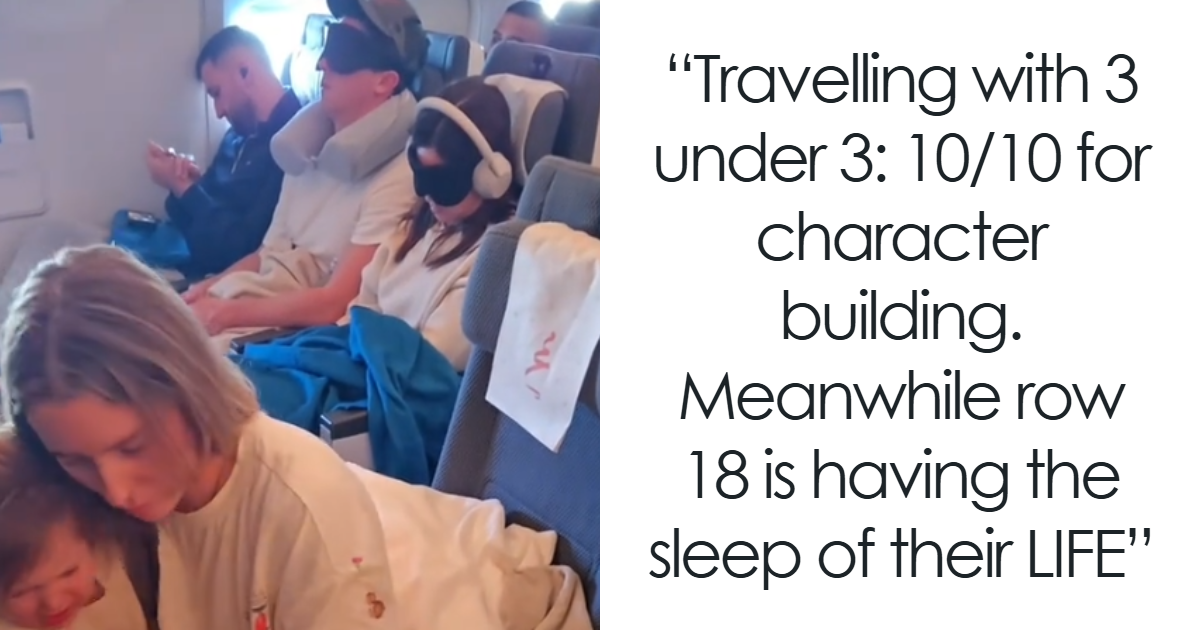
That was the heart of a recent online roasting after a family traveling with three very young kids appeared to complain about other passengers resting during the flight. The dad’s video framed the scene as if the surrounding travelers were somehow wrong for using headphones, eye masks, and silence while the parents wrestled with kid chaos. The internet, which can be both a jury and a comedy club with Wi-Fi, did not exactly send flowers.
Instead, commenters delivered the same message in a thousand different flavors: traveling with children is hard, but other passengers are not required to become unpaid members of your vacation support staff. In other words, congratulations on booking the family trip. Please do not hand row 18 an emotional invoice.
Why This Family Vacation Story Went Viral
The situation spread because it touched a nerve that almost every traveler understands. Airplanes are shared spaces with private discomfort. Everyone is squeezed in, tired, slightly dehydrated, and one overhead-bin dispute away from questioning civilization. Add three children under three into that environment, and the stress level goes from “airport coffee is too expensive” to “why is there a cracker in my passport?”
Still, the problem was not the children. Kids cry, wiggle, ask loud questions, drop snacks, and treat tray tables like experimental percussion instruments. Most reasonable passengers understand that. The problem was the tone. The video seemed to mock passengers who were simply trying to cope with the noise and fatigue in the most peaceful way possible: by tuning out.
That is where public opinion flipped. People are usually generous when parents are visibly trying. A calm apology, a quick smile, or even the universal “I am so sorry, we are doing our best” face can soften an entire row. But when the camera comes out and strangers are framed as villains because they dared to sleep, patience packs its bags and boards an earlier flight.
The Difference Between Asking for Grace and Demanding Attention
There is a huge difference between needing grace and demanding attention. A parent asking a seatmate to pass a dropped toy is asking for help. A parent quietly juggling bottles, snacks, and a restless toddler is doing the difficult work. Most people will respond kindly because struggle is human.
But a parent filming nearby passengers and implying they are selfish for resting changes the mood. That is not community. That is a pity party with a boarding pass. The audience did not object to the family having a hard time; they objected to the idea that everyone else should feel guilty for not joining the hard time.
Noise-canceling headphones are not an insult to children. Eye masks are not anti-family propaganda. Earbuds are not a declaration of war against toddlers. They are survival tools. Parents bring snacks, tablets, toys, blankets, pacifiers, and emergency applesauce pouches. Other passengers bring headphones and a dream of unconsciousness. Both groups are simply trying to survive the same metal tube.
Traveling With Three Kids Is HardNobody Denies That
Let us be fair: traveling with three small children can feel like managing a tiny, emotional circus where every performer needs a snack at a different time. Packing alone can become a military operation. You need diapers, wipes, extra clothes, favorite toys, emergency toys, backup snacks, bottles, comfort items, medications, chargers, and the one stuffed animal that must not be forgotten unless you want the vacation soundtrack to become sorrow.
Then comes airport security, where strollers fold only when they sense panic. Shoes go missing. One child wants to walk. One child wants to be carried. One child wants to lick the suitcase wheel because apparently vacation is about cultural exploration.
Families deserve compassion in those moments. Parents are not robots. They get tired, embarrassed, overwhelmed, and overstimulated. A flight with three young kids can test the patience of saints, diplomats, and people who assemble IKEA furniture without swearing.
But difficulty does not create entitlement. Having a hard day does not mean other people lose the right to protect their peace. Public spaces require balance: families have a right to travel, and fellow passengers have a right to rest, read, work, or stare blankly at the seatback map wondering why the plane icon moves so slowly.
Why The Internet Roasted The Pity Party
The online reaction was sharp because the story reflected a broader frustration with what many people call “main character syndrome.” That is the belief that your personal situation is the central plot and everyone else is background scenery. On vacation, this can look like blocking walkways for photos, letting kids run wild in hotel hallways, demanding special treatment in lines, or acting shocked when strangers do not rearrange their lives around your family logistics.
When parents travel, planning matters. Booking seats together, checking airline policies, arriving early, packing entertainment, respecting routines, and preparing children for the trip can reduce stress. None of that guarantees a smooth ride, because children are not software updates. Still, preparation signals responsibility. It shows fellow travelers that the parents understand the social contract.
The viral family’s mistake was not struggling. It was turning nearby passengers into characters in their complaint. Instead of saying, “Wow, traveling with three little kids is humbling,” the video seemed to say, “Look at these people relaxing while we suffer.” The internet answered, “Yes. That is what passengers paid to do.”
The Social Contract Of Family Travel
Every shared travel space has an unwritten agreement. Nobody gets everything they want, so everyone gives a little. Parents try to manage their children. Other passengers try to be patient. Flight attendants try to keep the peace while also handling safety, service, and the mysterious disappearance of tomato juice from everyday life except on airplanes.
The social contract does not require perfection. A baby may cry. A toddler may kick once before being corrected. A child may ask why the man across the aisle has no hair, loudly and with the innocence of a tiny courtroom attorney. These things happen.
What matters is the adult response. Are the parents attentive? Are they trying? Are they correcting behavior that affects others? Are they avoiding unnecessary filming of strangers? Are they aware that the cabin is not their living room?
When the answer is yes, most people soften. When the answer is no, the mood changes. Passengers can tolerate noise better than entitlement. A crying baby is understandable. A parent acting offended because other adults do not want to participate in the chaos is much harder to forgive.
What Parents Can Learn From The Backlash
1. Prepare Like The Trip Will Be Messy
The best family travel advice is simple: assume something will go wrong. Pack extra snacks, extra clothes, extra patience, and a plan for boredom. Bring small activities that do not create noise. Rotate toys instead of dumping everything out at once. Keep comfort items close. Feed during takeoff or landing when appropriate for little ones who struggle with ear pressure. Build time into the schedule so every delay does not feel like the universe personally betrayed you.
2. Choose Flights And Seats Strategically
When possible, families should book early, keep everyone on the same reservation, and understand the airline’s seating policies. Sitting together matters for safety, supervision, and sanity. Direct flights can reduce the number of transitions, while flights that match nap or bedtime may help some children cope better. Of course, there is no magical flight time that turns toddlers into business-class philosophers, but smart timing helps.
3. Bring Tools, Not Expectations
A tablet with downloaded shows, child-safe headphones, sticker books, soft toys, snacks, and familiar blankets are tools. Expecting strangers to entertain your children is not a tool. Expecting strangers to tolerate preventable chaos without irritation is risky. Expecting everyone to admire your parenting struggle because you filmed it is basically tossing your phone into a comment-section volcano.
4. Apologize Briefly, Then Keep Parenting
A short apology can do wonders. Not a dramatic speech. Not a tearful monologue. Just a quick, sincere “Sorry about thatwe are working on it” shows awareness. Most passengers do not want to shame parents. They want to know the parents are not ignoring the situation.
5. Keep Strangers Off Camera
Filming in public is common, but common does not always mean considerate. When children are overwhelmed and strangers are nearby, the better choice is usually to put the camera away. Your family’s difficult moment does not need supporting characters who never auditioned.
What Other Passengers Can Learn Too
The roasting may have focused on the parents, but passengers also have responsibilities. Children are allowed to exist in public. Families are allowed to fly. A baby crying does not mean the parents are lazy. A toddler having a bad moment does not mean society has collapsed. Sometimes the kindest thing a traveler can do is put on headphones, avoid glaring, and remember that they were probably once a loud little person with questionable snack etiquette too.
Passengers can also help in small, non-invasive ways. Pick up a dropped toy. Smile instead of scowl. Offer patience when parents are clearly trying. Save complaints for situations where adults are truly neglecting the problem, not merely losing a battle against exhaustion.
The best travel etiquette works both ways. Parents should not assume the cabin owes them special treatment. Other passengers should not assume every family is a nuisance. The goal is not a silent airplane. The goal is a humane one.
Why Family Vacation Content Gets So Much Attention Online
Family travel videos perform well because they mix aspiration and chaos. On one side, there is the dream: smiling kids on beaches, cute airport outfits, parents looking organized enough to run a small nation. On the other side, there is reality: spilled juice, wrong gates, hotel-room tantrums, and someone crying because the banana broke in half.
That contrast is funny when handled with humility. Parents who say, “We tried our best and the toddler still declared war on seat 12C” often win the internet. People love honest parenting stories. They appreciate vulnerability. They laugh because they recognize the truth.
But viewers react badly when the story blames everyone else. The moment content shifts from “parenting is hard” to “strangers are bad because they did not center our parenting experience,” the sympathy vanishes. Nobody wants to be guilt-tripped by a vacation video.
The Bigger Issue: Entitlement In Shared Spaces
This story is not only about kids on planes. It is about how people behave in shared spaces when they feel stressed. Airports, hotels, restaurants, theme parks, beaches, and rental homes all require cooperation. Nobody’s vacation is more important than everyone else’s peace.
A family may be tired after a long travel day. A couple nearby may be celebrating an anniversary. A solo traveler may be heading to a stressful work meeting. A grandparent may be flying home from a difficult visit. A student may be trying to sleep before an exam. We rarely know what other people are carrying, which is why humility matters.
The dad in the viral story seemed to assume the resting passengers were living the easy version of travel while his family suffered through the hard version. But that is the trap of public stress: it makes your own burden look bigger than everyone else’s. Good etiquette begins when we remember that strangers have invisible stories too.
Specific Examples Of Better Family Travel Etiquette
Imagine two versions of the same flight. In the first version, a toddler starts crying, the parents ignore the child while filming, and then post a video mocking nearby passengers for wearing headphones. The internet sees entitlement and responds accordingly.
In the second version, the toddler cries, the parents try snacks, quiet toys, a walk down the aisle when allowed, and a calm voice. One parent gives nearby passengers an apologetic smile. The child still cries for ten minutes because toddlers are tiny weather systems with shoes. Most people understand. Some may still be annoyed, but they are less likely to feel disrespected.
The difference is not the noise. The difference is effort, awareness, and respect.
Why The Phrase “You Chose To Have Kids” Hits So Hard
One common reaction to stories like this is blunt: “You chose to have kids.” That phrase can sound harsh, especially because parenting is genuinely demanding and society benefits when children are raised well. Parents do need support. They need fair airline seating, safe travel systems, affordable childcare, flexible workplaces, and communities that do not treat kids like unwelcome luggage.
But the phrase also contains a point about responsibility. Choosing parenthood means accepting that some parts of life become harder. Travel changes. Restaurants change. Sleep changes. Your carry-on becomes a mobile pantry. Your schedule becomes a negotiation with nap time. That does not make parents victims; it makes them parents.
The healthiest view is balanced: families deserve empathy, but empathy is not the same as exemption from courtesy. Parents can ask for kindness without expecting strangers to sacrifice their comfort. Passengers can recognize the stress of parenting without becoming responsible for it.
Experiences Related To This Topic: The Vacation Pity Party Nobody Asked To Attend
Anyone who has traveled during peak vacation season has seen some version of this drama. It might not involve a viral video, but the ingredients are familiar: tired parents, restless kids, crowded terminals, delayed flights, and a room full of strangers silently bargaining with the universe for five minutes of peace.
One common scene happens at boarding. A family arrives late, sweating through their matching vacation shirts, and suddenly needs three rows of passengers to rearrange seats. Sometimes the issue is unavoidable, and kind people help. Other times, the family booked scattered seats to save money and assumed the cabin would solve it. That is where goodwill starts leaking like a cheap inflatable pool toy.
Another familiar moment happens at hotels. Kids run down hallways because they are excited, and honestly, the hallway does look like a racetrack if you are five. But after 10 p.m., other guests are not thinking, “How charming.” They are thinking, “I paid for sleep, not the indoor Olympics.” Parents who step in quickly usually earn understanding. Parents who laugh and say, “They are just kids” often earn complaints.
Restaurants offer the same lesson. A child dropping a fork is normal. A child watching a loud cartoon at full volume while adults sip soup in emotional defeat is different. Families do not need to be invisible. They just need to remember that public volume belongs to everyone.
Theme parks may be the ultimate test. Everyone is hot, everyone is overspending, and at least one person in every group is wearing uncomfortable shoes. Parents can become understandably desperate when kids melt down after long lines. But the families who handle it best usually build breaks into the day, carry water, lower expectations, and accept that not every ride must be conquered. The families who struggle most often try to force a perfect vacation out of tired children and then blame the crowd when reality refuses to cooperate.
The truth is that family vacations are not relaxing in the traditional sense. They are memory-making projects with sunscreen. Parents may return home needing a vacation from the vacation. That is normal. The mistake is believing that parental exhaustion automatically outranks everyone else’s experience.
A better approach is to travel with humility. Laugh at the chaos. Prepare for the predictable disasters. Apologize when your family spills into someone else’s space. Accept help graciously when it appears, but do not demand it. Most importantly, do not turn strangers into villains just because they found a way to rest while you are in the parenting trenches.
The family in the viral story could have made a funny, relatable video about how traveling with three tiny kids tested every adult skill they had. People might have laughed with them. Instead, the tone made people laugh at them. That is the danger of the vacation pity party: once you invite the internet, it may show up with jokes instead of sympathy.
Conclusion: The Internet Roasted The Attitude, Not The Kids
The viral backlash against the family with three kids on vacation was not really about children being noisy. It was about attitude. Most travelers know that kids can struggle on planes. Most people understand that parents get overwhelmed. What people reject is the idea that strangers should be shamed for quietly protecting their own comfort.
Family travel works best when everyone keeps perspective. Parents should plan carefully, manage what they can, and show awareness when their children affect others. Fellow passengers should be patient when families are clearly trying. Nobody needs to be perfect. Everyone just needs to be considerate.
In the end, the internet’s verdict was simple: traveling with three small kids may be character-building, but it does not make the rest of the plane your supporting cast. If your vacation becomes a pity party, do not be surprised when the comment section brings the roast.