A hanging basket has a funny little superpower: it can make a porch, balcony, fence, garden gate, or tiny apartment patio look as if someone hired a royal florist with excellent taste and very clean shoes. For a display fit for the Queen’s Platinum Jubilee, the goal is not merely to stuff flowers into a basket and hope for the best. The goal is pageantry. Color. Cascading blooms. A basket that says, “Yes, I water regularly, and yes, I own pruning shears.”
Whether you are celebrating the Platinum Jubilee spirit with red, white, blue, purple, and silver tones, or simply want a hanging flower basket worthy of a garden party, the method is the same: choose the right basket, use a lightweight potting mix, match plants by sun needs, water deeply, feed consistently, and give the whole thing a little grooming now and then. Hanging baskets dry out faster than ordinary containers because air moves around them from nearly every direction. That means they need a practical plan, not wishful thinking and a half-empty watering can.
This guide walks you through how to plant hanging baskets from scratch, with design ideas inspired by royal celebration colors, plus hands-on tips for keeping them full, healthy, and photogenic all season long.
Why Hanging Baskets Are Perfect for a Jubilee-Style Garden
Hanging baskets bring flowers up to eye level, which makes them especially useful in small spaces. They add instant height to a porch, soften railings, brighten blank walls, and make entryways feel welcoming. For a Queen’s Platinum Jubilee-inspired display, they also let you create a festive color story without digging up a single inch of lawn.
Think of a hanging basket as a miniature parade float. The basket is the carriage, the trailing flowers are the ribbons, and the centerpiece plant is the dignitary waving politely to the crowd. With the right combination, one basket can look lush, layered, and intentional instead of like a random plant meeting that got out of hand.
Choose the Right Hanging Basket
Before you buy plants, choose the container. A good hanging basket should be large enough to hold moisture and provide root space. Smaller baskets may look cute at the store, but in summer heat they can dry out faster than gossip at a garden club meeting.
Best Basket Size
For most flowering annuals, choose a basket at least 12 inches wide. A 14- to 16-inch basket is even better if you want a full, dramatic display. Larger baskets hold more potting mix, which means roots have more room and moisture lasts longer between waterings.
Basket Materials
Plastic hanging baskets are lightweight and good at holding moisture. Wire baskets with coco fiber or moss liners look classic and romantic, but they dry out more quickly. They are beautiful for Jubilee-themed displays, especially when trailing plants spill over the sides, but they demand more attention. If you use a wire basket, consider adding a discreet plastic liner with drainage holes inside the natural liner to slow water loss.
Drainage Is Non-Negotiable
Every hanging basket needs drainage holes. Without drainage, roots sit in soggy soil, and soggy roots are not royal; they are just rotten. The aim is moist potting mix, not a tiny swamp swinging from your porch hook.
Use the Right Potting Mix
Do not use heavy garden soil in hanging baskets. Garden soil can compact, drain poorly, and become too heavy for hooks and brackets. Instead, use a high-quality lightweight potting mix designed for containers. Good potting mix usually contains ingredients such as peat moss or coir, perlite, vermiculite, bark, or composted materials that help with drainage and aeration.
For a long-blooming basket, mix in a slow-release fertilizer according to the package directions. This gives plants a steady nutritional base. You can also add a small amount of compost if your potting mix does not already contain nutrients, but keep the texture light. Hanging baskets need air around their roots as much as they need water.
Pick a Jubilee Color Palette
The Queen’s Platinum Jubilee naturally inspires a royal color scheme. You can go traditional with red, white, and blue, or lean elegant with purple, lavender, silver, and creamy white. The best hanging baskets use repeated colors rather than every flower in the garden center. Restraint is your friend, even when the petunias are flirting with you from six different shelves.
Classic Red, White, and Blue
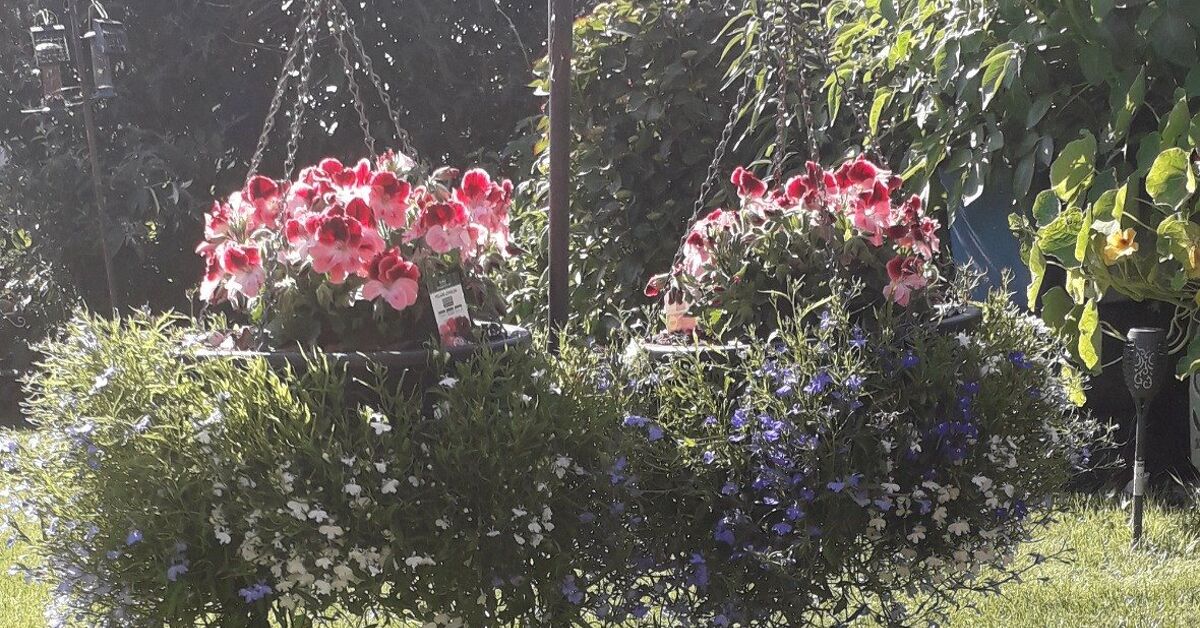
For a patriotic Jubilee look, combine red geraniums, white petunias or bacopa, and blue lobelia or blue-toned calibrachoa. True blue flowers are rare in gardening, so violet-blue or deep purple-blue blooms often do the job beautifully.
Royal Purple and Silver
For a more elegant basket, use purple petunias, lavender verbena, white alyssum, and silver foliage such as dichondra ‘Silver Falls’ or dusty miller. This combination feels regal without shouting. It is the floral equivalent of wearing pearls and pretending you did not just spill tea on the tablecloth.
Soft Garden Party Pastels
If your space is cottage-style, choose blush pink begonias, white trailing lobelia, soft lavender calibrachoa, and variegated ivy. This palette works especially well for shaded porches and afternoon tea vibes.
Understand the Thriller, Filler, and Spiller Formula
One of the easiest ways to design a professional-looking hanging basket is to use the thriller, filler, and spiller method.
Thrillers
The thriller is the upright or focal plant. In a hanging basket, it should not be too tall or heavy. Good choices include compact geraniums, upright begonias, small coleus, salvia, or angelonia.
Fillers
Fillers make the basket look lush. They occupy the middle space and create volume. Petunias, impatiens, calibrachoa, verbena, begonias, and lantana can all work as fillers, depending on light conditions.
Spillers
Spillers trail over the edge and create the cascading effect that makes hanging baskets so charming. Try trailing lobelia, bacopa, sweet potato vine, trailing verbena, ivy, dichondra, or trailing petunias.
For a 14-inch Jubilee basket, you might use one compact geranium in the center, three white petunias around it, two blue lobelia plants, and two silver dichondra plants near the edge. That gives you height, fullness, color, and movement.
Best Plants for Sunny Hanging Baskets
If your basket gets six or more hours of direct sun, choose plants that enjoy bright conditions. Sun-loving baskets often produce the most dramatic flower show, but they also need more water.
- Petunias: Big color, strong trailing habit, and excellent for red, white, purple, or blue-toned themes.
- Calibrachoa: Also called million bells, these small trumpet-shaped flowers bloom heavily and spill beautifully.
- Verbena: A great trailing bloomer that pairs well with petunias and calibrachoa.
- Lantana: Heat-tolerant, colorful, and attractive to pollinators.
- Geraniums: Classic, cheerful, and perfect for red accents.
- Portulaca: Excellent for hot, sunny spots and lower-water displays.
- Dichondra ‘Silver Falls’: A silvery trailing foliage plant that adds Platinum Jubilee sparkle.
Best Plants for Shady Hanging Baskets
For porches, balconies, and patios with morning sun or filtered light, choose shade-tolerant plants. Shade baskets can look rich and elegant, especially with foliage texture.
- Fuchsia: Pendant flowers that look like tiny royal earrings.
- Begonias: Reliable blooms and attractive foliage for partial shade.
- Impatiens: Bright color for shady spaces.
- Coleus: Fantastic foliage in burgundy, lime, cream, and pink tones.
- Boston fern: Lush, classic, and graceful for shaded porches.
- Ivy: A trailing green accent that softens the basket edge.
- Bacopa: Delicate white flowers that trail nicely in part sun.
Step-by-Step: How to Plant a Hanging Basket
Once you have your basket, potting mix, and plants, it is time to build the display. Do this on a table or potting bench if possible. Your back will thank you, and your plants will not judge your posture.
Step 1: Soak or Moisten the Liner
If you are using a coco fiber or moss liner, moisten it before planting. A dry liner can pull moisture away from the potting mix. Place the liner snugly into the basket and trim any awkward edges.
Step 2: Add Potting Mix
Fill the basket about halfway with lightweight potting mix. If you are using slow-release fertilizer, blend it into the mix now. Do not pack the mix down like you are making a brick. Gently firm is enough.
Step 3: Arrange Plants Before Planting
Set the plants on top of the soil while they are still in their nursery pots. This lets you test the design before committing. Place the thriller in the center, fillers around it, and spillers near the rim.
Step 4: Plant the Center First
Remove the center plant from its pot. If the roots are circling tightly, loosen them gently with your fingers. Plant it at the same depth it was growing in its original container.
Step 5: Add Fillers and Spillers
Plant fillers around the center and tuck spillers near the outside edge. Angle trailing plants slightly outward so they begin cascading naturally. Add more potting mix around the roots and firm it gently.
Step 6: Leave a Watering Space
Do not fill the basket to the absolute top. Leave about an inch of space below the rim so water can soak in instead of running immediately over the side. A basket without a watering space is basically a decorative colander.
Step 7: Water Thoroughly
Water until moisture drains from the bottom. This settles the potting mix around the roots and helps reduce transplant stress. Let the basket drain before hanging it in place.
Where to Hang Your Basket
Hang your basket where it matches the plants’ light needs. A sun basket belongs in bright light. A shade basket belongs in a protected area. Do not put shade-loving fuchsias in blazing afternoon sun unless you enjoy watching plants file emotional complaints.
Also check that the hook or bracket can support the basket when wet. A freshly watered hanging basket can be surprisingly heavy. Use sturdy hardware, especially on porches, pergolas, balconies, and shepherd’s hooks.
Watering: The Secret to a Basket That Does Not Sulk
Watering is the most important part of hanging basket care. Because baskets are exposed to sun and wind, they may need daily watering in warm weather. In very hot or breezy conditions, they may even need water twice a day.
The best test is simple: feel the potting mix. If the top inch feels dry, water deeply. Water until it drains from the bottom. Shallow watering encourages shallow roots and leaves dry pockets inside the basket.
Try to water the soil rather than spraying the leaves and flowers. Wet foliage can encourage disease, especially in crowded baskets. Morning is the best time to water because plants start the day hydrated and foliage has time to dry.
Feeding Hanging Baskets for Long Bloom
Hanging baskets are hungry. Frequent watering washes nutrients out of the potting mix, and flowering annuals use a lot of energy. A slow-release fertilizer at planting helps, but many baskets also benefit from liquid fertilizer every one to two weeks during peak growth.
Always follow the fertilizer label. More is not better. Too much fertilizer can damage roots and create weak, leafy growth instead of flowers. Think of fertilizer as a balanced meal, not a dare.
Deadheading, Pinching, and Trimming
Some modern annuals are self-cleaning, meaning they drop spent blooms on their own. Others benefit from deadheading. Remove faded flowers to keep the plant looking neat and encourage more blooms.
If your basket becomes leggy in midsummer, trim trailing plants back by about one-third. It may feel brutal for a moment, but the plants usually respond with fresh growth and more flowers. A midseason haircut can turn a tired basket into a comeback story.
Common Hanging Basket Problems
Wilting
Wilting usually means the basket is too dry, but it can also happen when roots are damaged by overwatering. Check the soil before reacting. If it is bone dry, water deeply. If it is soggy, improve drainage and let the mix dry slightly.
Yellow Leaves
Yellow leaves can come from overwatering, underwatering, nutrient deficiency, or natural aging. If the whole plant looks pale, it may need feeding. If lower leaves are yellow and the soil is wet, reduce watering.
Few Flowers
Low bloom can be caused by too little sun, too much nitrogen, inconsistent watering, or lack of pruning. Move sun plants into brighter light, feed correctly, and trim leggy stems.
Pests
Aphids, spider mites, and whiteflies sometimes visit hanging baskets. Inspect undersides of leaves regularly. A strong spray of water can knock off many small pests, and insecticidal soap may help when used according to directions.
Jubilee-Inspired Hanging Basket Recipes
The Royal Red, White, and Blue Basket
Use one red geranium as the centerpiece, three white petunias as fillers, two blue lobelia plants around the rim, and two trailing verbena plants for movement. This basket loves sun and looks festive near a front door.
The Platinum Elegance Basket
Combine purple calibrachoa, white bacopa, lavender verbena, and dichondra ‘Silver Falls.’ This is a refined option for patios, garden arches, and balconies. The silver foliage gives a subtle nod to the Platinum Jubilee theme.
The Shady Royal Porch Basket
Use pink and white begonias, burgundy coleus, trailing ivy, and white bacopa. It is soft, lush, and perfect for a covered porch that gets morning sun or bright indirect light.
Extra Experiences and Practical Lessons from Planting Jubilee-Style Hanging Baskets
The first lesson of planting hanging baskets is that beauty and maintenance are politely married. A basket can look effortless, but only because someone behind the scenes is watering, feeding, rotating, and trimming. It is not unlike a royal ceremony: the public sees the polished carriage, not the person frantically steaming the curtains at 6 a.m.
One useful experience is to plant slightly smaller young plants rather than buying the biggest ones available. Younger plants often settle into the basket more easily and grow into the design. Large nursery plants can give instant impact, but they may already be root-bound. If you do buy larger plants, loosen the roots gently and water well after planting.
Another lesson is that plant compatibility matters more than color. It is tempting to choose every red, white, blue, purple, and silver plant in sight for a Queen’s Platinum Jubilee theme, but a basket full of mismatched needs will struggle. Sun-loving petunias and shade-loving fuchsias should not be forced into the same container just because they look cute together at the store. Gardening is not a dating show. Choose plants that agree on light, water, and general care.
Watering by weight is also a helpful trick. Lift the basket gently after watering and notice how heavy it feels. Later, when it feels much lighter, it is probably time to water again. This is especially useful with coco-lined baskets, which can dry quickly in wind. During hot weather, checking baskets in the morning and again in late afternoon can save them from dramatic wilting.
For a more polished display, rotate baskets once or twice a week. Plants naturally grow toward the light, and rotation helps keep the shape balanced. This is particularly useful for baskets hanging against walls or porch posts. Without rotation, one side may become lush while the back looks like it gave up and moved to the countryside.
Do not be afraid to prune. Many gardeners hesitate because the basket looks full, but by midsummer trailing plants may become stretched, tangled, or bare near the top. A careful trim encourages branching and fresh flowers. After pruning, water well and apply a gentle liquid feed. Within a couple of weeks, the basket often looks fuller and healthier.
For special occasions, plant baskets several weeks ahead of the event. If you want a Jubilee-style basket to look full for a party, do not assemble it the night before and expect palace-garden abundance by breakfast. Most baskets need time to root, branch, and bloom. Four to six weeks of growth can make a huge difference.
Finally, remember that hanging baskets are living decorations. They change daily. Some flowers fade, others open, vines stretch, and foliage fills in. That is part of the charm. A great hanging basket is not frozen perfection; it is a small, swinging garden with personality. Treat it well, and it will reward you with color, movement, and the kind of curb appeal that makes neighbors slow down and pretend they are checking the mailbox.
Conclusion
Planting hanging baskets fit for the Queen’s Platinum Jubilee is all about combining good horticulture with a little theatrical flair. Start with a sturdy basket, fill it with lightweight potting mix, choose plants with matching light and water needs, and design with thrillers, fillers, and spillers. Then keep the basket watered, fed, groomed, and occasionally rotated so it stays lush through the season.
For a royal look, use red, white, and blue flowers for classic celebration style, or purple, white, and silver plants for a more elegant Platinum Jubilee mood. The result is a hanging basket that looks festive, graceful, and full of life. No palace required. A porch hook, a watering can, and a little patience will do nicely.
Note: This article is original, web-ready content based on practical hanging basket and container gardening principles from reputable horticultural guidance. No source links are inserted in the article body.