One-on-one basketball is where excuses go to sweat. There is no weak-side help to blame, no teammate “standing in the wrong spot,” and no complicated offense hiding your handle. It is just you, the defender, the ball, and the tiny voice in your head saying, “Please do not dribble this off your shoe.”
The good news? Great one on one basketball moves are not magic tricks. They are built from footwork, balance, timing, ball control, body angles, and decision-making. The best scorers do not win because they know 900 moves. They win because they can sell one move, read the defender, change speed, and finish with confidence.
This guide breaks down how to execute one on one basketball moves in 12 steps, from triple-threat footwork to crossovers, hesitation moves, spin moves, step-backs, and finishing at the rim. Whether you are playing driveway hoops, training for tryouts, or trying to stop getting cooked by your friend who wears one arm sleeve for absolutely no reason, these steps will help you attack smarter.
Why One on One Basketball Moves Matter
One-on-one basketball teaches skills that transfer directly to real games: creating separation, protecting the ball, reading the defender’s feet, finishing through contact, and making quick decisions. It also exposes bad habits fast. If you over-dribble, stand tall, avoid contact, or rely on one favorite move, the defender will figure you out quicker than a group chat finds your worst photo.
The goal is not to become a dribbling circus. The goal is to become efficient. A good one-on-one player can beat a defender in two or three dribbles, get to a scoring spot, and finish with balance. The fewer wasted movements you use, the harder you are to guard.
How to Execute One on One Basketball Moves: 12 Steps
Step 1: Start in a Strong Triple-Threat Position
Before you dribble, become dangerous. A strong triple-threat stance means you can shoot, pass, or drive. Keep your knees bent, feet about shoulder-width apart, chest slightly forward, and the ball protected near your hip or shoulder. Your eyes should be up, not staring at the ball like it owes you money.
From this position, the defender has to respect every option. If they crowd you, drive. If they back up, shoot. If they lean one way, attack the other. One-on-one scoring begins before the first dribble.
Step 2: Read the Defender’s Feet and Hips
The defender’s hands are loud, but their feet tell the truth. Look at which foot is forward. If the defender’s left foot is high, attack that side or use a crossover to exploit the angle. If their hips turn, they are giving you a lane. If they stand upright, blow by them before they wake up and remember basketball is happening.
Good scorers read the defender before choosing the move. Do not decide, “I am doing a spin move no matter what.” That is not strategy; that is stubborn choreography.
Step 3: Use a Jab Step to Make the Defender React
A jab step is one of the simplest and most effective one on one basketball moves. From triple threat, take a quick, sharp step toward one side while keeping your pivot foot planted. Your jab should be believable. Sell it with your shoulders, eyes, and ball movement.
If the defender jumps back, you may have space for a jumper. If they freeze, attack. If they overreact, go opposite. The jab step works because it asks the defender a question: “Do you trust your ankles today?”
Step 4: Attack in a Straight Line
Young players often drive in wide curves around the defender. That gives the defense time to recover. Instead, attack the defender’s outside shoulder and get your foot past their hip. Once your shoulder is even with or ahead of the defender’s shoulder, you have created an advantage.
Think of your drive like a highway ramp, not a scenic tour. Your first dribble should be long, low, and explosive. Push the ball out in front, step hard, and force the defender to turn.
Step 5: Master the Crossover Dribble
The crossover is a classic because it works. Start by dribbling in one direction. Drop your hips, shift your shoulders, and make the defender believe you are driving that way. Then quickly bounce the ball low across your body to the opposite hand and explode in the new direction.
The key is not just moving the ball. It is moving the defender. A lazy crossover is just a gift-wrapped steal. A great crossover has rhythm, deception, and a burst after the ball changes hands.
Step 6: Add the Between-the-Legs Move for Protection
The between-the-legs dribble helps you change direction while protecting the ball with your body. Step forward with one foot, bounce the ball between your legs to the opposite hand, and push off into your next move.
This move is useful when the defender is close because your leg acts like a shield. Practice it slowly first. Speed without control is just panic with sneakers.
Step 7: Use the Behind-the-Back Move When the Defender Reaches
The behind-the-back dribble is great when a defender reaches across your body or tries to cut off your crossover. Wrap the ball behind your back from one hand to the other while stepping away from pressure. Keep your chest low and your body between the defender and the ball.
Do not swing the ball wildly. The move should be tight and quick. When done correctly, it protects the ball and lets you change direction without exposing it in front of the defender.
Step 8: Freeze the Defender With a Hesitation Move
A hesitation move is all about changing speed. Dribble forward, briefly rise up as if you might shoot or slow down, then explode past the defender. The pause is the bait. The burst is the hook.
Keep your dribble alive and your eyes up during the hesitation. If the defender relaxes, attack. If they stay back, pull up. The best hesitation moves look casual for half a second, then turn into a fire alarm.
Step 9: Use the In-and-Out Dribble to Fake a Crossover
The in-and-out dribble makes the defender think you are crossing over, but you keep the ball in the same hand. Push the ball slightly toward the middle of your body, roll your hand around the outside of the ball, then snap it back and drive in the original direction.
This is a perfect move when a defender is waiting for your crossover. Once they lean toward the fake, you attack the open lane. It is basketball’s polite way of saying, “Thank you for moving.”
Step 10: Spin Only When You Have a Clear Angle
The spin move can be beautiful, but it can also become a turnover with extra drama. Use it when the defender cuts off your drive and their momentum is moving one way. Plant your outside foot, turn your back briefly to protect the ball, and spin tightly into open space.
Keep the ball close to your body. Do not spin into traffic or into a second defender. In one-on-one, the spin works best near the lane or mid-post when you have already forced the defender to slide hard.
Step 11: Create Space With a Step-Back or Pull-Up
Not every one-on-one move has to end at the rim. If the defender is retreating hard, stop quickly and rise into a pull-up jumper. If they recover aggressively, use a step-back. Drive forward, plant your lead foot, push backward into space, square your shoulders, and shoot on balance.
The step-back is not just jumping backward and hoping physics is kind. You need strong footwork, body control, and a clean gather. Practice it at game speed, but start close before drifting into long-range hero shots.
Step 12: Finish Strong at the Basket
Beating the defender is only half the job. You still have to finish. Practice layups with both hands, inside-hand finishes, outside-hand finishes, floaters, reverse layups, and two-foot power finishes. Learn to absorb light contact while keeping your eyes on the target.
When you get near the rim, do not rush. Gather under control, protect the ball, and finish high off the glass. The rim does not care how fancy your dribble was. It only respects makes.
Best One on One Basketball Moves to Practice
Crossover Into Pull-Up
Use a hard setup dribble, cross low, take one explosive dribble, then stop into a balanced jumper. This is ideal when the defender backs up to stop your drive.
Jab Step Into Straight Drive
Jab toward the defender’s high foot, rip the ball low, and drive directly past their shoulder. This is simple, efficient, and deadly when your first step is sharp.
Hesitation Into Crossover
Slow down just enough to freeze the defender, then cross over as soon as they rise or lean. This combination works because it blends pace with direction change.
In-and-Out Into Layup
Fake the crossover, keep the ball in the same hand, and attack the lane. Use this when the defender is sitting on your crossover.
Drive Into Step-Back
Attack hard, make the defender retreat, then stop and step back into space. This is effective if you can shoot well enough to punish the defender for giving you room.
Common Mistakes to Avoid
Over-dribbling: If you need 15 dribbles to get nowhere, the defender has already won emotionally.
Standing too tall: A high stance makes your moves slower and your handle easier to attack. Stay low and athletic.
Looking at the ball: Keep your eyes up so you can read the defender and see the rim.
Using moves without purpose: Every move should create an advantage. Do not dribble just to decorate the possession.
Ignoring the weak hand: If you can only drive right, defenders will send you left and watch the adventure unfold.
How to Practice One on One Basketball Moves
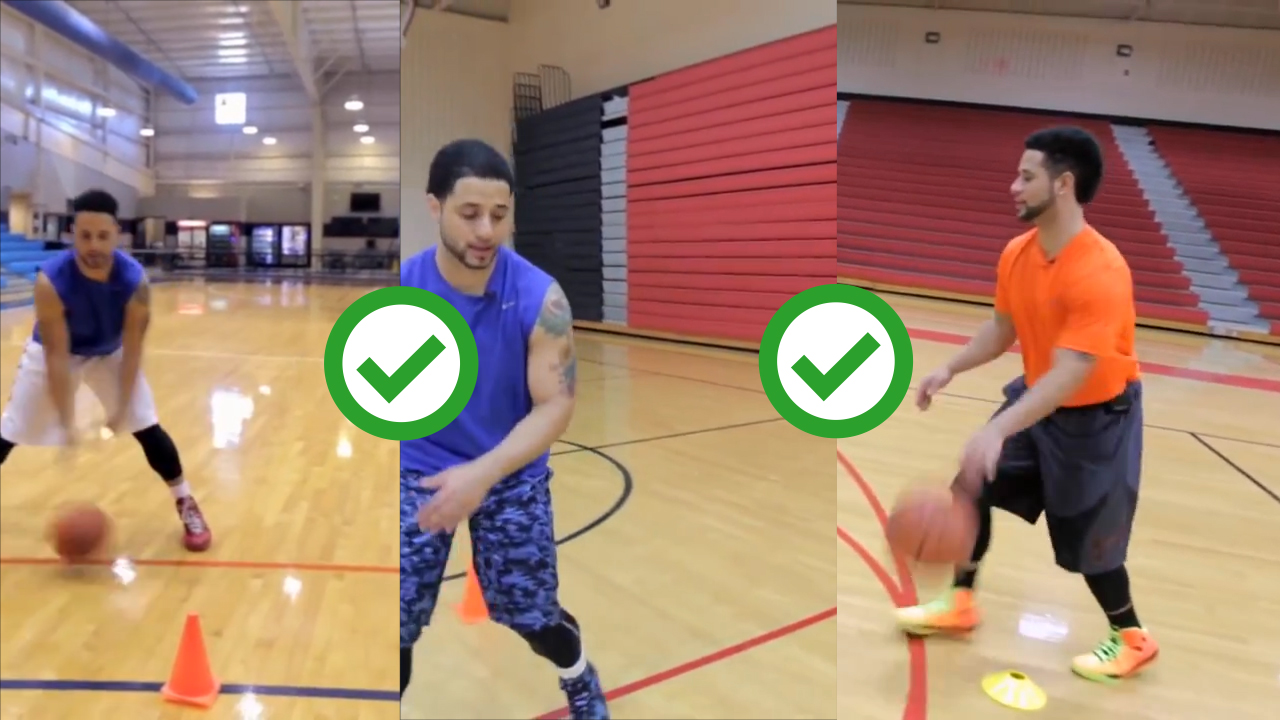
Start with stationary ball-handling drills for control: pound dribbles, crossovers, between-the-legs, behind-the-back, and figure-eight work. Then move to cone drills where each cone represents a defender. Finally, play live one-on-one with limits: three dribbles max, start from different spots, or require a weak-hand finish.
Dribble limits are especially useful. They force you to attack efficiently instead of dancing around the perimeter like you are auditioning for a halftime show. Try these formats:
- One-dribble attack: Catch at the wing and score with one dribble.
- Three-dribble one-on-one: Start at the top and create a shot in three dribbles or fewer.
- Closeout one-on-one: Defender starts under the basket, closes out, and offense attacks immediately.
- Weak-hand only: You may only dribble or finish with your non-dominant hand.
Training Tips for Faster Improvement
Practice at different speeds. Slow reps teach control. Medium reps build rhythm. Game-speed reps test whether the move actually works. If you only practice slowly, your move may disappear under pressure. If you only practice fast, your technique may look like a shopping cart with a bad wheel.
Record yourself when possible. Look for balance, ball height, wasted steps, and whether your shoulders sell the fake. You may feel explosive, but video might reveal that your “killer crossover” looks more like you are politely moving the ball from one hand to the other.
Also train both sides. A reliable left-hand drive makes your right-hand drive more dangerous. A good pull-up makes your layup easier. A strong hesitation makes your crossover sharper. One-on-one scoring is not one move; it is a menu.
Experience-Based Advice: What One-on-One Teaches You the Hard Way
After enough one-on-one games, you learn that basketball has a funny way of telling the truth. The first lesson is that your favorite move is only your favorite until the defender knows it is coming. Maybe you love the right-to-left crossover. Maybe it works twice. By the third possession, the defender is sitting on it like they reserved a table. That is when you discover whether you can counter, hesitate, pull up, or drive the other direction.
The second lesson is that pace beats pure speed. Many players think they need to be faster to beat defenders. Speed helps, sure, but change of speed is what creates separation. A slow dribble into a sudden burst can be more effective than sprinting at full speed from the start. When you go fast all the time, the defender adjusts. When you mix slow, medium, and explosive, the defender has to guess. Guessing defenders are delicious.
The third lesson is that contact is part of the game. A lot of players avoid the defender’s body and drive wide. That makes the finish harder. Strong scorers learn to attack the shoulder, get their foot past the hip, and protect the ball with their body. You do not need to be reckless or out of control. You need to be comfortable playing through normal basketball contact while staying balanced.
The fourth lesson is that your jumper changes everything. If the defender does not respect your shot, they can back up and dare you to drive into a crowded finish. Even a reliable mid-range pull-up forces them to step closer. Once they step closer, your drive opens. This is why one-on-one players should not only practice dribble moves. They should practice shooting off the catch, off one dribble, and after a hard stop.
The fifth lesson is that fatigue reveals your real handle. At the start of a workout, everyone looks smooth. After several hard drives, defensive slides, and missed layups, the ball starts getting loose. That is why competitive drills matter. Practice when tired, but keep your form. If your handle survives fatigue, it has a much better chance of surviving a real game.
The sixth lesson is humility. You will get stripped. You will miss layups. You will try a spin move and briefly become a confused ceiling fan. That is normal. The key is to notice why it happened. Did you stand too tall? Did you expose the ball? Did you attack without reading the defender? Did you decide on the move before seeing the defense? Each mistake gives you information.
The best one-on-one players are not always the flashiest. They are patient, balanced, and hard to predict. They can jab, drive, stop, shoot, counter, and finish with either hand. They understand that one-on-one is not about embarrassing the defender. It is about creating a quality shot as efficiently as possible. If the defender falls down, fine, history will remember. But the real win is getting to your spot, staying under control, and putting the ball in the basket.
Conclusion
Learning how to execute one on one basketball moves comes down to fundamentals with attitude. Start in triple threat, read the defender, use sharp footwork, protect the ball, change speed, and finish with balance. The crossover, hesitation, between-the-legs, behind-the-back, in-and-out, spin, and step-back are all valuable, but only when used with purpose.
Do not chase fancy. Chase effective. A simple jab step and straight-line drive can beat a defender more cleanly than a seven-dribble combo that ends with you trapped near the sideline. Practice both hands, limit wasted dribbles, and play live one-on-one often. The more you read real defenders, the faster your moves become game-ready.
Note: This article is for basketball skill development and general training education. Warm up properly, practice in a safe space, and adjust intensity based on age, fitness level, and experience.