Note: This article synthesizes public reporting and guidance from U.S. education, civil-rights, government, youth-advocacy, and media sources, including GAO, ACLU, National Women’s Law Center, Education Week, Chalkbeat, OPB, and NewsChannel5.
School dress codes have always had a talent for turning ordinary mornings into courtroom dramas. A student walks in wearing a tank top, skirt, leggings, hoodie, or hairstyle that felt perfectly normal at breakfast, and suddenly the school day becomes less about algebra and more about whether two inches of fabric have committed a felony. That is exactly why a viral TikTok series about sexist school dress codes struck such a loud cultural nerve.
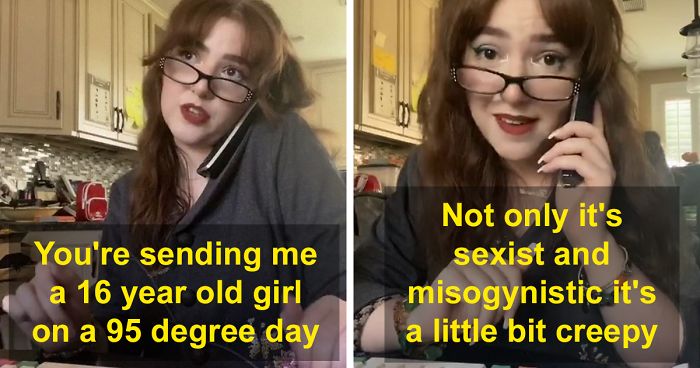
The videos, created by actress and TikTok user Nicole Ciravolo, imagine a school office secretary who refuses to let a girl be humiliated over a dress code violation. Instead of treating the student like a walking distraction, the secretary questions the logic behind the punishment. Why is the girl being removed from class? Did anyone actually complain? Why is her education being interrupted because an adult decided her clothing was a problem?
That fictional secretary became the hero many students wish they had in real life: calm, sharp, funny, and apparently allergic to nonsense. Her popularity reveals something bigger than one viral moment. Across the United States, students, parents, educators, and civil-rights groups have been questioning whether school dress codes are really about learning and safetyor whether they too often police girls’ bodies, reinforce gender stereotypes, and punish students unevenly.
Why This TikTok Hit So Hard
The magic of the TikTok series is that it does not need a long lecture to make its point. The situation is familiar: a girl is sent to the office because her outfit is supposedly “distracting.” The adult in power treats the outfit as the problem. The student loses instructional time. The secretary, acting as the audience’s collective backbone, asks the obvious question: why is the student being punished for someone else’s reaction?
That is the core issue behind many complaints about sexist school dress codes. The rules are often written as if they apply to everyone, but enforcement frequently falls hardest on girls, especially girls of color, curvier students, LGBTQ+ students, and students whose clothing, hair, or body type does not fit a narrow idea of what is “appropriate.” A rule may sound neutral on paper, but in the hallway, it can become very personal.
Common examples include bans or restrictions on tank tops, leggings, crop tops, skirts, shorts, visible straps, headwraps, certain hairstyles, or clothing that fits differently on different bodies. Students have long pointed out that the same outfit may be ignored on one body and punished on another. In other words, the dress code may claim to measure fabric, but enforcement often seems to measure bias.
The Real Problem: Lost Learning Time
Here is the irony wearing a hall pass: dress codes are often defended as tools for protecting the learning environment, yet strict enforcement can pull students out of that very environment. When a girl is removed from class, sent to the office, asked to change, or made to wait for a parent to bring different clothes, the message becomes painfully clear. Her outfit has been treated as more urgent than her education.
The U.S. Government Accountability Office has reported that nearly all public school districts require students to follow dress codes, and many districts cite safety as the reason. But the GAO also found equity concerns: dress codes more often restrict items typically worn by girls, and rules about hair, hairstyles, and head coverings may disproportionately affect Black students and students from certain religious or cultural backgrounds.
Even more concerning, the GAO found that an estimated 60 percent of dress codes include rules involving measuring students’ bodies or clothing. That can create uncomfortable, embarrassing, or unsafe situations, especially when enforcement happens publicly or during instructional time. The same report noted that strict dress code enforcement is associated with higher rates of discipline that remove students from the classroom.
So the question becomes simple: if a policy meant to support learning repeatedly interrupts learning, maybe the policy needs a wardrobe change.
How Dress Codes Can Become Sexist
Not every school dress code is automatically sexist. Schools can have reasonable rules about clothing that protects health, safety, and participation in class activities. For example, shoes may need to be safe for science labs, physical education, or emergency drills. Clothing with hate speech, threats, or graphic content can reasonably be restricted. Nobody is arguing that “anything goes” is the only fair policy.
The problem begins when a dress code focuses heavily on girls’ bodies or assumes girls are responsible for managing other people’s attention. Rules about shoulders, midriffs, skirt length, leggings, or straps often land differently on girls than boys. When the explanation is that boys or male teachers may be “distracted,” the rule quietly teaches a bad lesson: girls must shrink, cover, or disappear so everyone else can concentrate.
That lesson is unfair to girls and insulting to boys. It suggests boys cannot be expected to behave respectfully, which is a pretty low bar to trip over. Schools should teach all students self-control, respect, and responsibilitynot turn girls into walking classroom-management strategies.
Why Girls of Color Are Often Hit Harder
Any serious discussion of sexist school dress codes must also discuss race. The National Women’s Law Center has documented how dress code enforcement can disproportionately target Black girls. Its work with students in Washington, D.C. highlighted concerns about rules involving tank tops, headwraps, coats, and body shape, as well as the way students are removed from class for violations.
Chalkbeat’s reporting on Chicago Public Schools also found that low-income Black students and other students of color were more likely to attend high schools with dress codes. Students described unofficial or uneven enforcement, including situations where Black and Hispanic girls felt targeted over clothing choices during hot weather or in buildings without adequate cooling.
This matters because school discipline is not just a one-day annoyance. Repeated punishment can affect a student’s sense of belonging, academic confidence, attendance, and trust in adults. A student who feels watched, judged, or singled out may stop seeing school as a safe place to learn. And no, “just wear something else” is not a complete answer when the deeper issue is unequal treatment.
The Legal Side: Dress Codes Cannot Discriminate
Public schools have authority to set reasonable dress standards, but that authority has limits. Civil-rights advocates, including the ACLU, have emphasized that school dress codes cannot discriminate based on sex, race, religion, gender identity, or other protected characteristics. Dress codes also cannot be enforced in ways that punish one group more harshly than another for similar clothing.
A notable example involved a North Carolina public charter school that required girls to wear skirts. A federal appeals court said Title IX, the federal law prohibiting sex discrimination in federally funded education programs, applies to discriminatory school dress codes. The case became a major reminder that clothing rules are not just “school preference” when they reinforce unequal treatment.
In practical terms, this means schools should avoid rules that create different expectations for boys and girls. A modern, fair policy should focus on what clothing must do, not what gender a student is. Clothing should be safe for the activity, cover basic private areas, avoid harassment or hate speech, and allow students to participate fully in school. That is a lot cleaner than trying to measure everyone’s straps like the school hallway is a tiny fabric court.
What TikTok Changed About the Conversation
Students have complained about dress codes for decades, but TikTok gave the conversation a megaphone, a spotlight, and occasionally a soundtrack. Viral videos allow students and creators to show the absurdity of uneven enforcement in seconds. One popular format features boys and girls wearing similar outfits to demonstrate that girls are more likely to be punished. Another shows adults role-playing what supportive staff should say when a student is unfairly dress-coded.
That is why Ciravolo’s “hero secretary” character works so well. She does not simply argue that the rules are unfair. She models what adult allyship could look like: ask questions, protect dignity, keep the student in class, and challenge the assumption that girls’ bodies are problems to be managed.
Social media can oversimplify complex issues, of course. Schools do have real safety responsibilities. Teachers often enforce policies they did not write. Administrators may be trying to balance parent expectations, state laws, school culture, and student voice. But TikTok has made one thing harder to ignore: students know when rules feel arbitrary, and they know when “professionalism” is being used as a polite word for control.
What a Better School Dress Code Looks Like
A fair dress code does not need to be a 14-page fashion constitution. The best policies tend to be short, gender-neutral, specific, and focused on educational access. They explain what students must wear in practical terms: a top, a bottom or equivalent, and shoes. They restrict clothing that creates a genuine safety issue or includes hate speech, threats, or content inappropriate for school. They avoid vague language like “distracting,” “revealing,” or “immodest,” because those words depend heavily on adult opinion.
Several districts and advocacy groups have promoted model policies that protect students from body shaming and unnecessary discipline. Portland Public Schools and other districts influenced by the Oregon NOW Model Student Dress Code have moved toward rules that emphasize comfort, equity, and instructional continuity. Education Week has also reported on districts such as Alameda Unified in California, where student-teacher collaboration helped create a more gender-neutral policy and reduce dress code conflicts.
Better policies also set clear enforcement standards. Students should not be publicly shamed, measured in front of peers, forced into embarrassing “violation” clothing, or removed from class unless there is a genuine safety concern. Staff should be trained to handle concerns privately, respectfully, and consistently. If a school wants students to act like responsible young people, it helps when adults model responsibility first.
How Parents and Students Can Respond
For students who feel targeted by a school dress code, documentation can help. Write down what happened, when it happened, who was involved, what rule was cited, and whether other students wearing similar clothing were treated differently. This is not about causing drama; it is about collecting facts. Drama is for theater club, and even theater club deserves due process.
Parents can ask schools for the written dress code, the enforcement process, and data on dress code discipline. They can also ask whether the policy has been reviewed for gender, race, disability, religion, and LGBTQ+ equity. If the rules are vague, inconsistently enforced, or disproportionately affecting certain students, families can request a review by the school board or district leadership.
Students can also advocate for change through student councils, petitions, public comments, or meetings with administrators. The most persuasive argument is not “we want no rules.” It is “we want rules that are fair, clear, respectful, and focused on learning.” That approach is harder for adults to dismiss, because it sounds suspiciously like good policy.
Why the “Hero All Girls Need” Matters
The TikTok secretary character became beloved because she represents a missing adult voice. Many students do not need an adult to fight every battle for them. They need an adult who notices when something is unfair and refuses to pretend it is normal. That kind of support can change how a young person remembers school.
For girls who have been dress-coded, the humiliation often sticks longer than the rule itself. They may remember being pulled aside in a hallway, being told their clothes were a problem, or watching boys violate similar rules without consequences. They may remember feeling embarrassed, angry, confused, or suddenly aware that adults were evaluating their bodies instead of their homework.
That is why the viral videos are funny but not silly. Humor makes the issue easier to watch, but the message is serious: students deserve dignity. Girls deserve to learn without being treated like distractions. Boys deserve to be taught respect instead of being used as excuses. Teachers deserve policies that do not force them into awkward, biased enforcement. Schools deserve better than rules that create more conflict than clarity.
Experiences Related to Sexist School Dress Codes
Ask people about school dress codes, and many will immediately remember a specific moment. Not a general policy. Not a handbook paragraph. A moment. The day they were told their shorts were too short even though they had passed the “fingertip test” at home. The day a student had to wear oversized gym clothes for six hours. The day a teacher called attention to an outfit in front of the whole class. The day someone realized the rules were not being enforced equally.
One common experience is the “same outfit, different treatment” problem. A student may see two classmates wearing similar tops, but only one gets dress-coded because of body type. That inconsistency is one reason students describe dress code enforcement as unfair. The rule may claim to be about clothing, but the punishment can feel like it is about the person wearing it.
Another experience involves weather and comfort. Many schools, especially older buildings, do not have perfect air conditioning. In warm months, students naturally wear lighter clothing. A strict rule against tank tops or certain shorts can feel disconnected from reality when classrooms are hot enough to make a pencil sweat. Students are then expected to focus on lessons while also worrying whether their outfit will get them called out.
There is also the experience of public embarrassment. Some students say the worst part is not being asked to change. It is how the correction happens. Being stopped in a hallway, measured, stared at, or spoken to in front of peers can turn a minor clothing issue into a major emotional memory. A respectful private conversation is very different from public shaming. Schools that understand this difference usually create more trust.
Teachers have experiences too. Many educators dislike enforcing dress codes because the rules can be vague and uncomfortable. A teacher may worry about appearing unfair, saying the wrong thing, or damaging a student’s trust. Male teachers, in particular, have described the awkwardness of enforcing rules that focus on girls’ clothing. This is another reason strong policies matter: they protect students and staff by removing guesswork.
Parents often experience the dress code debate from both sides. They may want school to feel structured and appropriate, but they may also be frustrated when their child loses class time over a rule that seems arbitrary. A parent who receives a mid-day call about leggings or straps may reasonably wonder whether the school’s priorities need a tune-up. After all, if the outfit is safe and the student is ready to learn, the emergency level should probably stay below “summon the fashion police.”
The best experiences come from schools that invite students into the conversation. When students help revise dress codes, they are more likely to understand the rules and respect them. They can explain what feels unfair, what feels practical, and what language creates confusion. Adults may be surprised to learn that students are not always asking for chaos. Many simply want consistency, privacy, and dignity.
That is the lasting lesson from the TikTok series. The hero all girls need is not necessarily a dramatic rescuer with a cape. Sometimes she is a secretary, teacher, counselor, parent, principal, or classmate who says, “Wait. Is this fair? Is this necessary? Is this helping the student learn?” Those questions are small, but in a school culture built on rules, they can be powerful.
Conclusion
The viral TikTok about sexist school dress codes works because it says what many students have been thinking for years: dress code enforcement should not humiliate girls, interrupt learning, or turn body type into a disciplinary issue. Reasonable dress standards can exist, but they must be clear, gender-neutral, consistently enforced, and rooted in safety and education rather than outdated assumptions about distraction.
Schools are at their best when they help students feel respected and ready to learn. That means updating policies that do more harm than good, listening to students, training staff, and replacing shame with common sense. The hero all girls need is not someone who abolishes every rule. It is someone who makes sure the rules treat students like human beings first.