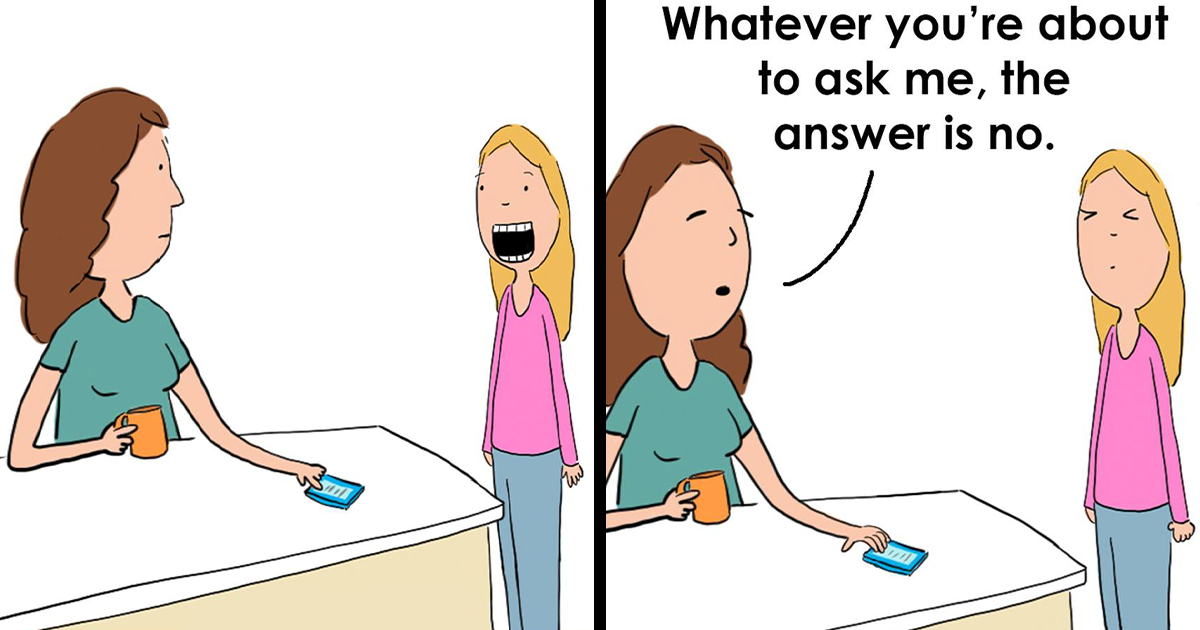
Parenting is the only full-time job where your boss cries because you peeled the banana “wrong,” your coworkers leave crackers in your shoes, and your annual performance review happens in the grocery store aisle while strangers pretend not to watch. That is exactly why parenting comics have become such a comfort-food corner of the internet. They take the tiny, chaotic, sticky, hilarious moments of raising kids and turn them into panels that make exhausted adults whisper, “Finally, someone understands.”
The best relatable comics about parenting do not pretend family life is one long commercial for matching pajamas and perfectly packed lunches. They show the real material: bedtime negotiations that feel like courtroom drama, toddlers who believe pants are optional, school mornings powered by panic, and parents who love their children more than life itself but would also like five quiet minutes to drink coffee while it is still legally coffee.
This collection-inspired guide explores the joys and struggles behind 50 common parenting comic scenarios. Instead of simply laughing at the mess, we will look at why these moments feel so universal, what they reveal about child development, and why humor may be one of the healthiest tools in the family survival kit.
Why Parenting Comics Feel So Relatable
Parenting comics work because they compress a whole day of emotional whiplash into a few drawings. In one panel, a parent is trying to teach kindness, patience, and emotional regulation. In the next, they are hiding in the pantry eating chocolate chips like a raccoon with a mortgage. The humor lands because it is exaggerated, but only slightly.
Modern parenting involves more advice than any human can reasonably process. Parents are told to be gentle but firm, structured but flexible, playful but responsible, digitally aware but not screen-obsessed, emotionally available but also magically well-rested. Comics cut through that pressure by saying, “Yes, this is hard. Also, it is absurd.”
That balance matters. Research-backed parenting advice often emphasizes routines, responsive relationships, emotional coaching, sleep, and positive attention. Comics show what those ideas look like when the family dog steals breakfast, the toddler refuses socks, and everyone is late. They make expert advice feel human instead of laminated.
50 Relatable Parenting Comic Moments Every Parent Recognizes
1. The Bedtime That Never Ends
Every parent knows the comic: a child is tucked in, hugged, watered, kissed, re-tucked, re-watered, and suddenly remembers an urgent philosophical question about dinosaurs, death, or pancakes. Bedtime routines help children feel secure, but kids also know this is prime negotiation territory.
2. The Snack Paradox
A child rejects dinner with the confidence of a Michelin critic, then asks for a snack seven minutes later. Parenting comics love this moment because it captures the mysterious physics of childhood hunger: meals are suspicious, but crackers found under the car seat are cuisine.
3. The Public Tantrum Olympics
A classic panel shows a parent kneeling beside a screaming child in a store while strangers offer either sympathy or judgment. Tantrums are often about big feelings in small bodies, but in the moment, it feels like starring in a live theater production called “Please Don’t Lick the Floor.”
4. The Toy Explosion
Comics often show a living room that looks like a toy store lost a fight. Children learn through play, but parents learn through stepping barefoot on building blocks. Nothing says family life like cleaning the same room three times before noon.
5. The Tiny Fashion Dictator
One child insists on wearing rain boots, a superhero cape, and a swimsuit to the dentist. Another refuses a jacket in winter because “my arms said no.” These comics are funny because independence often begins with clothing choices that would terrify a weather app.
6. The Screen-Time Treaty
A parent announces, “Five more minutes,” and the child hears, “Prepare for battle.” Family media boundaries are important, but comics reveal the truth: turning off a tablet can feel like disarming a tiny emotional volcano with a password.
7. The Bathroom Audience
Before kids, privacy seems like a basic human right. After kids, it becomes a rumor. Parenting comics frequently show children, pets, and sometimes a random toy dinosaur gathering at the bathroom door as if a press conference has been scheduled.
8. The Homework Spiral
One math worksheet can turn a peaceful kitchen into a crisis-management center. The child is frustrated, the parent is trying not to say, “They changed how they teach subtraction,” and everyone quietly wonders whether long division has a personal grudge.
9. The “I Can Do It Myself” Era
Few comic scenes are more accurate than a toddler taking 19 minutes to put on one shoe while the parent ages visibly. Independence is wonderful. Independence while late for school is character development for everyone involved.
10. The Car Seat Negotiation
Some comics show children going boneless the moment they need to sit in a car seat. The visual is always perfect: a parent holding a child who has transformed into warm spaghetti with opinions.
11. The Magic of Mispronounced Words
Not all parenting comics are about stress. Some capture the sweetness of a child saying “aminal,” “pasghetti,” or “hanitizer.” These tiny language moments become family treasure, even after children outgrow them.
12. The Sudden Deep Question
Children ask enormous questions at impossible times: “Where does the sky end?” “Why do people get old?” “Can ants feel embarrassed?” Comics thrive on this contrast between a parent loading the dishwasher and a child casually opening the universe.
13. The School Morning Dash
Backpacks vanish. Shoes hide. Permission slips appear from another dimension. A school-morning comic needs only one image: a parent holding a lunchbox, a child missing one sock, and a clock that has betrayed the family.
14. The Laundry Monster
Children are small, yet somehow generate laundry like professional athletes in a mud league. Parenting comics often show a mountain of clothes with a parent at the bottom, whispering, “I just washed this.”
15. The Selective Hearing Superpower
A child cannot hear “Please put your shoes on” from three feet away, but can hear a candy wrapper from the opposite side of the house. Scientists may never fully explain it. Cartoonists already have.
16. The Sick-Day Snuggle
Some panels slow down and show the tender side: a feverish child curled against a parent, the house quiet, the to-do list abandoned. Raising kids is exhausting, but moments like these remind parents how deeply they are needed.
17. The Grocery Store Side Quest
A simple grocery run becomes a journey involving cereal negotiations, cart escape attempts, and a child asking loudly why that man has no hair. Parenting comics capture the strange mix of embarrassment, laughter, and survival.
18. The Bedtime Book Trap
“One more book” sounds innocent until the stack reaches architectural height. Reading together supports connection and language, but kids know books are also excellent bedtime-extending technology.
19. The Permanent Marker Incident
Every parenting comic universe includes a wall, a marker, and a child who says, “I made it beautiful.” The struggle is real: you want to encourage creativity, but perhaps not on the hallway paint.
20. The Parent Voice
Comics often show a parent using phrases they swore they would never say: “Because I said so,” “We have food at home,” or “Please stop licking that.” Parenthood turns everyone into a remix of their own parents eventually.
21. The Tiny Compliment That Fixes Everything
A child suddenly says, “You’re the best,” and the entire hard day melts. These panels are beloved because parenting contains emotional jump scares in both directions: chaos, then pure love.
22. The Mystery Smell
Parents in comics often become detectives. What is that smell? Where is it coming from? Why is it damp? The answers are rarely comforting, but the investigation builds resilience.
23. The Birthday Party Hangover
A children’s birthday party looks cheerful from the outside. Inside, it is noise, frosting, gift wrap, and 14 kids moving at hummingbird speed. Comics understand that parents need recovery time after fun.
24. The “Watch This!” Loop
A child says “Watch this!” and performs the same jump 37 times. The parent claps every time, because love is sometimes pretending the couch-to-carpet hop has evolved as an art form.
25. The Emotional Support Rock
Children attach deep meaning to random objects: a rock, a stick, a broken plastic ring. Comics celebrate this because kids are tiny poets. Parents are just the people asked to wash the sacred stick.
26. The Meal They Loved Yesterday
Yesterday, macaroni was the best food ever. Today, it is apparently a personal insult. Parenting comics show the emotional danger of assuming a child’s preferences are valid for more than one business day.
27. The Family Photo Illusion
A polished family photo hides the reality: someone cried, someone blinked, someone had a snack stain, and one parent whispered threats involving screen time. Comics reveal the behind-the-scenes truth.
28. The Car Confessional
Kids often reveal school drama, big feelings, and random secrets from the back seat. Parenting comics capture how the car becomes a rolling therapy office, snack zone, and lost-toy museum.
29. The Question Avalanche
“Why?” “Why?” “Why?” Children ask questions because curiosity drives learning. Parents answer until their brain becomes pudding. The best comics honor both sides.
30. The Quiet That Means Trouble
Every parent knows silence is suspicious. A quiet child may be reading peacefully. Or painting the dog with yogurt. Comics use this pause like a horror-movie soundtrack.
31. The Tiny Negotiator
Kids bargain with stunning confidence. Two more minutes. Three more crackers. One more episode. Parenting comics frame these talks like diplomatic summits, except one party is sticky and wearing dinosaur pajamas.
32. The School Art Archive
Parents receive 400 drawings a month and must decide what to keep without hurting anyone’s feelings. Comics turn the refrigerator into a museum and the recycling bin into a secret moral dilemma.
33. The Sibling Justice System
“He looked at me.” “She breathed near my toy.” Sibling conflict comics work because the accusations are tiny, but the emotions are enormous. Parents become judges in cases no law school prepared them for.
34. The Bath-Time Splash Zone
Bath time begins as hygiene and ends as indoor weather. Parents enter dry and leave looking like they lost a water-balloon war. Children, meanwhile, insist they are still not clean.
35. The Nap Refusal
A child visibly exhausted declares they are “not tired” while leaning sideways into a stuffed animal. Comics catch this beautifully: children resist the very thing their parents dream about.
36. The Stuffed Animal Roll Call
Bedtime cannot proceed until every plush friend is accounted for. One missing bunny can halt the household. Parenting comics understand that stuffed animals are not toys; they are emotional executives.
37. The Parent Snack Tax
A parent prepares a snack for themselves. Suddenly, every child appears. Parenting comics often show this as a wildlife documentary: the young sense food and approach cautiously, then completely dominate the plate.
38. The Tiny Helper
Children love to help, which is beautiful and sometimes wildly inefficient. Baking with kids may involve flour on the ceiling, but comics remind us that shared tasks build confidence, connection, and memories.
39. The “I’m Bored” Announcement
This usually happens in a room full of toys, books, art supplies, and furniture apparently unsuitable for entertainment. Comics expose the absurdity while gently reminding parents that boredom can spark imagination.
40. The Parent Group Chat
Modern parenting includes digital teamwork: reminders, school updates, birthday logistics, and messages like, “Does anyone know why everyone needs a potato tomorrow?” Comics have barely scratched the surface of this chaos.
41. The Lost Shoe Mystery
No one knows where the shoe went. The child was wearing it 10 minutes ago. The family has not left the house. Parenting comics correctly treat this as supernatural activity.
42. The Emotional Goodbye
Drop-off can be heartbreaking. A child clings, a parent worries, and then the child runs off happily three seconds later while the parent sits in the car processing feelings. Comics catch that bittersweet twist.
43. The “Big Kid” Moment
One day, a child ties their shoes, reads a sentence, shares a toy, or comforts a friend. Parenting comics shine here because they show how pride and grief can arrive together. Growing up is wonderful. It is also rude.
44. The Messy Car Interior
A family car becomes a mobile ecosystem: crumbs, socks, drawings, water bottles, and one ancient french fry. Comics portray it as archaeology, which feels accurate.
45. The “You Were Right” Miracle
Once in a while, a child admits a parent was correct. The comic version usually includes heavenly light, a choir, and a parent trying to remain calm while mentally framing the sentence.
46. The Holiday Overload
Holidays with kids are magical and exhausting. Parents create traditions, wrap gifts, manage sugar, and assemble toys with instructions written by chaos goblins. Comics make the overwhelm feel shared.
47. The Unexpected Kindness
A child offers their last cookie, hugs a crying sibling, or says something wise beyond their years. These moments are why parenting comics are not just jokes. They are tiny reminders that the hard work matters.
48. The Parent’s Secret Snack
Hiding in the kitchen to eat something uninterrupted is practically a parenting rite of passage. Comics exaggerate it into spycraft, but only because the truth is already ridiculous.
49. The Growth Spurt Betrayal
Clothes that fit last week suddenly look borrowed from a doll. Shoes become too small overnight. Comics show parents staring at receipts and wondering whether children grow specifically to challenge budgets.
50. The Goodnight Whisper
After the tantrums, crumbs, negotiations, and missing socks, a child whispers, “I love you.” The parent melts. That final panel is why parenting comics keep returning to tenderness. The struggle is real, but so is the joy.
What These Comics Reveal About Raising Kids
Relatable parenting comics are funny because they are honest. They show that raising kids is not a straight line from lesson to result. It is repetition, repair, laughter, and trying again after losing patience over something small, like a shoe located directly under the child who says they cannot find it.
They also remind parents that children are not miniature adults. Kids are still learning impulse control, emotional language, patience, problem-solving, and flexibility. A meltdown over the wrong cup may look silly to adults, but to a tired child, it can feel genuinely overwhelming. That does not mean parents should give in to every demand. It means the moment often needs both boundaries and compassion.
The most useful parenting humor does not mock children for being children. It lovingly mocks the impossible situation everyone is in: kids learning how to be people, parents learning how to guide them, and the laundry multiplying in the background like a suspicious science experiment.
The Joy Hidden Inside the Struggle
One reason parenting comics spread so widely is that they validate mixed feelings. A parent can be deeply grateful and completely exhausted. They can adore their child and still fantasize about a silent hotel room with blackout curtains. They can laugh at a toddler’s logic while also needing a minute to breathe.
That emotional mix is not failure. It is family life. Children bring wonder into ordinary places. A walk becomes a rock hunt. A cardboard box becomes a spaceship. A rainy afternoon becomes a concert performed entirely with pots. At the same time, children bring noise, mess, worry, and questions that arrive before coffee.
Comics capture both truths in a format busy parents can actually consume. A long parenting book may sit unread on the nightstand. A four-panel comic can deliver relief in 20 seconds. Sometimes that is enough to help a parent feel less alone.
Why Humor Helps Parents Cope
Humor creates distance from stress. When parents laugh at a comic about bedtime chaos, they are not denying the difficulty. They are reframing it. The same moment that felt like defeat at 8:47 p.m. becomes a story by 10:15 p.m., especially once the child is asleep and no one is asking for water.
Funny parenting comics also build community. A shared comic says, “This happens in our house too.” That sentence is powerful. Many parents privately worry they are the only ones struggling with tantrums, picky eating, sibling fights, or screen-time battles. Relatable comics reveal the truth: behind many front doors, families are improvising with love, snacks, and mild confusion.
Of course, humor is not a replacement for support. Parents facing burnout, anxiety, depression, or ongoing family stress deserve real help, rest, and community. But laughter can be a small pressure valve. It can soften shame. It can turn “I am failing” into “This is hard, and I am human.”
How Parents Can Turn Comic Moments Into Connection
Name the Feeling, Not Just the Behavior
When a child melts down, parents often see the behavior first. Comics show the screaming, flopping, and dramatic floor work. But beneath that is usually a feeling: frustration, hunger, tiredness, jealousy, disappointment, or overstimulation. Naming the feeling helps children build emotional vocabulary.
Keep Routines Predictable
Many comic disasters happen during transitions: bedtime, school mornings, leaving the park, turning off screens. Predictable routines do not eliminate chaos, but they reduce surprises. A child who knows what comes next has one less reason to panic.
Use Play When Possible
Play can turn resistance into cooperation. A shoe race, a silly cleanup song, or pretending the toothbrush is a “cavity monster detector” may sound ridiculous, but ridiculous is fluent child language.
Model Repair
Parents lose patience. Kids lose patience. Everyone has moments they would not frame and hang in the hallway. Repair matters: apologizing, reconnecting, and trying again teaches children that love is not about perfection.
Save the Funny Stories
Write down the strange phrases, wild questions, and tiny victories. Today’s chaos becomes tomorrow’s family legend. Parenting comics are popular because every family is already living inside its own comic strip.
Extra Parenting Experiences: The Real-Life Comedy Behind the Panels
The experience of raising kids often feels like moving through a video game where the rules change every level. Just when a parent masters baby sleep, the toddler stage arrives with opinions. Just when the toddler finally sleeps, preschool brings questions. Just when school routines begin to make sense, someone announces a project due tomorrow involving poster board, cotton balls, and “maybe a shoebox.” Parenting is not one challenge; it is a rotating menu.
One of the most relatable experiences is the morning routine. In theory, it is simple: wake up, eat breakfast, get dressed, brush teeth, leave. In practice, the child cannot find pants, the cereal is “too wet,” the toothbrush tastes “spicy,” and the backpack contains a mysterious banana from another era. Parents learn to prepare like event planners and react like emergency responders. And still, somehow, the child will remember at the door that today is “wear something green day.”
Another shared experience is the emotional intensity of ordinary objects. Adults see a blue cup. A child sees betrayal, because they wanted the green cup. Adults see a banana broken in half. A child sees a ruined future. These moments can be maddening, but they also reveal how children experience the world with full-volume feelings. Their disappointment is real, even when the cause seems tiny. Parenting requires translating that intensity without getting swallowed by it.
Then there is the strange comedy of parental identity. Before kids, adults may have had hobbies, clean shirts, and conversations that did not involve bathroom updates. After kids, they become snack managers, bedtime negotiators, stain scientists, amateur therapists, lost-toy investigators, and audience members for living-room performances with unclear plots. The transformation can feel overwhelming, but it can also be unexpectedly beautiful. Children invite parents to notice details again: moon shapes, bug trails, cloud animals, and the joy of jumping into puddles for no productive reason at all.
Parents also discover that love is often hidden inside repetitive tasks. Packing lunch is not glamorous. Neither is washing the favorite shirt at midnight or reading the same book until every sentence is tattooed on the brain. But these repeated acts become the structure of security. Children may not thank parents for the clean socks, the remembered appointment, or the steady bedtime routine, but they feel the safety those things create.
The funniest parenting comics often end with a twist, and real life does too. A parent may spend all day feeling unnoticed, only to find a crumpled drawing labeled “I love Mom” or “Dad is my hero.” A child who fought bedtime for an hour may finally fall asleep holding the parent’s hand. A sibling rivalry may pause long enough for one child to defend the other with fierce loyalty. These moments do not erase the hard parts, but they explain why parents keep going.
In the end, the experience behind “50 Relatable Comics About The Joys And Struggles Of Raising Kids” is not just that parenting is messy. It is that the mess has meaning. The crumbs, questions, tantrums, jokes, drawings, and bedtime whispers become the family story. Comics help parents laugh at the chaos, but they also help them recognize the tenderness inside it. Raising kids is loud, sticky, expensive, emotional, and occasionally bewildering. It is also full of moments so sweet they almost seem designed to keep parents from quitting five minutes before the good part.
Conclusion
Parenting comics are more than quick laughs for tired adults scrolling after bedtime. They are tiny mirrors reflecting the daily reality of raising kids: the joy, the struggle, the confusion, the pride, and the snack crumbs in places no snack should ever be. The best relatable comics about raising kids succeed because they tell the truth without losing warmth. They remind parents that childhood is messy because growth is messy, and family life is funny because love keeps showing up in the middle of chaos.
Whether the comic is about bedtime negotiations, picky eating, sibling drama, school mornings, or the sacred silence that usually means trouble, the message is the same: you are not alone. Somewhere, another parent is also searching for a missing shoe, answering a question about space at the worst possible moment, and trying to raise kind humans while reheating the same cup of coffee for the fourth time.