Travel is supposed to broaden the mind. Unfortunately, it occasionally seems to remove the mind altogether, pack it into checked luggage, and send it to a different airport.
Most tourists behave responsibly. They follow local rules, respect residents, protect wildlife, and understand that a historic monument is not an oversized autograph book. Then there are the travelers who treat entire cities, national parks, museums, and sacred sites as personal amusement parks built exclusively for their social media accounts.
The worst tourist behavior goes far beyond wearing socks with sandals or mispronouncing a menu item. It includes vandalizing irreplaceable artifacts, harassing animals, trespassing on private land, mocking local customs, littering public spaces, and risking other people’s safety for a photograph that will receive twelve likes and one comment from an aunt.
The following examples draw on documented incidents and recurring complaints from park officials, museum staff, guides, residents, conservationists, and fellow travelers. Together, they provide a troubling tour of what happens when curiosity loses its traveling companion: basic human decency.
When Ancient History Becomes Someone’s Personal Scrapbook
Historic sites have survived wars, fires, earthquakes, political upheaval, and centuries of weather. Their most unpredictable modern threat may be a visitor carrying a pocketknife and thinking, “You know what this Roman wall needs? My initials.”
-
Toppling Million-Year-Old Rock Formations
Visitors at Lake Mead National Recreation Area were filmed pushing over naturally formed sandstone structures. Geological formations that took millions of years to develop were treated like oversized dominoes because apparently simply looking at a rock was not exciting enough.
-
Carving a Love Note Into the Colosseum
A tourist was recorded scratching his name and his girlfriend’s name into the Colosseum. Nothing says everlasting romance quite like damaging a nearly 2,000-year-old landmark and potentially receiving a criminal charge from the Italian authorities.
-
Adding Initials to an Ancient Japanese Temple
A teenage visitor reportedly carved letters into an eighth-century temple in Nara, Japan. The incident demonstrated a spectacular misunderstanding of cultural exchange: visitors are invited to appreciate history, not update it with homemade typography.
-
Signing a Maya Temple Like a Yearbook
Tourists have been photographed carving initials into ancient structures at Tikal. A temple that survived more than a millennium apparently could not escape two people determined to prove that they had once possessed a sharp object.
-
Engraving Names Into Living Coral
Divers and guides have been accused of scratching names into coral formations. Unlike a concrete wall, coral is a living ecosystem. Damaging it for a personalized underwater souvenir is less “adventure travel” and more “environmental vandalism with flippers.”
-
Attaching Love Locks to a Holocaust Memorial
Visitors have placed romantic padlocks on the Shoes on the Danube Bank memorial in Budapest, which commemorates people murdered along the river during World War II. Turning a memorial to mass killing into a relationship display crosses a boundary that should never require a warning sign.
-
Sitting on a Historic Sculpture for a Photograph
An Austrian tourist damaged a plaster sculpture by Antonio Canova after sitting on it while imitating its pose. Several toes broke from the artwork, and surveillance footage reportedly showed the visitor inspecting the damage before leaving.
-
Falling Into a Painting While Making a Meme
At Florence’s Uffizi Gallery, a visitor posing in front of an eighteenth-century portrait tripped backward and tore the canvas. The painting was removed for restoration, proving that “I was making content” is not a magical phrase that repairs centuries-old art.
-
Using Museum Displays as Furniture
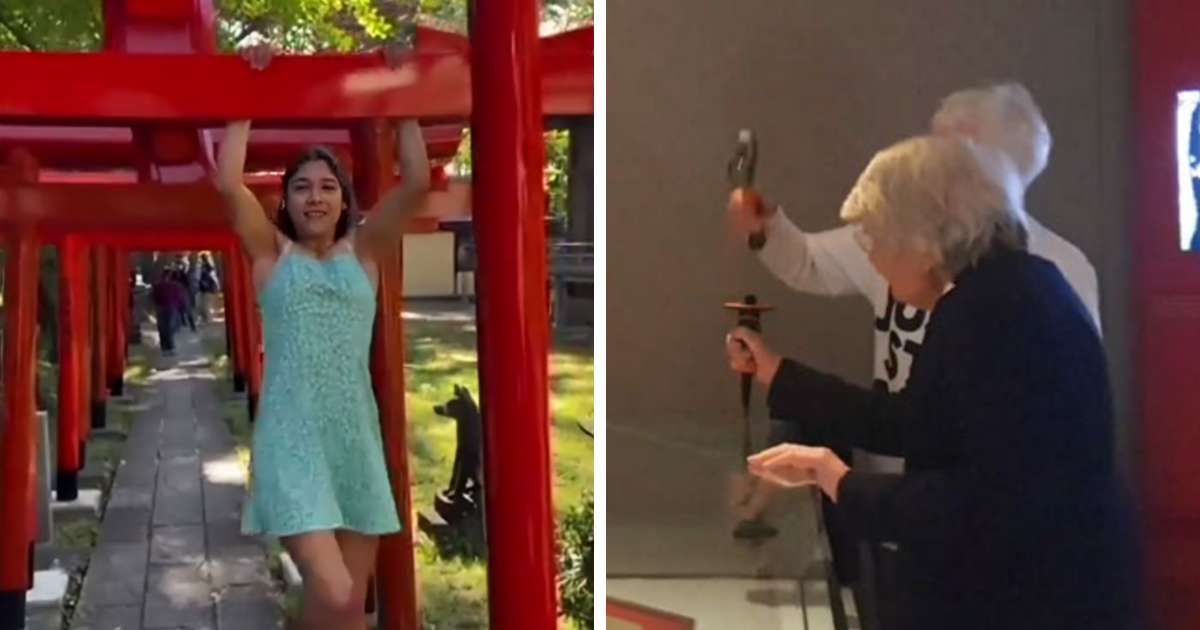
A crystal-covered artwork resembling Vincent van Gogh’s chair collapsed after a visitor sat on it for a picture. Museums place barriers and “do not touch” signs for a reason, and that reason is not to create a fun obstacle course for aspiring influencers.
-
Touching Ancient Statues for a Better Pose
Some museum visitors lean on statues, stroke carved surfaces, or wrap their arms around artifacts. Even when nothing breaks immediately, repeated contact transfers oils, introduces wear, and makes preservation teams quietly reconsider their career choices.
-
Taking Artifacts Home as Free Souvenirs
Protected parks and archaeological sites regularly deal with visitors removing pottery fragments, stones, fossils, or historic objects. The fact that an item fits inside a backpack does not mean it has become complimentary hotel soap.
Documented cases include vandalism at Lake Mead, the Colosseum, historic temples, coral sites, and major art museums.
Wild Animals Are Not Employees in the Selfie Department
Wildlife encounters inspire some of travel’s most memorable moments. They also inspire certain tourists to forget that animals have teeth, horns, claws, stress responses, and absolutely no interest in helping anyone improve an Instagram feed.
-
Kicking a Bison
A Yellowstone visitor was accused of harassing and kicking a bison before being injured by the animal. The incident required medical attention and law-enforcement involvement, while the bison presumably continued its day wondering why humans are allowed outside unsupervised.
-
Walking Up to Bison for Close-Up Pictures
Visitors repeatedly approach Yellowstone bison despite warnings to remain at least 25 yards away. Bison may appear calm, but they are powerful, unpredictable, and considerably faster than a tourist attempting to sprint in vacation sandals.
-
Cornering Elk Along Roads and Trails
Tourists often crowd elk with cameras, blocking the animals’ escape routes. When an elk reacts defensively, people act surprisedas though the animal failed to read its contract as a decorative feature of the landscape.
-
Picking Up Protected Sea Turtles
Visitors in Hawaii have been fined or investigated after handling green sea turtles for photographs. These protected animals need space to rest and feed, not strangers lifting their fins and arranging them like props at a beach-themed photo booth.
-
Standing on a Turtle
Travelers have posted images appearing to show them standing on turtles. The joke may last several seconds online, but the stress and potential injuries inflicted on the animal can have much more serious consequences.
-
Surrounding Nesting Turtles
Large tourist crowds have disrupted sea turtles attempting to nest. Flash photography, touching, shouting, and blocking access to the water can interfere with one of the most vulnerable moments in the animals’ life cycle.
-
Holding Sloths for Vacation Selfies
Wildlife-tourism investigations have found sloths and other animals captured or restrained so visitors can hold them. Because a sloth’s distress is not always obvious to an untrained observer, tourists may mistake silent suffering for cooperation.
-
Riding Elephants Without Questioning the Training
Elephant rides may look peaceful from the passenger’s seat, but attractions offering direct contact can rely on painful training and constant control. A smiling tourist photograph reveals little about what happened before the animal entered the frame.
-
Posing With Sedated or Restrained Big Cats
Facilities that offer tiger or lion selfies frequently market the experience as conservation. Yet forced handling, breeding for entertainment, and questionable sedation can turn a supposed wildlife encounter into a polished form of exploitation.
-
Feeding Monkeys and Creating Aggressive Behavior
Handing food to monkeys seems harmless until the animals begin grabbing bags, biting visitors, and depending on human snacks. Feeding wildlife changes natural behavior and can create lasting conflicts between animals and local communities.
-
Chasing Marine Animals While Snorkeling
Some swimmers pursue dolphins, rays, turtles, and reef fish for close-up footage. Ethical wildlife observation allows animals to decide whether to approach. It does not involve a human convoy with action cameras conducting an underwater paparazzi chase.
-
Climbing Into Animal Enclosures
Tourists have crossed zoo barriers for photographs, apparently concluding that fences are merely suggestions. Such behavior endangers the trespasser, other visitors, staff members, and animals that may be injured or killed after reacting naturally.
Park officials and wildlife organizations consistently warn against approaching, feeding, touching, restraining, or using wild animals as photo props.
Sacred Places and Memorials Are Not Content Studios
Some locations demand more than ordinary politeness. Places of worship, cemeteries, disaster sites, and memorials carry emotional weight for people whose families, beliefs, and histories are connected to them.
-
Taking Playful Selfies at Holocaust Memorials
Visitors have been criticized for jumping, posing, and taking cheerful fashion-style photographs at Holocaust memorials. Photography itself is not always prohibited, but the mood and purpose of the image matter when millions of murdered people are being remembered.
-
Climbing on Memorial Structures
Even when signs specifically ask visitors not to climb, some travelers treat memorials as playground equipment. The behavior can damage structures while forcing grieving families to watch strangers turn remembrance into recreational parkour.
-
Hanging From Shrine Gates
Tourists have been photographed climbing or hanging from torii gates and other sacred structures in Japan. A religious landmark is not a pull-up bar, regardless of how dramatically the color matches someone’s vacation outfit.
-
Interrupting Religious Services
Some visitors walk through active services while talking loudly, filming worshippers, or positioning themselves for photographs. Churches, mosques, temples, and shrines may welcome guests, but they remain living places of faith rather than silent movie sets.
-
Ignoring Clothing Requirements
Dress rules at sacred sites are sometimes treated as personal insults. In reality, covering shoulders, removing shoes, or wearing provided garments is usually a simple condition of entering a place that belongs to another community.
-
Photographing People Without Consent
Residents in traditional clothing are not public decorations. Tourists who push cameras into people’s faces, block their movement, or photograph private ceremonies reduce human beings to collectible images.
-
Harassing Geisha and Maiko in Kyoto
Complaints in Kyoto have included visitors chasing, touching, cornering, and photographing geisha or maiko without permission. Restrictions in parts of the historic district followed years of residents asking tourists to stop behaving like celebrity hunters.
-
Playing Games in Cemeteries
Residents of heavily visited communities have reported tourists picnicking, playing sports, and staging elaborate photographs in cemeteries. Graves are not atmospheric landscaping, and mourning families should never have to negotiate with someone’s vacation entertainment.
-
Turning Disaster Sites Into Comedy Backdrops
At locations associated with war, terrorism, accidents, or natural disasters, smiling poses and joke videos can deeply offend survivors. Responsible dark tourism centers education and remembrance rather than the visitor’s need to create a dramatic thumbnail.
Travel and cultural reporting has repeatedly examined disrespectful photography and intrusive conduct at memorials, cemeteries, worship sites, and historic districts.
Public Places Are Not Private Vacation Rentals
-
Leaving Trash Beneath the Seat
Food containers, tissues, bottles, and disposable cups are frequently abandoned in trains, parks, beaches, and waiting areas. Apparently, some travelers believe purchasing a ticket also hires an invisible employee to follow them with a garbage bag.
-
Using Bags to Occupy Crowded Seats
On busy ferries and trains, tourists sometimes spread luggage across multiple seats while elderly passengers and families stand nearby. A backpack may have experienced a long journey, but it does not require lumbar support.
-
Blocking Doors and Escalators
Groups regularly stop in doorways, at the top of stairs, or directly outside train exits to examine maps. Being temporarily lost is understandable. Constructing a human barricade while seventy commuters attempt to pass is less charming.
-
Playing Music Through Portable Speakers
National parks, beaches, trails, and historic plazas increasingly host visitors broadcasting personal playlists. Natural quiet and shared public space disappear beneath the assumption that everyone has been waiting to hear one tourist’s favorite dance remix.
-
Crossing Closed Gates for Photographs
Barriers around cliffs, waterfalls, unstable ruins, and construction zones are routinely climbed for pictures. Closures usually exist because of falling rocks, dangerous currents, fragile surfaces, or previous accidentsnot because officials dislike attractive camera angles.
-
Trampling Sensitive Habitat
Visitors ignore marked trails to stand among wildflowers, dunes, moss, or protected grasslands. One footprint may seem insignificant, but thousands of people making the same excuse can destroy vegetation and create permanent unofficial paths.
-
Swimming in Venice’s Canals
Tourists have jumped, surfed, or swum in Venice’s canals despite safety rules and local objections. The waterways are essential transportation routes, not a resort pool conveniently located beside centuries of architecture.
-
Bathing or Washing Clothes in Historic Fountains
Visitors have climbed into fountains to cool off, bathe, or wash personal items. Besides being disrespectful, the behavior may damage stonework, interfere with water systems, and result in fines considerably more expensive than a cold shower.
-
Flying Drones Where They Are Prohibited
Unauthorized drones disturb wildlife, disrupt the natural soundscape, invade privacy, and can interfere with emergency operations. Yet some travelers remain convinced that cinematic vacation footage is a constitutional right granted by the invention of propellers.
-
Parking on Private Property
Residents in popular destinations often find driveways blocked, gardens entered, and private fields used as scenic parking lots. A picturesque village is still a neighborhood where people need to reach work, receive deliveries, and leave their own homes.
-
Berating Workers Over Local Customs
Hotel employees, servers, guides, and transportation staff are frequently blamed because meals, laundry practices, opening hours, or room layouts differ from those at home. Cultural difference is the point of travel, not a defect that requires a manager.
-
Mocking People Who Do Not Speak English
Repeating the same sentence at increasing volume is neither translation nor diplomacy. Visitors who ridicule accents or demand fluent English forget that they are the ones who arrived without learning the local language.
-
Leaving a Train Car Looking Like a Landfill
Passengers have reported groups abandoning food, packaging, bottles, and scattered belongings on high-speed trains. The destination may have changed, but the universal rule remains: adults should clean up after themselves without requiring a gold star.
Tourism authorities and residents have responded to littering, trespassing, canal swimming, disruptive noise, drones, overcrowding, and other antisocial behavior with restrictions, closures, education campaigns, and fines.
Why Do Otherwise Ordinary People Become Terrible Tourists?
Bad tourist behavior rarely has a single cause. Anonymity plays a role: people may feel that consequences are unlikely because they will leave the country tomorrow. Group travel can weaken individual judgment, especially when everyone encourages the most reckless person to “just do it for the photo.” Alcohol, excitement, poor preparation, cultural ignorance, and social media competition add more fuel.
Smartphones have also changed the way travelers experience destinations. Instead of asking, “What can I learn here?” some visitors ask, “How can I prove I was here?” The location becomes a background, residents become extras, animals become props, and rules become obstacles between the traveler and the desired image.
Overtourism magnifies the damage. One person stepping off a trail may leave a small mark. Ten thousand people repeating the behavior can flatten an ecosystem. One visitor blocking a narrow street may be mildly annoying. Several tour groups doing it every hour can make daily life unbearable for residents.
The solution is not complicated. Read local rules before arriving. Keep a respectful distance from wildlife. Ask before photographing people. Stay on marked paths. Do not touch exhibits. Carry out trash. Lower your voice. Remember that destinations are homes, ecosystems, workplaces, and places of memorynot products purchased through a booking application.
Experiences From the Other Side of Bad Tourism
Statistics and viral photographs reveal the scale of disrespectful tourism, but individual experiences show why it hurts. Imagine being a park ranger watching a visitor step over a barrier toward a bison. The ranger is not merely enforcing a bureaucratic rule. That person knows an attack could injure the tourist, traumatize witnesses, endanger staff members, and potentially lead to consequences for the animal.
Consider a museum conservator arriving after someone has leaned against a painting. The visible tear may be small, but repairing it requires examination, documentation, specialized materials, controlled conditions, and many hours of delicate work. An exhibition may close, other visitors lose access, and public funds or museum resources must be redirected because someone wanted a more amusing photograph.
For residents, the frustration builds through repetition. A homeowner in a famous village may wake to strangers leaning over a garden wall. Later, a rental car blocks the driveway. At lunchtime, visitors photograph the family through an open window. By evening, litter covers a nearby viewpoint. None of these incidents alone explains the anger associated with overtourism. Together, they transform ordinary life into an endless negotiation with uninvited spectators.
Tour guides experience a different pressure. They may spend years learning local history, languages, safety procedures, and environmental rules. Then one guest ignores every instruction because an online video showed someone standing beyond a barrier. Correcting the behavior risks a bad review. Ignoring it risks injury or permanent damage. Good guides must somehow remain patient while explaining that gravity, wild animals, and national laws are not optional cultural preferences.
Other travelers also pay the price. A respectful visitor may wait quietly at a memorial while someone films a comedy routine nearby. A hiker may seek natural silence only to encounter a speaker blasting music. Train passengers may stand while luggage occupies seats. Families may find an attraction closed after previous tourists caused damage. Bad behavior turns a shared experience into a private inconvenience imposed on everyone else.
There is also the uncomfortable moment of deciding whether to intervene. Calling out a stranger can escalate tension, and visitors should never place themselves in danger. Still, a calm reminder can sometimes work: “Please stay behind the barrier,” “The animal needs more space,” or “This is an active place of worship.” When direct intervention feels unsafe, notifying staff, guides, rangers, or security is the better choice.
The most encouraging experiences occur when tourists correct themselves. A traveler lowers a camera after learning that photography is inappropriate. A family moves back from wildlife. Someone picks up litter that was not theirs. A tour group follows a local guide’s instructions and discovers that respectful behavior creates a richer experience, not a duller one.
Travel does not require perfection. Everyone mispronounces words, misunderstands customs, misses signs, or becomes confused. Human decency begins with how a person responds: apologize, listen, fix the mistake, and avoid repeating it. The worst tourists insist that the destination adapt to them. The best travelers allow the destination to teach them something.
Conclusion: Pack Curiosity, but Do Not Forget Respect
The 44 examples above range from inconsiderate to dangerous, but they share one underlying problem: the traveler places personal convenience, entertainment, or online attention above everyone and everything around them.
A good tourist does not need to memorize every cultural rule on Earth. Basic awareness goes surprisingly far. Treat residents as people rather than scenery. Treat animals as wildlife rather than accessories. Treat monuments as shared heritage rather than blank surfaces. Treat workers with patience. Treat public spaces as though somebody else will use them after youbecause somebody will.
The world is generous enough to let us visit extraordinary places. The least we can do is leave them standing, living, clean, and dignified when we depart.