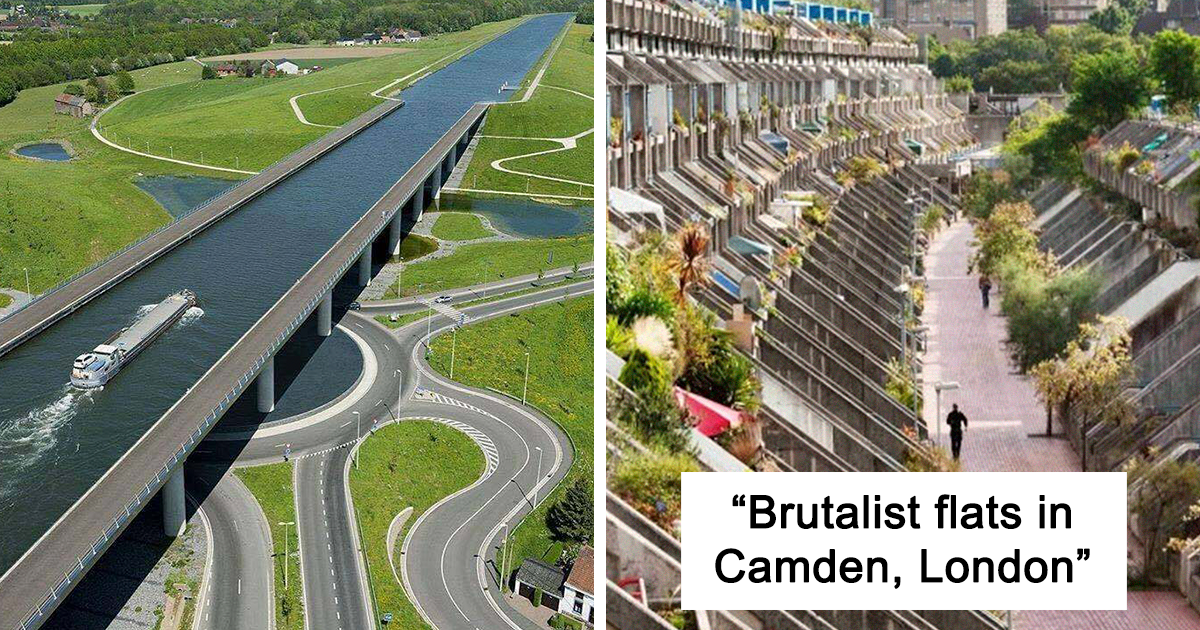
Infrastructure is easy to ignore when it works. The bridge does not ask for applause. The water main does not send a thank-you note. The traffic signal does not bow after shaving three minutes off your commute. Yet engineers know the truth: modern life is basically a giant group project held together by concrete, steel, sensors, pumps, wires, bolts, spreadsheets, and people who drink coffee from stainless-steel mugs at 6:12 a.m.
The best infrastructure is not always the flashiest. Sometimes it is a beautiful cable-stayed bridge. Sometimes it is a storm drain that prevents a neighborhood from becoming an accidental swimming pool. Sometimes it is a perfectly labeled electrical cabinet that makes a maintenance technician whisper, “Finally, someone cared.”
This guide explores 35 examples of infrastructure every engineer appreciates, from transportation systems and public utilities to digital networks and climate-resilient design. Whether you are a civil engineer, mechanical engineer, electrical engineer, urban planner, construction manager, or simply a person who enjoys not falling into potholes, these examples show why infrastructure deserves more love than it usually gets.
What Makes Infrastructure Worth Appreciating?
Great infrastructure solves problems quietly. It moves people, protects communities, delivers clean water, powers hospitals, supports commerce, and keeps cities from turning into obstacle courses. Engineers appreciate infrastructure because they understand the invisible difficulty behind it: load calculations, drainage models, redundancy plans, corrosion control, safety standards, right-of-way headaches, soil surprises, budget constraints, public meetings, and the occasional raccoon in a conduit.
Infrastructure is also interconnected. A hospital needs roads, electricity, broadband, clean water, wastewater treatment, emergency access, and resilient communications. A port needs rail, highways, cranes, power, dredged channels, cybersecurity, and weather forecasting. One weak link can slow an entire region. That is why the most admired infrastructure systems are not just strong; they are coordinated, maintainable, adaptable, and designed for real-world abuse.
35 Examples Of Infrastructure Every Engineer Appreciates
1. Bridges That Balance Strength and Elegance
A great bridge is engineering poetry with expansion joints. Engineers admire bridges because they must handle gravity, traffic, wind, vibration, temperature changes, corrosion, fatigue, and decades of maintenance. Suspension bridges, cable-stayed bridges, truss bridges, and segmental concrete bridges all solve the same basic problemgetting people safely across something inconvenientbut each does it with its own structural personality.
2. Highway Interchanges That Actually Make Sense
A well-designed interchange reduces conflict points, improves traffic flow, and keeps drivers from performing last-second lane gymnastics. Engineers appreciate thoughtful ramps, clear sight lines, proper merge distances, and signage that does not require psychic ability. A good interchange feels boring to drivers, which is usually a sign that the design team did its job.
3. Tunnels With Smart Ventilation Systems
Tunnels are not just holes with ambition. They require ventilation, lighting, fire protection, drainage, emergency exits, structural lining, monitoring systems, and careful inspection. Road and rail tunnels are especially impressive because they must operate safely in confined spaces where small problems can become dramatic very quickly.
4. Rail Networks That Move People Efficiently
Rail infrastructure earns engineer respect because steel wheels on steel rails are remarkably efficient. Tracks, ties, ballast, signals, stations, bridges, power systems, and dispatching software all work together. When rail is reliable, it reduces road congestion, supports freight movement, and gives commuters a chance to read, nap, or pretend to answer emails.
5. Public Transit Stations Designed for Real Humans
Engineers appreciate transit stations that manage crowds, protect riders from weather, support accessibility, and allow easy transfers. Good station design includes elevators that work, platforms with safe clearances, intuitive wayfinding, lighting, drainage, and enough circulation space so rush hour does not become a slow-motion bumper car event.
6. Airports With Durable Runways and Taxiways
Airport pavement takes enormous punishment from aircraft loads, fuel exposure, freeze-thaw cycles, braking forces, and constant operations. Engineers admire runways, taxiways, lighting systems, drainage, markings, and surface monitoring because aviation infrastructure has almost no tolerance for “close enough.”
7. Ports That Keep Global Trade Moving
Ports are industrial choreography. Ships, cranes, trucks, trains, warehouses, security systems, customs operations, and dredged channels must coordinate at massive scale. Engineers appreciate ports because they combine marine engineering, structural design, logistics, automation, and resilience against storms and sea-level challenges.
8. Inland Waterways, Locks, and Dams
Locks and dams are old-school infrastructure with modern importance. They help move bulk freight such as grain, coal, aggregates, and chemicals while supporting flood control and water management. Engineers respect lock chambers, gates, valves, approach channels, and control systems because they handle immense hydraulic forces without making a fuss.
9. Drinking Water Treatment Plants
Clean drinking water is one of civilization’s greatest engineering achievements. Treatment plants use screening, coagulation, sedimentation, filtration, disinfection, chemical control, testing, and distribution management. Engineers appreciate them because the work is invisible until something goes wrongand when it goes wrong, everyone suddenly becomes very interested in pipe diagrams.
10. Water Distribution Networks
Water mains, valves, pumps, meters, storage tanks, pressure zones, and hydrants form a hidden circulatory system beneath cities. A good distribution network maintains pressure, limits leakage, supports firefighting, and delivers safe water across varied terrain. Engineers especially appreciate accurate maps, because “somewhere under the street” is not a maintenance strategy.
11. Wastewater Treatment Facilities
Wastewater treatment is not glamorous, but it is heroic. Plants remove solids, organic matter, nutrients, and pathogens before water returns to the environment. Engineers value the biological processes, clarifiers, aeration systems, digesters, odor control, and energy recovery potential. Wastewater plants are proof that civilization depends on people willing to think deeply about things most people prefer not to discuss at dinner.
12. Stormwater Drainage Systems
Curbs, gutters, inlets, culverts, detention basins, bioswales, underground storage, and outfalls prevent rain from turning streets into canals. Engineers appreciate stormwater systems because they must be designed around probability, land use, soil behavior, maintenance access, and increasingly intense rainfall. A drain that works during a cloudburst is a tiny engineering miracle with a grate on top.
13. Levees and Floodwalls
Flood protection infrastructure protects homes, farms, roads, factories, and public buildings. Engineers admire levees and floodwalls because they require geotechnical knowledge, seepage control, erosion protection, inspection, emergency planning, and humility. Water is patient. Water reads the fine print. Good flood infrastructure respects that.
14. Electric Transmission Lines
Transmission lines move bulk electricity across long distances, connecting generation to cities and industries. Engineers appreciate tower design, conductor selection, right-of-way planning, vegetation management, relays, substations, and grid stability. It is hard not to respect infrastructure that can carry enough power to run entire regions while standing in weather that makes humans cancel picnics.
15. Substations That Quietly Run the World
Substations transform voltage, isolate faults, protect equipment, and manage power flow. To the casual observer, they look like fenced-in metal forests. To engineers, they are carefully arranged systems of transformers, breakers, busbars, switches, relays, grounding grids, and controls. A neat substation is basically electrical engineering with excellent posture.
16. Microgrids and Backup Power Systems
Microgrids can keep critical facilities running when the wider grid fails. Hospitals, campuses, military bases, data centers, and remote communities use backup generators, batteries, solar arrays, controls, and islanding capability. Engineers appreciate microgrids because they combine resilience, controls engineering, power electronics, and the deeply practical question: “What keeps working when everything else quits?”
17. Broadband Fiber Networks
Fiber-optic infrastructure is the road system of the digital economy. It supports remote work, telehealth, education, public safety, banking, manufacturing, and entertainment. Engineers value fiber networks because they require route planning, redundancy, splicing precision, conduit access, signal performance, and protection from the ancient natural enemy of communications infrastructure: the backhoe.
18. Cell Towers and Wireless Networks
Wireless infrastructure includes towers, antennas, small cells, fiber backhaul, power systems, and network equipment. Engineers appreciate the balance between coverage, capacity, spectrum, structural loading, aesthetics, permitting, and emergency reliability. Everyone wants five bars; very few people want a tower near them. That is where engineering meets diplomacy.
19. Data Centers With Serious Cooling Systems
Data centers are infrastructure for the cloud, which is not actually a cloud but rather a large building full of servers asking for electricity and air conditioning. Engineers appreciate data centers for their redundancy, cooling loops, backup power, fire suppression, cybersecurity, and relentless uptime requirements.
20. Traffic Signal Systems With Intelligent Timing
Smart traffic signals can respond to congestion, prioritize buses, assist emergency vehicles, and improve pedestrian safety. Engineers appreciate signal coordination because timing one intersection is simple; timing a network of intersections is a puzzle that fights back. Done well, it reduces delay, emissions, and driver muttering.
21. Complete Streets Infrastructure
Complete streets serve drivers, pedestrians, cyclists, transit riders, children, older adults, and people with disabilities. Engineers admire curb extensions, protected bike lanes, accessible crossings, refuge islands, bus bulbs, lighting, and traffic calming. Good street design acknowledges that roads are not just vehicle pipes; they are public spaces with moving parts.
22. Sidewalks and ADA Curb Ramps
Sidewalks may look simple, but accessibility requires careful slopes, detectable warnings, cross slopes, landing areas, drainage, surface quality, and maintenance. Engineers appreciate curb ramps because they prove that small details can determine whether infrastructure is genuinely usable or merely decorative concrete.
23. Retaining Walls That Do Not Make Headlines
Retaining walls hold back soil, support roads, protect buildings, and create usable land. Engineers appreciate mechanically stabilized earth walls, cantilever walls, anchored walls, and gravity walls because the real enemy is not the wall’s appearance; it is water pressure, poor drainage, weak soil, and optimistic assumptions.
24. Seismic-Resistant Buildings and Bridges
In earthquake-prone regions, resilient design saves lives. Base isolation, ductile detailing, shear walls, moment frames, flexible joints, and retrofit strategies help structures absorb and dissipate energy. Engineers appreciate seismic infrastructure because it is built around a mature understanding of uncertainty: the ground will move, and the structure must have a plan.
25. Hospitals Built for Continuity
Hospitals are among the most infrastructure-dependent buildings on Earth. They need power, water, medical gases, HVAC, elevators, communications, backup systems, sterile environments, and emergency access. Engineers appreciate hospitals because design failure is not merely inconvenient; it can be life-threatening.
26. Schools With Safe, Efficient Building Systems
Schools need reliable roofs, ventilation, lighting, plumbing, fire protection, secure entrances, buses, sidewalks, playground drainage, and technology networks. Engineers appreciate school infrastructure because it supports learning quietly. A classroom with good air quality and comfortable temperatures may not trend online, but students and teachers feel the difference every day.
27. Fire Stations Designed for Fast Response
Fire stations are operational machines. Apparatus bays, gear rooms, decontamination zones, dispatch systems, sleeping quarters, backup power, and driveway geometry all affect response time and safety. Engineers admire fire station design because every foot of circulation and every door clearance matters when seconds count.
28. Solid Waste and Recycling Facilities
Waste infrastructure includes transfer stations, landfills, material recovery facilities, composting sites, leachate systems, gas collection, and truck routes. Engineers appreciate these systems because they manage huge material flows while controlling odor, runoff, emissions, pests, and public health risks. Trash does not disappear; it becomes a logistics problem wearing a reflective vest.
29. Renewable Energy Infrastructure
Solar farms, wind turbines, battery storage, inverters, substations, and interconnection equipment are reshaping the power system. Engineers appreciate renewable infrastructure because it involves materials science, controls, forecasting, grid integration, land use, and maintenance in harsh environments. The turbine may look graceful, but the gearbox has opinions.
30. Pipelines With Monitoring and Safety Controls
Pipelines move water, fuel, natural gas, wastewater, and industrial fluids. Engineers value corrosion protection, pressure management, leak detection, shutoff valves, cathodic protection, inspection tools, and emergency response plans. A pipeline is only as good as its weakest joint, coating holiday, or forgotten valve.
31. Irrigation and Water Storage Systems
Reservoirs, canals, pumps, gates, sensors, and irrigation networks support agriculture and water supply. Engineers appreciate these systems because they must balance storage, delivery, evaporation, sedimentation, environmental needs, drought, and flood risk. Water management is never just plumbing; it is politics, physics, ecology, and arithmetic in one muddy spreadsheet.
32. Coastal Protection Infrastructure
Seawalls, dunes, living shorelines, surge barriers, wetlands, tide gates, and elevated utilities help coastal communities manage flooding and erosion. Engineers appreciate coastal infrastructure because it must work with waves, tides, sediment, storms, sea-level rise, and public expectations that the ocean should kindly stay where it was last year.
33. Public Parks as Green Infrastructure
Parks are not just places for joggers, dogs, and people pretending they enjoy Frisbee. They can absorb stormwater, reduce heat, provide habitat, improve air quality, and create emergency gathering spaces. Engineers and planners appreciate parks because good green infrastructure delivers social, environmental, and hydraulic benefits at the same time.
34. Asset Management Systems
Infrastructure is not finished when construction ends. Asset management systems track condition, risk, maintenance history, lifecycle cost, inspection schedules, and replacement priorities. Engineers appreciate them because a city cannot fix what it cannot see. A well-maintained database may not photograph well, but it can save millions of dollars.
35. Cybersecure Control Systems
Modern infrastructure depends on digital controls: water plants, power grids, traffic signals, pipelines, ports, airports, and building systems all use connected technology. Engineers appreciate cybersecurity because a pump, relay, or signal cabinet is no longer just physical equipment. It is part of a cyber-physical system, and keeping it safe requires both engineering discipline and digital vigilance.
Why Engineers Care About Infrastructure Details
Engineers tend to notice things others miss. A pedestrian may see a crosswalk; an engineer sees drainage slope, signal timing, curb radius, pavement markings, sight distance, and whether the push button was placed by someone with unusually long arms. A driver may see a bridge; an engineer sees load paths, bearings, fatigue-prone details, scour protection, deck condition, and inspection access.
This attention to detail is not nitpicking. It is the difference between infrastructure that merely exists and infrastructure that performs. Good infrastructure handles peak demand, bad weather, emergency use, maintenance needs, future growth, and human behavior. It accepts the uncomfortable truth that people will speed, storms will exceed forecasts, pipes will age, budgets will shrink, and somebody will eventually park where they should not.
Infrastructure Is a Long-Term Promise
Most infrastructure is designed to last decades. That means today’s choices become tomorrow’s maintenance reality. Engineers appreciate designs that consider lifecycle cost, inspection access, durability, climate stress, material availability, constructability, and repair. The cheapest option on bid day is not always the cheapest option over 50 years.
Infrastructure also carries public trust. When a community invests in a bridge, water plant, transit line, airport upgrade, or flood control project, it is making a promise: this system will serve people safely and reliably. Engineers are often the quiet guardians of that promise.
of Field Experience: What Infrastructure Teaches You Over Time
Spend enough time around infrastructure projects and you start to develop a strange affection for ordinary things. A clean trench line becomes beautiful. A properly compacted subbase feels like justice. A storm inlet set at the right elevation can lift your mood better than a motivational poster ever could. You also learn that infrastructure is never as simple as the public meeting slide makes it look.
On paper, a road reconstruction might sound straightforward: remove pavement, replace utilities, improve drainage, rebuild the roadway, stripe the lanes, and celebrate with a ribbon cutting. In the field, the project becomes a detective story. The old water line is not where the record drawing said it would be. The soil changes unexpectedly. A utility crew discovers a mystery conduit installed during the Nixon administration. A business owner needs access maintained during construction. Then it rains for four days, because weather has a talent for joining meetings uninvited.
Engineers learn to respect maintenance crews very quickly. The most elegant design in the world is not very helpful if nobody can reach the valve, replace the filter, inspect the bearing, clean the basin, or reset the controller. Field experience teaches a practical kind of humility: drawings matter, but so do ladders, clearances, labels, spare parts, and whether a person wearing gloves can actually open the panel.
Infrastructure also teaches patience. Many projects take years before anyone sees construction equipment. There are studies, permits, surveys, public comments, funding cycles, environmental reviews, right-of-way negotiations, utility coordination meetings, and design revisions. To outsiders, this can look painfully slow. To engineers, it is often the process of preventing expensive mistakes from becoming permanent concrete.
The best experiences usually come when infrastructure proves its value during stress. A drainage improvement prevents repeated flooding on a street that residents used to dread. A bridge replacement removes a weight restriction that had forced trucks onto local roads. A new sidewalk connects a neighborhood to a school. A pump station upgrade keeps service running during a storm. A signal retiming project reduces backups at a dangerous intersection. These wins may not get national attention, but they change daily life.
Engineers also learn that communities remember disruption more vividly than technical achievement. A project can be structurally brilliant, but if it blocks driveways without communication, people will not feel grateful. Good infrastructure work requires listening, explaining, adjusting, and occasionally admitting that the construction noise is, in fact, extremely annoying. The public does not need every calculation. They need to know what is happening, why it matters, and when their street will stop looking like an archaeological dig.
Over time, the biggest lesson is that infrastructure is a shared inheritance. We benefit from systems designed by people we will never meet, and future generations will live with the decisions we make now. That is why engineers appreciate not only the landmark projects, but also the unglamorous ones: the culverts, valves, manholes, substations, sidewalks, and inspection programs. They are the quiet machinery of daily life. When they work, life feels normal. That normalcy is the achievement.
Conclusion
The 35 examples of infrastructure every engineer appreciates prove that great engineering is everywhere. It is beneath our streets, above our rivers, along our coastlines, inside our buildings, across our power grid, and behind every reliable public service. Some examples are massive, like ports, bridges, airports, and transmission lines. Others are humble, like curb ramps, storm drains, valves, and asset databases. All of them matter.
Infrastructure is not only about concrete and steel. It is about continuity, safety, resilience, access, and trust. Engineers appreciate infrastructure because they understand the complexity hidden inside ordinary convenience. Every smooth commute, clean glass of water, working traffic light, safe hospital, and dry basement is supported by systems that someone designed, built, inspected, repaired, and defended from decay.
So the next time you cross a bridge, flush a toilet, board a train, walk down a sidewalk, stream a video, or enjoy lights that turn on instantly, pause for one tiny moment of appreciation. Somewhere, an engineer made a decision that helped that happen. And somewhere else, another engineer is probably trying to fix the thing before anyone notices.