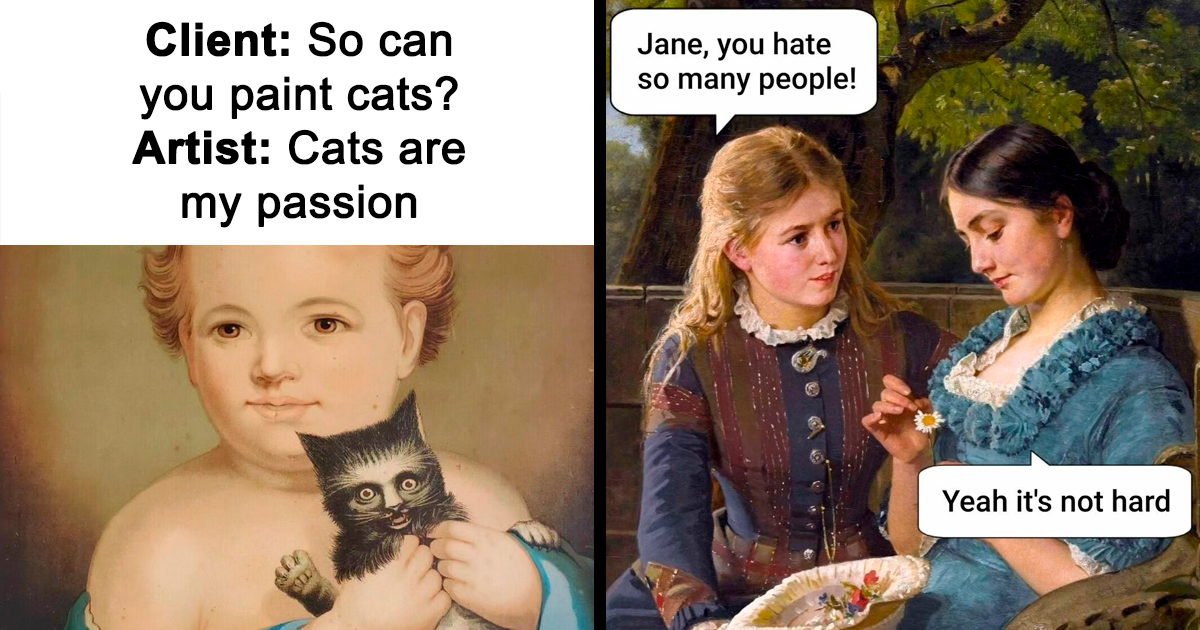
There are two kinds of people on the internet: those who politely admire classical paintings from a respectful digital distance, and those who see a 17th-century noblewoman clutching her pearls and immediately think, “That is exactly how I look when my phone battery hits 2%.” If you belong to the second group, congratulations: you are the target audience for one of Instagram’s most charmingly chaotic corners.
The beloved account behind these viral posts has built a loyal following by doing something wonderfully simple and surprisingly smart: pairing classical paintings with modern captions that make centuries-old art feel like it just posted from your group chat. The result is a scrollable collision of high culture and low-stakes everyday drama, where saints, aristocrats, peasants, cherubs, and vaguely alarmed women in bonnets suddenly seem to understand office politics, awkward dating, family tension, and the emotional devastation of being left on read.
That is the secret sauce of classical art memes. They are funny, yes, but they also reveal something else: human beings have always looked exhausted, dramatic, smug, confused, and mildly betrayed. The costumes change. The hairstyles get wilder. The lighting gets more Caravaggio. But the feelings? Those are timeless.
In a roundup built around 30 cleverly captioned classical paintings, the joke is never just the text. It is the uncanny recognition. One look at an old master painting and suddenly you are staring at your coworker during a Monday meeting, your cousin at Thanksgiving, your best friend after one iced coffee too many, or yourself pretending you are “totally fine” when life is clearly doing improv at your expense.
Why This Instagram Creator’s Posts Work So Well
What separates a beloved Instagram creator from a random meme account with a font addiction is curation. Anyone can slap modern slang onto old art. Not everyone can pick the exact painting where a woman’s expression says, without saying it, “I specifically asked for no drama.” The creator behind these posts understands that the funniest classical painting captions are not forced. They feel discovered.
That matters because classical paintings already come loaded with emotion. Renaissance, Baroque, Rococo, Neoclassical, Romanticevery era offered artists new ways to paint desire, panic, boredom, vanity, grief, irritation, gossip, status anxiety, and theatrical suffering. In other words, art history handed the internet an enormous archive of reaction images before reaction images were even a thing.
The smartest captions do not fight the painting. They unlock it. They take a solemn portrait and reveal an inner monologue. They take a crowded court scene and turn it into a group project disaster. They take a cherub with suspicious energy and transform him into the human embodiment of “I heard what you said.” The humor lands because the caption feels like it was always hiding inside the canvas, waiting for somebody with Wi-Fi and impeccable timing to let it out.
Why Classical Paintings Are Basically Prehistoric Memes
The facial expressions are doing most of the heavy lifting
Long before social media existed, painters were already experts in emotional exaggeration. Arched eyebrows, side-eyes, clenched mouths, overextended hands, tragic stares into the middle distanceclassical painters knew how to dramatize a moment. That is why so many old paintings convert so neatly into meme material. The face tells the story before the caption even arrives.
Modern meme culture thrives on instantly readable emotion. A great meme does not need a three-paragraph explanation. It hits you in one glance. Classical painting works the same way. You may not know the patron, the date, or the school, but you absolutely know when somebody in the painting is fed up.
Big drama makes small problems look hilarious
Part of the humor comes from mismatch. Classical paintings were often made to depict religious revelation, historical grandeur, moral allegory, or aristocratic prestige. Then a modern caption swoops in and turns all that seriousness into “when the waiter walks by with food that is not yours.” That contrast is comedy gold.
It is the same principle that makes a string quartet version of a ridiculous pop song funny. The form is grand. The content is gloriously petty. And somehow, that pettiness becomes even funnier when delivered through velvet sleeves, candlelight, and a cloud of symbolic anguish.
Art history has always had humor in it
There is also a deeper reason these posts feel so natural: humor and satire are not strangers to art history. Caricature, exaggerated expressions, comic prints, visual jokes, and satirical commentary have been part of the artistic tradition for centuries. So while these modern captions feel fresh, they are not completely alien to the spirit of visual culture. In a strange way, art memes are less of a rebellion against art history than a rowdy continuation of one of its livelier side streets.
What You Usually Get In A 30-Post Roundup Like This
A good set of 30 captioned classical paintings tends to cover the full emotional buffet of modern life. The paintings may be old, but the themes are aggressively current. Usually, the funniest posts fall into a few recognizable categories.
1. The group chat energy paintings
These are the ones with three to six figures all reacting differently to the same crisis. One looks horrified. One looks smug. One looks like they caused the problem. One appears spiritually absent. Put a modern caption on that and you have every chaotic text thread since the invention of the smartphone.
2. The workplace despair paintings
Nothing captures corporate exhaustion quite like a pale person in expensive fabric looking one inconvenience away from collapse. Add a line about meetings that should have been emails, and suddenly a museum-worthy portrait becomes an HR-adjacent masterpiece.
3. The dating and relationship paintings
Classical art is full of yearning, rejection, seduction, confusion, and spectacular misunderstanding. Which makes it ideal for jokes about mixed signals, bad flirting, accidental oversharing, and pretending not to care while caring with Olympic intensity.
4. The family drama paintings
If you have ever attended a holiday dinner where everybody claimed everything was “fine” while no one made eye contact, you already understand why old paintings of tense domestic gatherings are internet catnip.
5. The existential crisis paintings
Some paintings do not even need much help. A dramatic ceiling stare, a collapsed posture, a hand thrown across the foreheadthese images were practically born to represent the modern condition of opening your inbox and immediately regretting being literate.
6. The pure nonsense paintings
And then there are the posts that make absolutely no scholarly sense and are all the better for it: a duke becoming the patron saint of overthinking, a cherub doubling as a tiny menace, a pastoral scene somehow turning into a joke about online shopping. No footnotes. Just vibes.
The Real Achievement: Making Art Feel Approachable
It would be easy to dismiss this trend as a silly internet pastime, but that would miss the point. One reason these captioned paintings resonate is that they make art feel available. They remove the intimidation factor that still clings to a lot of classical art. You do not need to memorize dynasties, brushwork terminology, or the politics of 17th-century Europe to laugh at a woman in a gilded frame who looks exactly like someone hearing “per my last email.”
That accessibility matters. Museums and art institutions have spent years trying to meet audiences where they actually live, which increasingly means online. Social media has changed how people encounter art, discuss it, remix it, and build emotional relationships with it. A meme account that turns old paintings into contemporary jokes may not look like traditional arts education, but it often functions as an informal gateway drug to curiosity.
Some readers arrive for the joke and leave wanting to know who painted the work. Others begin to recognize visual styles, recurring themes, and historical moods. Even when the first response is laughter, the second is often attention. And attention is where appreciation begins.
Why These Posts Never Quite Get Old
Plenty of meme formats burn bright and die in a weekend. Classical painting captions keep surviving because the source material is nearly bottomless and the emotional content is inexhaustible. Human beings remain gloriously predictable. We still gossip. We still overreact. We still want validation, snacks, naps, reassurance, revenge, and one uninterrupted day without notifications.
That gives this creator an endless supply of comic tension. The paintings carry the gravitas. The captions bring the deflation. Together, they create that delightful split-second effect where your brain says, “This is a masterpiece,” followed immediately by, “This is also me when the barber spins the chair around.”
There is also something deeply satisfying about seeing elite, canonical, museum-approved imagery pressed into service for ordinary human nonsense. It reminds us that art is not a fossil. It can still move, still surprise, still accommodate a little irreverence without collapsing into dust. A joke does not automatically cheapen a painting. Sometimes it wakes it up for people who might never have stopped scrolling otherwise.
Why This Beloved Creator Has Earned The Affection
The admiration for this Instagram creator is not only about being funny. It is about tone. The account manages to be playful without sounding desperate, clever without sounding smug, and contemporary without flattening every painting into the exact same joke. That balance is harder than it looks.
Good art meme curation requires visual instinct, comic rhythm, and restraint. The caption must be short enough to hit fast, specific enough to feel fresh, and universal enough to travel. Too generic, and it is forgettable. Too niche, and it dies on impact. The best posts thread the needle by making you feel like the painting has somehow become a witness to modern life.
And maybe that is why people keep coming back. In a crowded internet full of noise, these posts offer a tiny burst of recognition. They say: yes, your stress is ridiculous, your life is dramatic, your emotions are ancient, and somewhere in a European oil painting, a stranger from centuries ago appears to understand all of it.
Conclusion
30 Classical Paintings Cleverly Captioned By This Beloved Instagram Creator is the kind of premise that sounds like a joke and ends up revealing something surprisingly sincere. These posts work because they turn classical art into a living conversation. They prove that old paintings are not trapped in the past. They can still flirt, complain, judge, panic, sulk, and absolutely thrive in the algorithm.
More importantly, they prove that humor is one of the fastest ways into art. Not every viewer needs a lecture. Sometimes all it takes is one perfect caption, one overly dramatic hand gesture, and one face from 400 years ago that somehow looks exactly like you when your plans get canceled after you already put on jeans.
That is why this beloved Instagram creator’s work sticks. It is not just funny. It is weirdly human. And in the middle of all that velvet, varnish, symbolism, and old-world seriousness, that humanity is what makes the joke land so beautifully.
Extended Reflection: What It Feels Like To Scroll Through 30 Captioned Masterpieces
There is a very specific joy in scrolling through 30 captioned classical paintings in one sitting, and it is different from the joy of looking at ordinary memes. Regular memes are fast food. These are more like unexpectedly delicious leftovers served on fine china. You arrive expecting a quick laugh and somehow end up lingering.
Part of the experience is the surprise of recognition. You are not just laughing at a joke. You are laughing at the collision between two worlds that should not fit together but absolutely do. A solemn portrait from centuries ago suddenly becomes the emotional twin of your roommate hearing the rent went up. A mythological scene turns into the visual equivalent of “I said I was over it, not healed.” A sorrowful saint becomes the unofficial mascot of everyone who opened social media for five minutes and came away with ten new anxieties.
That emotional whiplash is strangely comforting. The paintings remind you that people have always been theatrical creatures. They loved status, gossip, beauty, symbolism, romance, jealousy, spectacle, and being perceived correctly. We like to imagine the past as dignified and distant, but these images keep betraying the truth. People have always had faces that said too much. They have always had body language that screamed, “This could have been an email.”
Scrolling through a full set of 30 also creates a rhythm. At first, you chuckle at the novelty. By post six, you are pointing at your screen like a conspiracy theorist because one figure looks exactly like your aunt when someone brings up politics at dinner. By post twelve, you are convinced that half of Western painting was secretly preparing for social media. By post twenty, you begin to appreciate the creator’s craft. You notice the precision of the selections. The timing. The restraint. The way one tiny sentence can transform a museum object into a fully modern mood.
And then something even better happens: the humor starts making you look harder. You notice the drapery, the lighting, the composition, the glances between figures, the odd little hand positions painters loved so much. You start appreciating the paintings not despite the joke, but partly because of it. The caption gets you in the door; the artwork convinces you to stay.
There is also a social pleasure to the whole experience. These are the kinds of posts you send to friends with no explanation beyond, “You.” They become shorthand. They let people say, “This is my mood,” without composing a speech. In that way, the old paintings become new emotional tools. They are no longer just historical objects. They become reaction images, personality tests, inside jokes, and tiny mirrors.
Maybe that is why the format feels so enduring. It does not simply recycle art for clout. At its best, it reanimates it. It lets the old masters stumble into the present and discover that human absurdity is still thriving. Bills still arrive. Crushes still confuse us. Family dinners still turn tense. Work still drains the spirit. And every one of those situations can apparently be visualized by somebody wearing brocade and looking one second away from fainting decoratively.
By the end of a 30-post roundup, you are left with more than a few laughs. You get the strange and lovely sense that history is less remote than you thought. Not because the past was exactly like the present, but because the people in it were no less dramatic, no less emotional, and no less vulnerable to nonsense. The captions are modern. The feelings are not. That is why the experience lingers. It is funny, but it is also oddly intimate. Across hundreds of years, a painted stranger catches your eye and says, without saying a word, “Yeah, I know. Me too.”