Editorial note: This article is written as original commentary and analysis. It discusses memorable Key & Peele sketches, characters, and comedic ideas without reproducing copyrighted sketch dialogue.
Why Key & Peele Still Feels Like Comedy Royalty
Some comedy shows age like milk. Key & Peele aged like a perfectly timed side-eye. Created by Keegan-Michael Key and Jordan Peele, the sketch series blended cinematic production, sharp social commentary, surreal escalation, and characters so memorable they practically moved into the internet and started paying rent in GIFs.
What made the show special was not just that it was funny. Plenty of shows are funny. Key & Peele had range. One sketch could roast football culture, another could unpack code-switching, and another could turn a normal restaurant interaction into a psychological thriller performed by two men who absolutely should not be trusted near valet parking. The best Key & Peele jokes did what great sketches do: they started with a recognizable human truth, twisted it, polished it, then launched it into orbit wearing a very serious expression.
This hall of fame list celebrates 20 Key & Peele jokes and sketch concepts that still deserve prime placement in the comedy museum, right between “perfect timing” and “how did they keep a straight face?”
20 Key & Peele Jokes That Belong In The Hall Of Fame
1. Substitute Teacher
The “Substitute Teacher” sketch is probably the first ballot Hall of Famer. The genius is simple: Mr. Garvey brings the suspicion, intensity, and battle-tested classroom energy of his past teaching experience into a quiet suburban class where students are mostly just trying to answer attendance. The joke flips the familiar experience of mispronounced names, turning it into a comic power struggle. It is loud, tense, absurd, and strangely educational. Also, no one has ever said “Aaron” the same way again.
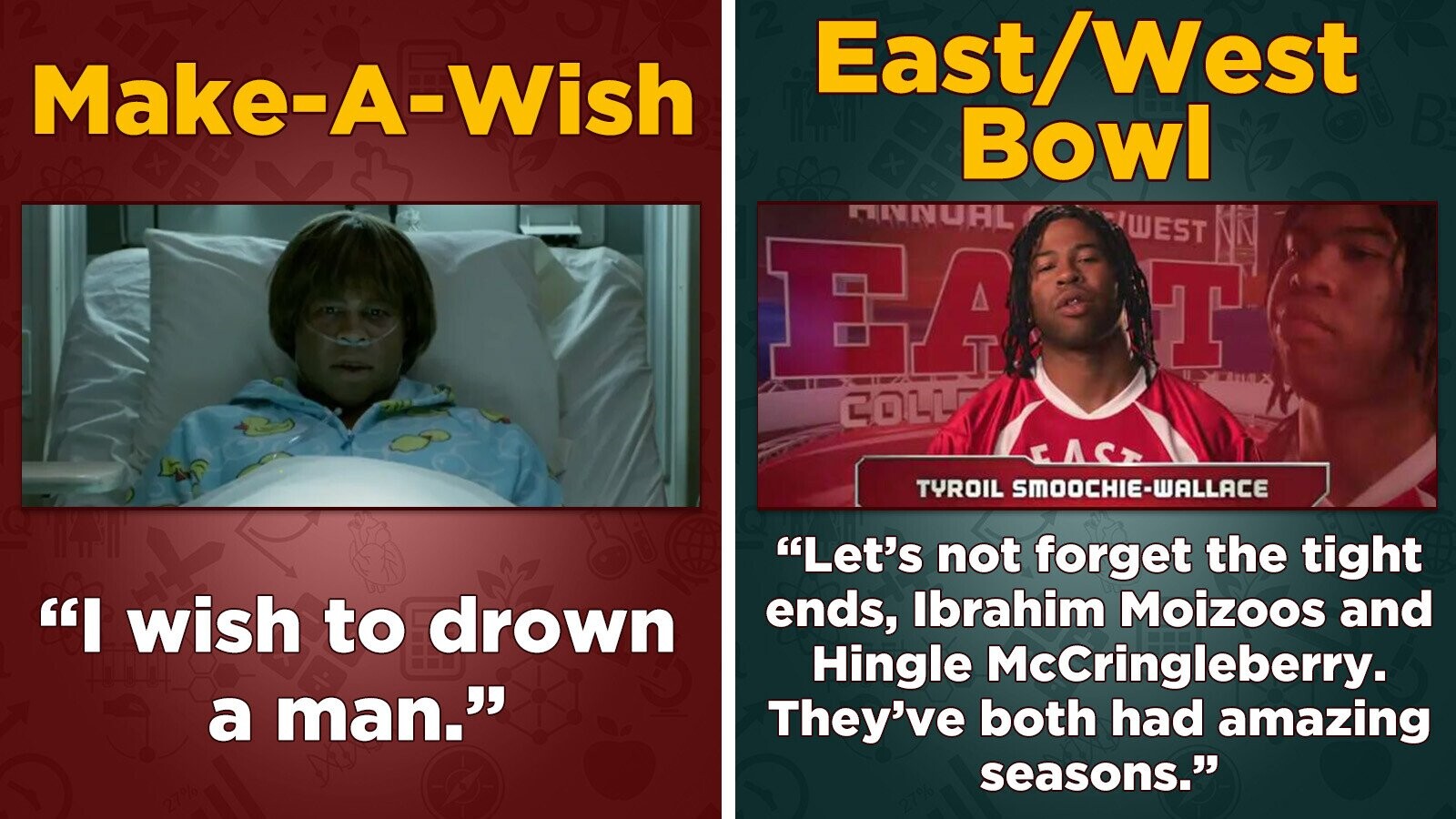
2. East/West College Bowl
Sports introductions already sound like theater. Key & Peele merely pushed them one inch past reality, then another mile into glorious nonsense. “East/West College Bowl” works because it understands the strange music of televised football: the dramatic camera angles, the stone-faced players, the school names, and the escalating creativity of athlete introductions. The names are the joke, but the commitment sells it. Every player is introduced like a mythological warrior who also might have majored in experimental jazz.
3. Obama’s Anger Translator
Luther, President Obama’s anger translator, is one of the show’s most culturally durable ideas. The premise is brilliant because it externalizes what a public figure cannot always say. Jordan Peele plays Obama with careful restraint, while Keegan-Michael Key’s Luther becomes the emotional thunderstorm behind the calm weather report. The sketch is funny on the surface, but underneath it is about image management, politics, race, respectability, and the pressure to remain composed while everyone else gets to be loud.
4. The Valets
The Valets are pure joy in uniform. These characters celebrate pop culture with the kind of breathless enthusiasm usually reserved for lottery winners and people who just found extra fries at the bottom of the bag. Their mispronunciations and pluralized celebrity names became part of the joke, but the real comedy comes from their sincerity. They are not mocking movies; they are worshiping them. If fan culture had two parking attendants as saints, it would be these guys.
5. Continental Breakfast
“Continental Breakfast” turns a hotel buffet into an aristocratic adventure. One man discovers the small pleasures of travel food and behaves as though he has entered a palace of endless luxury. The joke works because the stakes are hilariously tiny. A banana, a pastry, a yogurt cupnothing is glamorous, yet the character treats every item like a jewel from a royal vault. It is a perfect example of Key & Peele finding opera-sized emotion inside everyday ridiculousness.
6. Meegan And Andre
Meegan and Andre are a relationship red flag factory with excellent comic timing. Their sketches take familiar couple arguments and inflate them until every small disagreement becomes a public emotional weather event. The humor is not just that Meegan is dramatic or Andre is trapped in romantic quicksand. It is that both characters are so specific. You can feel the history between them, which makes every apology, exit, return, and meltdown feel like the latest chapter in a very chaotic novel.
7. The Slap-Ass Sports Interview
Sports culture loves tradition, even when the tradition is objectively strange. This sketch takes one locker-room habit and examines it with the seriousness of an investigative report. The brilliance lies in how the joke escalates from playful camaraderie into a full institutional crisis. Key & Peele often found comedy by asking, “What if everyone treated this silly thing like a major social issue?” Here, the answer is a sports sketch that runs like a workplace compliance seminar gone feral.
8. Wendell’s Pizza Order
Wendell is one of Jordan Peele’s most painfully funny creations: lonely, imaginative, and wildly committed to making his fictional life sound real. In the pizza-order sketch, a simple phone call becomes an elaborate performance of fake friends, fake plans, and fake confidence. The joke is not cruel because the character is oddly lovable. We laugh at the lie, but we also recognize the human desire behind it: nobody wants to look like they are ordering all that pizza alone.
9. I Said It, But Quietly
One of the show’s most famous relationship sketches centers on men performing bravery only when they are absolutely sure nobody dangerous can hear them. The exact words are less important than the structure: exaggerated masculine confidence collapses the second consequences enter the room. Key & Peele were masters at exposing how people narrate themselves as heroes in private while behaving very differently in real life. It is a joke about ego, fear, and the ancient art of pretending you meant to whisper.
10. Black Ice
“Black Ice” is a master class in double meaning. On one level, it is a weather segment. On another, it becomes a satirical conversation about fear-based language and coded assumptions. The sketch is clever because it never stops being a local-news bit. The anchors, warnings, and dramatic tone all feel familiar. Then the phrasing keeps widening the meaning until the audience realizes the joke has been operating on two tracks the entire time.
11. A Cappella Club
“A Cappella Club” uses one of the show’s favorite engines: social insecurity. A group that seems friendly becomes a battlefield of identity, status, and performance. The comedy comes from watching characters try to define who belongs, who gets attention, and who owns a particular style. Like many great Key & Peele sketches, it begins with a recognizable campus or club setting and slowly reveals the emotional politics hiding behind all that cheerful harmony.
12. The Flicker
“The Flicker” takes workplace suspicion and gives it horror-movie lighting. Two colleagues become obsessed with whether a tiny facial expression means something deeper. The joke is incredibly relatable because humans are professional overthinkers. A glance, a pause, a half-smilesuddenly the brain becomes a courtroom with no evidence and too many exhibits. The sketch turns social anxiety into a thriller, proving that sometimes the scariest monster is your own interpretation of someone’s eyebrow movement.
13. Prepared For Terries
The airplane sketch often remembered by fans as “Prepared for Terries” finds comedy in fear, bravado, and very questionable emergency planning. It works because the characters treat a terrifying possibility like a chance to display personal toughness. Key & Peele understood that panic and confidence are funnier when they arrive at the same time. The sketch is ridiculous, but it also pokes at the fantasy that ordinary people can improvise themselves into action-movie heroes at cruising altitude.
14. Soul Food
Food scenes are perfect for Key & Peele because restaurants are where identity, insecurity, and performance all sit at the same table. “Soul Food” builds from the pressure to seem authentic, adventurous, or culturally fluent. Each order becomes less about hunger and more about pride. The joke lands because everyone has, at some point, ordered with their ego instead of their stomach. That is how lunch becomes a dare and the menu becomes a battlefield.
15. Text Message Confusion
Few modern problems are as universal as reading tone into a text message. Key & Peele’s take on digital misunderstanding turns small punctuation choices and short replies into emotional explosives. The comedy is painfully accurate: one person thinks the conversation is casual, while the other is building an entire dramatic universe from a few words on a screen. It is a perfect sketch idea because technology changed communication, but it did not make humans any less ridiculous.
16. Auction Block
Some Key & Peele sketches used uncomfortable historical settings to expose modern vanity and insecurity. “Auction Block” is memorable because it flips expected emotional responses in a way that is risky, pointed, and absurd. The sketch is not just trying to shock. It examines ego in the worst possible context, showing how people can turn almost anything into competition. That is part of the show’s power: it could make audiences laugh while also making them sit up straighter.
17. Rap Album Confessions
Key & Peele loved puncturing performance, and their rap-related sketches often played with the gap between image and reality. The “tough persona meets ordinary human problem” format is a comedy engine that never runs out of gas. Whether the target is exaggerated bravado, studio posturing, or the pressure to seem harder than one feels, the joke is always rooted in contrast. The bigger the image, the funnier the tiny insecurity hiding behind it.
18. The Weird Party Guest
Key and Peele repeatedly proved that parties are basically laboratories for awkwardness. Their sketches about parties, costumes, impressions, and social boundaries work because everyone recognizes the person who takes a bit too far. The show’s Halloween and impression-based premises often turn enthusiasm into a hostage situation. The joke is not simply that someone is weird; it is that the room politely tries to survive the weirdness while pretending everything is normal. That is civilization in one sketch.
19. Gremlins 2 Brainstorm
One of the great Key & Peele pleasures is watching a sketch become a tribute and a roast at the same time. Their “Gremlins 2” brainstorming bit imagines the creation of a famously chaotic sequel as the result of one person saying yes to every bizarre idea. It is funny because it feels both impossible and strangely plausible. The sketch celebrates Hollywood excess by making the creative meeting more unhinged than the movie itself.
20. The Final Season’s Bigger Swings
By the final season, Key & Peele had earned the right to go big. Musical numbers, social allegories, genre parodies, and emotional turns showed that the series was not just collecting punchlines. It was building miniature films. The best later sketches feel ambitious without losing the central joke. That balance is why the show’s legacy remains strong: it respected comedy as craft, not filler between commercials.
What Makes These Key & Peele Jokes Hall Of Fame Material?
The best Key & Peele jokes usually have three ingredients. First, they begin with something familiar: a teacher taking attendance, athletes introducing themselves, a couple fighting, a hotel breakfast, a political speech. Second, they reveal a hidden tension: identity, pride, fear, code-switching, status, or insecurity. Third, they escalate with total commitment. The actors never wink at the camera. The world of each sketch treats the absurd premise as completely real.
That commitment matters. Sketch comedy fails when it behaves like it knows it is funny. Key & Peele often did the opposite. Their characters believed in the moment so intensely that the audience had no choice but to follow. Mr. Garvey believes the students are testing him. Luther believes anger needs a spokesperson. The Valets believe movie stars deserve opera-level praise. Wendell believes his imaginary social life can survive one more detail. These characters are ridiculous, but they are not empty.
Experience: Watching Key & Peele In The Wild
The funny thing about Key & Peele is that the sketches do not stay on the screen. They escape. They show up in classrooms, group chats, fantasy football leagues, office jokes, reaction GIFs, and those moments when someone mispronounces a name and the entire room silently thinks of Mr. Garvey. That is when a comedy sketch becomes culture. You are no longer just remembering the joke; you are using it as a shared language.
Watching Key & Peele with friends is its own experience. The first laugh usually comes from the premise. The second comes from recognition. The third comes later, when someone repeats the idea in real life at the perfect moment. A friend sees a tiny continental breakfast at a budget hotel and suddenly behaves like royalty. Someone drafts a dramatic text message, and everyone remembers how quickly digital tone can become a disaster. A sports broadcast introduces a player with an unusual name, and half the room immediately shifts into East/West Bowl mode.
The sketches also reward rewatching because they are built with details. Background reactions matter. Costumes matter. Camera angles matter. The show often looked more polished than sketch comedy had to look, which made the absurdity hit harder. A ridiculous idea filmed like a serious movie becomes funnier because the production refuses to admit anything silly is happening. That is why so many sketches still feel fresh. They were not disposable internet clips; they were carefully shaped comic scenes.
There is also a personal layer to why these jokes last. Key & Peele often turned everyday social pressure into comedy. Many viewers know what it feels like to change how they speak in different rooms, to worry about how they are being perceived, to pretend confidence they do not fully possess, or to laugh through an awkward situation because the alternative would be screaming into a decorative pillow. The show understood that identity is not a lecture. Sometimes identity is a football intro, a text message, a buffet tray, or a substitute teacher with a clipboard and the emotional energy of a thunderclap.
For writers, creators, and comedy fans, the biggest lesson is this: specificity wins. Key & Peele did not write “a funny teacher.” They wrote Mr. Garvey. They did not write “sports names are weird.” They built an entire televised universe where each athlete seemed to arrive from a different planet with a full scholarship. They did not write “Obama is calm.” They invented Luther, the emotional pressure valve. That level of specificity is why the sketches became quotable without needing to be explained.
In the end, the Hall of Fame case is easy. Key & Peele jokes survive because they combine intelligence with silliness, style with substance, and social observation with pure clown energy. They can be analyzed in essays, shared as memes, and laughed at after midnight when everyone is too tired to be sophisticated. That is rare. That is powerful. That is comedy with a permanent parking spot.
Conclusion
The greatest Key & Peele jokes are not just memorable because they are loud, quotable, or perfectly acted. They endure because they are built on recognizable truths. The show understood how people perform identity, hide insecurity, compete for status, misunderstand each other, and turn tiny situations into emotional emergencies. Then it made all of that extremely funny.
From “Substitute Teacher” to “East/West College Bowl,” from Luther to the Valets, these sketches deserve Hall of Fame status because they continue to live where comedy matters most: in everyday conversation. Key & Peele did not simply create viral sketches. They created comic reference points that still help people explain awkwardness, enthusiasm, pride, panic, and the mysterious art of saying a normal name like it contains a trapdoor.