Some people see a squirrel in the attic and assume the house is haunted. Others, according to their own accounts, see hell, demons, flaming cities, shadowy figures at the foot of the bed, or dead loved ones standing in the doorway as calmly as a neighbor asking to borrow sugar. Human beings are vision-making machines, and occasionally the machine prints something so terrifying that the owner never quite recovers the emotional security deposit.
This article looks at 10 soul-destroying visions experienced by real people, from famous religious mystics and near-death experiencers to eerie reports that sit somewhere between folklore, faith, psychology, and history. The goal is not to prove every vision literally happened as described. It is to explore what real people reported, why those visions mattered, and why certain imagesfire, darkness, judgment, suffocation, separation, and the sudden presence of “someone else”continue to shake the human mind like a haunted snow globe.
What Makes a Vision “Soul-Destroying”?
A disturbing vision is not just a scary image. A horror movie can make you spill popcorn; a soul-destroying vision can rearrange a person’s life. These accounts often share three traits: they feel more real than a dream, they carry moral or emotional weight, and they leave a permanent mark. The people involved may become more religious, more anxious, more compassionate, more cautious, or simply more convinced that reality has a trapdoor.
Many visions occur under extreme conditions: illness, grief, trauma, sleep paralysis, critical care, religious ecstasy, or near-death states. Others belong to old mystical traditions where visions were interpreted as warnings, revelations, or spiritual tests. Whether viewed through faith or neuroscience, the experiences are undeniably humanand deeply unsettling.
1. St. Teresa of Ávila’s Vision of Her Own Hell
St. Teresa of Ávila, the 16th-century Spanish Carmelite mystic, described many religious experiences, but one of the bleakest was her vision of hell. In her account, she was led into a cramped, suffocating place that felt like a spiritual prison built for one. Forget cartoon pitchforks and theatrical flames. Teresa’s hell was intimate, claustrophobic, and personally tailoredthe afterlife equivalent of being locked forever in a closet designed by a very angry architect.
What made this vision so disturbing was not only the pain she described, but the certainty attached to it. The space seemed to communicate finality: no exits, no fresh air, no “Oops, wrong room.” Teresa wrote that the memory remained physically painful years later. That detail matters. The vision was not a quick nightmare; it became part of her spiritual biography and helped shape her intense focus on repentance, prayer, and reform.
2. St. Teresa’s Vision of Demons Around a Dead Man
Teresa also reported seeing demons during a burial-related episode involving a man she believed had lived sinfully. According to later retellings of her mystical writings, she saw grotesque spirits surrounding the corpse and attempting to claim the man’s soul. The image is brutal because it turns death, already not famous for its party atmosphere, into a contested spiritual tug-of-war.
The body in the room was not merely a body. In Teresa’s vision, it became a battlefield. The demons were not abstract symbols of temptation; they were active, hungry presences. For a believer in the 16th century, such an image would have carried enormous force. It suggested that moral choices did not simply fade at death. They followed a person like unpaid bills with claws.
3. The Children of Fátima and the Vision of Hell
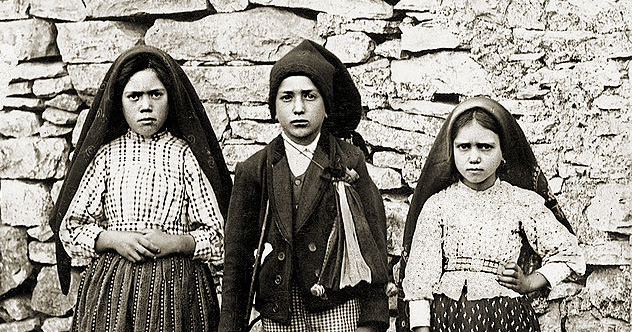
In 1917, three shepherd children in Fátima, PortugalLúcia dos Santos and her cousins Francisco and Jacinta Martoreported apparitions of the Virgin Mary. The Roman Catholic Church later recognized the apparitions as worthy of belief. Among the most frightening parts of the Fátima story is the children’s reported vision of hell.
The vision, as preserved in Catholic tradition, included fire, suffering souls, and demonic figures. What makes the account especially chilling is the age of the witnesses. These were children, not medieval theologians competing in a “Who can terrify the parish?” contest. The reported vision deeply affected them, especially Jacinta, who became known for intense prayer and sacrifice afterward.
From an SEO standpoint, Fátima remains one of the most searched religious vision stories because it combines children, prophecy, public devotion, and apocalyptic imagery. From a human standpoint, it is unsettling because it asks a question no one wants in the suggestion box: What if the invisible moral universe is more serious than we think?
4. The Third Secret of Fátima: A Ruined City and a Fallen Bishop
The Third Secret of Fátima, released by the Vatican in 2000, contains symbolic imagery that feels like a fever dream written during wartime. The vision describes a “bishop dressed in white,” widely interpreted in Catholic commentary as a pope, passing through a ruined city filled with corpses before being killed near a cross.
This is not jump-scare horror. It is slow, ceremonial dread. The landscape is burned out. The figure walks through devastation. Prayer and violence collide. The Vatican connected the vision with 20th-century persecution and the attempted assassination of Pope John Paul II in 1981, though interpretations continue to vary.
The power of the Third Secret comes from its cinematic spareness. It does not explain too much. It gives the mind enough rubble, blood, and silence to do the rest of the damage itself. Human imagination, unfortunately, is a very talented unpaid intern.
5. Pope Leo XIII’s Reported Vision of Spiritual Warfare
One famous Catholic tradition says Pope Leo XIII experienced a terrifying vision after Mass in the late 19th century. Accounts differ in detail, but the broad story claims he perceived a confrontation involving Satan, the Church, and a period of intense spiritual trial. This experience is often linked to the Prayer to St. Michael the Archangel.
What gives the story its soul-darkening quality is scale. Unlike Teresa’s personal hell or Fátima’s children seeing a brief infernal scene, this vision is often described as a panorama of historical suffering: conflict, persecution, and spiritual attack stretched across time. Whether read literally, symbolically, or devotionally, it reflects a fear that evil is not random but organized.
That idea is psychologically potent. Ordinary bad luck is one thing. A universe with paperwork, hierarchy, and management-level evil? That is the kind of concept that makes even brave people check the locks twice.
6. Howard Storm’s Near-Death Descent
Howard Storm, a former art professor, became known for describing a frightening near-death experience during a medical emergency in Paris in 1985. In his account, he found himself separated from his body and drawn into a gray, hostile realm by figures that first seemed helpful but became cruel. The atmosphere darkened. The beings mocked and attacked him. It was less “walk toward the light” and more “the hallway has teeth.”
Storm later interpreted the experience through a Christian lens and said it transformed his life. Near-death experiences are reported across cultures and may include out-of-body sensations, tunnels, lights, life reviews, encounters with deceased relatives, or distressing realms. Storm’s account belongs to the darker category: the NDE as warning, confrontation, and moral shock.
Whether one sees it as spiritual reality, altered consciousness, or a crisis-generated narrative, the effect on Storm was dramatic. A vision does not need universal agreement to change a life. It only needs to feel absolutely real to the person inside it.
7. George Ritchie’s Vision Beyond Death
George G. Ritchie, later a physician and psychiatrist, reported a near-death experience as a young soldier during World War II. His book Return from Tomorrow became influential in the modern discussion of near-death experiences. Ritchie described an out-of-body state and encounters with spiritual realities that included disturbing scenes of souls trapped by destructive desires.
The most haunting element is not simply punishment. It is repetition. In Ritchie’s account, some beings seemed imprisoned by the same cravings, anger, or self-obsession that had ruled them in life. That is a terrifying idea because it turns character into geography. You do not merely go somewhere after death; you become unable to escape what you have become.
Modern readers may interpret the story in many ways. Still, its emotional logic is strong: the worst prison is not always built from walls. Sometimes it is built from habits, resentments, and the refusal to love anyone beyond the royal kingdom of “me.”
8. St. Gemma Galgani and the Nightly Devil
St. Gemma Galgani, an Italian mystic who died in 1903 at only 25, is remembered for intense spiritual experiences, including visions, ecstasies, and the stigmata. Devotional accounts also describe terrifying confrontations with the devil. She reportedly experienced frightening voices, violent attacks, and demonic appearances.
One reason Gemma’s story still fascinates readers is the contrast. She is often portrayed as gentle, devout, and physically fragile, yet her visionary world was anything but soft-focus holy-card lighting. It contained aggression, mockery, and spiritual intimidation. If Teresa’s visions feel monastic and theological, Gemma’s feel personal and physicalas if the invisible world had decided to stop sending emails and start kicking the furniture.
For believers, her visions reveal the cost of sanctity. For skeptics, they may suggest illness, stress, sleep disturbance, or religiously shaped perception. Either way, the accounts show how terrifying visions can become part of a person’s identity and legacy.
9. The Garabandal Warning and Apocalyptic Fear
In the early 1960s, four girls in San Sebastián de Garabandal, Spain, claimed to receive Marian apparitions. Unlike Fátima, Garabandal has not received the same level of official Catholic approval, and its status remains controversial. Still, the reported visions attracted global attention, especially the so-called Warning and Chastisement.
The Warning, as described by followers of the apparition claims, involves a future moment when every person sees the state of their soul. That is a deeply unnerving concept. Imagine your entire moral search history projected in high definition, with no delete button and no helpful “forgot password” link. The Chastisement imagery, depending on the account, becomes even darker, involving catastrophic purification if humanity does not change.
Garabandal’s power lies in psychological exposure. Many apocalyptic visions frighten people with external destruction: fire, blood, war, collapsing cities. Garabandal frightens by turning the spotlight inward. The monster is not outside the village. The monster is the truth about the self.
10. The Burning Hand of Hell
The “burning hand” story is one of those religious horror anecdotes that survives because it has exactly the right ingredients: a secret romance, a late-night visitation, a burned mark, and a dead man with terrible timing. In the tale, a woman is visited by her deceased lover, who leaves a fiery mark as proof of damnation.
Historians and skeptics rightly treat such stories cautiously. They often travel through devotional literature, sermons, and retellings rather than court-quality documentation. But as a vision story, it is brutally effective. The dead do not return to explain compound interest or say the soup needed salt. They return with a message: consequences are real.
The image of the burned hand is powerful because it makes the invisible visible. Hell is no longer an abstract doctrine. It has fingerprints. In folklore, that is often the point: a spiritual warning becomes unforgettable when it leaves a mark on the ordinary world.
Why These Visions Still Disturb Us
These stories come from different centuries, countries, and belief systems, yet they share emotional DNA. They involve judgment, hidden truth, separation from love, unbearable confinement, and the fear that reality is layered. The ordinary worldbeds, churches, hospital rooms, fields, corridorssuddenly opens into something larger and darker.
They also remind us that visions are not only visual. Many include sound, touch, smell, pressure, or an overwhelming sense of presence. That is why they can feel more convincing than dreams. A dream may fade over breakfast. A vision that includes a hand on the chest, a voice in the room, or the sense of being watched can stay for decades.
Additional Real-Life Experiences Related to Soul-Destroying Visions
Not every terrifying vision belongs to a monastery, a shrine, or a near-death memoir. Modern medicine has documented many experiences that ordinary people describe as every bit as frightening. These accounts do not always come with angels or prophecies. Sometimes they come with a hospital bracelet, a sleep disorder, a migraine aura, or grief so heavy it starts borrowing the furniture of perception.
Sleep Paralysis: The Bedroom Intruder
Sleep paralysis may be the most democratic horror experience on Earth. It does not require a castle, a curse, or even dramatic background music. A person wakes up unable to move, senses a presence in the room, and may see a shadowy figure nearby. Many report chest pressure, suffocation, or the feeling that someone is sitting on them. The brain is partly awake while the body remains in REM-related paralysis, which is a perfectly reasonable explanation that does absolutely nothing to make the experience feel less like being mugged by a nightmare in your own bed.
ICU Delirium: The Hospital That Turns Into a Trap
Patients recovering from critical illness often report dreams, hallucinations, or delusional memories from intensive care. Tubes, alarms, sedation, pain, infection, and sleep disruption can produce terrifying inner stories. Some patients believe they were kidnapped, tortured, experimented on, or trapped in an elaborate conspiracy. Later, when they learn that doctors and nurses were trying to save them, the emotional confusion can be enormous. The body survives; the mind has to sort through a horror film it accidentally directed under anesthesia.
Bereavement Visions: When the Dead Appear at Home
Many grieving people report sensing, hearing, or seeing someone who has died. These experiences can be comforting, frightening, or both. A widow may see her spouse in a favorite chair. A parent may hear a child’s voice. A person may feel a familiar presence in the room. Clinical research suggests these experiences are common and not automatically signs of mental illness. Still, they can be soul-shaking because they blur the border between memory and presence. The heart says, “They are here.” The calendar says, “No, they are not.” That argument can knock the breath out of a person.
Charles Bonnet Syndrome: When Vision Loss Creates Visitors
People with significant vision loss may experience vivid visual hallucinations known as Charles Bonnet syndrome. They may see faces, animals, patterns, strangers, or scenes that are not actually present. Many remain fully aware the images are not real, which makes the experience less delusional but not necessarily less startling. Imagine losing part of your sight and having your brain compensate by installing surprise guests in the living room. The brain, bless its overachieving little circuits, sometimes fills silence with noise and darkness with pictures.
PTSD Flashbacks: Seeing the Past in the Present
For people with post-traumatic stress disorder, intrusive visual memories can feel less like remembering and more like being dragged back into the event. A sound, smell, location, or anniversary can trigger images that arrive with panic, physical tension, and a sense of immediate danger. The person may know intellectually that the trauma is over, but the body reacts as if the threat has returned. That is the cruelty of flashbacks: the past does not ask permission before entering the room.
Migraine Aura: The Beautiful Vision That Feels Like Doom
Migraine aura can produce zigzag lines, shimmering lights, blind spots, flashes, or strange distortions. Many people experience these visual symptoms before or during a migraine attack. The patterns can be strangely beautiful, like stained glass designed by a nervous electrician, but the first episode can be terrifying. People may fear stroke, blindness, or something supernatural. A migraine aura shows how thin the line can be between wonder and panic when the visual world suddenly stops obeying the usual rules.
These modern experiences help explain why ancient vision stories still feel believable to many readers. The human brain is capable of producing images that are vivid, meaningful, and emotionally devastating. Sometimes the cause is spiritual belief. Sometimes it is grief, trauma, low oxygen, neurological activity, medication, sleep disruption, or sensory loss. But the impact can be real either way. A vision does not have to be externally verifiable to change the person who saw it.
Conclusion: The Dark Mirror of Human Vision
The most soul-destroying visions are not always the bloodiest or loudest. They are the ones that seem to reveal something ultimate: the condition of the soul, the cost of cruelty, the reality of death, the persistence of grief, or the terrifying independence of the mind. St. Teresa’s cramped hell, the Fátima children’s fire, Pope Leo XIII’s spiritual battle, Howard Storm’s dark corridor, Gemma Galgani’s demonic assaults, and modern sleep-paralysis intruders all point to the same uncomfortable truth: human beings do not only live in the world they can touch. They also live in the world they can imagine, remember, fear, and believe.
That inner world can heal, inspire, and comfort. It can also produce visions that feel like someone opened the basement door of reality and forgot to close it. Whether these experiences are interpreted as religious warnings, neurological events, trauma responses, or mysteries still waiting politely in the lobby of science, they deserve more than a cheap laugh or a lazy shrug. They show how fragile perception can beand how powerful.
So yes, some visions can destroy a person’s peace. But they can also rebuild a life, redirect a conscience, or force a question that ordinary daylight keeps avoiding: What are we, really, when the lights go out?
Editorial note: This article presents historical and personal visionary accounts as reported experiences, not as medical diagnosis or proof of supernatural events. Anyone experiencing distressing visions, hallucinations, flashbacks, sleep paralysis, or sudden visual changes should consider speaking with a qualified healthcare professional.