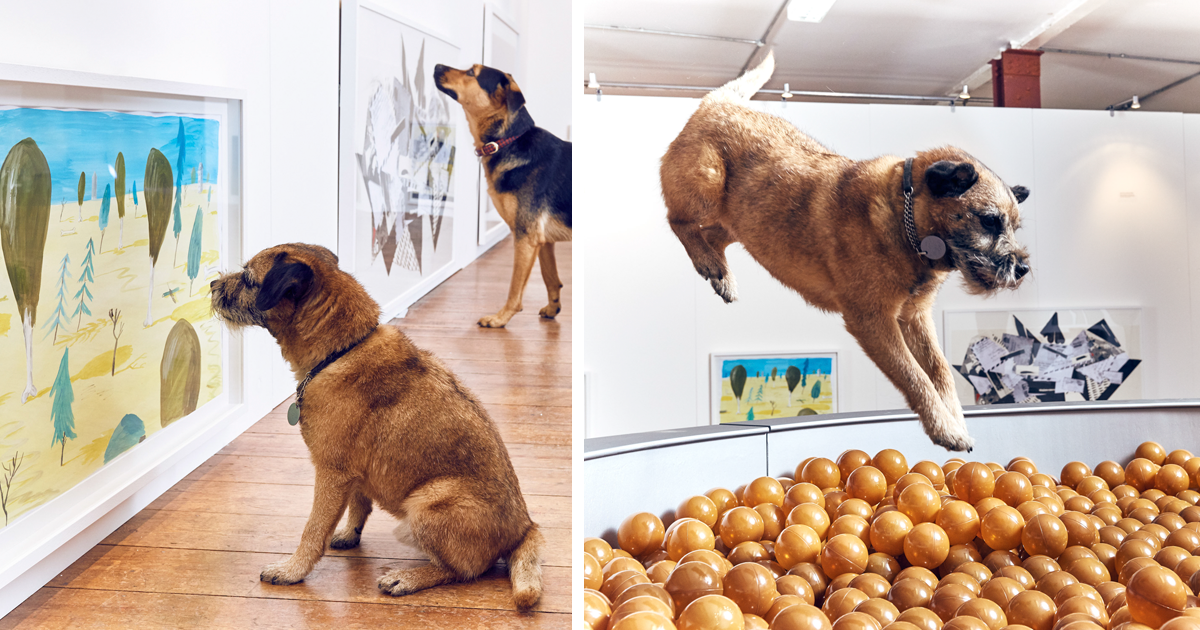
For centuries, humans have dragged dogs into paintings, portraits, postcards, calendars, memes, and approximately nine million “Dogs Playing Poker” jokes. But in 2016, something delightfully strange happened: dogs were no longer just the subject of art. They became the audience. And not the bored, politely clapping audience either. The sniffing, sprinting, tail-wagging, “Is that a giant bowl of kibble or am I dreaming?” kind of audience.
The event widely billed as the world’s first art exhibition for dogs was more than a cute publicity stunt. It was a clever experiment in design, perception, and a surprisingly big question: what happens when you create culture for a species that does not care about velvet ropes, artist statements, or whether the lighting flatters the sculpture? The answer, it turns out, is part comedy, part canine enrichment, and part serious lesson in empathy.
This dog-focused exhibition did not ask pets to behave like miniature museumgoers with excellent self-control and a graduate degree in conceptual art. Instead, it flipped the whole formula. Rather than forcing dogs into human spaces, it built a space around how dogs actually experience the world: through motion, scent, play, curiosity, and colors that work for canine eyes. That is what made the idea memorable. It was weird, yes. But it was smart weird, which is always the best category of weird.
What Was the World’s First Art Exhibition for Dogs?
The exhibition most people mean when they say World’s First Art Exhibition For Dogs is Play More, a pop-up show created by artist and inventor Dominic Wilcox in London. The project was designed specifically for canine visitors and built around the things dogs naturally love: running, sniffing, chasing, splashing, and sticking their heads into spaces that look suspiciously fun. In other words, it was a gallery designed by someone who had clearly spent time with actual dogs, not just decorative ones on throw pillows.
Instead of traditional “please do not touch” art, the exhibition offered interactive installations. One piece simulated the joy of sticking your head out of a moving car window. Another transformed a giant dog bowl into a ball pit. There were dancing water features, dog-height displays, and paintings created in hues more visible to dogs than the standard human-friendly rainbow. The setup treated dogs as active participants, not passive mascots.
That shift mattered. Humans tend to assume that good design begins with what looks appealing to us. This exhibition made a stronger point: good design begins with the user. In this case, the user just happened to have four legs, a powerful nose, and absolutely no patience for abstract minimalism unless it smelled like steak.
The Installations That Made the Idea Famous
The genius of the exhibition was in the details. A giant bowl filled with light-brown balls mimicked a fantasy version of dinner. A breezy car-window simulator recreated one of the great canine thrills of modern life. Water-based pieces tapped into the excitement many dogs feel around splashing and movement. Even the paintings were adapted, using colors that fit better with canine vision and placing works where dogs could actually see them without needing a tiny museum step stool.
There was also something joyfully unserious about the whole thing, and that worked in its favor. Art can become very self-important, very fast. A dog-centered show cuts through that instantly. If the piece is interesting, the dog engages. If not, the dog wanders away in search of a better smell. Honestly, that is a tougher and more honest form of criticism than some gallery reviews.
Why an Art Exhibition for Dogs Actually Makes Sense
At first glance, the concept sounds like a headline invented by the internet after too much coffee. But the more you think about it, the more logical it becomes. Dogs do not experience the environment the way humans do, so designing a sensory space for them is not silly at all. It is thoughtful. It asks what art can be when it is not limited to walls, labels, and silent admiration.
Dogs See Differently Than We Do
Human beings are visual maximalists. We love detail, color variety, and fine distinctions. Dogs, however, are working with a different visual system. They do see color, but not in the same way people do. Their vision is often described as dichromatic, meaning blues and yellows stand out more clearly, while reds and greens are less distinct. They are also especially tuned to motion, which explains why a moving object can be far more exciting to a dog than a perfectly still masterpiece.
That is why this exhibition was clever rather than gimmicky. It was built around what dogs can actually detect and enjoy. The use of dog-friendly colors, low viewing angles, and active elements acknowledged a basic truth: if you want dogs to engage, you have to stop designing only for human eyeballs.
In that sense, the exhibition was almost a mini lesson in neuroscience wrapped inside a tail-wagging event. It demonstrated that perception is not universal. One species’ museum piece is another species’ mildly confusing rectangle.
Dogs Smell the World Before They See It
If humans live in a visual culture, dogs live in an olfactory one. A dog’s sense of smell is astonishingly powerful, and it plays a huge role in how dogs gather information, experience novelty, and make sense of their surroundings. That makes scent a huge part of any truly dog-centered environment.
This is where the exhibition moved beyond novelty and into genuine canine logic. Interactive elements tied to food, air, and familiar sensory rewards aligned with what dogs naturally enjoy. For a human visitor, an open-window simulator might be amusing. For a dog, it is practically poetry. It combines movement, airflow, and smell into one glorious sensory event. That is not just “cute design.” That is audience research, dog edition.
Play Is More Than Entertainment
Another reason the exhibition resonated is that play is not frivolous for dogs. Play supports mental stimulation, physical activity, bonding, and emotional well-being. Trainers and animal welfare experts regularly stress the value of enrichment, puzzles, novelty, and interactive experiences. Dogs do not thrive on food, sleep, and occasional hallway walking alone. They need engagement.
An exhibition for dogs may sound extravagant, but the principle behind it is wonderfully practical: when animals are given interesting, species-appropriate ways to explore, they tend to be happier, more stimulated, and less bored. That lesson travels well beyond one two-day event in London. It applies to homes, shelters, daycare spaces, training environments, and everyday life.
Why Humans Loved the Idea Too
Let’s be honest: humans were never going to ignore a headline about a fine-art show for dogs. It has all the ingredients of internet gold. Dogs? Check. Art? Check. Mildly absurd British creativity? Triple check. But people stayed interested because the idea tapped into something bigger than novelty.
For one thing, the exhibition gently mocked the stiffness of traditional art culture. It replaced whispered commentary with play. It suggested that wonder does not need to be solemn. In fact, a lot of human spaces could benefit from a little canine energy. Fewer chin strokes. More delighted chaos.
It also appealed to the deep emotional bond people have with dogs. Humans love to include pets in daily life, from cafes and parks to travel and retail experiences. A dog-centered exhibition made many people think, “Of course. Why shouldn’t dogs get their own cultural event?” That reaction says a lot about how modern pet ownership has evolved. Dogs are no longer viewed only as companions on the sidelines. They are increasingly treated as family members with needs, preferences, and experiences worth considering.
Dogs Have Long Been in Art, But This Changed the Audience
Dogs have been part of art history for ages. They appear in aristocratic portraits, hunting scenes, sentimental Victorian paintings, modern photography, and contemporary sculpture. Museums and galleries continue to mount exhibitions about dogs, dog portraiture, and the human-canine bond. Entire collections have been built around canine imagery.
But the important difference here is that older dog art was still made for people. Humans admired the brushwork. Humans studied the symbolism. Humans debated whether a terrier represented loyalty, status, domestic life, or the artist’s unresolved emotional relationship with 19th-century society. The dogs themselves were not invited to weigh in, which is frankly rude when you think about it.
The world’s first art exhibition for dogs changed that equation. It moved the dog from image to participant. From subject to viewer. From passive inspiration to active audience. That was the real breakthrough.
What the Exhibition Teaches Us About Design
The biggest lesson of this story is not “dogs like ball pits,” though that is certainly useful information. The bigger lesson is that design improves when we stop assuming everyone experiences the world the same way we do.
That idea matters in museums, branding, architecture, education, and product design. The best spaces are not built around ego. They are built around users. The dog exhibition worked because it started with empathy: What can dogs perceive? What excites them? What feels intuitive? What turns a room from confusing into compelling?
There is also a refreshing humility in designing for dogs. You cannot bluff your way through it. A dog will not pretend to appreciate a concept because the wall text says it is important. If the environment is interesting, the dog responds. If it is dull, the dog checks out. That makes dogs wonderfully honest test subjects for experience design.
Could More Dog-Centered Exhibitions Happen?
Absolutely. In fact, the legacy of dog-centered art and museum culture has only grown. Dog museums, themed exhibitions, pet portrait shows, and canine-friendly events continue to attract attention because they sit at the intersection of art, entertainment, and emotional connection. Not every city needs a permanent museum where Labradors critique installation art, but the appetite for dog-related cultural spaces is real.
That said, the strongest future projects will be the ones that go beyond social-media bait. The most meaningful dog-friendly exhibitions will focus on real enrichment, thoughtful sensory design, safety, and interaction. A room full of random decorations is not the same thing as an environment created for canine perception. If a show is truly for dogs, then dogs should be able to use it, enjoy it, and move through it naturally.
In other words, the future belongs to spaces that do not merely feature dogs but genuinely consider them. That is what made this exhibition stand out in the first place.
What the Experience Might Feel Like: A 500-Word Walk Through a Dog’s-Eye Art Show
Imagine arriving at a gallery with your dog on a bright weekend morning. You expect the usual pet-event setup: a branded backdrop, some free samples, maybe a bowl of water and a staff member saying, “He’s so cute,” in the voice humans reserve for babies and puppies. Instead, the room feels different immediately. It is lower, looser, and somehow more alive. Nothing is asking your dog to sit still and behave like a tiny human in a bow tie. The space is asking your dog to explore.
Your dog notices it before you do. The nose lifts. The ears shift forward. There is airflow coming from somewhere, the exciting kind that carries scent. A few steps later, there is a structure that recreates the thrill of an open car ride, one of those little slices of dog joy humans could never fully patent because it belongs to the universe. Your dog leans in, sniffs hard, and suddenly the whole gallery stops feeling like a novelty for people. It feels like a place with its own logic.
Then comes the giant bowl. Humans laugh first, because it is visually funny. Dogs, however, treat it like destiny. The oversized bowl filled with ball-pit “kibble” hits that magical intersection between food fantasy and playground design. Some dogs leap in with heroic enthusiasm. Others approach like suspicious food critics, testing the concept one paw at a time. A few stand on the edge and look as if they are considering whether this installation is beneath them. Every reaction is perfect. The art is not static; it is completed by participation.
As you move through the exhibition, the usual museum habits disappear. Nobody is whispering about composition and influence. Instead, people watch their dogs discover, hesitate, splash, circle back, and burst into little moments of delight. A water feature becomes more than water. A moving image becomes more than a screen. Paintings hung at dog height suddenly reveal how often public spaces ignore the physical reality of the beings inside them. It is funny, yes, but also strangely moving.
The best part might be what happens to the humans. Owners stop performing “taste” and start paying attention. They watch their dogs with unusual concentration. Which colors seem interesting? Which movement catches the eye? Which smells trigger curiosity? Which installation invites confidence, and which one makes a dog hang back? In that way, the exhibition becomes a relationship tool as much as an art event. It teaches people to observe rather than assume.
By the end, the experience feels less like a gimmick and more like a tiny philosophical reset. You walk out realizing that a world built entirely for humans is not the only version of a meaningful world. Your dog does not leave discussing artistic intention, obviously. Your dog leaves carrying the emotional equivalent of, “That windy thing ruled, the giant bowl was excellent, and I would like civilization to continue in this direction.” Honestly, that is a rave review.
Conclusion
The world’s first art exhibition for dogs captured attention because it was funny and fresh, but it lasted in people’s minds because it expressed something true. Dogs are not decorative side characters in human life. They are sentient companions with their own perceptual world, their own pleasures, and their own ways of engaging with space. The exhibition honored that reality.
More importantly, it showed that art can be playful without being shallow, and that design can be empathetic without becoming preachy. A dog-centered gallery may sound eccentric, but the idea behind it is beautifully simple: if you care about an audience, learn how they experience the world and build from there. Sometimes that principle leads to better museums. Sometimes it leads to smarter products. And sometimes it leads to a giant dog-bowl ball pit, which, to be fair, is also a legitimate cultural achievement.