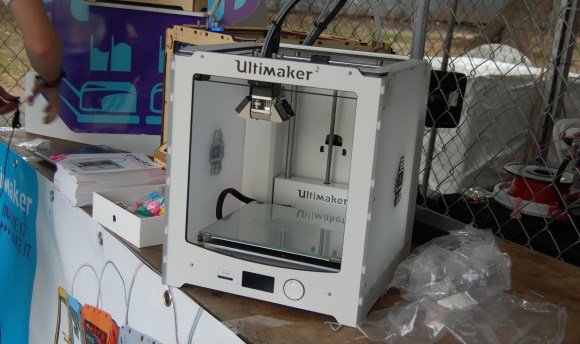
At World Maker Faire New York, where robots roll, LEDs blink like caffeinated fireflies, and someone is always explaining why their bicycle-powered blender is “technically transportation,” the arrival of a new 3D printer was not just another booth attraction. The new Ultimakerbetter known historically as the Ultimaker 2represented a turning point for desktop 3D printing. It was not merely a machine for people who enjoyed tightening belts, adjusting pulleys, and whispering encouraging words to stepper motors at 2 a.m. It was a sign that the maker movement was growing up.
The title “World Maker Faire: The New Ultimaker” captures a moment when desktop fabrication shifted from “build the printer before you print anything” toward “load a model, choose a setting, and make the thing.” That may sound ordinary today, but in 2013, it felt like someone had moved the future from the garage workbench to the design studio.
The World Maker Faire Backdrop: Noise, Ideas, and Controlled Chaos
World Maker Faire New York was the kind of event where invention wore comfortable shoes. It brought together engineers, artists, students, teachers, hackers, crafters, robotics teams, and families who came to see what happened when imagination met soldering irons. The 2013 New York event featured hundreds of maker exhibits across technology, science, craft, fashion, food, art, and education. In that environment, a 3D printer had to do more than look futuristic. It had to prove it could survive real curiosity.
Maker Faire has always been more than a product expo. It is part carnival, part classroom, part startup incubator, and part “please do not touch the spinning thing unless the maker says it is safe.” For desktop 3D printing companies, the Faire was a perfect stage. Visitors could see prints forming layer by layer, ask blunt questions, compare machines side by side, and decide whether a printer was genuinely useful or just an expensive box that made plastic spaghetti.
Why the New Ultimaker Mattered
The original Ultimaker had earned respect among tinkerers because it was fast, accurate, and open to modification. Its laser-cut wooden frame had charm, like a science project that had graduated with honors. But it also belonged to a period when many users expected to assemble, tune, modify, and sometimes emotionally negotiate with their 3D printers.
The new Ultimaker changed the tone. Instead of presenting itself primarily as a kit for hackerspaces, it appeared cleaner, more refined, and more appropriate for designers, architects, schools, and professional studios. Its design suggested that desktop 3D printing was becoming less about machine ownership as a hobby and more about making objects as a workflow.
Key Upgrades: The Practical Magic Inside
Heated Build Plate
One of the biggest upgrades was the heated glass build platform. This mattered because print adhesion is the quiet villain of 3D printing. Without reliable adhesion, a beautiful model can turn into a curled, warped, sad little potato halfway through the job. A heated bed helps materials stay stable during printing and improves the chances that a part remains flat and usable.
OLED Display and Onboard Controls
The new interface also made the printer feel more like a finished appliance than a collection of parts that had agreed to cooperate. The OLED display and onboard controls gave users a clearer way to manage prints, adjust settings, and monitor progress without feeling as if they needed an engineering degree, a secret handshake, and a spare weekend.
Larger Build Volume
The Ultimaker 2 offered a build volume of about 230 x 225 x 205 mm, giving makers room to print larger prototypes, models, fixtures, and useful shop objects. In desktop 3D printing, build volume is not just a number. It determines whether an idea can be printed in one piece or must be sliced into sections like a puzzle designed by a mischievous raccoon.
High Resolution and Speed
The machine was marketed with layer resolution as fine as 20 microns and print speeds ranging broadly enough to satisfy both cautious users and speed enthusiasts. Of course, experienced makers know that maximum speed is not always your friend. A printer can move quickly, but your object still has opinions about cooling, overhangs, bridges, and gravity. The Ultimaker 2’s strength was not only raw specification; it was the balance between speed, precision, and repeatability.
From Tinkering to Trust
The larger story of the new Ultimaker was trust. Early desktop 3D printers often demanded devotion. Users learned bed leveling, extrusion temperature, filament moisture, belt tension, slicer settings, and the ancient ritual of removing a failed print without breaking the build plate or their own spirit. That tinkering culture was valuable, but it also limited who could participate.
Ultimaker’s approach helped move 3D printing toward a broader audience. The machine still welcomed advanced users who wanted to adjust settings, experiment with materials, and squeeze extra quality from the hardware. But it also respected people who simply wanted to print a prototype before a client meeting or create a classroom model before third period.
Cura: The Unsung Hero of the Ultimaker Ecosystem
No discussion of the new Ultimaker is complete without Cura. Hardware may get the applause, but slicing software does the quiet backstage labor. Cura prepares a 3D model for printing by converting it into toolpaths the printer can understand. In plain English, it tells the machine where to move, how fast to move, how much plastic to push, and when to stop before creating an abstract sculpture called “Oops.”
Ultimaker’s decision to support open-source slicing software was important. Cura made the printing process more approachable with simple quality options, while still offering deeper controls for experienced users. That combinationeasy entry, advanced depthwas a major reason Ultimaker printers became popular in schools, libraries, makerspaces, design firms, and engineering offices.
Open Filament and Maker Freedom
The Ultimaker 2 also stood out for its open filament system. Instead of locking users into one manufacturer’s material ecosystem, it allowed them to use compatible filament from different suppliers. That mattered to the maker community, where experimentation is practically a food group.
Open filament meant a user could test different PLA brands, colors, blends, and later specialty materials depending on printer capability and settings. For schools and community spaces, it also helped control cost. For professionals, it created flexibility. For hobbyists, it meant being able to buy that suspiciously bright neon filament and print a dragon, because adulthood is complicated and sometimes you need a neon dragon.
Competing in the MakerBot Era
At the time, MakerBot was one of the most visible names in desktop 3D printing. The company had helped popularize the idea that a 3D printer could sit on a desk and turn digital files into physical things. But the market was changing quickly. Users were becoming more demanding, and printers had to offer better reliability, cleaner output, and smoother software.
The Ultimaker 2 entered this competitive space with a clear message: desktop 3D printing did not have to be a circus act. It could be polished, precise, and still friendly to makers. While some machines chased hype, Ultimaker focused on print quality, mechanical refinement, and software usability. That gave it credibility among people who cared less about buzzwords and more about whether the part finished before lunch.
Print Quality: The Faire Table Test
At an event like World Maker Faire, sample prints are the real sales team. Visitors can inspect surfaces, check detail, look for stringing, examine overhangs, and quietly judge layer lines with the seriousness of art critics. Reports from the event emphasized that the new Ultimaker produced impressively consistent and high-quality prints.
Consistency was the key. Plenty of printers could produce one excellent print after careful tuning. The bigger question was whether they could do it again, and again, with fewer failures. That is where a refined machine earns its reputation. A printer that saves users from endless troubleshooting is not just convenient; it changes how people use 3D printing. They stop treating it like a weekend project and start treating it like a tool.
Who Was the New Ultimaker For?
Designers and Architects
For designers and architects, the new Ultimaker offered a practical way to create physical models quickly. A printed model can reveal proportions, fit, and spatial relationships that a screen cannot. Even with visible layer lines, a desktop print can make an idea easier to understand, discuss, and improve.
Educators and Students
In classrooms, a reliable 3D printer turns abstract lessons into objects students can hold. Geometry becomes a shape. Biology becomes a model. Engineering becomes a bracket that either works or becomes a teachable moment with jagged edges. The Ultimaker’s balance of usability and depth made it attractive for education because beginners could start simply while advanced students could learn deeper fabrication principles.
Makerspaces and Libraries
Makerspaces and libraries needed machines that could handle varied users, frequent jobs, and occasional beginner mistakes. The Ultimaker 2’s sturdy design and approachable workflow made it a strong candidate for shared environments. In a public setting, reliability is not a luxury. It is the difference between “come learn 3D printing” and “the printer is down again; please enjoy this pamphlet.”
Engineers and Product Teams
For engineers, the real value was rapid iteration. A bracket, enclosure, jig, knob, or concept model could be printed overnight and evaluated the next morning. That reduced waiting time and encouraged experimentation. When prototypes are faster and cheaper, teams can test more ideas before committing to expensive manufacturing steps.
The Limits: Not a Magic Box, Still a 3D Printer
The new Ultimaker was impressive, but it did not abolish physics. Fused filament fabrication still has limitations. Overhangs may require support. Very fine details may be challenging. Tall thin parts can wobble. Material choice matters. A heated bed helps, but it does not grant immunity from warping. And yes, failed prints still happen, usually when you are confident enough to walk away.
That honesty is important for SEO readers and real buyers alike. The Ultimaker 2 was not revolutionary because it made 3D printing effortless in every case. It was important because it reduced friction. It made good results more repeatable. It gave users a stronger starting point and a more polished experience.
Why This Moment Still Matters Today
Looking back, the World Maker Faire appearance of the new Ultimaker feels like a snapshot of desktop 3D printing’s transition. The movement began with kits, forums, open-source designs, and passionate builders. Then it moved toward polished machines, professional applications, and broader adoption. Today, 3D printing is used in classrooms, dental labs, product studios, manufacturing floors, hospitals, libraries, cosplay workshops, and home garages where someone is absolutely printing another cable organizer.
The modern UltiMaker brand has since evolved through new printers, cloud workflows, Cura improvements, and the 2022 merger of Ultimaker and MakerBot. That merger brought two historically important desktop 3D printing names under one roof. It also showed how much the industry had matured since the early Maker Faire days, when the big question was whether desktop 3D printing would move from hobbyist excitement to dependable everyday use.
The New Ultimaker and the Maker Ethos
The best part of the Ultimaker story is that it did not abandon the maker ethos while becoming more refined. It still valued openness, experimentation, and community knowledge. It simply wrapped those values in a cleaner, more reliable package. That is not selling out; that is growing up without throwing away the toolbox.
World Maker Faire was the right place for that message. The event celebrated both the messy prototype and the finished product. It honored the person who laser-cut a robot chassis in a garage and the team turning desktop fabrication into a professional workflow. The new Ultimaker stood between those worlds and said, “You can have both.”
Experience Section: What It Feels Like to Meet a Printer Like This at Maker Faire
Imagine walking into World Maker Faire with the sound of motors, children laughing, drones buzzing somewhere they probably should not be buzzing, and a faint smell of popcorn mixed with warm electronics. You move past a booth where someone has built a fire-breathing sculpture, then another where a student is proudly explaining a robot that solves a problem adults did not know existed. Then you arrive at the Ultimaker booth.
The first thing you notice is that the machine does not look like a science fair project held together by hope. It looks intentional. Clean lines. Enclosed structure. A bright build area. A print running smoothly enough that you lean closer, partly impressed and partly suspicious, because anyone who has used early desktop printers knows smooth motion can feel like a magic trick.
A small object is growing on the build plate, layer by layer. Maybe it is a gear, a miniature architectural model, a test piece, or some elegant little shape designed specifically to show off overhangs and curves. The nozzle moves with confidence. The plastic lands where it should. Nobody is frantically tightening something. Nobody is poking the print with tweezers. Nobody is saying, “It usually works.” That alone feels like progress.
Someone at the booth explains the heated bed, the improved hot end, Cura, the open filament system, and the larger build area. Around you, visitors nod in that Maker Faire way: half understanding, half already imagining what they would print first. A teacher sees classroom potential. An architect sees massing models. A parent sees a child discovering engineering without realizing it is engineering. A hobbyist sees upgrades, experiments, and yes, probably a better way to print parts for another printer. The maker loop never really ends.
The experience is not just about the printer. It is about the confidence the printer gives people. That is the hidden emotional engine of desktop 3D printing. When a machine seems reliable, ideas become less risky. You are more willing to try. You sketch more freely. You print the first version, learn from it, and print the second. The gap between “I wonder if this would work” and “here, hold this” becomes smaller.
That is why the new Ultimaker mattered at World Maker Faire. It was not the loudest exhibit. It did not shoot flames, play music, or wear googly eyes. But it showed a quieter kind of future: a future where digital fabrication becomes normal enough to use, open enough to explore, and dependable enough to trust. In a building full of inventions shouting for attention, the Ultimaker 2 made its case by simply printing well. Sometimes the most convincing demonstration is not a dramatic speech. It is a clean first layer.
Conclusion
“World Maker Faire: The New Ultimaker” marks an important chapter in the history of desktop 3D printing. The Ultimaker 2 arrived at a moment when makers wanted more than novelty. They wanted accuracy, reliability, usability, and freedom to experiment. With its heated bed, polished design, open filament approach, Cura software, and strong print quality, the new Ultimaker helped prove that desktop 3D printers could serve designers, educators, engineers, libraries, makerspaces, and serious hobbyists without losing the playful spirit that made the movement exciting in the first place.
The machine was not perfect, and no 3D printer is. But it helped shift expectations. A desktop printer could be refined without becoming closed. It could be approachable without becoming shallow. It could serve professionals while still making room for tinkerers. That is why this Maker Faire moment still deserves attention: it captured the bridge between the early hacker era of 3D printing and the more mature, practical, creative ecosystem we know today.
Note: This article was written from a synthesis of historical Maker Faire coverage, Ultimaker product information, 3D printing reviews, maker community reporting, and additive manufacturing background sources. Source links are intentionally omitted from the article body as requested.