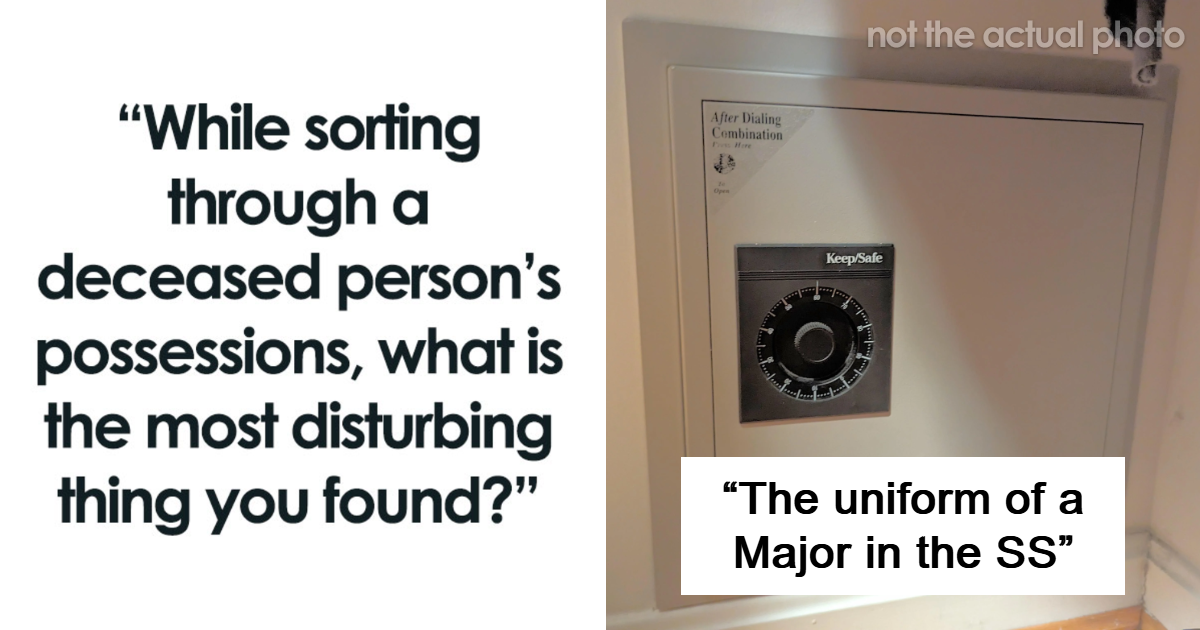
Going through a loved one’s home after they die is one of life’s strangest emotional roller coasters. One minute, you’re folding a sweater and trying not to cry into it. The next, you open a dusty box labeled “tax stuff” and discover wartime letters, casino chips, a mystery key, and enough expired coupons to stock a time capsule. Grief is already a lot. Add hidden safes, secret bank accounts, surprise collections, and a few family plot twists, and suddenly the estate cleanout starts to feel less like a chore and more like a deeply emotional treasure hunt with no map and very mixed vibes.
That’s exactly why stories about unexpected things people found after their loved ones died resonate so strongly. They’re not just about objects. They’re about identity, memory, secrecy, and the bizarre little ways people build private worlds. Sometimes the discoveries are touching. Sometimes they’re hilarious. Sometimes they’re mildly alarming, like when Grandpa’s harmless-looking garage turns out to contain 37 identical flashlights and three shoeboxes of cash. Apparently, some people prepared for the apocalypse, but only in one room.
In this article, we’re digging into why these discoveries happen, what kinds of surprises families most often uncover, and what those findings can reveal about the people we thought we knew. We’ll also walk through practical advice for handling emotional, legal, and digital surprises after a death. So yes, there will be feelings. But there may also be a locked tin, a handwritten note, and a deeply confusing ceramic frog collection.
Why Surprising Discoveries Happen After Someone Dies
Most people leave behind more than furniture and paperwork. They leave layers. Over time, people tuck away items that feel too sentimental, too private, too painful, or too random to explain. Some save important records in “safe spots” that become so safe, even they forget where they put them. Others keep money hidden at home because they came from generations that didn’t fully trust banks. And many people simply never got around to organizing their affairs, which is a very human habit and a very inconvenient one for whoever opens the hall closet later.
There’s also the emotional side. Belongings are rarely just belongings after a death. A recipe card becomes proof of care. A stack of unpaid bills becomes a source of panic. A sealed envelope becomes a question mark with edges. That’s why sorting through possessions can feel exhausting even before you find anything surprising. You’re not just cleaning a house. You’re decoding a life.
49 Unexpected Things People Found After Their Loved Ones Died
Below are 49 of the most common, surprising, and unforgettable things families discover when going through a loved one’s belongings. Some are sweet. Some are shocking. Some are both, which is honestly grief in a nutshell.
Hidden Money, Valuables, and Financial Surprises
- Cash tucked into old books.
- Rolled bills hidden inside socks, coat pockets, or cookie tins.
- Jewelry stashed in sewing kits or pill bottles.
- Savings bonds forgotten in file folders.
- Uncashed checks from years ago.
- A safe no one knew existed.
- A key with no label that opens something important.
- Gold coins or collectible currency hidden in drawers.
- A secret investment account or brokerage statement.
- Life insurance paperwork nobody realized was active.
These finds can be lifesavers or logistical nightmares. Hidden cash may help with funeral expenses, but mystery accounts and unlabeled keys can send families on an accidental scavenger hunt through paperwork, banks, and safe deposit boxes.
Family Secrets and Personal History
- Love letters from someone other than the spouse.
- A diary revealing a very different inner life.
- Photos of people no one in the family recognizes.
- Documents connected to a previous marriage or engagement.
- Adoption papers kept private for decades.
- Military records never discussed during life.
- A long-lost sibling mentioned in letters or legal forms.
- Old report cards, awards, or rejection letters carefully preserved.
- A bundle of unsent letters to children, partners, or parents.
- Proof of a dream they never got to pursue.
This is often where the emotional temperature changes fast. These discoveries don’t just surprise people. They can completely reshape the story a family tells about a parent, spouse, grandparent, or sibling.
Collections Nobody Saw Coming
- Hundreds of identical figurines.
- A closet full of unopened gifts bought for “someday.”
- Rare comic books or baseball cards in mint condition.
- Vintage postcards, stamps, or coins.
- Dozens of radios, watches, clocks, or pocketknives.
- A room devoted to one oddly specific hobby.
- Every issue of a magazine from the 1970s.
- Handmade crafts no one had ever seen.
- Holiday decorations for holidays nobody in the family celebrated.
- An entire box of restaurant sugar packets or hotel soaps.
Some collections are valuable. Others are priceless only to the person who built them. And some are so oddly specific they deserve their own documentary series.
Important Documents in Very Unimportant Places
- A will tucked into a cookbook.
- Birth certificates inside a Christmas ornament box.
- Property deeds folded into the pages of a Bible.
- Passwords scribbled on the back of junk mail.
- Tax records stuffed into old shopping bags.
- Funeral preferences hidden in a random desk drawer.
- Divorce papers mixed in with vacation brochures.
- A handwritten list of accounts with no explanations.
- Medical records sealed in an envelope labeled “Do Not Throw Away.”
- Receipts proving ownership of valuable items everyone assumed were costume pieces.
This is the section where families realize that “important papers in one place” was apparently a lovely theory and not a lived reality.
Digital and Modern-Day Surprises
- An active social media presence no one expected.
- Photos stored in a cloud account nobody could access.
- Online subscriptions quietly charging every month.
- Cryptocurrency or digital wallets mentioned in passing but never explained.
- A second email address used for years.
- A dating profile still live.
- A memorial page request left unfinished.
- Thousands of family photos on an old phone or tablet.
- A playlist library that said more about them than their obituary did.
Digital surprises can hit especially hard because they feel both intimate and inaccessible. Today, a person’s legacy may be partly stored in devices, inboxes, photo accounts, and social profiles, which means modern grief often comes with passwords, account recovery forms, and a truly unreasonable amount of two-factor authentication.
What These Discoveries Really Mean
When families find surprising things after a death, the instinct is often to sort them into neat categories: valuable, sentimental, strange, important, trash. But real life is messier than that. A stack of handwritten recipes might be emotionally priceless. A sealed envelope may contain either heartfelt wisdom or a cable bill from 2009. A secret collection may feel absurd until you realize it was someone’s way of coping with loneliness, preserving joy, or holding onto control.
That’s why the best approach is usually slower and gentler than people expect. Not every mystery needs to be solved in one weekend. Not every object needs to be thrown out, kept forever, or immediately understood. Grief has terrible timing, and shocking discoveries tend to arrive exactly when people are least equipped to process them.
How to Handle Unexpected Things Found After a Loved One Dies
1. Don’t rush the cleanout
Unless there’s a deadline involving rent, a property sale, or legal access, it helps to move room by room. Fast decisions made in the fog of grief often turn into “Wait, where did we put the envelope marked ‘insurance’?” six months later.
2. Separate emotional items from legal items
Create categories like documents, valuables, photos, keepsakes, donations, and unknown items. This reduces the chance that a family heirloom gets donated by accident or that a crucial paper ends up inside a giveaway box between an afghan and a fondue fork.
3. Look for estate-related paperwork first
Before anyone debates who gets the cookie jar, locate the will, trust documents, insurance records, bank statements, property titles, tax records, and any list of accounts or passwords. The sentimental sorting can happen alongside that, but legal documents deserve early attention.
4. Be careful with digital accounts
Phones, laptops, email accounts, cloud storage, and social media profiles may contain both treasured memories and practical information. Families are often surprised to learn that access is not always automatic, even for close relatives. That makes digital planning one of the most overlooked parts of modern estate organization.
5. Expect emotional whiplash
You may laugh at a bizarre collection, cry over a grocery list in familiar handwriting, and then get furious over unpaid bills all within the same hour. Congratulations, you are having a normal human response to a profoundly abnormal situation.
6. Bring in help when needed
Executors, estate attorneys, appraisers, grief counselors, organizers, and trusted family members can all be useful depending on what turns up. You do not need to personally become a probate expert, digital archivist, and trauma-informed minimalist in one week.
The Emotional Side of Unexpected Discoveries
Objects can reopen relationships. A father who seemed distant may suddenly appear tender through saved drawings and old letters. A quiet grandmother may turn out to have written sharp, hilarious notes in the margins of cookbooks. A spouse may leave behind evidence of debts, secrets, or silence that complicates grief rather than softening it. That complexity matters.
Too often, people think grief should move in a straight line from sadness to acceptance. It rarely does. Unexpected discoveries can trigger comfort, confusion, anger, relief, nostalgia, guilt, and even admiration. You may feel closer to someone after finding their hidden keepsakes. You may also feel like you never fully knew them. Both experiences can exist at the same time.
And sometimes the object itself is small. A receipt. A tiny key. A note that says, “For later.” That’s the wild thing about loss. The emotional weight of an item has almost nothing to do with its market value. One person inherits a watch worth thousands and shrugs. Another finds a handwritten pancake recipe and absolutely falls apart in the kitchen. Human beings are weird, tender creatures. That’s part of the story too.
Extended Reflections: What People Often Experience During These Discoveries
For many people, the process starts with dread. They know they have to go through the house, the apartment, the storage unit, or the boxes in the garage, but they keep delaying it because the task feels enormous. It is never just “sorting stuff.” It is confronting proof that a person was here, that they had routines and habits and private little systems, and that those systems stopped. Even opening a nightstand can feel like crossing an emotional border.
Then comes surprise. People expect clothes, photo albums, paperwork, and maybe a few sentimental keepsakes. They do not expect hidden envelopes of cash, unknown relatives in old photos, handwritten notes revealing fears or dreams, or enough batteries to outlast civilization. That surprise can be funny in one moment and heartbreaking in the next. A person may laugh at a ridiculous collection of souvenir spoons and then cry because it suddenly reminds them how excited their mother got on road trips.
Another common experience is guilt. Families often worry they are being invasive, even when they are simply doing what must be done. Reading a notebook can feel like a betrayal. Opening a locked box can feel wrong. Throwing away ordinary things can feel worse than logic suggests. People second-guess themselves constantly. Should this be kept? Donated? Shared? Hidden? Framed? Burned dramatically in the backyard? The answer is usually less cinematic and more practical, but the internal debate is real.
There is also conflict, because grief does not magically improve communication. In fact, it usually stress-tests it. One sibling wants to preserve everything. Another wants the house cleared in a week. A cousin thinks the old tools are junk; someone else sees them as sacred artifacts. Add money, resentment, and exhaustion, and suddenly the argument about a lamp is not actually about a lamp at all. It is about memory, fairness, love, and who showed up when it counted.
And yet, amid the confusion, many people experience unexpected comfort. They find notes tucked into books, carefully saved birthday cards, children’s drawings, recipes stained with years of use, or holiday decorations repaired again and again instead of replaced. These items can make a person feel present in a new way. They remind the living that ordinary life was never ordinary at all. It was built from tiny acts of care repeated over decades.
That may be the biggest lesson in all these stories. The surprising things people find after their loved ones die are not really just about secrets or shock value. They are about evidence. Evidence that a person loved, worried, planned, collected, remembered, saved, hoped, and hid parts of themselves just like everyone else. In the end, the strangest thing families often discover is not the hidden money or the locked box. It is how much of a life can still speak long after the person is gone.
Conclusion
The unexpected things people find after their loved ones die can be funny, moving, unsettling, and deeply revealing all at once. A single box can hold financial clues, family secrets, emotional landmines, or treasures that become part of a new family story. What matters most is not solving every mystery instantly. It is handling the process with patience, practicality, and a little grace for yourself and others.
If there’s one takeaway here, it’s this: the belongings left behind are rarely random. Even the weird stuff. Especially the weird stuff. Behind every hidden envelope, strange collection, and carefully folded letter is a person trying, in their own imperfect way, to hold onto meaning. And when those discoveries happen after death, they remind us that a life is never just what was visible on the surface.