Stonehenge is one of those places that looks simple from far awayjust a famous ring of very large stones standing in a very windy field. Then you get closer, and the questions start piling up like ancient luggage. Who built it? Why there? Why those stones? Why drag rocks across Britain when the local hardware store was apparently closed for 5,000 years?
For centuries, Stonehenge has attracted theories the way a porch light attracts moths: Druids, aliens, healing rituals, royal tombs, giant calendars, prehistoric temples, and even the occasional “someone had too much free time” explanation. But modern science has made the mystery both clearer and more interesting. Researchers now know a great deal about how Stonehenge was built, where many of its stones came from, and why some popular ideas do not hold up under close inspection.
The latest debate centers on a tempting theory: that Stonehenge was designed as a precise solar calendar. It sounds neat. It sounds elegant. It sounds like something a museum gift shop would love to put on a mug. But scientists have pushed back, arguing that the evidence is far weaker than the headline suggests. So what is Stonehenge, exactly? The best answer is not “just a calendar,” “just a temple,” or “just a pile of rocks.” Stonehenge was likely a ceremonial, social, astronomical, and political monumentan ancient masterpiece with more layers than a very old onion.
What Is Stonehenge?
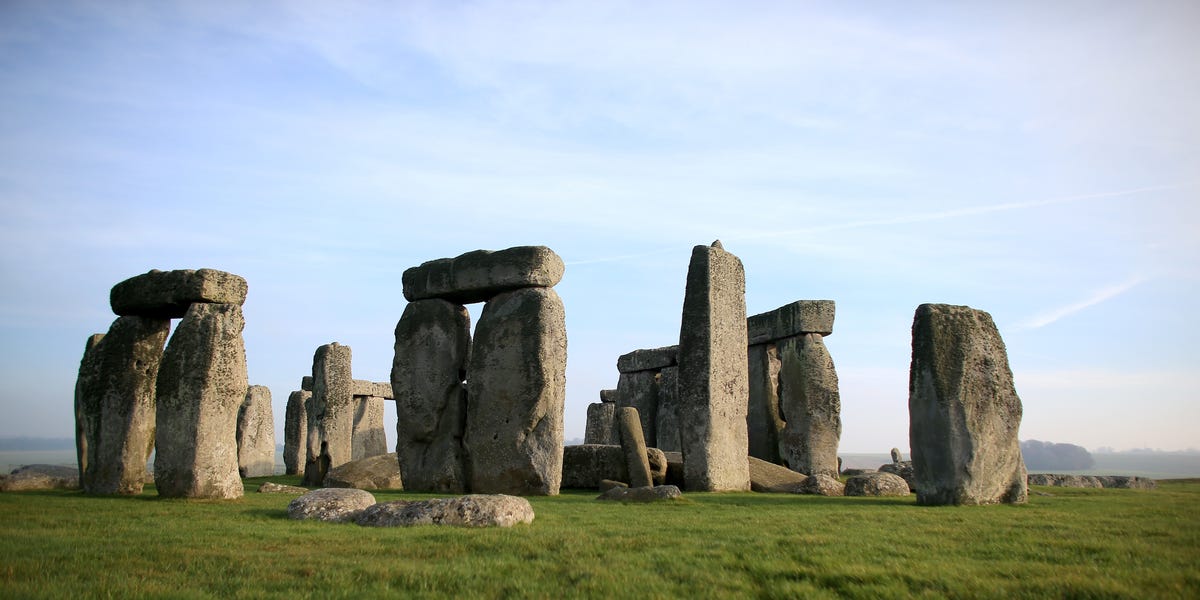
Stonehenge is a prehistoric megalithic monument on Salisbury Plain in Wiltshire, England. It is famous for its circular arrangement of upright stones, horizontal lintels, and central trilithonstwo vertical stones capped by a third stone across the top. The monument was not built in one weekend by a highly motivated prehistoric contractor. It developed in stages across many centuries, beginning around 3000 BCE with an earthwork enclosure and later becoming the stone monument recognized today.
The earliest major version of Stonehenge was a circular ditch and bank, probably dug with antler picks and stone tools. Inside this early monument were 56 pits known as the Aubrey Holes. Cremated human remains found in and around the site suggest that Stonehenge served as one of the largest late Neolithic cremation cemeteries in Britain. In other words, before it became a global icon and a selfie magnet, Stonehenge was already deeply connected to death, memory, and ritual.
Around 2500 BCE, the site changed dramatically. Builders raised large sarsen stones and smaller bluestones into a carefully planned arrangement. The sarsens formed the outer circle and the central horseshoe of massive trilithons, while the bluestones were placed between them and rearranged over time. The monument we see today is ruined, weathered, and incomplete, but even in that state, it remains one of the most technically sophisticated prehistoric stone circles ever built.
What Is Stonehenge Made Of?
Stonehenge is mainly made from two types of stone: sarsens and bluestones. The sarsens are the huge sandstone-like blocks that give the monument its instantly recognizable silhouette. Many weigh about 25 tons, and the largest, the Heel Stone, weighs roughly 30 tons. These stones likely came from West Woods, near Marlborough, about 20 miles from Stonehenge.
The bluestones are smaller, but “smaller” is doing some heavy lifting here. They still weigh between two and five tons each. These stones came from the Preseli Hills in Wales, more than 140 miles away. When freshly broken or wet, some have a bluish tint, which is how they earned their name. The fact that Neolithic people moved these stones across such a distance is one of the great clues to Stonehenge’s importance. Nobody hauls multi-ton rocks across Britain just because the yard needs a little curb appeal.
Even more surprising is the Altar Stone, a large recumbent sandstone slab near the center of Stonehenge. Recent mineral analysis indicates that it likely came from the Orcadian Basin in northeast Scotland, at least 750 kilometers from Salisbury Plain. This discovery has changed the conversation. Stonehenge was not simply a local project. It may have drawn materials, people, symbolism, and cooperation from across Britain.
The Popular Theory Scientists Debunked: Was Stonehenge a Solar Calendar?
The idea that Stonehenge was connected to the sun is not nonsense. In fact, the monument is famously aligned with the solstices. On the summer solstice, the sun rises near the Heel Stone and shines into the center of the monument. On the winter solstice, the sun sets in the opposite direction along the same broad axis. This alignment was almost certainly meaningful to the people who built and used Stonehenge.
But there is a big difference between saying “Stonehenge marked important solar events” and saying “Stonehenge was a precise 365-day calendar.” The second claim is much more specificand much harder to prove.
In 2022, a theory proposed that Stonehenge worked as a solar calendar with 365.25 days, similar in length to the later Julian calendar. According to this idea, the 30 stones of the sarsen circle represented 30 days in a month. The five central trilithons represented extra days, while the four Station Stones accounted for leap-year adjustments. It was a clever interpretation, and clever interpretations are fun. Unfortunately, archaeology is not graded on cleverness alone.
In 2023, researchers Giulio Magli and Juan Antonio Belmonte challenged the calendar theory in the journal Antiquity. They argued that the proposal relied too heavily on forced interpretations, questionable numerology, astronomical problems, and unsupported comparisons with calendars from other ancient cultures. Their critique did not deny Stonehenge’s solar alignment. Instead, it rejected the idea that the monument functioned as an accurate daily calendar.
Why the Calendar Theory Falls Short
First, the astronomy is tricky. Tracking the sun’s movement with enough precision to maintain a detailed 365-day calendar would require an exactness that massive stones may not have provided. The sun’s position changes subtly from day to day, and small errors would matter if the monument were supposed to count individual days.
Second, the numbers feel too convenient. It is tempting to look at 30 stones and think “30 days,” then add other features until the math works. But ancient monuments are not Sudoku puzzles. Archaeologists must be careful not to make the evidence fit a modern idea simply because the arithmetic is satisfying.
Third, the historical analogy is weak. The calendar theory compared Stonehenge with ancient Egyptian solar calendars, but direct evidence for such a cultural connection is lacking. Without written records from Stonehenge’s builders, researchers must rely on material evidence, landscape context, dating, and comparisonbut comparisons cannot do all the heavy lifting.
The better conclusion is more modest and more believable: Stonehenge was aligned with the solar cycle and likely used for seasonal rituals, especially around the solstices. But calling it a precise calendar may give the stones a job description they never applied for.
Another Theory Under Pressure: Did Glaciers Move the Stones?
The solar-calendar theory is not the only popular idea scientists have questioned. Another long-running theory suggested that glaciers transported Stonehenge’s unusual stones close to Salisbury Plain during the Ice Age, leaving Neolithic people to simply arrange what nature had already delivered. This idea had one major advantage: it made the logistics easier. Instead of imagining people moving enormous stones from Wales or Scotland, glaciers did the heavy work. Very convenient. Suspiciously convenient.
Recent mineral fingerprinting has challenged that glacial-transport theory. Researchers analyzed tiny grains of zircon and apatite from river sediments around Stonehenge to look for evidence that glaciers had carried rocks from distant source regions into the area. The results showed no strong match for the faraway stone sources and no clear sign that glaciers reached Salisbury Plain in the necessary way. That supports the human-transport explanation: people deliberately selected, moved, and placed the stones.
This matters because it changes how we understand Stonehenge. If humans moved the stones, then Stonehenge was not a lucky accident of geology. It was an organized, intentional, and highly ambitious project. The builders had planning systems, labor coordination, shared beliefs, and probably a very high tolerance for back pain.
So Why Was Stonehenge Built?
The honest answer is that no single theory explains everything. Stonehenge likely served several overlapping purposes over time. Different generations may have used it in different ways, adding meanings as they added stones, burials, pathways, and ceremonies.
Stonehenge as a Burial and Ancestral Site
One of the strongest interpretations is that Stonehenge was connected to the dead. Cremated remains found at the monument show that it served as a cemetery in its earliest phases. The careful placement of human remains suggests ritual importance, not casual disposal. The stones may have represented permanence, ancestry, and memorya way of making the presence of the dead visible in the landscape.
Stonehenge as a Solstice Monument
Stonehenge’s alignment with the summer sunrise and winter sunset makes its solar connection impossible to ignore. The winter solstice may have been especially important for Neolithic farming communities. In a world without electric lights, supermarket produce aisles, or weather apps that are confidently wrong, the return of longer days mattered. Seasonal gatherings at Stonehenge may have marked renewal, survival, and cosmic order.
Stonehenge as a Place of Gathering
Nearby sites such as Durrington Walls show evidence of large-scale feasting. Animal bones, especially pig remains, suggest that people gathered in the wider Stonehenge landscape for major communal events. Some animals appear to have come from distant regions, which points to gatherings that drew people from across Britain. Stonehenge may have been the sacred centerpiece of a much larger social world.
Stonehenge as a Political Symbol
The discovery that the Altar Stone may have come from Scotland has encouraged a newer interpretation: Stonehenge may have symbolized unity among distant communities. Stones from England, Wales, and possibly Scotland would have turned the monument into a physical map of connections. It may have been a statement of alliance, shared identity, or cultural ambition. In modern terms, it was less “local construction project” and more “national infrastructure with spiritual branding.”
Why Stonehenge Still Feels Mysterious
Stonehenge remains mysterious because its builders left no written explanation. There is no carved plaque saying, “Welcome to Stonehenge, built for seasonal ceremonies, ancestral remembrance, and occasional pig feasts.” Archaeologists must reconstruct the story from stones, bones, soil, tools, alignments, and nearby monuments.
That uncertainty is not a failure. It is part of what makes Stonehenge powerful. The monument sits at the intersection of science and imagination. Scientific methods can identify stone sources, date construction phases, analyze cremated remains, and test old theories. But the emotional and symbolic world of the builders remains partly out of reach.
The best modern understanding is that Stonehenge was not one thing. It was a sacred place, a solar monument, a burial landscape, a gathering site, and possibly a symbol of unity. It was not a simple machine for counting days. It was a human monumentmessy, meaningful, ambitious, and built by people whose world was different from ours but whose desire to mark time, honor the dead, and gather under the sky feels surprisingly familiar.
What Scientists Have Actually Solved
Although Stonehenge is still wrapped in mystery, science has solved more than many people realize. Researchers have traced many sarsens to West Woods. They have linked bluestones to Wales. They have shown that the Altar Stone likely came from far to the north. They have clarified that the monument was built in multiple stages rather than all at once. They have found evidence of cremation burials, seasonal alignment, nearby feasting, and long-distance movement of materials.
Science has also helped remove some of the noisier myths. Stonehenge was not built by aliens. It was not built by medieval Druids, because the monument predates the Druids described in classical sources by many centuries. It was probably not a perfect solar calendar. And the stones were likely not simply dropped off by glaciers like a prehistoric delivery service.
The real story is more impressive than the myths. Human beings, using stone tools, timber, ropes, planning, patience, and shared belief, created a monument that still commands global attention thousands of years later. That is more astonishing than aliens, frankly. Aliens would have had better equipment. Neolithic builders had determination.
Experience: What Visiting Stonehenge Teaches You About the Mystery
Reading about Stonehenge is one thing. Standing near it is another. Even from a distance, the monument changes scale in your mind. In photographs, the stones can look like a tidy circle on a green field. In person, they feel heavier, stranger, and more deliberate. The landscape is open, the sky is enormous, and the stones seem to hold their ground with a silence that makes modern chatter feel slightly underdressed.
A good Stonehenge experience begins before you reach the circle. The wider landscape matters. The monument is not isolated from history like a sculpture dropped into a park. It belongs to a broader prehistoric world of burial mounds, avenues, earthworks, and nearby ceremonial sites. Walking through that landscape helps you understand why the “what is Stonehenge?” question cannot be answered by staring only at the stones. Stonehenge is the headline, but the surrounding plain is the article.
Visitors often arrive expecting one grand explanation. They want the answer: calendar, temple, cemetery, observatory, meeting place. But the best experience comes when you let go of the need for a single label. The stones reward curiosity more than certainty. You can look toward the Heel Stone and imagine the summer solstice sunrise. You can picture winter gatherings when the setting sun mattered deeply to people facing cold, darkness, and hunger. You can think about cremated remains placed in the earth and about families returning to a place where ancestors were remembered.
The transport story adds another layer. Once you know that the stones came from different parts of Britain, Stonehenge feels less like a monument and more like a conversation across distance. The sarsens speak of the local chalk landscape. The Welsh bluestones suggest journeys, memory, and perhaps migration. The Scottish Altar Stone, if the current interpretation holds, stretches the story even farther. Suddenly, the monument is not just a circle. It is a network.
One useful way to experience Stonehenge is to imagine the labor without romanticizing it. Moving a multi-ton stone was not a charming team-building retreat with matching shirts. It required planning, food, leadership, technical skill, and probably plenty of arguments. Someone had to decide where the stone should go. Someone had to organize the route. Someone had to feed the workers. Someone had to say, “No, not that way, the giant rock is leaning,” and somehow survive the meeting.
That human element makes Stonehenge more moving. The monument is not mysterious because ancient people were unknowable geniuses or because magic must have been involved. It is mysterious because they were human, and humans build meaning into things. We do it with churches, memorials, stadiums, courthouses, national monuments, and family graves. Stonehenge belongs to that same impulse. It turns belief into architecture.
If you visit, the best advice is to slow down. Do not treat it like a famous object to check off a travel list. Look at the stones, then look away from them. Notice the horizon. Notice how the monument sits in relation to the sky. Think about the people who gathered there long before written history, bringing animals, stories, grief, hope, and possibly a strong opinion about where the next stone should stand. Stonehenge does not give up one easy answer. Instead, it gives something better: a rare chance to feel how deep human memory can be.
Conclusion: Stonehenge Is Bigger Than One Theory
Stonehenge is not “just” a solar calendar, even though the sun clearly mattered there. It is not “just” a burial ground, even though the dead were part of its earliest story. It is not “just” a political monument, though the far-traveled stones may point to alliances and identity across Britain. The most convincing interpretation is that Stonehenge was a multi-purpose ceremonial landscape, shaped by generations of people who used it to connect earth, sky, ancestors, community, and power.
Scientists debunking the precise solar-calendar theory does not make Stonehenge less fascinating. It makes it more real. The monument was not a neat prehistoric spreadsheet. It was a living place of ritual, memory, seasonal attention, and social effort. The more researchers discover, the clearer one thing becomes: Stonehenge’s true wonder is not that we do not understand it completely. The wonder is that people built it at alland that, 5,000 years later, we are still looking up at the same sky, asking what it meant.