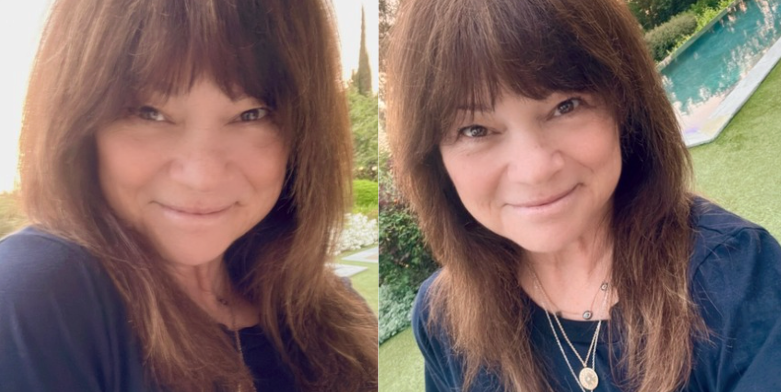
Valerie Bertinelli has spent decades being the kind of celebrity people feel they know: the funny sitcom daughter, the warm Food Network host, the candid author, the woman who can make a casserole sound like emotional therapy with cheese. But her recent return to acting has introduced another version of Bertinelli: the seasoned performer willing to admit that stepping back in front of a scripted camera can still feel terrifying.
Her return is not a glossy “comeback” packaged with confetti and a suspiciously perfect blowout. It is more honest than that. Bertinelli has been open about feeling nervous, exposed, and emotionally raw as she re-entered acting through the Lifetime movie Love, Again, a drama centered on love, caregiving, Alzheimer’s disease, grief, and the frightening possibility of starting over. In other words, not exactly a “show up, say three jokes, hug a golden retriever” kind of role.
For fans who first met her as Barbara Cooper on One Day at a Time, her vulnerability feels both surprising and deeply familiar. Bertinelli has always had a gift for making audiences lean in. Now, at this stage of her career, she is doing it without hiding the wobble in her voice or the life experience behind her eyes.
Why Valerie Bertinelli’s Acting Return Matters
Valerie Bertinelli’s return to acting is meaningful because it arrives after years in which many viewers associated her less with scripted television and more with food, lifestyle, books, and daytime conversation. She became a comforting presence on Food Network through Valerie’s Home Cooking and Kids Baking Championship, where her warmth often felt like the emotional equivalent of being handed a brownie and told, “You’re doing great, sweetie.”
But before the aprons, recipe cards, and cake disasters, Bertinelli was first known as an actress. Her breakout role on One Day at a Time made her a household name in the 1970s and 1980s. She later starred in Hot in Cleveland, a sitcom that paired her with Betty White, Jane Leeves, and Wendie Malick. That series reminded viewers that Bertinelli could still land a punchline with ease, charm, and the timing of someone who has been doing this since most of us were still figuring out how to operate a VCR.
So when she returned to scripted work in Love, Again, the story was not simply “Valerie has a new movie.” It was “Valerie is returning to the craft that shaped her public life, but she is doing it as a woman who has lived, lost, healed, changed, and become far less interested in pretending everything is fine.”
The Emotional Weight of Love, Again
In Love, Again, Bertinelli plays Caroline, a woman whose long marriage is transformed when her husband, Henry, is diagnosed with early-onset Alzheimer’s disease. Henry is played by Henry Czerny, while Eric McCormack appears as Leo, a new source of companionship and emotional support in Caroline’s life.
The film’s premise asks a painful question: What happens when the person you built your life with begins slipping away while still physically present? That is not just a plot. It is a heartbreak many caregivers know in their bones. The role required Bertinelli to portray confusion, guilt, loyalty, loneliness, tenderness, anger, and the complicated shame that can come with needing support while someone you love is suffering.
For an actor returning after time away, this was not a gentle warm-up lap. It was the emotional equivalent of being handed a marathon bib, a thunderstorm, and shoes you have not broken in yet. Bertinelli has described the project as deeply vulnerable, and that vulnerability makes sense. A role like Caroline does not work if the actor performs grief from a polite distance. It requires openness. It requires stillness. It requires letting the audience see the cracks.
From Sitcom Star to Food Network Favorite
To understand why Bertinelli’s acting return resonates, it helps to look at the many chapters of her career. She became famous young, earning major recognition for One Day at a Time. Her work on that series won her Golden Globe honors and established her as one of television’s most recognizable young performers.
After years of acting in television movies, guest roles, and series work, she found another major scripted success with Hot in Cleveland, which ran from 2010 to 2015. The show gave Bertinelli a fresh comedic showcase and connected her with a new generation of viewers. Then, around the same period, her career expanded into food television.
Valerie’s Home Cooking allowed her to bring a different kind of performance to the screen. Cooking shows may look casual, but hosting one well is no small skill. You must chop, talk, smile, remember measurements, keep time, tell stories, and avoid setting anything on fire. Ideally, all at once. Bertinelli made it look easy because her greatest strength has always been emotional accessibility.
On Kids Baking Championship, she balanced encouragement with judging, helping young bakers feel seen even when their fondant looked like it had survived a minor earthquake. For many fans, her Food Network years were not a detour from acting; they were an extension of the same qualities that made her beloved on sitcoms: sincerity, humor, timing, and warmth.
The Vulnerability Behind the Public Persona
Bertinelli’s return to acting also comes during a period when she has been unusually open about personal growth, body image, grief, aging, divorce, and self-acceptance. Her memoir Getting Naked: The Quiet Work of Becoming Perfectly Imperfect explores many of those themes, including the work of letting go of shame and making peace with the person in the mirror.
That matters because the public often expects celebrities to reappear fully polished, as if reinvention should happen overnight with a glam team and a ring light. Bertinelli has instead made honesty part of her public identity. She has talked about painful transitions, professional disappointments, and the strange courage it takes to be visible when you no longer want to perform perfection.
That honesty gives her acting return more weight. When she says she felt scared, it does not read as a promotional sound bite. It reads like a woman acknowledging that experience does not erase fear. A long career can give you tools, discipline, and perspective, but it does not make vulnerability disappear. Sometimes it makes you more aware of what is at stake.
Why Fans Respond to Her Honesty
Fans have long responded to Valerie Bertinelli because she does not seem sealed behind celebrity glass. She can be glamorous, yes, but also goofy, emotional, blunt, and self-aware. She is the rare star who can discuss grief and then somehow make the room laugh without making the grief feel smaller.
That ability is powerful in today’s entertainment landscape. Audiences are increasingly drawn to public figures who feel human rather than overly managed. Bertinelli’s vulnerability about returning to acting taps into something universal: the fear of starting again after a long break.
Many people know that feeling. Returning to a career after parenting, illness, caregiving, divorce, burnout, job loss, or grief can feel like walking into a room where everyone else remembers the steps to a dance you once knew. Your body remembers some of it. Your confidence may need a minute. Your inner critic, naturally, arrives early and takes the best seat.
Bertinelli’s openness turns her acting return into more than a celebrity headline. It becomes a reminder that starting over does not require total confidence. Sometimes it only requires showing up while scared.
The Role of Age in Bertinelli’s New Chapter
One of the most refreshing parts of this story is that Bertinelli is not pretending age is irrelevant. Hollywood has often treated women over 50 as if they should quietly exit through a side door labeled “Mother of Main Character.” Bertinelli’s return pushes against that tired script.
At this point in her life, she brings decades of emotional texture to a role like Caroline. The story of Love, Again is not about youthful romance or fresh heartbreak. It is about mature love, caregiving, loyalty, complicated desire, and the emotional cost of holding a life together when the center begins to shift.
Those are not small themes. They require an actor who understands that love after loss is not simple. It can feel hopeful and disloyal at the same time. It can arrive quietly, inconveniently, and with emotional paperwork nobody wants to fill out. Bertinelli’s age and experience are not obstacles to the role; they are part of what make the role credible.
Professional Reinvention After Public Disappointment
Bertinelli’s acting return also follows a public professional transition after her Food Network exit. Her departure from Kids Baking Championship hurt fans because she had been such a central part of the show’s appeal. Bertinelli herself acknowledged the emotional sting while also recognizing the business side of television.
That kind of public career shift can be bruising. Losing a job is hard enough when it happens in an email thread only three people see. When it happens in entertainment, everyone has an opinion, and some of those opinions arrive wearing muddy boots.
Yet Bertinelli did not disappear. She continued working, joined The Drew Barrymore Show as a lifestyle expert, hosted Bingo Blitz on Game Show Network, released books, and returned to acting. That arc gives the story a useful lesson: reinvention is rarely a single dramatic leap. More often, it is a series of steps, some graceful, some awkward, and some taken while muttering, “Well, here we go.”
What Her Return Says About Courage
Courage is often misunderstood as fearlessness. Bertinelli’s return to acting suggests something better: courage is fear with movement. It is taking the role, learning the lines, trusting the director, connecting with co-stars, and letting your own emotional history inform the work without swallowing it whole.
That is especially true for a project like Love, Again. Stories about Alzheimer’s disease and caregiving can easily become sentimental if handled carelessly. The best versions honor the exhaustion as much as the devotion. They show that caregivers are not saints floating above human need. They are people who get tired, frustrated, lonely, and scared. They love deeply, and sometimes they still need someone to help carry the groceries, the grief, and the impossible Tuesday afternoon.
Bertinelli’s vulnerability gives the role an added dimension because she has publicly embraced emotional honesty in her personal life. She is not simply acting pain; she is bringing the humility of someone who understands that healing is not linear and that life can be both beautiful and wildly inconvenient.
Why This Moment Feels Different From a Typical Celebrity Comeback
The phrase “celebrity comeback” can sound like marketing confetti. It often implies that someone vanished, got a makeover, and returned with better lighting. Bertinelli’s situation is different. She never really left public life. Instead, she changed lanes, survived difficult seasons, and came back to acting with more emotional honesty than before.
That makes the return feel less like a comeback and more like a continuation. The teenage star from One Day at a Time, the sitcom veteran from Hot in Cleveland, the Food Network host, the author, the daytime contributor, and the Lifetime drama lead are all part of the same career. The thread connecting them is not genre. It is trust.
Audiences trust Valerie Bertinelli because she has allowed them to see her evolve. She has not frozen herself in one era. She has aged publicly, sometimes painfully, often humorously, and with a willingness to revise her own story. That is why her vulnerability lands. It feels earned.
Related Experiences: What Bertinelli’s Return Can Teach Anyone Starting Over
Valerie Bertinelli getting vulnerable about returning to acting is not just a Hollywood story; it is a very human one. Plenty of people know what it feels like to step back into a room they once knew well and suddenly wonder, “Do I still belong here?” Maybe it is returning to work after years of caregiving. Maybe it is dating after divorce. Maybe it is creating art after grief, going back to school at 50, applying for a job after burnout, or walking into a gym after a decade of pretending the gym was a myth invented by leggings companies.
The first experience Bertinelli’s story reflects is the discomfort of being a beginner again. Even experts can feel rusty. A person may have decades of experience and still feel shaky when the context changes. Bertinelli had acted for most of her life, yet returning to scripted drama after time away brought anxiety. That is a useful reminder: nervousness does not mean you are unqualified. Sometimes it simply means you care.
The second experience is the challenge of bringing your whole self to the work. Many people try to separate personal pain from professional performance. Sometimes that boundary is necessary. But creative work often asks for emotional truth. Bertinelli’s role in Love, Again required her to access grief, empathy, and vulnerability. In everyday life, the same thing can happen when someone becomes a teacher, counselor, manager, parent, caregiver, artist, or leader. The hardest experiences can deepen compassion, but only when handled with care.
The third lesson is that reinvention is allowed to be messy. People often imagine new chapters as clean and cinematic: a fresh haircut, a powerful soundtrack, maybe a montage involving journals and herbal tea. Real reinvention usually involves doubt, awkward first attempts, and at least one moment of wondering whether everyone else got an instruction manual. Bertinelli’s openness makes the messy middle visible. She shows that you can be grateful for an opportunity and terrified of it at the same time.
The fourth experience is learning to accept public imperfection. Most people are not famous, but many still feel watched: by family, coworkers, neighbors, social media, or the tiny courtroom inside their own head. Bertinelli has spent years being evaluated for her body, career choices, relationships, and emotions. Her willingness to keep showing up offers a practical form of courage. She is not saying, “Nothing hurts me.” She is saying, “I can be hurt and still continue.”
The fifth and perhaps most important lesson is that starting over later in life can be richer than starting young. Youth has energy, but age has context. A younger performer might play heartbreak beautifully, but an older performer may bring the ache of memory, compromise, caregiving, and survival. In ordinary life, the same is true. A second career, second love, second home, or second dream may carry more depth because it is built by someone who knows the cost of things.
That is why Bertinelli’s return feels inspiring without becoming sugary. It is not about pretending fear disappears. It is about walking with it. It is about taking the call, reading the script, saying yes, and letting yourself be seen before you feel fully ready. And honestly, that may be the most relatable performance of all.
Conclusion
Valerie Bertinelli’s vulnerable return to acting is a reminder that even beloved veterans can feel uncertain when life asks them to begin again. Her role in Love, Again brings together many of the themes she has explored publicly in recent years: grief, self-acceptance, aging, emotional honesty, and the courage to stay open after loss.
For longtime fans, the moment feels like a full-circle return to the craft that first made her famous. For newer viewers, it offers a portrait of a woman refusing to be reduced to any single chapter of her life. Bertinelli is not just coming back to acting. She is coming back with more truth, more humor, and more willingness to let the camera catch something real.
And perhaps that is why this story resonates. Returning to something you love is rarely simple. It can be scary, humbling, and emotionally inconvenient. But as Bertinelli’s latest chapter shows, vulnerability is not a weakness in the performance. Sometimes, it is the performance.