Movie sets are designed to fool the camera, not survive the century. A palace may be plywood, a stone wall may be foam, and an entire town may have only enough plumbing to support one nervous production assistant and a coffee machine. Once filming ends, most sets are dismantled, recycled, or quietly transformed into the next blockbuster’s medieval marketplace.
Sometimes, however, Hollywood simply leaves the scenery behind. Deserts swallow spaceports. Forests reclaim fake cemeteries. A wrecked locomotive keeps rusting beside a real railroad while tourists point excitedly from passing trains. These abandoned movie sets reveal a strange afterlife in which temporary illusions become landmarks, archaeological sites, or wonderfully odd roadside attractions.
For accuracy, “abandoned” here means that substantial production-built structures or props were left at the filming location after the crew departed. Several entries were later restored, protected, or converted into attractions. Apparently, even movie ruins can get a second act.
10. The Baseball Diamond From Field of Dreams Iowa, United States
The baseball field created for the 1989 film Field of Dreams is the friendliest kind of abandoned movie set: one that refused to disappear. Production transformed Iowa farmland into the diamond where ghostly players emerged from the corn and Kevin Costner learned that emotional reconciliation is easier when accompanied by batting practice.
After filming, the field was left with the landowners rather than erased. They maintained it, welcomed visitors, and gradually turned a temporary piece of production design into a permanent piece of American movie culture. Today, it is far from derelict, but its origin belongs to the classic abandoned-set pattern: the studio finished its work, the crew left, and the physical fantasy remained.
9. Sweethaven From Popeye Anchor Bay, Malta
Robert Altman’s 1980 musical Popeye needed a crooked seaside village that looked as though it had been assembled by sailors during a mild argument. The production built Sweethaven along Malta’s Anchor Bay, filling the shoreline with timber houses, warped walkways, and cheerfully lopsided architecture.
When filming wrapped, the village stayed. Instead of collapsing into a picturesque pile of lumber, it was repainted, maintained, and developed into Popeye Village, a tourist attraction featuring performances, exhibits, play areas, and surviving pieces of the original set. It is now more preserved than abandoned, but it began as a production environment left behind after the cameras stopped.
8. Port Royal From Pirates of the Caribbean St. Vincent and the Grenadines
For Pirates of the Caribbean: The Curse of the Black Pearl, filmmakers transformed Wallilabou Anchorage on St. Vincent into a version of Port Royal. Buildings, docks, maritime props, and weathered details helped create the bustling colonial harbor where Captain Jack Sparrow made one of cinema’s most confident entrances aboard one of cinema’s least confident boats.
Production moved on, but parts of the harbor set remained. Some structures and memorabilia were incorporated into the site for visitors, while other features deteriorated under tropical sun, salt air, storms, and time. The result sits somewhere between preserved attraction and cinematic shipwreck.
7. The Gas Station From The Hills Have Eyes Morocco
The isolated gas station in the 2006 remake of The Hills Have Eyes appears to be the sort of place where every sensible traveler would keep driving. Naturally, movie characters stop. Built in southern Morocco, the set was dressed with battered pumps, faded signs, dusty vehicles, and enough ominous clutter to make a roadside restroom seem like a luxury resort.
After the production departed, the station remained near the highway. With no actors, lighting rigs, or crew nearby, the location became even more unsettling. Weather and dust have added genuine deterioration to a structure originally designed to imitate deteriorationa rare case of nature joining the art department without filling out payroll forms.
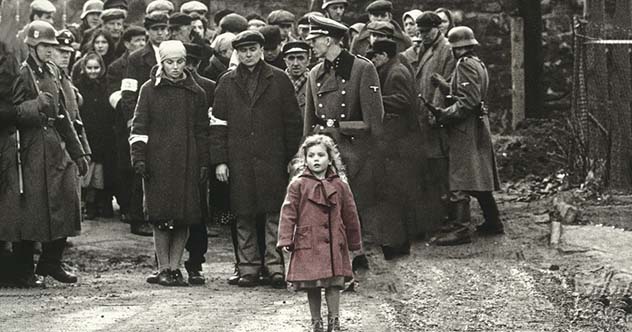
6. The Płaszów Replica From Schindler’s List Kraków, Poland
Steven Spielberg filmed much of Schindler’s List in and around Kraków, but the production did not recreate the Płaszów concentration camp on the actual memorial ground. Instead, a large replica was constructed in the nearby Liban Quarry. The set included barracks, guard towers, fencing, roads, and a representation of commandant Amon Göth’s villa.
Elements of the set were left in the quarry after filming and deteriorated over time. The location requires careful distinction: it is a film set built near places where real persecution and forced labor occurred, not the original Płaszów camp itself. Visitors should approach it as a solemn landscape, not an adventure playground or background for dramatic selfies.
5. The Train Wreck From The Fugitive North Carolina, United States
The train crash in 1993’s The Fugitive remains one of the decade’s great practical-action sequences. To create it, filmmakers staged a full-scale collision near Dillsboro, North Carolina, using a locomotive, rail cars, and a prison bus. The sequence looks expensive because it was built around large objects obeying the basic cinematic principle that smashing real machinery is extremely persuasive.
Once the scene was complete, removing the wreckage would have been difficult and costly. The damaged train and bus were left near the tracks, where they can still be spotted from excursions on the Great Smoky Mountains Railroad. Rust, vegetation, and mountain weather now provide the long, slow sequel no studio executive requested.
4. The Town of Spectre From Big Fish Alabama, United States
Tim Burton’s Big Fish required Spectre, an impossibly pleasant Southern town where shoes hang from a wire, nobody seems hurried, and the lawn is suspiciously perfect. The fictional community was built on Jackson Lake Island near Millbrook, Alabama. Because the story revisits Spectre at different moments, parts of the town were created to appear pristine while others were deliberately aged.
After production, the buildings, church, main street, and artificial trees remained. Real weather gradually took over from scenic paint, and goats became the site’s most reliable residents. The island later welcomed visitors and campers, while restoration efforts preserved portions of the town. One prop house was destroyed by lightning in 2023, a plot development even Burton might have considered a little theatrical.
3. Sad Hill Cemetery From The Good, the Bad and the Ugly Burgos, Spain
The climactic three-way showdown in Sergio Leone’s The Good, the Bad and the Ugly takes place inside Sad Hill Cemetery, a vast circular arena of fictional graves. The set was built in northern Spain with assistance from Spanish soldiers, creating thousands of grave mounds around a central stone plaza.
After filming ended in 1966, Sad Hill was abandoned. Soil, shrubs, and decades of weather gradually erased the design until the cemetery almost disappeared into the landscape. Beginning in the mid-2010s, volunteers and film fans excavated and reconstructed the site, restoring its circular form and turning it into a pilgrimage destination.
2. The Lost Egyptian City From The Ten Commandments California, United States
For his 1923 silent version of The Ten Commandments, Cecil B. DeMille constructed an enormous Egyptian city in the Guadalupe-Nipomo Dunes of California. The set featured monumental gates, pharaoh statues, sphinxes, and walls rising from the sand on a scale intended to make audiences wonder whether moderation had been temporarily outlawed.
When production ended, the set was too expensive to move and too valuable to leave available for competitors. It was dismantled, destroyed, and buried in the dunes. Shifting sand kept much of it hidden for decades, turning discarded plaster and wood into a genuine archaeological site. Researchers have since recovered pieces, including large sphinx fragments, while much of DeMille’s “lost city” remains underground.
1. Mos Espa From Star Wars Near Tozeur, Tunisia
No abandoned movie set better captures the collision between fantasy and landscape than Mos Espa, the Tatooine spaceport built in Tunisia for the Star Wars prequels. Domed buildings, market streets, towers, moisture-farm details, and alien-looking facades rose from the desert to create Anakin Skywalker’s childhood home.
When filming wrapped, the structures stayed. With the crew gone, wind-driven sand began advancing across the site. Dunes pressed against walls and partially buried sections, while travelers, vendors, preservation campaigns, and fan-led interest gave the abandoned spaceport an unexpected real-world economy. It remains recognizable precisely because the desert has weathered it so cinematically.
Why Are Movie Sets Left Behind?
Large sets are sometimes abandoned because demolition costs money, transportation is impractical, or landowners agree to keep what production built. In remote deserts and rural areas, leaving a structure may be cheaper than hauling it away. A useful set can also attract another film, support tourism, or become a local landmark.
That does not mean abandonment is harmless. Temporary construction can introduce waste, unstable materials, unauthorized traffic, and environmental damage. Modern productions increasingly face permit requirements and restoration obligations, especially on protected land. The romantic image of a forgotten town in the desert becomes less charming when the “town” is mostly fiberglass, nails, and somebody else’s cleanup problem.
Experiencing Abandoned Movie Sets: What the Visit Really Feels Like
Seeing an abandoned movie set in person is different from visiting a polished studio attraction. There is usually no soundtrack, no carefully timed reveal, and no employee waiting to explain where the famous actor stood. Instead, there is wind, dust, birds, insects, rust, and the mildly confusing realization that a familiar cinematic world is much smaller than it looked on screen.
The First Surprise Is Scale
Cameras are talented liars. A street that appeared to stretch across a city may end after four buildings. A grand house may have no back wall. A stone fortress may sound hollow when tapped because it is plaster over a timber frame. This is not disappointing; it is the pleasure of seeing the trick and admiring it anyway. The illusion becomes more impressive once you understand how little material was needed to suggest an entire civilization.
The Second Surprise Is Silence
Movie scenes feel crowded with dialogue, music, machinery, animals, and extras. Their abandoned locations can be unnervingly quiet. At a desert set, wind may be the only thing moving. At a forest site, branches cross paths once filled with cameras and cables. The silence makes the place feel less like a museum and more like a memory that accidentally developed walls.
Decay Adds a Story the Film Never Told
Peeling paint and collapsing facades reveal how sets were constructed. Layers become visible: scenic aging over fresh lumber, fake brick over mesh, decorative beams that support nothing. Every crack exposes the difference between an object built to look old and an object that has actually become old. In places such as Spectre or Mos Espa, natural decay does not destroy the atmosphere immediately; it deepens it.
Responsible Access Matters
The most important experience is knowing when not to enter. Some sets stand on private property. Others are unstable, environmentally sensitive, culturally significant, or located near memorial sites. Visitors should use established tours, respect barriers, avoid removing fragments, and never climb structures simply because they once held a famous actor. A loose prop wall does not care how many followers you have.
Respect is especially important at sites connected to real suffering. The replica used for Schindler’s List, for example, exists near authentic wartime landscapes. Treating such a place as an urban-exploration playground strips away the history that gives it meaning. Curiosity should arrive with context.
The Best Visits Combine Film Knowledge With Local History
Before traveling, watch the relevant scene and study a behind-the-scenes image. Once on location, compare camera angles, hills, doorways, and sightlines. Then look beyond the movie. The land existed before the production arrived and continued after it left. Local guides can explain who built the set, how residents participated, whether tourism helped the area, and what preservation challenges remain.
That broader perspective is what makes abandoned movie sets memorable. They are not frozen pieces of fiction. They are temporary workplaces that became permanent objects, shaped first by designers, then by weather, landowners, fans, and communities. Visiting one feels like walking behind the screen and discovering that movie magic does not disappear when the lights switch off. Sometimes it rusts. Sometimes it gets buried. Sometimes it opens a gift shop.
Conclusion
The world’s best abandoned movie sets are more than decaying props. They show how cinema reshapes real landscapes, how temporary illusions acquire history, and how fans can rescue places that studios once considered disposable. From Mos Espa’s sand-covered streets to DeMille’s buried sphinxes, these locations continue telling stories long after the final take.
They also complicate the word “abandoned.” Some were neglected for decades, some were intentionally buried, and others quickly became attractions. Their shared feature is that production left something physical behindand time became the uncredited final member of the art department.
Note: Some locations listed above were abandoned only temporarily and are now restored, managed, privately operated, or accessible solely through authorized tours. Conditions and access rules can change, so visitors should verify permission and safety requirements before traveling.