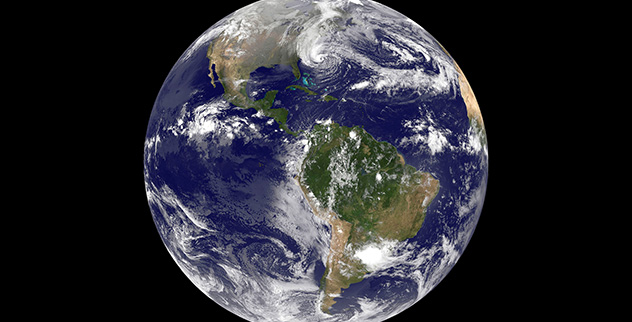
Earth is the planet we know best, mostly because we are standing on it, breathing its air, spilling coffee on its furniture, and occasionally complaining about the weather as if the sky has a customer-service department. But our home planet is far more remarkable than a blue dot with Wi-Fi. Earth is a fast-spinning, ocean-wrapped, magnetically shielded world traveling around the Sun in a carefully balanced orbit that makes life possible.
Understanding Earth and its orbit helps explain why we have seasons, leap years, ocean tides, changing constellations, sunrise times, climate patterns, and that annual moment when someone confidently says, “It’s hot because we’re closer to the Sun,” and every science teacher quietly reaches for a marker. The truth is more interesting. Earth’s orbit is not a perfect circle, our axis is tilted, our Moon acts like a stabilizing partner, and our planet moves through space much faster than a speeding jet.
Below are the top 10 facts about Earth and its orbit, written in plain English with enough cosmic perspective to make your next walk outside feel slightly more dramatic.
1. Earth Is the Third Planet from the Sun
Earth sits in the third orbital lane from the Sun, between Venus and Mars. This location is one reason our planet can support liquid water on the surface. Too close to the Sun, and oceans could boil away. Too far away, and water might freeze into a global ice locker. Earth occupies a region often called the habitable zone, where temperatures can allow liquid water to exist under the right atmospheric conditions.
That does not mean Earth is ordinary. Among all the worlds we have explored so far, Earth remains the only known planet with abundant life. It has oceans, continents, clouds, weather, plate tectonics, a breathable atmosphere, and a magnetic field that helps protect it from solar particles. Mars may get the science-fiction spotlight, but Earth is still the only confirmed planet where you can eat tacos, grow tomatoes, and argue about daylight saving time.
2. Earth Takes About 365.25 Days to Orbit the Sun
A year is not just a calendar invention. It is the time Earth needs to complete one orbit around the Sun. That journey takes about 365.25 days. The extra quarter day is the reason leap years exist. Without leap years, our calendar would slowly drift out of sync with the seasons. After enough time, summer in the Northern Hemisphere could start showing up where winter belongs, and calendars would become the most passive-aggressive objects in the house.
To fix this mismatch, most years have 365 days, while leap years add February 29. This small adjustment keeps the calendar aligned with Earth’s orbital rhythm. It is a simple reminder that our daily schedule is tied to celestial mechanics. Every appointment, birthday, holiday, and tax deadline is riding on a planet moving around a star.
3. Earth’s Orbit Is Slightly Elliptical, Not Perfectly Circular
Earth’s path around the Sun is an ellipse, which is a gently stretched circle. However, Earth’s orbit is only slightly elliptical, so it is close to circular compared with the more dramatic orbits of some comets and asteroids. The Sun is not exactly in the center of this ellipse; it sits near one focus. That means Earth’s distance from the Sun changes during the year.
Earth reaches its closest point to the Sun, called perihelion, in early January. It reaches its farthest point, called aphelion, in early July. The distance difference is only a few million miles, which sounds enormous until you remember that the average Sun-Earth distance is about 93 million miles. In planetary terms, that is a modest wiggle, not a cosmic road trip.
This fact surprises many people because early January is winter in much of North America. If distance from the Sun controlled the seasons, January should feel like a beach vacation. Instead, seasons are mainly caused by Earth’s axial tilt, not by how close we are to the Sun.
4. Earth Moves Around the Sun at About 67,000 Miles per Hour
You may feel stationary while reading this, but you are absolutely not. Earth is orbiting the Sun at roughly 67,000 miles per hour, or about 30 kilometers per second. That is fast enough to make a race car look like a sleepy shopping cart. Yet we do not feel this motion because Earth carries us, the atmosphere, the oceans, and everything else along with it smoothly.
This orbital speed is controlled by gravity and inertia. The Sun’s gravity pulls Earth inward, while Earth’s forward motion keeps it from falling directly into the Sun. The result is orbit: a continuous free fall around the Sun. It is elegant, stable, and much better than the alternative.
Earth also rotates on its axis once every 23.9 hours. That rotation gives us day and night. Combined with our yearly orbit, it creates the basic timekeeping structure of human life. Morning coffee, sunset walks, seasonal harvests, and midnight snacks all depend on Earth’s rotating and orbiting routine.
5. Earth’s Axis Is Tilted About 23.4 Degrees
Earth does not spin straight up and down relative to its orbit. Its axis is tilted about 23.4 degrees. This tilt is the main reason we experience seasons. As Earth orbits the Sun, the Northern and Southern Hemispheres take turns leaning toward more direct sunlight.
When the Northern Hemisphere tilts toward the Sun, sunlight arrives at a higher angle and days are longer. That produces summer in the north and winter in the south. Six months later, the Southern Hemisphere receives more direct sunlight, and the seasons reverse. During spring and fall, both hemispheres receive roughly equal sunlight, giving us the equinoxes.
Without this tilt, seasons would be much less dramatic. The poles would remain colder, the tropics would stay warm, and many mid-latitude regions would lose the familiar rhythm of spring blooms, summer heat, autumn leaves, and winter snow. Earth’s tilt is basically the planet’s way of keeping the annual playlist interesting.
6. Seasons Are Not Caused by Earth Being Closer to the Sun
This is one of the biggest Earth orbit myths. Many people assume summer happens when Earth is closer to the Sun and winter happens when Earth is farther away. It sounds logical, but it is wrong. Earth is closest to the Sun in early January, when the Northern Hemisphere is having winter.
The real cause of seasons is the angle and duration of sunlight. When your hemisphere tilts toward the Sun, the Sun appears higher in the sky, daylight lasts longer, and sunlight is more concentrated. When your hemisphere tilts away, the Sun stays lower, days are shorter, and sunlight spreads over a larger area, reducing heating.
This is why Australia can have summer while the United States has winter. Both places are on the same planet at the same distance from the Sun, but they are in opposite hemispheres receiving sunlight at different angles. Earth’s orbit sets the stage, but axial tilt directs the seasonal drama.
7. Earth’s Orbit Helps Define the Astronomical Unit
The average distance between Earth and the Sun is called one astronomical unit, or AU. It is about 93 million miles, or about 150 million kilometers. Astronomers use the AU as a handy measuring stick for distances inside the solar system.
For example, Mars orbits at about 1.5 AU from the Sun, while Jupiter orbits at about 5.2 AU. Instead of constantly saying “hundreds of millions of miles,” scientists can compare planets using Earth’s average distance as the baseline. It is one of the rare situations where Earth gets to be the ruler, and not just emotionally during Monday morning traffic.
Light from the Sun takes a little over eight minutes to reach Earth. That means sunlight warming your face left the Sun minutes before you noticed it. Every sunny afternoon is, technically, a brief look into the past.
8. The Moon Stabilizes Earth’s Tilt and Shapes Our Tides
Earth’s orbit around the Sun is not the only relationship that matters. The Moon plays a major role in making Earth a stable and livable planet. Its gravity helps stabilize Earth’s axial tilt, keeping our seasons relatively consistent over long periods. Without the Moon, Earth’s tilt might vary more dramatically over time, which could create extreme climate swings.
The Moon also drives most ocean tides. Its gravity pulls on Earth, creating tidal bulges in the oceans. As Earth rotates through these bulges, coastlines experience high and low tides. The Sun also affects tides, but the Moon has the stronger tide-generating influence because it is much closer to Earth.
Tides are not just beach scenery. They influence coastal ecosystems, marine life, navigation, sediment movement, and human activity along shorelines. The next time you see waves creep up a beach, remember that the Moon is doing some long-distance tugging. It is subtle, powerful, and much more poetic than a leaf blower.
9. Earth’s Orbit Slowly Changes Over Long Time Scales
Earth’s orbit and rotation are stable enough for life, but they are not frozen forever. Over tens of thousands to hundreds of thousands of years, Earth’s orbit changes shape, its axial tilt varies slightly, and its axis slowly wobbles like a spinning top. These long-term patterns are known as Milankovitch cycles.
Milankovitch cycles affect how sunlight is distributed across Earth’s surface, especially by latitude and season. They are linked to natural ice age cycles over geologic time. These orbital changes do not explain today’s rapid human-driven climate change, but they are important for understanding Earth’s deep climate history.
Think of Milankovitch cycles as Earth’s slow background music. They do not decide tomorrow’s weather, but over long periods they can influence whether ice sheets grow or shrink. It is a reminder that Earth’s orbit is part of a larger solar system dance involving gravitational nudges from the Moon, the Sun, and other planets.
10. Earth’s Orbit Works with Its Atmosphere and Magnetic Field to Support Life
Earth’s comfortable orbit would not be enough by itself. Our planet also has an atmosphere that helps regulate temperature, supports weather, allows liquid water to persist, and protects the surface from many small meteoroids. Near the surface, Earth’s atmosphere is mostly nitrogen and oxygen, with smaller amounts of gases such as argon, carbon dioxide, and neon.
Earth also has a magnetosphere, produced by motion in its metallic outer core. This magnetic field helps shield the planet from the solar wind, which is a stream of charged particles from the Sun. Without this protection, Earth’s atmosphere and surface environment would be more vulnerable to space weather.
The combination is extraordinary: the right orbit, a steady star, liquid water, a protective atmosphere, an active interior, a stabilizing Moon, and a magnetic shield. Change one of those ingredients too much, and Earth might be a very different place. Life here depends on a delicate planetary recipe, and somehow the kitchen has stayed open for billions of years.
Why Earth’s Orbit Matters in Everyday Life
Earth’s orbit may sound like a topic reserved for textbooks, telescopes, and people who own more than one star chart. In reality, it shapes everyday experience. The changing height of the Sun affects how warm your home feels, how long your garden grows, how early birds start singing, and how much daylight you have after work.
Farmers depend on seasonal sunlight patterns to plan planting and harvest cycles. Solar energy systems produce different amounts of power depending on daylight length and Sun angle. Architects consider sunlight when designing windows, shade, and energy-efficient buildings. Even your mood may respond to seasonal changes in light exposure.
Earth’s orbit also creates the shifting night sky. As our planet travels around the Sun, the nighttime side faces different directions in space. That is why certain constellations dominate winter skies while others return in summer. Orion, for example, is a classic winter constellation in the Northern Hemisphere, while Scorpius is easier to see during summer evenings. The stars are not rearranging themselves for our convenience; Earth is changing its viewing angle.
Leap years, solstices, equinoxes, sunrise times, tide schedules, and seasonal weather patterns are all connected to Earth’s motion. The planet’s orbit is not distant trivia. It is the quiet machinery behind calendars, climates, ecosystems, and daily routines.
Experience Notes: How Earth’s Orbit Feels in Real Life
One of the best ways to understand Earth and its orbit is to pay attention to ordinary outdoor experiences. You do not need a laboratory or a giant telescope. A sidewalk, a window, a notebook, and a bit of curiosity can reveal how our planet moves through space.
Start with shadows. Choose a fixed spot outside and observe the shadow of a tree, fence post, or building at the same time each week. Over the year, the shadow will change length and direction because the Sun’s path across the sky changes with the seasons. In summer, the midday Sun climbs higher, producing shorter shadows. In winter, it stays lower, stretching shadows across the ground like the planet is practicing dramatic lighting.
Sunrise and sunset are another easy experiment. If you watch where the Sun rises over the course of several months, you will notice that it does not appear at the exact same point on the horizon every day. Around the solstices, sunrise and sunset reach their northernmost or southernmost positions. Around the equinoxes, day and night are closer to equal length. These changes are direct evidence of Earth’s tilt and orbit working together.
You can also experience Earth’s orbit through the night sky. Visit the same dark location every few months and look for familiar constellations. Some will disappear into the Sun’s glare for part of the year, while others will become evening highlights. This seasonal rotation of constellations happens because Earth is moving around the Sun, giving us a new nighttime view of space as the months pass.
The ocean offers another powerful lesson. At the coast, tide charts show the gravitational relationship between Earth, the Moon, and the Sun. Watching the tide rise and fall makes orbital mechanics feel less abstract. The water is responding to gravity, rotation, shoreline shape, and lunar position. It is astronomy you can walk beside, photograph, and occasionally get your shoes wet in.
Even gardening teaches orbital science. Plants respond to daylight length, temperature shifts, and seasonal Sun angles. A spring garden is not just a collection of flowers; it is biology reacting to Earth’s position and tilt. When tomato plants stretch toward stronger summer sunlight or trees drop leaves as days shorten, they are responding to the planet’s annual journey.
Personal observation makes Earth feel less like a static platform and more like a moving world. We are passengers on a rotating, orbiting planet, but the ride is so smooth that we often forget it is happening. The trick is to notice the clues: the changing light, the shifting stars, the rhythm of tides, the calendar’s leap day, and the slow swing of seasons. Earth’s orbit is not hidden. It is written into every sunrise.
Conclusion
Earth and its orbit are a masterclass in cosmic balance. Our planet orbits the Sun once every 365.25 days, spins fast enough to create day and night, tilts enough to produce seasons, and travels through space at breathtaking speed. Its slightly elliptical orbit changes its distance from the Sun during the year, but the real seasonal magic comes from axial tilt, not solar distance.
The Moon stabilizes Earth’s tilt and powers ocean tides. The atmosphere and magnetic field help protect the surface. Long-term orbital cycles influence climate over geologic ages. Together, these facts show that Earth is not just a rock in space. It is a dynamic, interconnected system where orbit, rotation, gravity, water, air, and life all work together.
The next time you see a sunset, check a calendar, feel a season change, or watch the tide roll in, remember that you are witnessing Earth’s orbit in action. Our planet is moving, tilting, turning, and balancing its way around the Sun. Not bad for a place we casually call “the ground.”