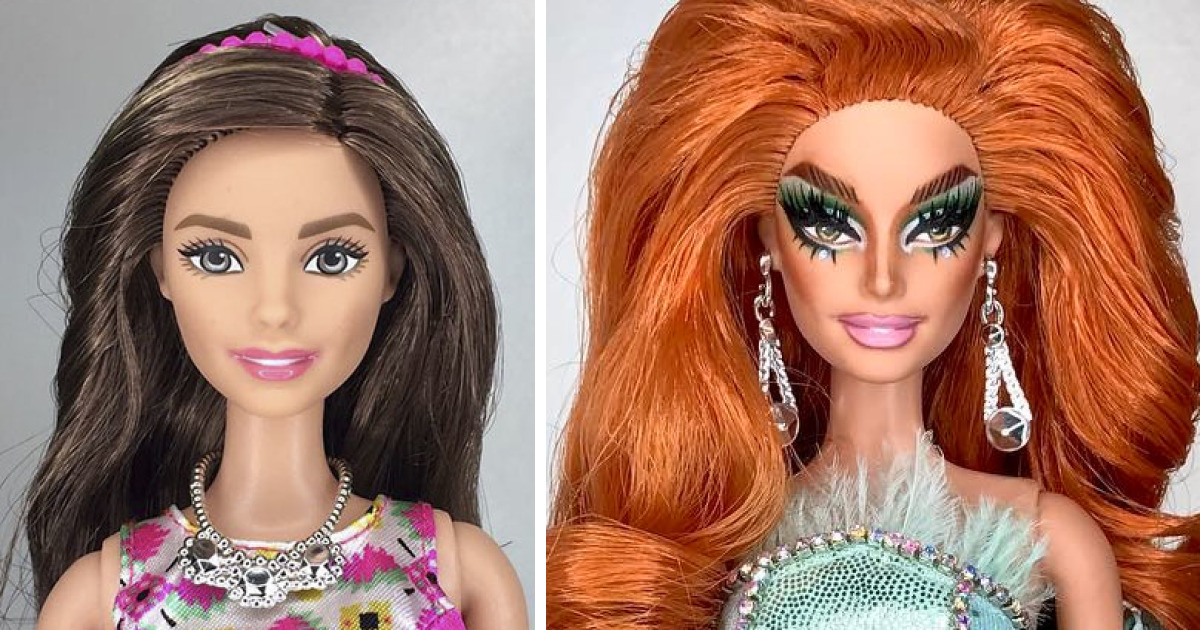
Some artists paint on canvas. Some sculpt marble. Some stare at a perfectly ordinary Barbie doll and think, “You know what this needs? A lace-front wig, a beat mug, a rhinestoned bodysuit, and the spiritual confidence of a queen lip-syncing for her life.” That is the deliciously extra magic behind artist Mark Jonathan’s custom Barbie repaints inspired by RuPaul’s Drag Race.
Jonathan, a U.S.-based artist and graphic designer, became known online for transforming classic fashion dolls into tiny, high-glam replicas of famous Drag Race contestants. His project, often called “Rupaints,” does more than put makeup on plastic faces. It turns Barbie into a miniature runway, a fan tribute, and a reminder that drag has always been part performance, part fashion, part illusion, and part “how did they even make that?”
For fans of Barbie, drag culture, and RuPaul’s Drag Race, these dolls hit a very specific pleasure center. They are nostalgic, campy, detailed, and wonderfully unnecessary in the best possible way. Nobody technically needs a Barbie version of Trixie Mattel, Violet Chachki, Naomi Smalls, or Valentina. But once you see one, your brain immediately says, “Actually, yes. Put her in a glass case and alert the Smithsonian.”
When Barbie Meets the Main Stage
Barbie has been a pop culture icon since Mattel introduced the doll in 1959. Over the decades, she has been a doctor, astronaut, presidential candidate, mermaid, movie star, and approximately 9,000 other things that make the average résumé look sleepy. Her whole cultural superpower is transformation. Barbie is not one identity; she is a platform for imagination.
That is exactly why the connection between Barbie and drag feels so natural. Drag is also built on transformation. A performer starts with a body, a face, a concept, and a dream. Then come the wigs, pads, lashes, paint, jewels, fabric, attitude, and stage presence. By the time the look is complete, the result is not just clothing. It is a character. It is a fantasy. It is storytelling with contour.
RuPaul’s Drag Race, which premiered in 2009, brought that art form to a massive television audience. The show turned runway categories, lip-sync battles, reading challenges, sewing disasters, and catchphrases into mainstream entertainment. It also helped introduce viewers to the labor behind drag: the makeup skills, costume construction, comedy writing, branding, and personal vulnerability required to survive in a competition where one bad hemline can haunt you forever.
Mark Jonathan’s dolls sit right at the intersection of these worlds. Barbie already represents fashion fantasy. Drag Race represents theatrical self-invention. Combine the two and you get a small plastic diva who looks ready to ask, “Is the bus still running?” while wearing a perfectly tailored gown.
Who Is Mark Jonathan?
Mark Jonathan is the artist behind the viral Barbie-to-drag-queen transformations that caught attention across entertainment and pop culture sites. He is often described as a Barbie repainter, doll artist, and graphic designer. His work became especially visible through Instagram, where fans could see side-by-side comparisons of the original queens and their doll versions.
The idea is simple to explain but difficult to execute: take an existing Barbie-style doll, remove or alter the factory face, repaint the features, style the hair, recreate the outfit, and capture the attitude of a real drag performer in miniature. The final doll must look like both a toy and a recognizable queen. That balance is harder than it sounds. Too realistic, and the doll loses its Barbie charm. Too generic, and it becomes “random blonde in a dress,” which is not exactly a category winner.
Jonathan’s strength is specificity. His dolls do not merely suggest drag. They reference particular Drag Race contestants, signature makeup shapes, memorable runway outfits, and recognizable performance personas. A Trixie Mattel-inspired repaint, for example, must understand Trixie’s exaggerated eye shape, doll-like cheek structure, retro-cowgirl-meets-camp aesthetic, and intentionally artificial glamour. A Violet Chachki-inspired doll must communicate vintage burlesque elegance, sharp fashion lines, and the kind of waistline that makes corsets file for overtime.
The Art of the “Rupaint”
A great repaint starts with observation. Drag makeup is not everyday makeup with extra glitter sprinkled on top like a cupcake emergency. It is architecture. Queens reshape their faces using highlight, shadow, exaggerated brows, stacked lashes, overdrawn lips, and sometimes enough setting powder to survive a small weather event.
On a Barbie doll, those details shrink to a tiny surface. The artist must paint expression, likeness, and personality in miniature. The eye placement has to be right. The brows must match the queen’s signature style. The lips need the correct shape and color. Even the blush placement matters because drag faces are often instantly recognizable from the way the makeup exaggerates structure.
Then comes the fashion. RuPaul’s Drag Race is famous for runway looks that range from Old Hollywood glamour to club-kid chaos, from pageant perfection to conceptual art pieces that make the judges say, “I don’t know what I’m looking at, but I’m entertained.” Recreating those looks for a doll requires pattern-making, fabric choice, cutting, sewing, gluing, styling, and problem-solving at a scale where one rhinestone can look like a disco ball.
One of Jonathan’s widely discussed creations was a doll inspired by Naomi Smalls, the season 8 finalist known for her towering legs, fashion confidence, and model-like runway presence. The doll recreated Naomi’s neon challenge look, including bright hair and a high-impact outfit that translated beautifully into Barbie scale. That specific project showed why these repaints work: Naomi already has the proportions and fashion energy of a living doll, so turning her into one feels like pop culture completing a full circle.
Why Drag Race Queens Make Perfect Barbie Subjects
Not every celebrity makes sense as a Barbie repaint. Some famous people have looks that depend on subtlety. Drag queens, however, often build their public image around visual signatures. That makes them ideal subjects for doll art.
Trixie Mattel: The Human Doll Becomes an Actual Doll
Trixie Mattel is one of the most obvious choices for a Barbie transformation because her drag persona openly plays with doll-like femininity. Her makeup is enormous, graphic, and instantly recognizable: huge white eye shapes, severe black liner, dramatic lashes, and lips that look ready to sell both country music and emotional damage. A Trixie doll is not just a fan object; it feels like the natural habitat of the character.
Violet Chachki: Vintage Glamour in Miniature
Violet Chachki’s drag is built on polish, silhouette, and fashion history. She brings burlesque, fetish glamour, couture references, and old-school showgirl precision into her looks. A Violet-inspired Barbie repaint needs elegance and restraint, even when the outfit is dramatic. It cannot simply be sparkly. It has to look expensive, even if it is only a few inches tall and probably lives on a shelf next to a glue gun.
Naomi Smalls: Runway Proportions, Doll Logic
Naomi Smalls is another perfect fit because her drag persona often leans into supermodel fantasy. Long lines, bold colors, sleek hair, and confident posing make her translate naturally into Barbie form. The challenge is capturing her attitude. Naomi’s appeal is not only in the clothes; it is in the way she wears them, as if the runway personally apologized before she stepped on it.
Valentina: Beauty, Drama, and the Power of a Face
Valentina’s drag is beauty-forward, romantic, and theatrical. Her face is central to the fantasy, which makes her a fascinating repaint subject. A Valentina doll needs softness, glamour, and just enough telenovela energy to make you believe she might dramatically turn away from a mirror while whispering, “I’d like to keep it on, please.”
More Than Fan Art: Why These Dolls Matter
At first glance, custom Drag Race Barbies might seem like a cute internet novelty. And yes, they are cute. Deeply cute. Aggressively cute. But they also reveal something important about fandom, queer creativity, and the changing meaning of toys.
For decades, Barbie has been debated as a symbol of beauty standards, consumer culture, femininity, aspiration, and imagination. Some people see her as limiting. Others see her as flexible and empowering. The truth is probably somewhere in the middle, wearing heels. What makes custom doll art interesting is that it takes a mass-produced object and reclaims it. The factory doll becomes a canvas for new identities.
When an artist turns Barbie into a drag queen, the doll stops being only a traditional symbol of polished femininity. She becomes camp. She becomes queer tribute. She becomes a miniature celebration of chosen identity. She becomes proof that femininity itself can be performed, exaggerated, questioned, remixed, and rhinestoned until it becomes something entirely new.
That is especially meaningful in the world of RuPaul’s Drag Race, where contestants often discuss how drag helped them understand themselves, survive rejection, find community, and build careers. A custom doll cannot hold all of that history, of course. It is still plastic. But art can gesture toward bigger stories, and Jonathan’s dolls do exactly that.
The Internet’s Love Affair With Miniature Glamour
Part of the appeal of these Drag Race Barbie dolls is the internet’s long-standing obsession with miniature craftsmanship. Tiny food, tiny rooms, tiny designer bags, tiny celebrity outfitspeople love seeing large cultural objects recreated at small scale. It is the same reason a perfect miniature croissant can make a grown adult gasp like they have witnessed a miracle.
Miniature art creates delight because it demands precision. A full-size gown is impressive, but a doll-size gown that still captures the original silhouette feels almost impossible. The viewer understands the difficulty immediately. Every seam is smaller. Every accessory is fussier. Every mistake is magnified because there is nowhere to hide. A crooked lash on a human face is a minor issue; a crooked lash on a doll can look like she just received shocking news backstage.
Social media also rewards this kind of work. A finished repaint is instantly visual, easy to share, and satisfying to compare with the original queen. Fans can comment on the accuracy, tag the performer, debate favorite looks, and ask which queen should be next. In that sense, the dolls are not only objects. They are conversation starters.
Drag, Barbie, and the Joy of Exaggeration
Drag and Barbie both understand exaggeration. Barbie’s world has always been a little too perfect, a little too shiny, and a little too color-coordinated. Drag takes that same artificiality and makes it self-aware. It says, “Yes, this is fake. That is the point. Now look closer.”
That is why the combination feels so satisfying. A Barbie turned into a drag queen does not hide the artificial nature of the doll. It celebrates it. The plastic body, painted face, synthetic hair, and tiny clothes become part of the joke and the beauty. Drag has always known that artificiality can reveal truth. Sometimes a person has to become larger than life to show who they really are.
There is also a fun cultural reversal happening. Barbie has often been treated as an idealized image of womanhood. Drag queens take idealized femininity and turn it into performance, critique, fantasy, comedy, and personal expression. When Barbie becomes a drag queen, the doll is no longer just an object shaped by beauty norms. She becomes an object commenting on those norms with a wink, a fan, and possibly a death drop.
The Craft Behind the Camp
It is easy to underestimate playful art. Because these dolls are fun, colorful, and pop-culture-based, some people might dismiss them as simple fan creations. But custom doll repainting requires serious technique.
Artists often remove the original factory paint using careful methods that protect the vinyl. They repaint features with tiny brushes, high-quality pigments, sealants, and steady hands. Hair may be rerooted, styled, cut, curled, or replaced. Outfits may be sewn from scratch or assembled from altered doll garments. Accessories might be handmade, sculpted, painted, or repurposed from other miniature pieces.
In other words, a successful Drag Race Barbie repaint is not just “Barbie plus eyeshadow.” It is portraiture, fashion design, textile work, makeup analysis, character study, and fan devotion crammed into one tiny body. The finished doll may look effortless, but effortless is usually what happens after many hours of muttering at fabric under bad lighting.
Why Fans Connect With These Dolls
Fans connect with Jonathan’s Drag Race-inspired Barbies because they offer a physical version of admiration. In digital fandom, love often appears as posts, memes, edits, comments, and reaction GIFs. A custom doll is different. It is slow fandom. It takes time, materials, and care. It says, “This queen’s look mattered enough for me to recreate it by hand.”
That kind of tribute feels personal. Many Drag Race viewers do not just watch the show casually. They follow queens after the season ends, attend tours, buy merch, quote confessionals, recreate makeup, and build emotional connections with performers whose stories mirror their own experiences of self-discovery, rejection, resilience, and reinvention.
A doll can become a small shrine to that connection. It can represent a favorite runway, a beloved queen, or a moment when a viewer felt seen. And because Barbie is tied to childhood imagination, the format adds another layer. For queer fans especially, a drag Barbie can feel like a playful rewrite of the toy aisle: the doll you wish existed when you were younger, standing proudly in heels and refusing to apologize for being fabulous.
How Drag Race Changed the Visual Language of Pop Culture
RuPaul’s Drag Race has had a major influence on modern pop culture. Its vocabulary, humor, and aesthetics have moved far beyond the show itself. Phrases from drag and ballroom culture have entered everyday speech, fashion brands collaborate with queens, celebrities appear as guest judges, and performers from the franchise tour internationally.
The show has also changed how mainstream audiences understand makeup and fashion performance. Viewers now casually discuss padding, mug painting, reveals, silhouettes, branding, and runway references with the confidence of people who have never sewn a sleeve but definitely have opinions about one. Drag has trained audiences to look at clothing as storytelling.
That is part of why Jonathan’s dolls feel so timely. They are not random celebrity miniatures. They are responses to a culture that has learned to appreciate drag as visual art. Each doll asks viewers to notice the choices behind a queen’s image: the color palette, the eye shape, the wig, the accessories, the proportion, the mood. In miniature, those choices become even clearer.
Experiences Inspired by Drag Race Barbie Art
Spending time with the idea of Drag Race-inspired Barbie dolls changes the way you look at both toys and performance. At first, the concept sounds like pure internet fun: take a doll, add drag, enjoy the sparkle. But the more you think about it, the more it becomes a lesson in creativity. These dolls show that art does not always need a grand museum wall. Sometimes it needs a desk, a brush, a doll head, and the courage to say, “This needs more blush.”
One experience many fans can relate to is the joy of recognizing a queen from tiny details. You may not need a label to identify Trixie Mattel if the doll has those giant graphic eyes and that unmistakable camp expression. You may spot Violet Chachki through a sculpted silhouette or Naomi Smalls through a model-like pose. That recognition feels like being part of an inside joke with the artist. The doll rewards people who know the references, but it is still visually exciting for people who do not.
Another experience comes from realizing how much labor lives inside glamour. On television, runway looks flash by quickly. A queen walks, poses, gets critiqued, and moves on. But a doll repaint freezes the look. Suddenly you study the curve of an eyebrow, the placement of a jewel, the way a garment creates shape. The miniature format slows everything down. It makes you appreciate the original drag performer and the doll artist at the same time.
These dolls can also spark creativity in people who have never considered customizing toys. A fan might start by looking at Jonathan’s work and thinking, “I could never do that.” Then curiosity sneaks in. How do artists repaint faces? What materials do they use? Can doll hair be rerooted? How tiny can a corset be before it becomes a personal attack? That curiosity can lead to sketching, sewing, collecting, photographing, or simply paying closer attention to handmade objects.
There is also a nostalgic emotional layer. Many people grew up with dolls as tools for storytelling. They invented characters, outfits, dramas, weddings, betrayals, careers, and emergency mermaid situations. Drag Race Barbie art brings that childhood play into an adult pop culture space. It says imagination does not expire. It just gets better lighting and stronger contour.
For LGBTQ+ fans, the experience can feel even more meaningful. Traditional toy aisles have not always made room for queer expression, gender play, or camp aesthetics. A Barbie transformed into a drag queen feels like a tiny act of reclamation. It imagines a world where glamour can be loud, identity can be flexible, and a doll can serve face without asking permission. That may sound dramatic for a small plastic figure, but drag has always understood the power of drama.
Finally, these dolls remind us that fandom is most beautiful when it creates rather than only consumes. Watching a show is fun. Quoting it is fun. Arguing about robbed queens online is, depending on your blood pressure, occasionally fun. But making something because the show inspired you adds another layer. Mark Jonathan’s Drag Race Barbies are not just merchandise-style objects. They are handmade love letters to performers who turned themselves into art first.
Conclusion: Tiny Dolls, Huge Charisma
Mark Jonathan’s Barbie transformations work because they understand the soul of both Barbie and drag. Barbie is fantasy in plastic form. Drag is fantasy with a heartbeat, a punchline, and a pair of lashes visible from space. Together, they create miniature icons that celebrate fashion, queer creativity, pop culture, and the pure joy of transformation.
These dolls are funny, beautiful, and surprisingly thoughtful. They show how a mass-produced toy can become a custom tribute. They show how drag queens build identities powerful enough to be recognized even at doll scale. Most of all, they remind us that art can be glamorous without being serious, and serious without losing its sense of humor.
In a world that often asks people to shrink themselves, a Drag Race Barbie does the opposite. She may be small, but she is not subtle. She is painted, styled, posed, and ready for the runway. And honestly? She did not come to play. She came to slay, in sensible miniature heels.