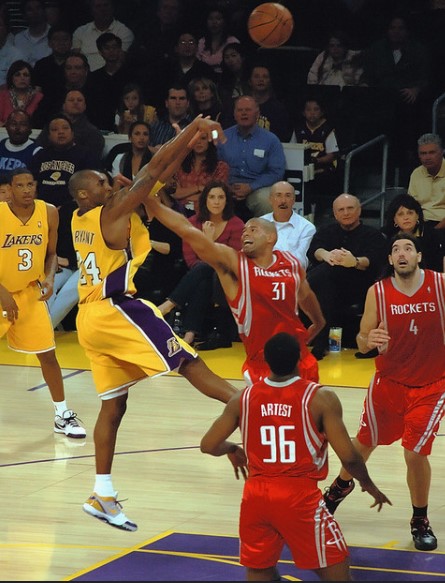
At first glance, Shane Battier and John Maynard Keynes belong in the same sentence only if a trivia host has dropped the answer cards. Battier spent 13 NBA seasons studying scorers, taking charges, making timely corner three-pointers, and helping championship teams. Keynes spent his career analyzing recessions, uncertainty, employment, money, and the international financial system. One wore a Miami Heat jersey; the other looked like a man who had just discovered a flaw in your economic assumptions.
Yet the comparison becomes surprisingly useful once we stop focusing on their job titles. Both men saw value that conventional scoreboards missed. Both respected quantitative evidence without confusing numbers for reality. Both understood that performance depends on systems, timing, psychology, incentives, and the behavior of other people. Most importantly, both were willing to do practical, sometimes unglamorous work to improve the whole.
An Unlikely Comparison With a Serious Point
Battier was a major star at Duke, helping the Blue Devils win the 2001 national championship while collecting national player-of-the-year honors. In the NBA, his identity changed. He was not asked to dominate the ball or chase scoring titles. His value came from defense, positioning, communication, preparation, floor spacing, and decisions that made more celebrated teammates better. He later won two NBA titles with Miami and received the league’s 2013-14 Twyman-Stokes Teammate of the Year Award.
Research support:
Keynes followed a similarly unusual path from academic talent to practical problem-solver. Trained in mathematics at Cambridge, he wrote about probability, served in government, challenged economic orthodoxy during the Great Depression, and helped shape postwar monetary negotiations. His 1936 book, The General Theory of Employment, Interest and Money, argued that an economy could remain trapped by inadequate demand and high unemployment rather than automatically returning to full health.
Research support:
The shared theme is hidden contribution. Battier’s box score could look ordinary while his team improved. A market statistic could look orderly while Keynes saw weakness spreading through the wider economy. Both trained themselves to notice interactions, second-order effects, and overlooked constraints.
Both Saw What Traditional Scoreboards Missed
Battier Looked Beyond Points and Rebounds
Basketball once leaned heavily on the box score because points, rebounds, assists, steals, and blocks were easy to count. Battier complicated that language. How do you record a defender steering Kobe Bryant toward a lower-percentage area? Where is the column for making the correct rotation early enough that no heroic block is needed? How many fantasy points does a player receive for warning a teammate about a screen? Usually none, because fantasy basketball has never awarded a trophy for excellent adult supervision.
Battier became famous as a “no-stats” contributor because his impact often appeared indirectly. He studied opponent tendencies, accepted difficult assignments, spaced the floor, drew charges, and executed game plans with unusual discipline. In discussions of people analytics, he explained how data offered a blueprint for guarding elite scorers while judgment remained essential during live possessions.
Research support:
Keynes Looked Beyond Individual Markets
Keynes also focused on effects that disappear when each decision is viewed alone. A family may wisely reduce spending during uncertain times. If millions of families do so simultaneously, businesses lose revenue, investment slows, and jobs disappear. The economy can spiral downward even though each participant is behaving sensibly from a narrow perspective.
This is the economic version of five defenders independently making a “smart” choice and leaving the corner shooter open. Keynesian economics emphasizes aggregate demandthe combined spending of households, businesses, and governmentas a major influence on short-run output and employment. Keynes made the system visible, just as basketball analytics made hidden on-court contributions easier to recognize.
Research support:
They Used Data, but Never Worshiped It
Battier did not walk onto the court, open a spreadsheet, and ask Kevin Durant to stand still while the formulas recalculated. Data gave him tendencies: which direction an opponent preferred, where a scorer was most efficient, and which shot the defense should concede. The numbers narrowed the problem. Judgment still solved it.
Keynes likewise resisted the idea that every uncertainty could be reduced to a perfectly precise number. His work on probability treated evidence, confidence, and incomplete knowledge as serious problems. His economic writing also emphasized that businesses invest before they can know exactly what demand, politics, technology, or public confidence will look like.
Research support:
This is one of the clearest similarities between Shane Battier and John Maynard Keynes: evidence guided action but did not replace thinking. A tendency is not a guarantee, and a model is not the world.
Context Was Their Real Superpower
Battier’s best decision depended on the opponent, lineup, score, clock, and defensive scheme. A contested long two-pointer might be an excellent result against one superstar and a poor result against another. The correct choice was contextual, not universal.
Keynesian policy is also contextual. The idea is not that government should spend recklessly every Tuesday because the economy looks bored. The stronger claim is that when private demand collapses and resources sit idle, public policy can support spending, employment, and confidence. During inflationary pressure, the appropriate response may be different.
Research support:
Battier was not loyal to one defensive move; he was loyal to the team’s objective. Keynes was not defending one mechanical rule for every economic season; he was diagnosing conditions before prescribing treatment.
They Made Other People More Effective
Battier’s career is a model of team-first leadership. After being a college superstar, he accepted NBA roles requiring fewer shots and more invisible labor. He defended stars, communicated, prepared, mentored, and created order around teammates with greater offensive responsibility. The NBA’s teammate award recognizes selfless play, leadership, mentorship, and dedication to the groupqualities closely associated with Battier.
Research support:
Keynes worked on a much larger court, but his practical influence also enabled others. His ideas gave governments and central banks a framework for responding to severe downturns. At Bretton Woods in 1944, he represented Britain in negotiations that contributed to the postwar monetary order. His proposals were not adopted in full, but he helped frame the need for institutions that could reduce instability and support reconstruction and trade.
Research support:
Neither man’s most interesting contribution was a solo highlight. Battier’s value appeared in a five-man unit. Keynes’s value multiplied through policymakers and institutions.
They Preferred Useful Ideas to Elegant Dogma
Battier’s game was practical almost to the point of comedy. If the best option was taking a charge, making an extra pass, standing in the corner, or forcing an awkward shot, he did it. Basketball aesthetics could file a complaint later.
Keynes showed similar impatience with theories that looked elegant but failed during crisis. The Great Depression exposed the weakness of assuming that markets would quickly restore full employment on their own. Keynes asked the practical question: if recovery is not occurring, what mechanism will restore demand, and what can policy do while unemployment remains severe?
Research support:
This did not make either man anti-theory or anti-data. It made them outcome-oriented. Theory had to explain the game being played, not an imaginary contest in which every participant behaved perfectly.
Both Understood Psychology and Expectations
Basketball is shaped by confidence, frustration, reputation, and pressure. A defender who repeatedly forces a scorer into uncomfortable attempts may influence that scorer’s later choices. Battier’s preparation worked partly because he understood habits and how to disrupt them.
Keynes placed expectations and confidence near the center of economic behavior. Investment depends not only on current arithmetic but also on what business leaders believe the future may bring. Fear can delay hiring and investment; optimism can encourage risk-taking. Human beliefs can reinforce the very conditions people expect.
In both settings, people are not neutral pieces on a board. They observe, react, adapt, panic, and occasionally behave as though the fourth quarter has started even when it is still Monday morning.
They Changed the Language of Value
Battier became a symbol of basketball’s effort to measure defense, spacing, lineup fit, and decision quality. His career showed that a player can create winning value without superstar counting statistics.
Keynes changed economic vocabulary on a larger scale. Aggregate demand, expectations, liquidity preference, employment, and stabilization policy became central to modern macroeconomic debate. Economists still disagree about intervention, but they often argue on terrain Keynes helped define.
Research support:
Where the Comparison Breaks Down
Battier operated inside a game with fixed rules, a visible clock, and a score everyone could agree on. Keynes studied economies with changing institutions, political conflict, incomplete information, and no final buzzer. Basketball analysts can examine thousands of comparable possessions; economic policymakers rarely receive so many clean experiments.
Their public styles were different too. Battier became admired for understated contribution. Keynes was a famous intellectual, forceful debater, investor, adviser, and controversial public figure. Their similarity lies less in personality than in method: examine the system, identify the hidden constraint, use evidence intelligently, and act for the larger objective.
Conclusion: The Glue Guy and the Macroeconomist
The similarities between Shane Battier and John Maynard Keynes reveal a broader lesson about intelligence. Intelligence is not merely knowing more facts or producing more visible output. It is recognizing which facts matter, understanding how parts interact, and choosing actions that improve the system.
Battier showed that winning basketball may depend on contributions that never receive a highlight package. Keynes showed that an economy cannot always be understood by examining isolated individuals and assuming the whole will automatically repair itself. Both challenged simplistic scoreboards, valued context, and made their greatest impact by helping a larger unit perform better.
No, Battier was not secretly running fiscal policy from the weak-side corner, and Keynes never had to guard Kobe Bryant. Still, each asked a similar question: what is happening beneath the obvious numbers, and what action gives the teamor the economythe best chance to succeed?
Experience-Based Lessons From the Battier-Keynes Mindset
The Most Valuable Person May Not Look Like the Star
In sports teams, offices, startups, and community organizations, visible output is only part of performance. One employee presents the final deck, while another catches the data error that would have embarrassed the company. One salesperson closes the contract, while an operations specialist builds the process that allows delivery. The Battier lesson is to notice who improves everyone else’s odds. The Keynes lesson is to examine the system that makes individual success possible. Leaders should therefore ask not only who produced the biggest number, but also who reduced mistakes, improved coordination, shared information, and made the group more resilient.
Dashboards Are Maps, Not the Territory
Many organizations have experienced the strange comfort of a beautiful dashboard during a developing problem. The charts are green, the weekly report is polished, and yet customers are unhappy or employees are quietly leaving. Battier’s approach suggests combining metrics with observation and situational knowledge. Keynes’s approach suggests asking whether the indicators capture the larger cycle or merely one corner of it. A stronger process asks what is missing, which behavior a metric encourages, whether an average hides a vulnerable group, and whether conditions have changed. Blindly following a dashboard is not data-driven management; it is numerically decorated obedience.
Crisis Rewards Role Clarity
During a crisis, teams often waste time arguing about blame or waiting for normal conditions to return. The Battier-Keynes mindset directs attention toward the binding constraint. On a basketball court, that may be stopping a scorer from reaching his favorite spot. In a recession, it may be collapsing demand and rising unemployment. In a business, it may be cash flow, customer trust, supply disruption, or slow decisions. Once the constraint is identified, roles become clearer: protect cash, communicate, redesign operations, and measure results. Crisis management often resembles taking a chargeuncomfortable, necessary, and unlikely to appear on the promotional poster.
Adaptation Beats Identity Protection
People often cling to an old strategy because it once proved they were smart. A manager keeps the same playbook after the market changes. A talented employee resists a supporting role because it feels like a demotion. A policymaker defends a prediction long after reality has objected loudly. Battier’s career demonstrates the value of changing roles without losing purpose. Keynes’s work demonstrates the value of changing frameworks when existing explanations fail. Adapting does not erase earlier success. It shows that the objective matters more than preserving an image.
Build for the Whole, Not the Applause
The deepest shared lesson is that durable success comes from improving connections. A defensive rotation connects five players. Aggregate demand connects households, businesses, financial institutions, and government. A healthy organization connects incentives, information, trust, and execution. People applying this mindset stop treating every task as a personal audition. They document processes, share credit, prepare for unlikely scenarios, and make decisions that may not pay off immediately. Those behaviors can feel invisible until pressure arrives. Then the ordinary teammate becomes essential, and the boring contingency plan becomes the reason the organization survives. That is the practical usefulness of comparing Shane Battier with John Maynard Keynes.
Note: This article presents an analytical comparison. It does not suggest that Shane Battier and John Maynard Keynes had a direct personal or historical connection.