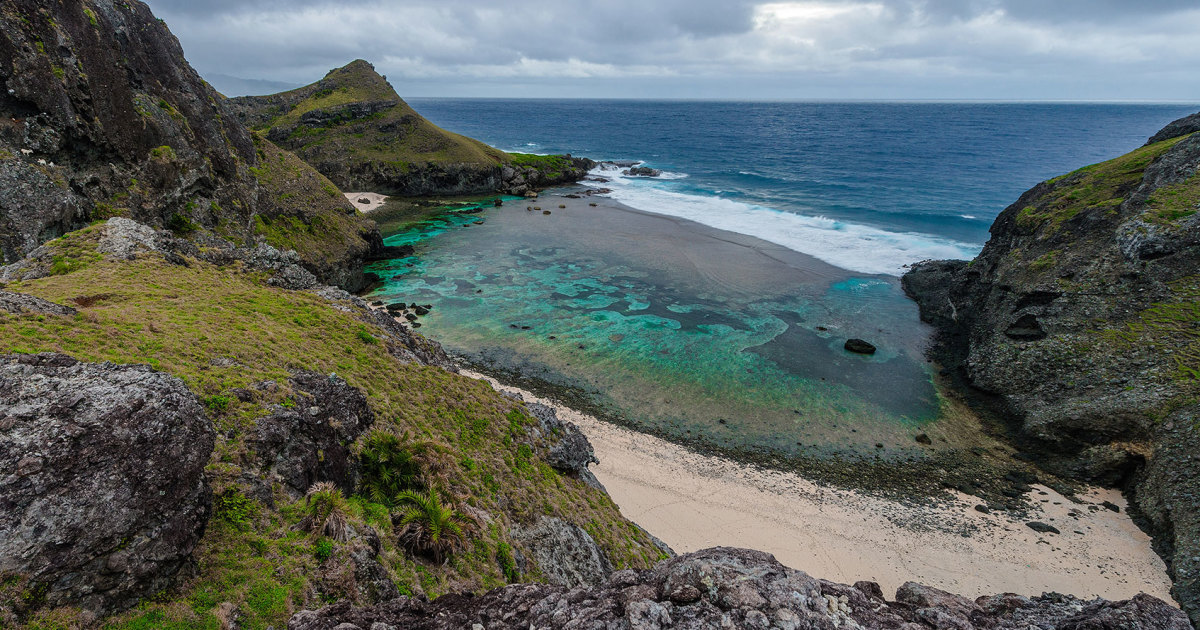
There are places that look good in photos, and then there is Batanes, a place that makes your camera question whether it has been trying hard enough. Perched at the northern edge of the Philippines, Batanes has earned its “Last Frontier” reputation the honest way: by being remote, wind-whipped, visually dramatic, and culturally distinct without turning itself into a theme park for tourists. It is the kind of destination where the landscape does not merely sit there looking pretty. It moves, broods, glows, and occasionally smacks your tripod with a gust of wind just to keep your ego in check.
An 18-day shoot in Batanes is not a casual photo walk with better scenery. It is part landscape expedition, part cultural education, part weather negotiation, and part lesson in humility. You arrive for the rolling hills, volcanic boulder beaches, stone houses, fishing villages, and lighthouses. You stay because the place keeps changing moods every few hours. One moment the hills look like they borrowed their styling from Ireland. The next, the cliffs go full cinematic and suddenly your camera roll starts acting like it deserves its own film festival.
This article explores what makes Batanes such a dream for photographers, filmmakers, and visual storytellers, why a longer shoot matters here, and what an 18-day creative stay can reveal that a rushed checklist trip never will. Spoiler: the best images are not always the obvious ones, and the best stories are rarely found by sprinting from one postcard spot to another.
Why Batanes Feels Like the Last Frontier
Batanes does not feel like the rest of the Philippines, and that difference is exactly the point. The province is known for rugged coasts, sloping green hills, strong winds, and a visual rhythm shaped by both geography and Ivatan culture. Its remoteness has helped preserve not only its scenery but also a way of life built around resilience, self-sufficiency, and respect for land and sea. This is not a place you “consume.” It is a place you learn to move through carefully.
For visual creators, that matters. Batanes offers more than beauty. It offers texture. The stone houses are not decorative nostalgia; they are practical architecture born from storms. The roads curve beside cliffs and pastureland where cattle look suspiciously like they know they are in everyone’s frame. Fishing villages feel lived-in rather than staged. Even famous stops such as Valugan Boulder Beach or the rolling hills near Racuh a Payaman have a rawness that keeps images from looking overly polished or generic.
That is why calling Batanes a “Last Frontier” is more than travel-brochure poetry. The phrase works because Batanes still resists easy packaging. It remains shaped by weather, distance, local customs, and conservation concerns. In other words, it is gorgeous, yes, but it is also gloriously inconvenient. For serious photographers, that is not bad news. That is the entire romance.
What 18 Days Gives You That 48 Hours Never Will
A short visit can get you the headline shots. Eighteen days gives you the whole sentence, the footnotes, and the emotional subtext. In Batanes, light is a moving target and weather is basically a co-director. Clouds can swallow a mountain, flatten a coastline, and then step aside ten minutes later like nothing happened. A longer shoot gives you time to wait, adapt, and return to locations until they reveal more than their first impression.
That patience changes the work. On day one, you may photograph a lighthouse because it is iconic. By day ten, you are no longer just shooting the lighthouse. You are shooting the way fog softens its edges at sunrise, the way the grass bends before rain, the way the empty road leading to it says something about isolation. Longer stays also make room for what many creators forget to schedule: boredom. And boredom, inconveniently enough, is often where good ideas come from.
An 18-day timeline also helps you avoid turning Batanes into a highlight reel with no soul. Instead of grabbing landmarks and leaving, you start noticing repetition and ritual: fishermen preparing for the day, clouds building over ridges, village quiet in the late afternoon, the visual logic of houses built low and sturdy against the wind. That is when the project begins to move from pretty travel content into actual storytelling.
Locations That Refuse to Be Average
Valugan Boulder Beach
If Batanes had a signature texture, Valugan Boulder Beach would be one of its loudest arguments. The volcanic boulders, surf, and shifting sky can make the beach look ancient, moody, and slightly dramatic in the best possible way. It is ideal for long exposures, wide environmental compositions, and those moments when the sea looks like it is trying to recite poetry through violence.
Racuh a Payaman and the Rolling Hills
Often compared to open countryside elsewhere in the world, the rolling hills of Batanes are not just scenic; they are graphic. Their curves create clean layers, especially when side light arrives early or late in the day. Photographers love them because they simplify beautifully. One cow, one road, one horizon line, and suddenly your frame is doing all the talking.
Sabtang Island
Sabtang is where architecture and atmosphere shake hands. Traditional Ivatan stone houses, weathered paths, coastal views, and village life make it a rich place for cultural photography. This is where a creator needs to slow down and shoot with respect. The goal is not to treat heritage as a prop. The goal is to understand how daily life, memory, and design meet in one frame.
Itbayat and Torongan Hills
Itbayat feels more remote still, and that extra edge shows up in the imagery. Cliffs, trails, rough water access, and a quieter visual field make it compelling for landscape work that feels less visited. Torongan Hills and the nearby cave and burial markers add historical depth to the scenery, giving photographers a chance to build a body of work that includes archaeology, terrain, and cultural continuity rather than just another nice horizon.
Diura and the Fishing Villages
If your project needs human rhythm, not just dramatic views, fishing villages matter. In places like Diura, the local fishing traditions, seasonal routines, and boats along the shore can add movement and context to a shoot. These are the frames that keep a landscape project from becoming a glorified wallpaper collection.
The Ivatan Influence on the Visual Story
What makes Batanes memorable on camera is not only the terrain. It is the way Ivatan culture is woven into that terrain. Stone houses, cogon roofs, fishing practices, local festivals, and even a place as simple as Honesty Coffee Shop all reflect a strong cultural identity shaped by practicality and trust. That gives photographers something increasingly rare: a destination where the visual language still belongs to the place itself.
And that comes with responsibility. A meaningful shoot in Batanes should not reduce Ivatan culture to “quaint local color.” It should pay attention to why things look the way they do. A house built for typhoon conditions is not merely photogenic; it is historical problem-solving in architectural form. Traditional attire is not costume for your content calendar. Fishing rituals are not there to spice up a montage. The best work from Batanes is often the work that remembers real people live inside the frame.
This is also where humor helps, just a little. Batanes has a way of making overexcited photographers calm down. You come in planning to capture everything. Then the wind nearly steals your hat, your lens fogs up, and a local child walks by with the kind of casual dignity your entire mood board has been faking for months. The place teaches respect quickly.
Gear, Timing, and Creative Survival
Batanes rewards preparation, but it does not guarantee cooperation. Weather can shift quickly, and the same conditions that make the islands visually exciting can also make shooting physically tiring. Wind is a recurring character, not a background extra. For photographers, that usually means a sturdy tripod, weather-conscious packing, lens cloths, backup batteries, and a willingness to stop fighting the elements and start composing with them.
Sunrise and sunset are obvious favorites, but gray weather has real value here. Overcast skies can deepen the greens, emphasize the stone textures, and bring out the brooding quality of the coast. Blue hour works especially well in villages and along the shore, where muted light gives the islands a quieter, almost meditative mood. For night photographers, Batanes can also be rewarding when skies open up, especially in less light-polluted areas. But a good astro night still depends on patience, luck, and the weather deciding not to be theatrical for once.
As for creative survival, the real trick is simple: do not shoot every location the same way. Batanes deserves more than one visual voice. Try wide landscapes, yes, but also details, portraits, road scenes, negative space, weather transitions, and environmental storytelling. Otherwise you will return home with 1,200 photos that all say, “Look, a hill,” which is not the artistic breakthrough we were hoping for.
The Real Story Is Not Just Beauty, but Balance
The more you learn about Batanes, the clearer it becomes that the future of photography there is tied to sustainable tourism. Local stakeholders have emphasized preservation, carrying capacity, and a balanced approach to tourism that protects both the environment and Ivatan control over local life. That matters because Batanes is not beautiful in spite of restraint. It is beautiful because of restraint.
For creators, this means the smartest approach is not “How much can I extract from this place?” but “How do I work here without making the place worse?” That may sound serious, but it is actually liberating. It shifts the project away from frantic content grabbing and toward intentional observation. You stop treating Batanes like a set. You start treating it like a living landscape with limits, memory, and agency.
That is also why an 18-day shoot can be more ethical than a rushed content sprint. The longer you stay, the more likely you are to slow down, spend locally, learn context, and produce work that reflects Batanes as something richer than a one-note paradise. A frontier, after all, is not just what remains undiscovered. It is also what still asks to be approached carefully.
Composite Experience Notes: What 18 Days Shooting in Batanes Can Feel Like
The following reflection is a composite, source-informed narrative based on recurring themes from travel, photography, and cultural accounts of Batanes.
By the third or fourth day in Batanes, many photographers realize they have been approaching the islands all wrong. At first, the instinct is to chase landmarks like a collector. Valugan at sunrise. Rolling hills before noon. Sabtang by afternoon. Lighthouse by golden hour. Repeat until legs complain and memory cards look heroic. But Batanes does not reward panic very well. It rewards return.
Imagine spending nearly three weeks there and watching the same road under six different skies. One morning it is clear and cheerful, the kind of weather that makes every patch of grass look freshly painted. On another day, mist pulls the horizon closer and the whole island seems to shrink into itself. Then comes a late afternoon when the clouds break just enough for light to rake across the hills, and suddenly a scene you thought you had already “done” becomes the strongest frame of the trip. That is the quiet magic of a long shoot. It lets repetition become revelation.
The experience is not all grand scenery either. Some of the most lasting impressions come from ordinary moments. Waiting outside a small shop while the wind works overtime. Hearing local stories about storms as if weather were an old neighbor with bad manners. Seeing fishing boats on the shore and realizing that in Batanes, livelihood, landscape, and identity are never very far apart. Even the architecture teaches you something. The stone houses do not pose for the camera. They simply exist with confidence, as if to say, “We were built for harder things than your composition problems.” Fair point.
There is also a strange way Batanes changes your pace. In cities, photographers often move fast because there is too much to capture. In Batanes, you slow down because there is too much to absorb. You notice the silence between vehicles, the open stretches of road, the sound of surf below a cliff, the patience required to wait for fog to lift. You start taking fewer photos for a while, and oddly enough, those photos often get better. The island edits your impulses for you.
By the final stretch of an 18-day stay, the creative goal usually shifts. The trip is no longer about proving Batanes is beautiful. That case was closed on day one. The goal becomes showing why the place feels different. Why the wind matters. Why distance matters. Why trust, ritual, restraint, and resilience matter. You stop chasing spectacle and start chasing coherence. And that is when a project about Batanes becomes less about tourism and more about place.
Leaving is the frustrating part. Not because you have “run out” of locations, but because the islands have trained your eyes to look more carefully than before. After nearly three weeks, Batanes does not feel like a destination you finished. It feels like a conversation you had to interrupt. Which, in a way, is the highest compliment a landscape can earn.
Conclusion
“The Last Frontier” is a fitting name for Batanes because the islands still feel earned. They are visually generous, but never cheap. Over 18 days, shooting here becomes less about collecting famous views and more about understanding the relationship between land, weather, heritage, and patience. Batanes gives photographers dramatic coastlines, rolling hills, fishing villages, traditional architecture, and unforgettable light. But its real gift is subtler: it teaches you to pay attention.
That may be the best reason to spend more time there. In a world obsessed with speed, Batanes remains stubbornly photogenic in slow motion. And honestly, that might be its boldest flex.