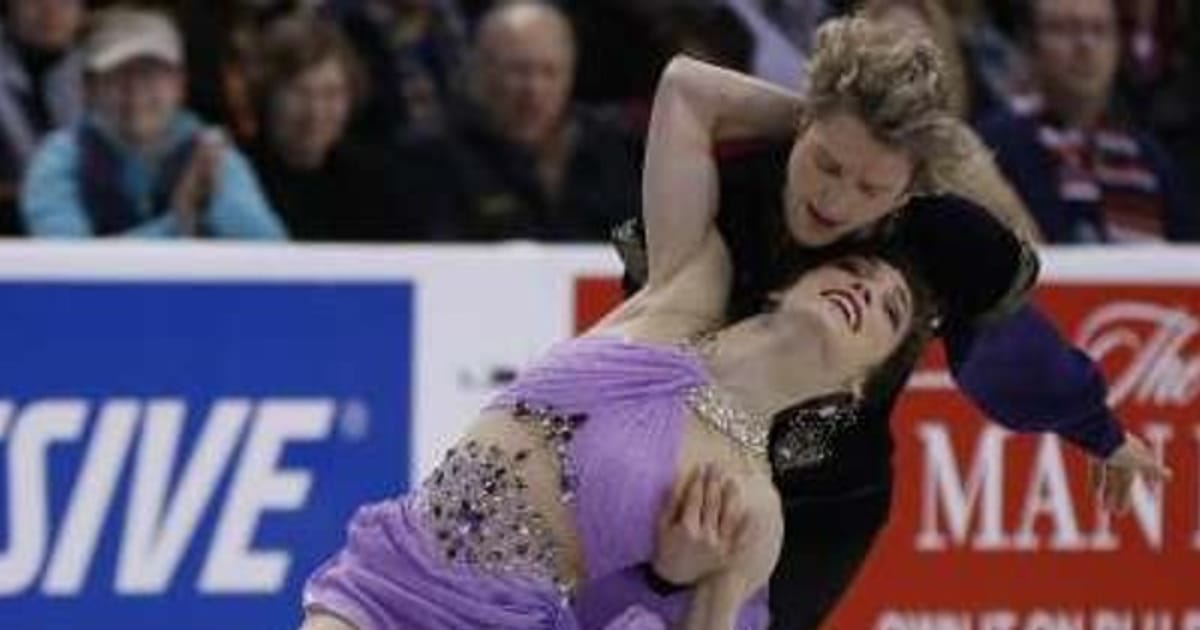
Ice dancing is figure skating’s most elegant trick: it looks effortless precisely because it is ridiculously difficult. There are no giant throw jumps to hide behind, no dramatic triple axels to make the crowd forget a messy edge. In ice dance, every lean, twizzle, lift, musical accent, and eyebrow raise has to arrive on time. One wobble can turn “timeless romance” into “two people urgently trying not to become a meme.”
The greatest ice dancing pairs of all time are not just medal collectors. They are artists, technicians, innovators, and occasionally, Olympic-level mind readers. They changed how audiences understood movement on ice. Some brought ballroom discipline into the rink. Others pushed ice dance into theater, modern dance, cinematic storytelling, and full-body emotional chaosin the best possible way.
This guide looks at legendary ice dancing teams whose influence can still be seen in today’s rhythm dances and free dances. From the first Olympic ice dance champions to modern record-breakers, these pairs helped shape the sport into one of the most captivating events at the Winter Olympics and World Figure Skating Championships.
What Makes an Ice Dancing Pair Truly Great?
Ranking the best ice dancing pairs is not as simple as counting medals, although medals certainly help. Ice dance has changed dramatically over time, moving from compulsory dances and the 6.0 judging system to the modern International Judging System. That means comparing a 1970s Soviet champion with a 2020s world champion is a little like comparing a rotary phone with a smartphone: both can connect people, but one of them has considerably more settings.
Technical Mastery
Great ice dancers must show deep edges, precise turns, fast yet controlled twizzles, secure lifts, and seamless footwork. The best teams make complex choreography look relaxed, as if skating on one blade at high speed while holding a dramatic facial expression is something everyone does before breakfast.
Musicality and Storytelling
Ice dance is built on rhythm. The top teams do not merely skate to music; they seem to breathe with it. Their knees, shoulders, hands, and timing create the illusion that the music is coming from the ice itself.
Influence on the Sport
The greatest ice dancing pairs leave a fingerprint. They inspire choreography trends, change judging expectations, or bring new audiences to the sport. A truly legendary team makes future skaters say, “We want to do something like that,” before realizing that “something like that” requires twenty years of practice and possibly supernatural balance.
1. Jayne Torvill and Christopher Dean
No list of the greatest ice dancing pairs of all time can begin anywhere else. Jayne Torvill and Christopher Dean of Great Britain turned ice dance into high art with their unforgettable “Boléro” at the 1984 Sarajevo Winter Olympics. The program became one of the most iconic performances in Olympic history, earning perfect artistic impression scores and turning a four-minute free dance into a cultural event.
What made Torvill and Dean so extraordinary was not only their competitive dominance but their imagination. They approached the ice like choreographers, actors, and musicians. Their movement had sculptural shape, theatrical patience, and a sense of dramatic build that felt revolutionary. “Boléro” did not simply win gold; it made millions of people understand that ice dance could be hypnotic, daring, and emotionally overwhelming.
Their influence continues today. Modern ice dancers still study how Torvill and Dean used stillness, body line, and tension. They proved that skating did not need to shout to be powerful. Sometimes, a slow arm, a shared breath, and perfect timing can be louder than a stadium horn.
2. Tessa Virtue and Scott Moir
Canada’s Tessa Virtue and Scott Moir are often described as the complete ice dance package: technical precision, natural chemistry, competitive nerve, and performance quality that could make even casual viewers suddenly develop strong opinions about step sequences.
Virtue and Moir won Olympic gold in 2010 and 2018, Olympic silver in 2014, and multiple world titles. Their 2010 victory in Vancouver made them the first North American ice dancers to win Olympic gold. Their 2018 “Moulin Rouge” free dance in PyeongChang was a masterclass in timing, tension, and performance control. It had speed, edge quality, daring lifts, and enough chemistry to power a small Canadian town through winter.
What separates Virtue and Moir from many other great teams is their range. They could skate with youthful freshness, classical polish, romantic intensity, or modern dramatic bite. Their partnership lasted from childhood into adulthood, giving their skating a rare depth. Every glance looked earned because, in a way, it was. They had decades of shared training behind each moment.
3. Gabriella Papadakis and Guillaume Cizeron
Gabriella Papadakis and Guillaume Cizeron of France changed the texture of modern ice dance. While many teams focused on sharp drama or ballroom sparkle, Papadakis and Cizeron brought softness, flow, and contemporary movement vocabulary into the center of the sport.
Their skating was famous for long, liquid edges and seamless transitions. They seemed less interested in hitting poses than in creating motion that never fully stopped. Their programs often felt like modern dance translated onto ice, where the blades became brushstrokes and the rink became a canvas. That sounds poetic because their skating practically forced people to become poetic against their will.
They won Olympic gold in 2022, Olympic silver in 2018, and multiple world championships. They also helped push scoring boundaries in the modern system, including becoming the first ice dancers to break the 200-point mark internationally. Their impact is visible in the way many current teams now pursue continuous flow, emotional restraint, and abstract storytelling.
4. Meryl Davis and Charlie White
Meryl Davis and Charlie White made American ice dance history. The Michigan-based team became the first U.S. ice dancers to win a world title and the first Americans to win Olympic ice dance gold, which they achieved at the 2014 Sochi Winter Olympics.
Davis and White were known for speed, attack, and relentless precision. Their skating had a bright, athletic quality: fast twizzles, explosive lifts, crisp transitions, and programs that moved like a beautifully polished machine. Their “Scheherazade” free dance in 2014 was dramatic, technically packed, and confident from the first stroke.
Their rivalry with Virtue and Moir also elevated the sport. Training in the same Canton, Michigan environment for much of their careers, the two teams pushed each other to new levels. For fans, it was a golden era of ice dance: Canada versus the United States, elegance versus electricity, romance versus speed. Fortunately, nobody had to choose permanently. We could simply enjoy the skating and argue online like civilized sports fans with Wi-Fi.
5. Lyudmila Pakhomova and Aleksandr Gorshkov
Before ice dance became an Olympic discipline, Lyudmila Pakhomova and Aleksandr Gorshkov were already defining what greatness looked like. Representing the Soviet Union, they became the first Olympic ice dance champions when the event debuted at the 1976 Innsbruck Winter Olympics.
Pakhomova and Gorshkov were pioneers. Their success helped establish ice dance as a serious competitive discipline rather than a decorative side room inside figure skating. They won multiple world titles and brought sophistication, musical intelligence, and technical authority to the sport’s early Olympic identity.
Their legacy matters because every ice dance champion who followed inherited a stage that they helped build. Without Pakhomova and Gorshkov, ice dance might not have gained the same prestige so quickly. They were not just champions; they were architects of the discipline.
6. Oksana Grishuk and Evgeny Platov
Oksana Grishuk and Evgeny Platov of Russia achieved one of the rarest accomplishments in ice dance: back-to-back Olympic gold medals. They won in 1994 and again in 1998, combining competitive steel with dramatic presence.
Their skating was bold, intense, and sometimes controversial, which is another way of saying people actually watched ice dance with their blood pressure involved. Grishuk and Platov had speed, power, and a flair for theatrical impact. They were not always subtle, but they were rarely forgettable.
Winning one Olympic title in ice dance is brutal. Winning two requires technical consistency, political resilience, and the ability to reinvent while everyone else studies your every weakness. Grishuk and Platov managed that challenge and remain one of the sport’s most decorated teams.
7. Marina Klimova and Sergei Ponomarenko
Marina Klimova and Sergei Ponomarenko were models of longevity and refinement. Competing for the Soviet Union and later the Unified Team, they won Olympic bronze in 1984, silver in 1988, and gold in 1992. That full Olympic medal set is a remarkable achievement in any discipline.
Their skating blended classic elegance with emotional maturity. They were not merely chasing trends; they had a polished, deeply controlled style that rewarded careful viewing. Their best programs showed a balance of technical security and artistic sophistication.
Klimova and Ponomarenko also influenced future generations through coaching and family legacy. Their son Anthony Ponomarenko went on to compete internationally in ice dance for the United States, proving that in some families, excellent edges may be practically hereditary.
8. Natalia Bestemianova and Andrei Bukin
Natalia Bestemianova and Andrei Bukin of the Soviet Union brought theatrical fire to ice dance in the 1980s. They won Olympic gold in 1988, Olympic silver in 1984, and multiple world championships, becoming one of the defining teams of their era.
Their programs often had a dramatic, avant-garde flavor. Bestemianova’s intensity and Bukin’s strong partnering created performances that felt larger than life. They were not the type of team to quietly float through a free dance and hope someone noticed. They demanded attention.
Their style helped broaden the emotional vocabulary of ice dance. They showed that the discipline could be passionate, unconventional, and theatrical while still maintaining technical discipline. In short, they brought opera energy to a sport already wearing sequins. Respect.
9. Maia Shibutani and Alex Shibutani
Maia and Alex Shibutani, affectionately known as the “Shib Sibs,” hold a special place in modern ice dance. As siblings, they faced a unique artistic challenge: ice dance often rewards romantic storytelling, but sibling teams must build emotional connection without leaning on romance. Their solution was smart, stylish, and deeply memorable.
The American duo won Olympic bronze in 2018 and helped the United States earn team bronze at the same Games. Their “Paradise” free dance was emotional, clean, and beautifully structured, showing that connection can be powerful without being romantic. Their skating emphasized precision, musical clarity, and polished unison.
The Shibutanis also became important ambassadors for the sport. Their social media presence, creativity, and approachable personalities brought new fans into ice dance. They made the sport feel modern and accessible while still competing at the highest level.
10. Madison Chock and Evan Bates
Madison Chock and Evan Bates represent the strength and imagination of contemporary American ice dance. Their long partnership, distinctive program concepts, and late-career rise have made them one of the most compelling teams of the modern era.
Chock and Bates won three consecutive world titles from 2023 through 2025, a major achievement in a discipline where staying on top is harder than pretending rhinestones are practical athletic wear. They are known for creative themes, dramatic lifts, and a willingness to build programs around unusual characters and moods.
One of their greatest strengths is reinvention. Over the years, they evolved from talented contenders into world champions with a recognizable artistic identity. Chock’s expressive range and Bates’s secure partnering give their programs a theatrical completeness. They remind fans that ice dance careers do not always peak early. Sometimes, the best chapter arrives after years of persistence, recalibration, and very patient knees.
Honorable Mentions Among the Best Ice Dancing Teams
Any serious conversation about the best ice dancing pairs should also include teams such as Isabelle and Paul Duchesnay, who brought experimental and modern themes into the sport; Anjelika Krylova and Oleg Ovsyannikov, known for passionate Russian drama; Tanith Belbin and Benjamin Agosto, who helped revive American ice dance; and Piper Gilles and Paul Poirier, whose creativity and longevity have earned them a devoted following.
The challenge with ice dance is that greatness comes in many flavors. Some teams dominate technically. Some redefine performance. Some become fan favorites because they make the audience feel something real. The best teams usually do all three, preferably without accidentally clipping each other’s blades during twizzles.
How the Greatest Ice Dancing Pairs Changed the Sport
They Expanded What Ice Dance Could Express
Early ice dance had strong roots in ballroom patterns and formal structure. Over time, legendary teams expanded the sport’s emotional and choreographic range. Torvill and Dean made it theatrical. Papadakis and Cizeron made it fluid and contemporary. Chock and Bates leaned into fantasy, character, and visual storytelling.
They Raised Technical Expectations
Modern ice dance is incredibly technical. Lifts must be creative but controlled. Twizzles must be fast, synchronized, and clean. Step sequences require deep edges and difficult turns. Teams like Davis and White, Virtue and Moir, and Papadakis and Cizeron pushed the technical standard so high that today’s elite dancers must be both athletes and artists at all times.
They Created Rivalries That Built the Audience
Great rivalries make sports more exciting. Davis and White versus Virtue and Moir gave fans a modern classic. Papadakis and Cizeron versus Virtue and Moir turned the 2018 Olympic ice dance event into must-watch television. Rivalries help casual viewers understand stakes, styles, and personalities. They turn edge calls and component scores into dinner-table debates. Well, maybe not every dinner tablebut certainly the fun ones.
Experience Section: What Watching the Greatest Ice Dancing Pairs Teaches You
Watching the greatest ice dancing pairs of all time is a different experience from watching many other sports. At first, you may notice the obvious things: the costumes, the music, the speed, the dramatic lifts. But the more you watch, the more the hidden details begin to appear. Suddenly, you are paying attention to knee bend, edge depth, matching shoulder lines, and whether both skaters finish a turn on the same musical accent. Congratulationsyou have become the person at the watch party saying, “That twizzle exit was a little scratchy.” There is no cure, but there are snacks.
One of the most striking experiences is realizing how much trust ice dance requires. These teams move at high speed with blades inches apart. A lift is not just a pretty shape; it is a negotiation between strength, timing, balance, and confidence. When Virtue and Moir glide through a rotational lift or Davis and White attack a footwork sequence, the beauty comes from years of repeated practice. The audience sees magic. The skaters remember the bruises.
Another lesson is that chemistry is not always romance. Torvill and Dean had theatrical connection. Papadakis and Cizeron had a meditative, almost spiritual quality. The Shibutanis showed sibling connection built on rhythm, trust, and shared purpose. Chock and Bates often create chemistry through character and atmosphere. Great ice dance partnerships prove that connection can be playful, dramatic, elegant, mysterious, or deeply human.
Watching these legendary pairs also changes how you hear music. After seeing “Boléro,” it is almost impossible to hear Ravel’s famous rhythm without imagining blades carving slow circles into Olympic ice. After Virtue and Moir’s “Moulin Rouge,” every dramatic crescendo feels like it should include a curve lift. After Papadakis and Cizeron, quiet music feels bigger because they taught audiences to notice breath, space, and softness.
For new fans, the best way to experience ice dance is to watch one program more than once. The first viewing is for emotion. The second is for structure. The third is for details: how the team changes hold, how they use the full rink, how the choreography builds toward the final pose. Ice dance rewards rewatching because the best programs are layered. They are not just routines; they are short stories written in edges.
There is also something inspiring about the longevity of elite ice dance partnerships. Many of these teams skated together for a decade or more. They had to survive injuries, judging changes, coaching switches, personal growth, public pressure, and the occasional costume choice that probably seemed better under fluorescent rink lighting. Their success shows that greatness is rarely instant. It is built through repetition, patience, argument, repair, and the decision to show up again tomorrow.
In the end, the greatest ice dancing pairs offer more than medals. They offer a reminder that partnership itself can be an art form. Two people moving as one is easy to describe and almost impossible to master. That is why ice dance continues to fascinate. When it works, it looks like music learned how to skate.
Conclusion
The greatest ice dancing pairs of all time earned their place through more than Olympic medals and world titles. They changed the sport’s language. Pakhomova and Gorshkov gave ice dance Olympic legitimacy. Torvill and Dean turned it into theater. Klimova and Ponomarenko refined its elegance. Grishuk and Platov brought competitive fire. Virtue and Moir, Davis and White, Papadakis and Cizeron, the Shibutanis, and Chock and Bates carried the discipline into new eras of athleticism, artistry, and global popularity.
Ice dance is sometimes misunderstood by casual viewers because its difficulty is disguised as grace. But that is exactly what makes it special. The best ice dancing teams make impossible coordination look natural. They turn rules into rhythm, pressure into performance, and frozen water into a stage. Not bad for a sport where one tiny blade wobble can ruin your day.