It started like a lot of modern cultural breakthroughs do: with takeout, side-eye, and a scale on the kitchen counter.
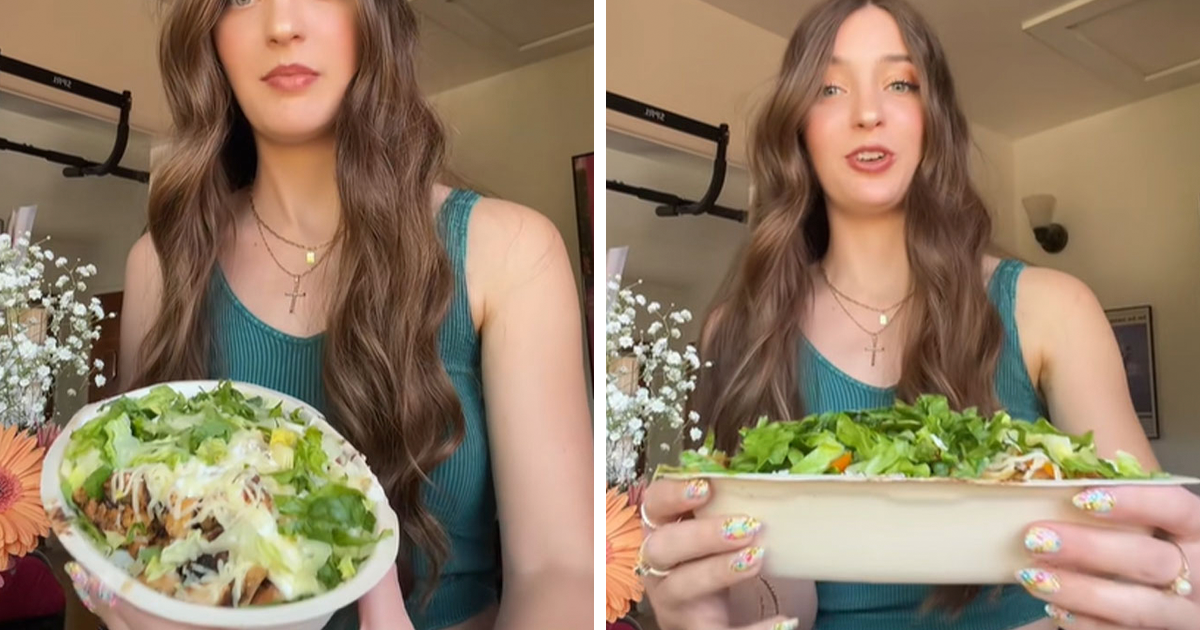
Across TikTok and other social platforms, women began testing a strangely specific theory. If they placed the exact same delivery order under a man’s name instead of a woman’s name, would the restaurant send more food? Not better food. Not faster food. Just… more food. A little extra chicken. A fuller scoop of rice. Fewer sad, lonely bites rattling around the bowl like a budget maraca.
At first, the idea sounded like internet nonsense with a side of guac. But then informal experiments started piling up. Some women claimed that when the order name was “Andrew” or “Jake,” the bowl looked fuller than when it was “Emily” or “Sarah.” Suddenly, the theory stopped feeling like a joke and started feeling like something many women already suspected about daily life: men are often assumed to need more, deserve more, or at the very least get served more generously.
That does not mean there is a giant secret cabal in the back of every fast-casual kitchen whispering, “Ladies get half a scoop.” But it does mean the viral trend landed on fertile ground. It tapped into real frustrations about portion inconsistency, gender expectations, and the weirdly emotional economics of paying delivery fees only to receive a burrito bowl that looks like it lost a fight on the way to your door.
Where the viral theory came from
The trend gained traction after women posted side-by-side comparisons of nearly identical orders placed under male and female names. In the most widely discussed examples, the male-name orders appeared slightly heavier or more generously portioned. Other commenters chimed in with their own stories, saying they had noticed the same thing not just with delivery, but sometimes in person as well.
That is important, because the internet did not invent this suspicion from scratch. Many customers were already complaining about inconsistent portions from major fast-casual chains, especially places where food is assembled quickly by hand. When every bowl is built scoop by scoop, tiny differences add up. One employee gives a level spoonful. Another serves with the enthusiasm of a grandma who thinks you “look thin.” One location is generous. Another acts like shredded cheese is a controlled substance.
So when women began testing the “male name” theory, people were primed to believe it. The public had already been arguing about skimpy servings, uneven value, and whether some customers were walking away with packed bowls while others got what can only be described as a rice-themed apology.
Why so many people instantly believed it
Culture already links men with bigger appetites
There is a reason this theory feels plausible even before anyone checks the gram count. Food is heavily gender-coded in American culture. Big burgers, towering burritos, oversized steaks, and “man-sized” meals are marketed as masculine. Smaller salads, lighter entrées, and “clean eating” are often framed as feminine. It is not subtle. We have spent years marinating in the message that a hearty appetite looks rugged on men and “too much” on women.
Research backs up part of that perception. Studies on portion size estimation have found that men generally choose larger ideal portions than women. Other research has found that people hold both implicit and explicit associations linking men with large portions and women with small ones. In plain English: even if no one says it out loud, a lot of people mentally pair “man” with “more food” and “woman” with “less food.”
Women are often socialized to order “smaller”
Older research on fast-food habits found that women were more likely than men to consider small portion sizes when ordering. Men, meanwhile, were more likely to report eating everything they ordered and less likely to focus on portion size at all. That does not mean every woman wants a tiny meal or every man wants a mountain of fries. It means the social script is real, and scripts have consequences.
If a server, line worker, or even a person quickly scanning a ticket unconsciously expects a man to want a fuller bowl, that assumption can affect behavior without becoming a formal policy. Bias is often less like a memo and more like a muscle memory.
But is the conspiracy actually true?
Here is the honest answer: the viral tests are intriguing, but they are not scientific proof of a universal rule.
Most of the experiments making the rounds online are tiny, informal, and easy to influence without anyone intending to cheat. Different employees may prepare each order. Ingredients may run low. Rush-hour pressure may change scoop sizes. Containers may settle differently in transit. Restaurants may batch ingredients unevenly. A ten-to-thirty gram difference can look meaningful on a scale while still falling within the messiness of human food assembly.
Even some restaurant workers pushed back online, saying they do not check names and are just trying to get orders out quickly. That explanation is believable too. In high-volume kitchens, speed rules everything. Nobody is conducting a deep philosophical inquiry into whether “Ashley” deserves extra fajita veggies.
So no, the available evidence does not prove that all restaurants deliberately give men more food. But it does suggest something more interesting: many people find the theory believable because it fits existing patterns of bias and inconsistent service.
The bigger issue may be inconsistency, not a secret anti-woman ladle policy
One reason this trend exploded is that portion inconsistency is a real customer pain point. Restaurants that build meals by hand are especially vulnerable to variability. A slightly heavy scoop here, a slightly light scoop there, and suddenly two customers paying the same price receive meals that look like distant cousins rather than twins.
That concern became so loud that chain executives had to address it publicly. In the broader conversation around fast-casual bowls and burritos, companies have emphasized the need for more consistent and generous portions after customer complaints went viral. In other words, people were not imagining the inconsistency part.
Delivery makes the issue feel even worse. When you order in person, you can sometimes ask for another spoonful of rice or politely raise an eyebrow that says, “We both know that was a heartbreakingly small portion.” With delivery, you lose that power. The food arrives sealed, final, and accompanied by fees that make every underfilled container feel like a personal insult.
And delivery itself is not a perfectly precise machine. Industry reporting on order accuracy shows that food delivery still comes with mistakes, delays, and uneven execution. So if customers already know that what arrives at the door is not always exactly what was intended, they are more likely to suspect that names, appearances, or assumptions could shape the outcome too.
Why the theory feels true even when the evidence is messy
Average calorie needs are different, but service should still be fair
It is true that U.S. dietary guidance generally estimates higher calorie needs for adult men than for adult women on average. That reality helps explain why people instinctively accept larger portions for men as “normal.” But that is where the logic often gets sloppy.
Population averages are not instructions for how to plate one specific takeout order. A restaurant is not supposed to read “Michael” and think, “Better heap on the chicken, this guy has biology.” The customer ordered a menu item, paid the same listed price, and should get the same intended portion regardless of gender, name, or who is picking it up.
The story resonates because it connects to bigger everyday bias
Part of the reason the trend spread so quickly is that women recognized it as emotionally familiar. Many have experienced being taken more seriously when a man is present, hearing service workers direct technical explanations to husbands instead of wives, or noticing that “hearty” is praised in men while “restrained” is expected of women.
So when a woman changes her delivery name and suddenly gets a fuller bowl, it does not feel like an isolated fluke. It feels like one more tiny, edible example of a larger social pattern.
What restaurants should take from this
If restaurants want customers to stop conducting burrito-based gender investigations, the answer is not PR spin. It is consistency.
Clear portion standards, better training, measured scoops, and stronger quality checks matter. Not because diners are trying to ruin anyone’s day with kitchen-counter science, but because perceived unfairness destroys trust fast. Customers can forgive a missing napkin. They are less forgiving when their $18 delivery bowl looks like it was assembled during a power outage.
There is also a customer-experience lesson here. The more opaque the process, the more people rely on intuition to explain what they got. If portioning is inconsistent, customers will fill in the blanks. Sometimes they will blame randomness. Sometimes they will blame corporate stinginess. And sometimes they will conclude that Andrew got more chicken because Andrew is Andrew.
How customers can protect themselves without becoming “Jake” for dinner
Order smart, not suspicious
If you are trying to get the portion you actually paid for, a few practical moves help more than a fake male alias. Ordering items with clearly listed add-ons, checking the receipt for modifiers, choosing restaurants known for strong consistency, and reporting underfilled orders through the app can all make a difference.
You can also compare locations. One store may portion carefully while another wings it with the confidence of a reality-show contestant. If a restaurant repeatedly sends meals that look skimpy, the issue may be that location’s execution rather than your name.
Still, the trend says something real
Even if the viral “conspiracy” is not universally provable, it exposes a real tension in modern food culture. Customers want fairness. Delivery apps promise convenience. Restaurants are under pressure to move fast, protect margins, and keep people happy. Add gender stereotypes to that messy mix, and suddenly a bowl of rice becomes a referendum on social bias.
That is why this story matters. It is funny, yes. It is internet-fueled, absolutely. But underneath the jokes is a serious question: when women suspect they need a male name to get full value, what does that say about how trust works in everyday transactions?
Maybe the conspiracy is not a conspiracy in the cinematic sense. No smoky boardroom. No secret Portion Patriarchy Handbook. Just a tangle of assumptions, habits, and inconsistencies that sometimes produce outcomes people can feel, weigh, and compare.
And frankly, that may be even more believable.
Experiences people relate to when this topic comes up
What makes this story stick is not just the viral test itself. It is the flood of “wait, that happened to me too” reactions that follow. Many women describe ordering the same meal as a boyfriend or husband and noticing that his looks more generous, even when both orders cost the same. Sometimes the difference is dramatic, with one bowl piled high and the other looking oddly modest. Other times it is subtle: a little more meat, a more enthusiastic scoop of rice, or a side that mysteriously feels less stingy. Tiny differences matter when people are already paying premium delivery prices, because nobody wants to fund a scavenger hunt for missing chicken.
Another common experience is the safety angle. Some women say they started using initials or male names on delivery apps long before this food theory went viral, simply because it felt safer. The goal was to avoid overfamiliar messages, weird comments, or the unsettling feeling that a stranger now knows where they live. That makes the newer twist even more frustrating. What began as a strategy for personal comfort suddenly seems to come with a side benefit: better portions. And when one workaround appears to solve two different problems, people start wondering how many parts of everyday life are quietly shaped by the same old assumptions.
Then there is the emotional comedy of testing the theory. People laugh about bringing takeout home and turning their kitchens into low-budget laboratories. Bowls get weighed. Photos get compared. Friends crowd around the counter like judges on a cooking show nobody asked for. One person says the difference is obvious. Another says it is just packing density. A third person is mostly interested in eating before the guacamole oxidizes into despair. The humor is real, but so is the underlying irritation. Nobody wants to feel ridiculous for checking whether they received the same value as someone else.
There are also plenty of experiences that complicate the theory. Some customers report no difference at all. Some workers insist names never factor into portioning because they barely have time to breathe, much less discriminate by ticket label. Others point out that restaurants built around hand assembly are naturally inconsistent, and that what looks like bias may sometimes be a rushed employee, a new hire, or a near-empty pan. That pushback matters. It reminds people not to confuse a compelling pattern with airtight proof.
Still, the reason these experiences resonate is simple: they feel familiar. Many women have stories about being treated as if they should want less, need less, or take up less space. So when a takeout order appears to reflect that same message, even accidentally, it lands harder than it should. The food becomes symbolic. It is not just about burritos anymore. It is about fairness, value, and whether ordinary transactions are as neutral as they pretend to be.
Conclusion
The internet loves a catchy theory, and “men get more food when ordering delivery” is exactly the kind of claim built to spread. It is visual, testable, funny, and just infuriating enough to keep people talking. The available evidence does not prove a universal plot against women’s dinner orders. But it does reveal something real: gendered assumptions about appetite are deeply embedded in culture, and inconsistent restaurant portions make those assumptions easier to believe.
That is why the story keeps resonating. It sits at the intersection of social bias, customer frustration, and delivery-era disappointment. Whether the culprit is unconscious stereotyping, sloppy portion control, or plain old kitchen chaos, the takeaway is the same. People want the meal they paid for, and they want it without needing to cosplay as “Brandon” on an app.
Until restaurants get more consistent, the conspiracy will keep living rent-free in America’s takeout bags.