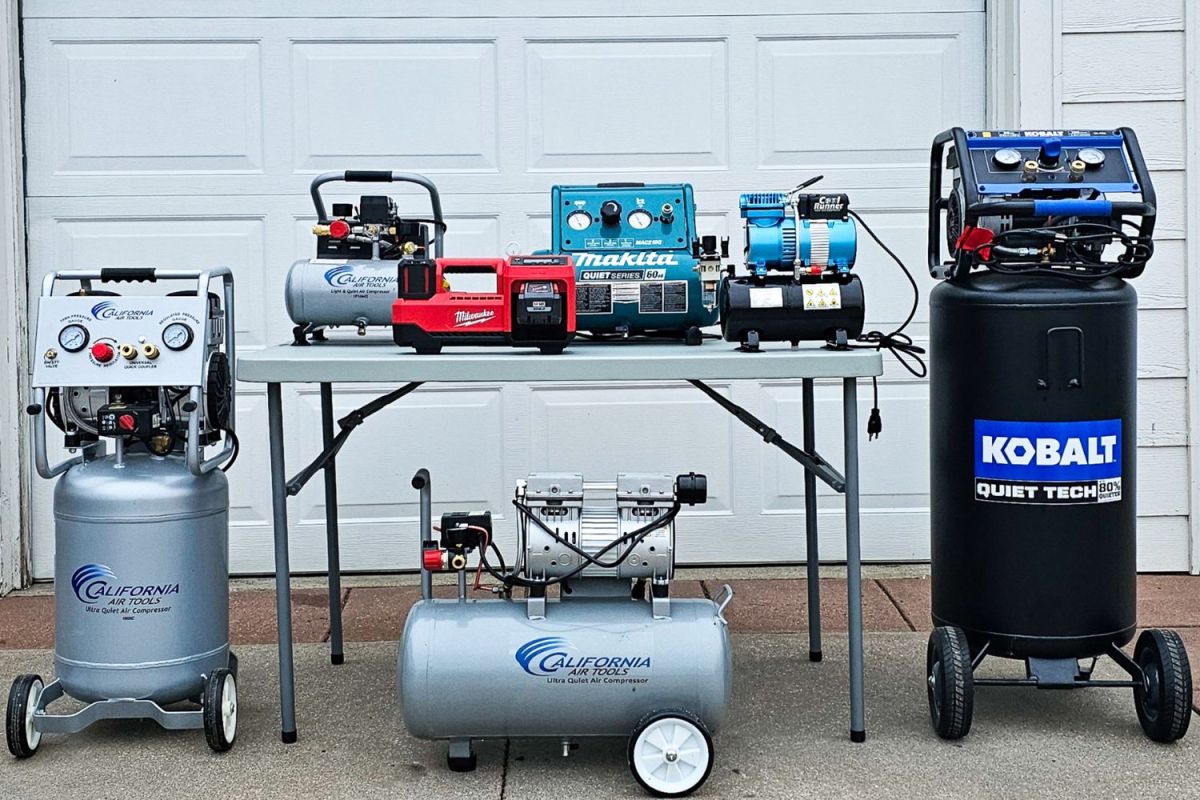
Air compressors are wonderfully useful machines. They inflate tires, fire nail guns, clear sawdust from stubborn corners, and make an airbrush feel like a tiny magic wand. Unfortunately, many traditional models also sound like a lawn mower arguing with a blender. That is not ideal when you are working in a shared garage, a basement workshop, a small studio, or anywhere within hearing range of a sleeping baby, a nervous dog, or a neighbor who already has opinions about your weekend projects.
A quiet air compressor changes the whole experience. Instead of bracing for a startling roar whenever the tank refills, you can carry on a conversation, listen to a podcast, or at least hear yourself mutter when you drop a screw behind the workbench. The best quiet air compressors combine lower decibel ratings with enough airflow, tank capacity, and recovery speed to handle real jobsnot merely inflate one basketball and retire dramatically.
Bob Vila’s quiet air compressor picks cover a wide range of needs, from compact airbrush units to shop-ready models for nailers, impact wrenches, and light paint spraying. Below is a practical guide to the standout models, what their specifications mean, and how to choose one without accidentally buying either a whisper-quiet underachiever or a powerful machine that announces itself to the county.
What Makes an Air Compressor “Quiet”?
Noise is usually measured in decibels, written as dB. For perspective, a normal conversation is often around 60 dB, while many conventional shop compressors can climb well above 80 dB. That difference matters because decibel levels do not rise in a neat, polite straight line. A few extra dB can make a compressor feel much louder in a garage with concrete walls, metal shelving, and nowhere for sound to hide.
Quiet compressors generally use lower-RPM motors, dual-piston pump designs, vibration isolation, and better intake systems. Some oil-free models are especially attractive for homeowners because they require less routine maintenance and can produce cleaner air for finish work, airbrushing, and inflation. Oil-lubricated compressors still have a place in demanding shops, but they are often heavier and may require more attention.
The goal is not simply to buy the compressor with the lowest dB number. A nearly silent compressor that cannot keep up with your nailer, spray gun, or wrench is still frustrating. The sweet spot is low noise paired with the right CFM, PSI, tank size, portability, and duty cycle for the work you actually plan to do.
Quick Comparison: Quiet Air Compressor Picks
| Model | Best For | Noise Level | Air Delivery at 90 PSI | Tank Size |
|---|---|---|---|---|
| California Air Tools 8010 | Best overall DIY use | 60 dB rated | 2.2 CFM | 8 gallons |
| California Air Tools 1P1060S | Budget-friendly light jobs | 56 dB | 1.2 CFM | 1 gallon |
| Makita MAC210Q | Compact professional portability | 60 dB | 2 CFM | 2 gallons |
| California Air Tools 10020C | Garage air tools | 70 dB | 5.3 CFM | 10 gallons |
| Master Airbrush Cool Runner II | Airbrush painting | 47 dB rated | 0.8 CFM | 0.8 gallons |
| Fortress 175 PSI | Multipurpose home and garage jobs | 69 dB | 4.3 SCFM | 10 gallons |
| Milwaukee M18 Tire Inflator | Car, bike, and truck tires | 56 dB in testing | 1.1 SCFM at 35 PSI | No tank |
| Kobalt Quiet Tech 26-Gallon | Home shop and longer tool use | 70 dB | 4.5 CFM | 26 gallons |
The Best Quiet Air Compressors for Different Jobs
Best Overall: California Air Tools 8010
The California Air Tools 8010 earns its place as an excellent all-around quiet compressor because it balances low noise with genuinely useful capacity. Its 8-gallon tank, 2.2 CFM output at 90 PSI, and 60 dB rating make it suitable for brad nailers, finish nailers, staplers, airbrushes, tire inflation, blow-cleaning, and light-duty painting.
For many homeowners, this is the Goldilocks option: not tiny, not industrial-sized, and not likely to make the garage sound like a race track pit lane. The wheeled horizontal design also makes it easier to move than a bulky stationary compressor. It is not the right choice for high-demand continuous tools such as large impact wrenches or heavy commercial spray guns, but for everyday DIY work, it offers a rare mix of calm manners and practical power.
Best Value: California Air Tools 1P1060S
The California Air Tools 1P1060S is a strong pick for DIYers who want low noise without giving their wallet a dramatic compression injury. It runs at about 56 dB, weighs around 29 pounds, and uses a compact 1-gallon steel tank. That makes it especially appealing for indoor projects, small apartments with a work nook, crafts, brad nailing, light stapling, and quick tire top-offs.
Its 1.2 CFM at 90 PSI is enough for short bursts of air, but it is not designed for continuous sanding, large spray guns, or serious automotive wrenching. Think of it as a polite assistant rather than a shop foreman. It shows up, does the light work, and does not yell about it.
Best Compact Option: Makita MAC210Q Quiet Series
The Makita MAC210Q is a compact quiet air compressor built for users who value portability, durable construction, and cleaner organization in a crowded work area. It offers a 2-gallon tank, 2 CFM at 90 PSI, and a 60 dB operating level. A protective roll cage and padded carry handle help make it a smart fit for contractors, trim carpenters, and homeowners who need to carry a compressor from room to room.
This Makita model works well for finish nailing, stapling, trim work, inflation, and other light-to-medium tasks. Its lower-RPM motor design helps keep the sound down, which is useful when working inside a customer’s home or trying not to wake the household at 7 a.m. on a Saturday. It is compact, not miraculous, so do not expect it to run high-air-demand tools indefinitely.
Best for Air Tools: California Air Tools 10020C
If you need more airflow for garage tasks, the California Air Tools 10020C is a meaningful step up. It has a 10-gallon tank, a 2-horsepower motor, 5.3 CFM at 90 PSI, and a 70 dB noise rating. That is enough power for many common air tools, including standard impact wrenches, die grinders, framing nailers, and light-duty paint sprayers.
This is the kind of quiet garage compressor that makes sense for a home mechanic or serious DIYer. It can run more demanding tools without sounding like a giant metal animal escaped from a factory. Two air outlets also make it easier to support multiple connected tools, although the total airflow demand still matters. Two tools sharing one compressor are like two teenagers sharing one bathroom: coordination helps.
Best for Airbrushing: Master Airbrush Cool Runner II
Airbrushing requires steady pressure, fine control, and the ability to focus on a tiny painted detail without being startled every few minutes. The Master Airbrush Cool Runner II is designed for exactly that sort of work. It has a small tank, a maximum pressure suited to airbrush use, and a low sound rating of about 47 dB.
This model is ideal for artists, miniature painters, hobbyists, cake decorators, model builders, and detail-focused crafters. It is not a substitute for a conventional workshop compressor. A brad nailer or impact wrench would look at this little airbrush unit the way a pickup truck looks at a scooter: respectfully, but from a distance.
Best Multipurpose Model: Fortress 175 PSI Air Compressor
The Fortress 175 PSI air compressor offers a strong blend of power, mobility, and lower noise. With a 10-gallon tank, 4.3 SCFM at 90 PSI, and a 69 dB rating, it is capable of handling nailing, stapling, tire inflation, blow-cleaning, and many common garage projects. Its high maximum pressure also provides a useful reserve for tools that benefit from more stored air.
This is a practical choice for someone who wants one compressor for several types of work. Its never-flat tires and sturdy handle make it easier to roll around a garage, driveway, or jobsite, although it is not a lightweight carry-with-one-hand machine. Consider it a quiet workhorse with wheelsnot a travel-size sidekick.
Best for Tires: Milwaukee M18 Cordless Tire Inflator
The Milwaukee M18 cordless tire inflator is different from a tank-style compressor. It does not store compressed air in a receiver tank. Instead, it uses a battery-powered pump to inflate tires directly. That makes it especially convenient for cars, trucks, bicycles, motorcycles, sports balls, and other inflation jobs where dragging out a hose-and-tank setup would be excessive.
The useful feature here is the preset pressure control. Set the desired tire pressure, start the inflator, and let it shut off automatically when it reaches the target. It is especially appealing for people who already use Milwaukee M18 batteries. For tire maintenance, this type of inflator is less “workshop machinery” and more “emergency superhero that lives in your trunk.”
Best Home Shop Choice: Kobalt Quiet Tech 26-Gallon
The Kobalt Quiet Tech 26-gallon compressor is built for users who need longer runtimes and more consistent airflow in a dedicated home shop. With 4.5 CFM at 90 PSI, a 150 PSI maximum, and a 70 dB rating, it can handle nail guns, impact wrenches, sanding tasks, and many paint sprayers more comfortably than smaller portable compressors.
The trade-off is weight. At well over 100 pounds, this is not the model to casually toss in the back of a vehicle. It belongs in a garage or workshop where it can serve as a semi-permanent air station. For woodworking, automotive repair, and regular renovation work, the large tank is a major advantage because it gives you more stored air before the motor needs to cycle again.
How to Choose the Right Quiet Air Compressor
Start With CFM, Not Horsepower
Horsepower looks impressive on a label, but CFM is usually more useful. CFM, or cubic feet per minute, measures the volume of air a compressor can deliver. When comparing models, focus on the CFM rating at 90 PSI because many pneumatic tools list their requirements at that pressure.
For example, a brad nailer might only need brief bursts of air, while an impact wrench, die grinder, sander, or spray gun can demand much more. If a tool requires 4 CFM at 90 PSI and your compressor delivers only 2 CFM at 90 PSI, the compressor may work briefly but will struggle to keep up. You will spend more time waiting for the tank to recover than actually working, which is a deeply inefficient way to become acquainted with your garage walls.
Match Tank Size to Your Work Style
A larger tank does not create more CFM, but it stores more compressed air. That matters when you use tools in bursts or need a longer stretch of work before the motor starts again. A 1- or 2-gallon compressor is convenient for trim work, light inflation, and small repairs. An 8- to 10-gallon tank offers more flexibility for DIY projects and automotive tasks. A 20-plus-gallon tank is better suited to regular shop work and tools that need sustained airflow.
If you only inflate tires or fire a few brads, a small tank makes sense. If you are sanding furniture, painting cabinets, or working on vehicles, more storage capacity will make the experience smoother and less stop-and-go.
Understand PSI Without Overthinking It
PSI means pounds per square inch, or the pressure available to power a tool. Many household pneumatic tools operate around 70 to 90 PSI. A compressor with a higher maximum PSI can store more pressure in the tank, which may extend usable runtime before the motor cycles back on.
However, high PSI is not a substitute for enough CFM. A compressor can have an impressive maximum PSI and still be a poor match for a high-demand air tool. Always check the tool manufacturer’s required PSI and CFM before buying. Numbers are boring only until they save you from buying the wrong machine.
Consider Portability and Storage
Quiet compressors come in several shapes: pancake, hot dog, twin-stack, horizontal wheeled, vertical wheeled, and tankless inflator. A compact 30-pound model can be ideal for trim work around the house. A 125-pound shop compressor can be wonderful until it needs to move upstairs, into a truck bed, or across gravel.
Look for wheels, a comfortable handle, protected gauges, secure hose storage, and a footprint that fits your space. Measure the storage area before ordering. “I assumed it would fit” has launched many household arguments.
Do Not Ignore Maintenance and Safety
Even quiet air compressors deserve basic care. Drain moisture from the tank after use or according to the manufacturer’s schedule. Condensation can accumulate inside the tank, especially in humid conditions, and moisture is not a charming long-term roommate for steel components. Check hoses, couplers, regulators, and fittings for leaks. A little soapy water around a suspected connection can reveal escaping air through bubbles.
Wear eye protection whenever you use compressed air or pneumatic tools. Use hearing protection for long sessions, even with a quieter model. Keep the compressor in a ventilated space, avoid damaged extension cords, and never aim compressed air at yourself or anyone else. A compressor may sound civilized, but it is still storing enough energy to deserve respect.
Real-World Experience: Why a Quiet Compressor Feels So Different
The first time you use a quiet air compressor after years with a standard loud model, the experience is almost suspicious. You turn it on, wait for the familiar mechanical scream, and instead hear a controlled hum. It feels as though the machine forgot to attend the “make a dramatic entrance” workshop.
In a home garage, that difference becomes practical almost immediately. You can hear the click of a nailer seating properly. You can notice when a hose starts leaking. You can listen for a loose fastener, a rattling tool, or the subtle hiss of a connection that needs tightening. Loud compressors hide those clues under a wall of sound. Quiet models make troubleshooting easier because the background noise does not swallow every other sound in the room.
For woodworking, a quieter compressor makes trim work feel less frantic. A finish nailer typically uses air in quick bursts, so a small or medium quiet compressor can often sit nearby without dominating the project. You can install baseboards, repair molding, build storage shelves, or assemble a simple cabinet without announcing each compressor cycle to the entire house. That is especially helpful in attached garages, basements, condos, and workshops near living spaces.
For automotive projects, low noise can make a long afternoon much more pleasant. Inflating tires, blowing dust from brake components, cleaning a work area, or using an impact wrench becomes less exhausting when the compressor is not blasting away every few minutes. A larger quiet compressor with a 10- or 26-gallon tank can be particularly useful because it stores enough air for short jobs while reducing the number of recovery cycles.
Quiet operation matters even more for airbrush work. Painting miniatures, model cars, artwork, helmets, or detailed craft pieces requires patience. The repetitive roar of a loud compressor can break concentration and make a relaxing hobby feel like you are renovating a subway tunnel. A compact airbrush compressor is not designed for heavy-duty tools, but it delivers exactly what artists need: stable pressure, small size, and enough silence to let creativity do the talking.
There is also a social advantage. A quieter compressor is easier on family members, neighbors, pets, and anyone trying to take a nap while you decide that 8:15 on Sunday morning is the perfect time to install crown molding. It does not make DIY projects silent, of course. Nail guns still pop, impact wrenches still chatter, and dropped sockets remain committed to making the loudest possible noise. But reducing the compressor’s contribution can make the entire project feel more manageable.
The biggest lesson from real-world use is simple: buy for the work you do most often. A small 56 dB compressor can be a delight for brad nailing and inflation, but it will not suddenly become a high-CFM shop powerhouse because you believe in it. A large 26-gallon compressor can be superb for sanding and paint work, but it will not become easy to carry upstairs just because it has a nice handle. Match the tool to the task, and the compressor becomes one of the most usefuland least annoyingmachines in your workshop.
Final Thoughts
The best quiet air compressor is the one that supplies enough airflow for your tools while keeping your workspace comfortable. For versatile home DIY work, the California Air Tools 8010 is a standout balance of low noise, portability, and useful capacity. For compact jobsite use, the Makita MAC210Q is an excellent choice. For more demanding garage work, the California Air Tools 10020C, Fortress 175 PSI, and Kobalt Quiet Tech offer more air capacity without the usual ear-splitting soundtrack.
Choose based on CFM at 90 PSI, tank size, noise level, and how often you will move the compressor. Do that, and you will get a machine that helps you work smarter, stay calmer, and keep the neighborhood guessing whether you are actually building somethingor merely becoming very organized.
Note: Product specifications, included accessories, model availability, and pricing can change. Confirm the current manufacturer specifications and match the compressor’s airflow rating to the requirements of your specific pneumatic tools before purchasing.